Key takeaways
- Lodge your DA through the NSW Planning Portal online
- You need DA form, plans, SEE, BASIX, and owner consent
- The portal guides you through each upload step
- Council fees are calculated at lodgement
- After lodgement your DA goes through assessment stages
You lodge a Development Application in NSW online through the NSW Planning Portal. Register for a free account, complete the approved DA form, upload your plans and a Statement of Environmental Effects, pay your council's fee, and submit the application to your local council. That submission is the formal start of the assessment.
For a homeowner or owner-builder doing this for the first time, the portal itself is the easy part. The work that trips people up sits in the documents, and one document in particular: the Statement of Environmental Effects, which has to be written from scratch in planning language you have probably never used. Get a document wrong or leave one out and your council can pause the whole application with a request for more information, adding weeks to a timeline that should have run smoothly.
Get a council-ready Statement of Environmental Effects for your DA in 5 minutes — no town planner, no waiting.
Get your SEE report →- How to register and use the NSW Planning Portal to lodge your DA
- The seven documents every residential DA needs before lodgement
- What the council checks after you submit and why completeness matters
- How much it costs to lodge a DA in NSW, including document costs
- The common mistakes that get applications sent back with a request for information
What You Need Before You Lodge a DA in NSW
Preparing your documents before you open the portal is the difference between a smooth lodgement and one that stalls halfway through.
Before you open the portal, get your documents ready, because the system will ask you to upload them in one sitting. For a standard residential DA you need architectural plans and a scaled site plan, a Statement of Environmental Effects, a BASIX certificate if the work is residential, written owner's consent where you are not the sole registered owner, a cost estimate of the development, and your property's 10.7 planning certificate to confirm the zone and any constraints.
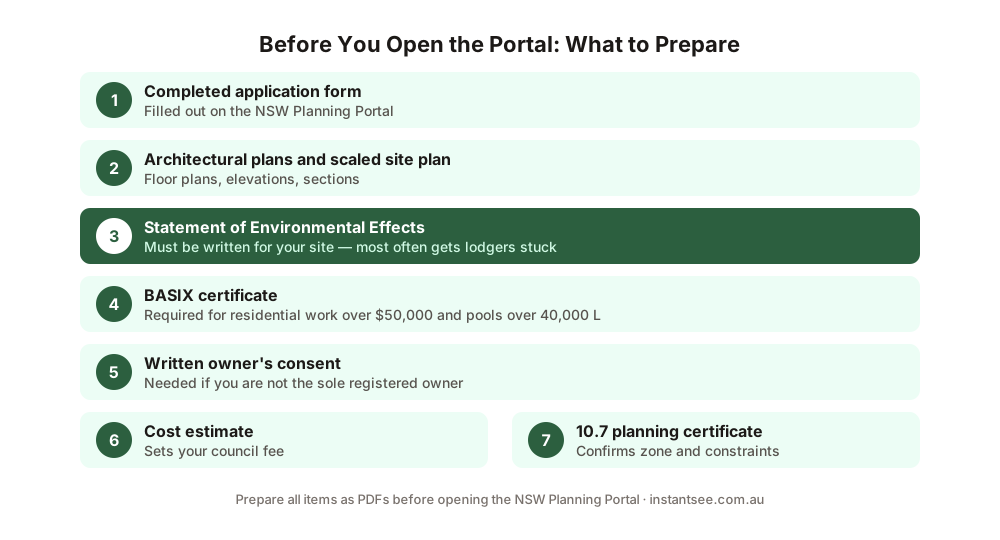
Figure 1: What to prepare before you lodge. The Statement of Environmental Effects is the item most self-lodgers get stuck on.
A few of these have specific triggers worth knowing. A BASIX certificate is required for new dwellings and for most renovations over $50,000, as well as swimming pools and spas of 40,000 litres or more, and you generate it through the portal. Owner's consent must be in writing if your name is not on the title, which catches a lot of applications lodged by a partner, a company, or a builder. The cost estimate matters because it sets your council fee, so it needs to be honest and defensible. Running through a DA Lodgement Checklist for NSW before you start confirms you have every item for your project type, rather than discovering a gap halfway through the form.
How to Lodge a DA in NSW, Step by Step
Lodging the DA is a six-step sequence on the NSW Planning Portal — have your documents ready as PDFs and work through it in one go.
Lodging the DA is a six-step sequence on the NSW Planning Portal. None of the steps is difficult on its own; the order is what keeps it simple. Have your documents saved as PDFs first, then work through the portal in one go.
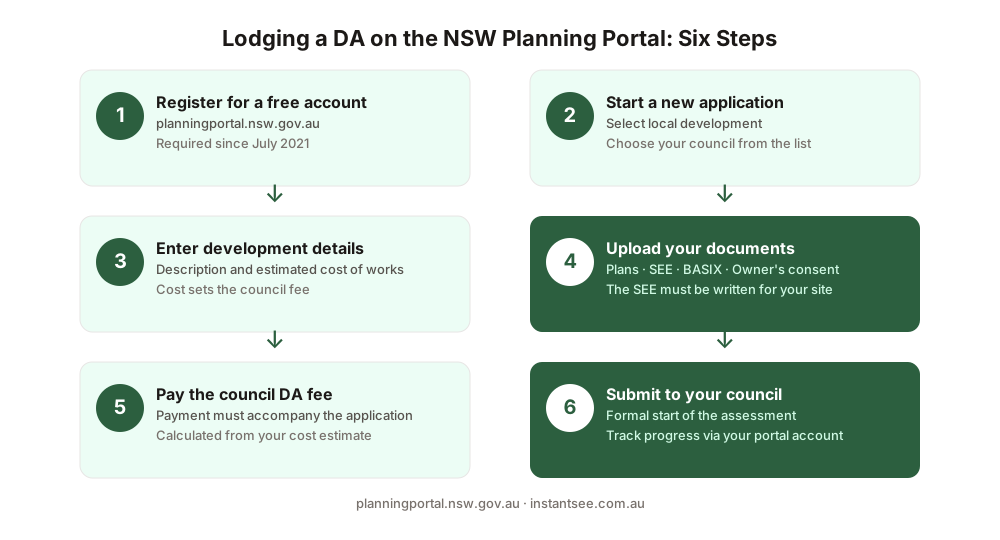
Figure 2: The six steps to lodge a DA in NSW on the Planning Portal, from registering an account to submitting to your council.
First, register for a free NSW Planning Portal account at planningportal.nsw.gov.au, which has been required to lodge any DA online since July 2021. Second, start a new application, select local development, and choose your council from the list. Third, enter the development details and your estimated cost of the work, which the system uses to calculate the fee. Fourth, upload your documents, including your plans, your Statement of Environmental Effects, your BASIX certificate, and owner's consent. Fifth, pay the council DA fee; payment must accompany the application. Sixth, submit the application to your council. From there you can track the status of your DA through the same portal account. Lodgement is the formal start of the process, so an application that is complete on day one starts its clock cleanly.
What Documents You Must Upload With Your DA
Spend 5 minutes, not 3 weeks
instantSEE generates a complete, DA-ready Statement of Environmental Effects online. No town planner. No waiting.
Get your SEE report in 5 minutes →The documents do the heavy lifting in any DA — and the portal will not let you submit a properly made application without the core set.
The documents do the heavy lifting in any DA, and the portal will not let you submit a properly made application without the core set. At a minimum you upload the completed approved form, architectural and site plans, a Statement of Environmental Effects, a BASIX certificate for residential work, written owner's consent, and a cost estimate. Some sites also need specialist reports, such as a survey, an arborist report for tree removal, or a heritage impact statement in a conservation area.
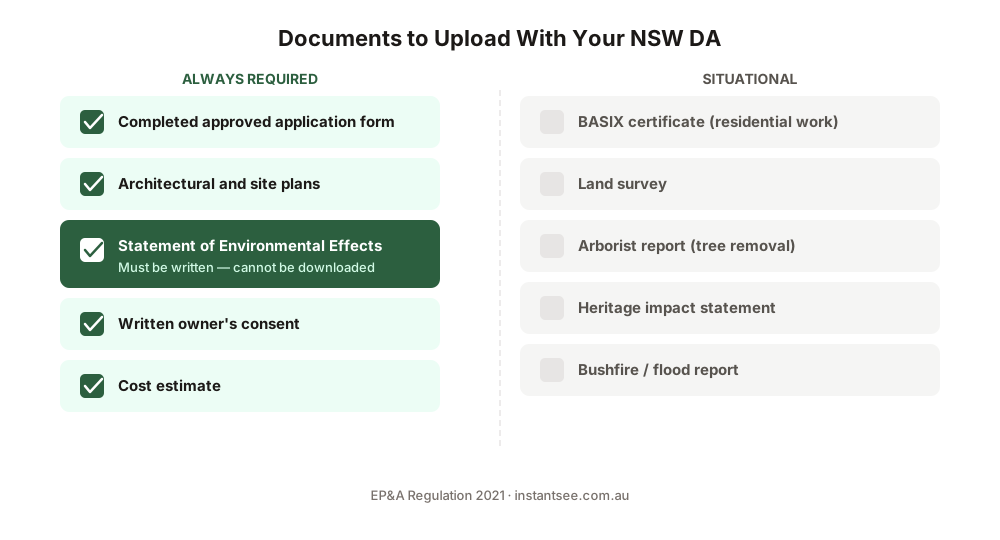
Figure 3: The documents to upload with your DA. Plans come from your designer and BASIX from the portal, but the SEE has to be written.
Under the Environmental Planning and Assessment Regulation 2021, a Development Application (other than for complying development) must be accompanied by a Statement of Environmental Effects. This means your SEE is not optional padding; it is a lodgement requirement, and a DA submitted without one can be returned before assessment begins. The SEE is also the document that catches people out, because your designer produces the plans and the portal generates BASIX, but the SEE has to be written specifically for your site and your council's planning controls. If you are unsure what the abbreviation means, our guide to what a SOEE is explains that SOEE and SEE are the same document. A standard town planner charges $800 to $2,500 to prepare one and takes one to three weeks.
How Much It Costs to Lodge a DA in NSW
The cost of lodging a DA has two parts: the council's fee set by regulation, and the cost of preparing your documents — of which the SEE is the most variable.
The cost to lodge a DA in NSW has two parts: the council application fee and the cost of preparing your documents. The council fee is set by the Environmental Planning and Assessment Regulation and scales with the estimated cost of your development, so a small alteration carries a modest fee while a new two-storey dwelling costs more. Your council publishes its fee schedule, and the portal calculates the fee from the cost estimate you enter.
The larger and more variable cost is document preparation. Plans come from your designer or architect, BASIX is generated on the portal, and the Statement of Environmental Effects is where the planning spend usually lands. A town planner typically charges $800 to $2,500 for a SEE and takes one to three weeks to deliver it. That is the single cost most owner-builders look to avoid, because the plans are already paid for and the council fee is fixed. instantSEE generates a complete, DA-ready SEE in 5 minutes online, which is why preparing the SEE yourself, with the right tool, is the most common way people keep a small DA affordable without leaving a gap in the lodgement. For a full breakdown of what each document and fee costs, see what must be included in a SEE and plan your budget around the documents your project actually needs.
What Happens After You Lodge Your DA
After lodgement, your council first checks the application is complete — an incomplete application pauses at this stage until you supply what is missing.
Once you submit, your council first checks the application is properly made, which means every required document is present and correct. If something is missing, the council issues a request for additional information and your application pauses until you supply it. If the application is complete, it moves to public notification, where neighbours can view the proposal and make submissions, then to a merit assessment by the assessing officer.
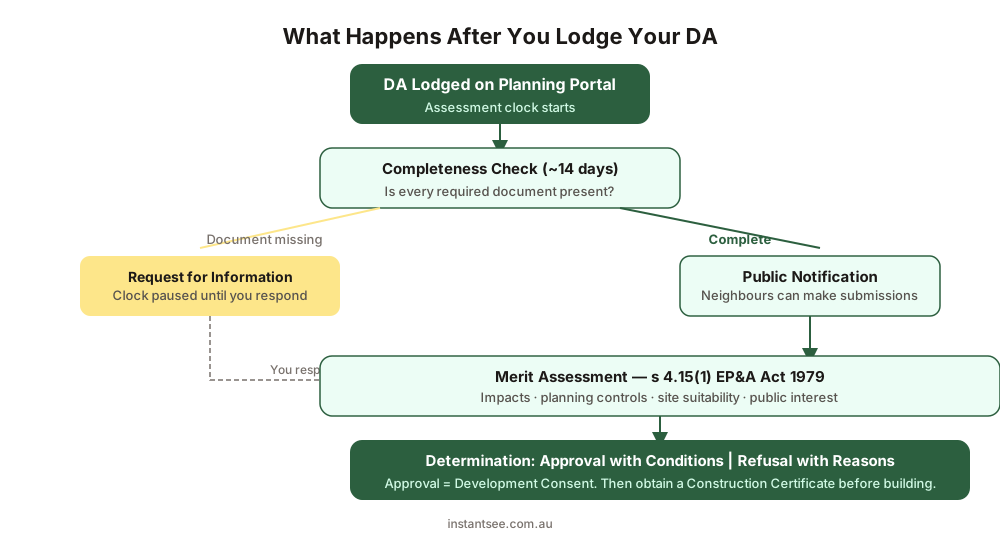
Figure 4: After you lodge, your council checks completeness, notifies neighbours, assesses the DA under section 4.15, then determines it.
Under section 4.15(1) of the Environmental Planning and Assessment Act 1979, your council must take into account the relevant planning instruments and controls, the likely impacts of the development, the suitability of the site, any submissions received, and the public interest. Your SEE is your chance to answer each of those matters before the officer has to ask, which is why a complete SEE moves the assessment along. The council then determines the DA in one of two ways: it approves the application, usually with conditions of consent, or it refuses it with reasons. An approval is your development consent, and you cannot start building until you also obtain a Construction Certificate.
Common Mistakes That Get a DA Sent Back
Most delays on a straightforward residential DA trace back to a handful of avoidable mistakes at lodgement.
Most delays on a straightforward residential DA trace back to a handful of avoidable mistakes at lodgement. The biggest is the Statement of Environmental Effects: either missing entirely, or present but skipping a planning control the council cares about. Close behind are owner's consent that is missing or not in writing, no BASIX certificate for residential work, plans that do not match the written description, and a cost estimate understated to lower the fee.
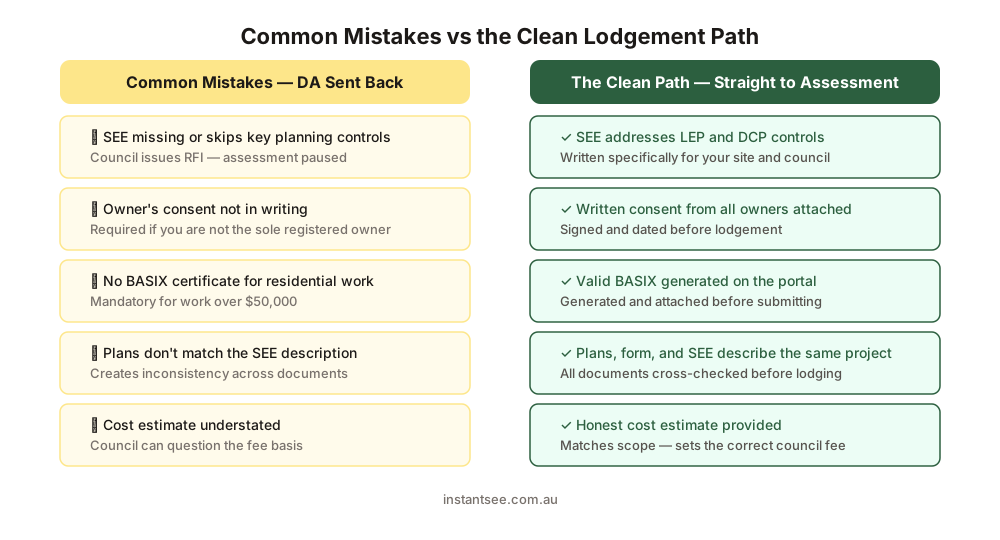
Figure 5: The mistakes that get a DA sent back, set against the clean lodgement that moves straight to assessment.
The fix for each is the same: get it right before you submit rather than after. Make sure your SEE addresses your council's Local Environmental Plan and Development Control Plan, attach written owner's consent if your name is not on the title, generate a valid BASIX on the portal, confirm your plans, form, and SEE all describe the same project, and give an honest cost estimate. Because the plans and BASIX are largely mechanical, the difference between a DA that progresses and one that waits almost always comes down to the SEE being complete. Cover every relevant matter the first time and the rest of the lodgement is routine.
- Statement of Environmental Effects covers the LEP and DCP controls
- Written owner's consent attached if not sole owner
- Valid BASIX generated on the portal for residential work
- Plans, form, and SEE all describe the same project
- Cost estimate is honest and matches the scope of works
Frequently asked questions
How do I lodge a development application in NSW?
Can I lodge a DA myself without a town planner in NSW?
What documents do I need to lodge a DA in NSW?
How long does it take for a council to assess a DA in NSW?
Do I need a Statement of Environmental Effects to lodge a DA?
Ready to get your SEE report?
Skip the writing. Get a DA-ready Statement of Environmental Effects in 5 minutes.
Get your SEE report