Key takeaways
- A DA needs seven core documents before lodgement
- Mandatory documents include DA form, plans, SEE, and BASIX
- Situational documents depend on your site constraints
- A complete checklist avoids requests for information
- Check your council specific requirements before lodging
- Use the interactive DA lodgement checklist to get a tailored document list for your project type — free, no sign-up required.
A DA lodgement checklist for NSW covers the documents every council requires to accept your Development Application: a completed application form, architectural and site plans, a Statement of Environmental Effects, a BASIX certificate for residential work, written owner's consent, a cost estimate of the work, and the council DA fee. Miss one and your council can refuse to accept the application.
For a first-time applicant, the trouble is that no single page tells you the full list in plain English, and the items are not equal. Some are mandatory for every DA, some depend on your site, and one, the Statement of Environmental Effects, has to be written from scratch rather than downloaded or generated. Leave a gap and your council issues a request for additional information that pauses the whole application, often adding weeks.
Get a council-ready Statement of Environmental Effects for your DA in 5 minutes — no town planner, no waiting.
Get your SEE report →- The seven core documents that every NSW DA requires
- Which documents depend on your site's zone and constraints
- What your Statement of Environmental Effects must cover
- How to identify specialist reports before your council asks for them
- How a complete checklist keeps your assessment clock running
The Complete DA Lodgement Checklist for NSW
The core document set is consistent across NSW because every council lodges through the same portal — even though the planning controls each SEE must address differ by council.
Here is the core DA lodgement checklist that applies to a standard residential Development Application anywhere in NSW. Every council uses the NSW Planning Portal, so the base set of documents is consistent across the state, even though the specific planning controls differ.
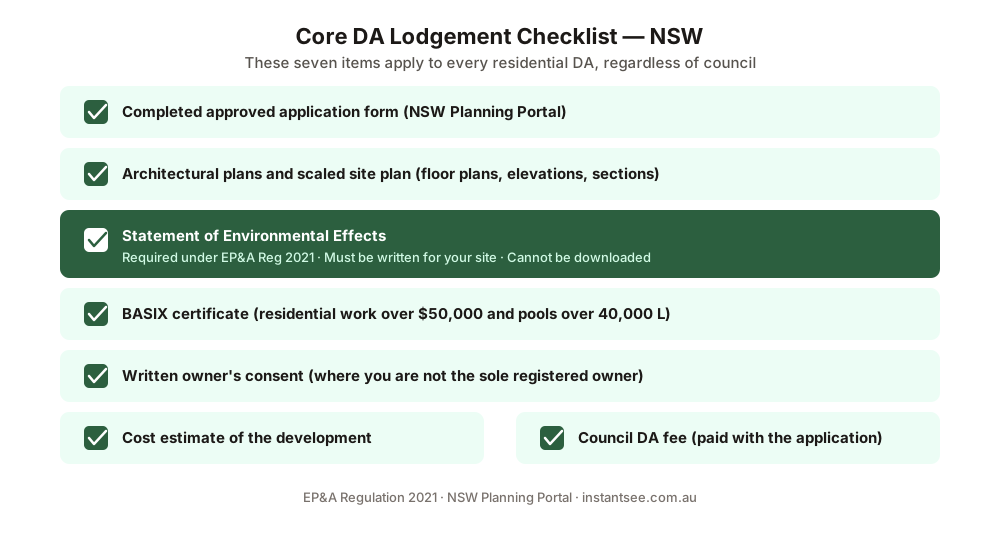
Figure 1: The core DA lodgement checklist for NSW. The Statement of Environmental Effects is the item most people prepare last.
Your core checklist is: a completed approved application form, filled out on the NSW Planning Portal; architectural plans and a scaled site plan, including floor plans, elevations and sections; a Statement of Environmental Effects; a BASIX certificate where the work is residential; written owner's consent where you are not the sole registered owner; a cost estimate of the development, which sets your council fee; and payment of the council DA fee, which must accompany the application. That is the spine of every residential DA. If you want the full process around these documents, our guide on how to lodge a DA in NSW walks through the portal steps from registering an account to hitting submit. Get the seven items above ready as PDFs before you start and the lodgement itself takes minutes.
Which DA Documents Are Mandatory and Which Depend on Your Site
Splitting the list into always-required and situational documents tells you where to spend time immediately and where to investigate your site's constraints.
Not every document on a DA lodgement checklist applies to every project. It helps to split the list in two: the documents that are always required, and the documents triggered by your specific work or your property's constraints. Treating a situational document as mandatory wastes money; treating a mandatory one as optional gets your DA sent back.
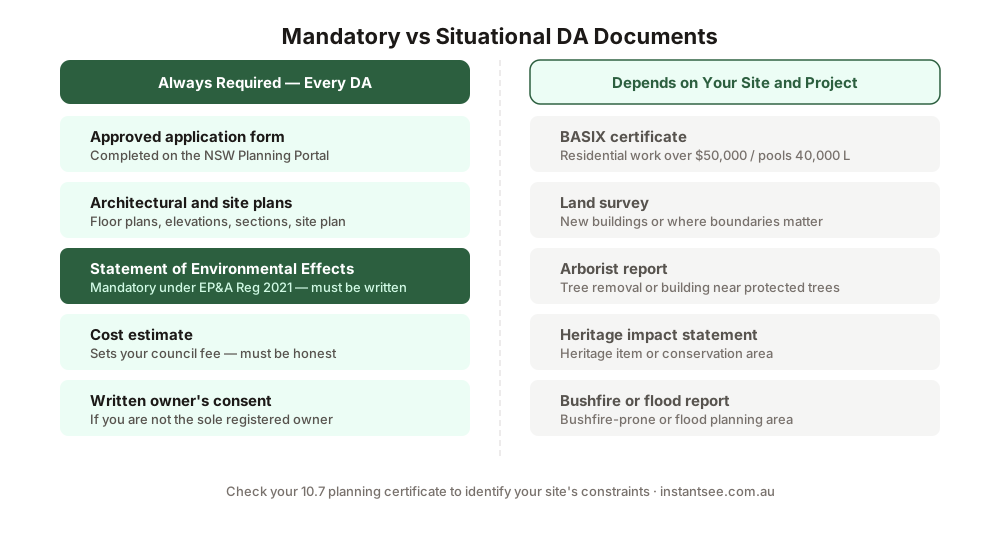
Figure 2: Always-required documents on the left, site-dependent documents on the right. Your 10.7 certificate tells you which situational items apply.
The always-required set is short: the approved application form, plans, a Statement of Environmental Effects, a cost estimate, and owner's consent. Miss any of these and the DA is not properly made. The situational set depends on your circumstances. A BASIX certificate is required for new residential development and most renovations over $50,000, as well as pools and spas of 40,000 litres or more. A survey, an arborist report for tree removal, a heritage impact statement in a conservation area, or a bushfire or flood report all depend on the property. The fastest way to work out which situational documents you need is to read your property's 10.7 planning certificate, which lists the zone and the constraints, and to check your council's requirements for your specific DA type.
What Your Statement of Environmental Effects Must Cover
Spend 5 minutes, not 3 weeks
instantSEE generates a complete, DA-ready Statement of Environmental Effects online. No town planner. No waiting.
Get your SEE report in 5 minutes →The one item on the checklist you cannot download or auto-generate is the Statement of Environmental Effects — it must be written specifically for your site and your council's controls.
The one item on the checklist you cannot download or auto-generate is the Statement of Environmental Effects. Under the Environmental Planning and Assessment Regulation 2021, a Development Application (other than for complying development) must be accompanied by a SEE, so it is a hard lodgement requirement, not a nice-to-have. It is also where self-lodged DAs most often fall short, because it has to be written specifically for your site and your council's controls.
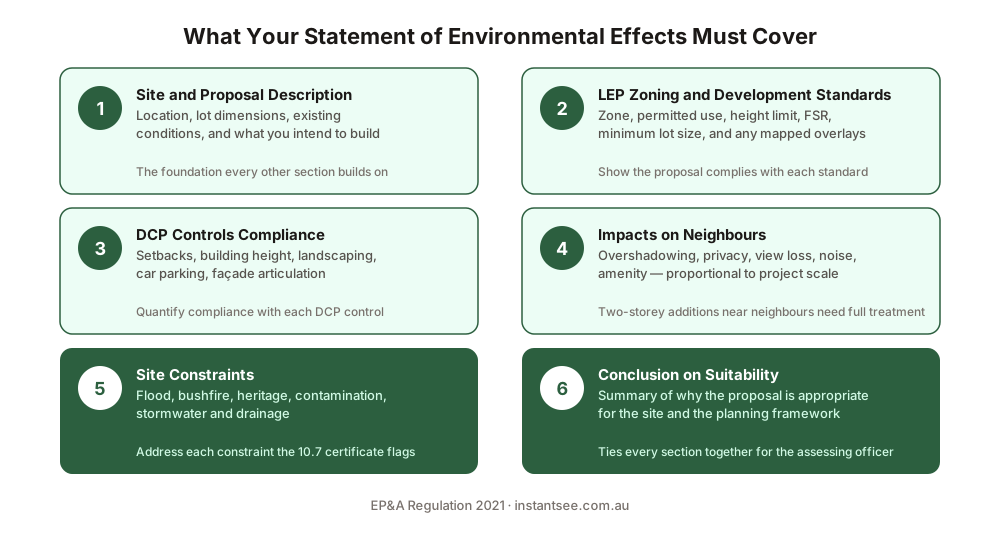
Figure 3: The six things your SEE must cover, from a description of the site to a conclusion on suitability.
A complete Statement of Environmental Effects covers six things: a description of the site and the proposed development; the zoning and development standards under your council's Local Environmental Plan, such as height and floor space ratio; compliance with the relevant Development Control Plan controls, such as setbacks and landscaping; an assessment of impacts on neighbours, including overshadowing, privacy and noise; site constraints such as flood, bushfire, heritage and drainage; and a conclusion on why the proposal suits the site. The depth of each section should match the scale of your project. A rear deck needs a paragraph on overshadowing; a two-storey addition near a neighbour needs a full treatment with shadow diagrams. A town planner charges $800 to $2,500 and takes one to three weeks to write one.
- Description of the site and the proposed development
- LEP zoning and development standards (height, FSR)
- DCP controls compliance (setbacks, landscaping)
- Impacts on neighbours: overshadowing, privacy, noise
- Site constraints: flood, bushfire, heritage, drainage
- Conclusion on suitability of the site
Specialist Reports on Your DA Lodgement Checklist
Specialist reports are the items most often discovered too late — your 10.7 certificate and council requirements will tell you which ones apply, so check both before you book anyone.
Beyond the core documents, some sites add specialist reports to the DA lodgement checklist. These are the items that catch people out late, because you often only discover you need one when your council's requirements or your 10.7 certificate flags a constraint. Ordering them takes time and money, so identify them early.
The common specialist reports are a land survey, which a council usually wants for new buildings or where boundaries matter; an arborist report, required when you remove or build near trees protected by the council's tree controls; a heritage impact statement, needed when your property is a heritage item or sits in a heritage conservation area; a bushfire assessment, triggered when the land is mapped as bushfire prone; and a flood report, where the property is in a flood planning area. A small alteration on an unconstrained block may need none of these, while a new dwelling on a bushfire-prone, flood-affected heritage block could need several. Each report is prepared by a relevant consultant and adds to both the cost and the timeline, which is one more reason to confirm your full checklist before you commit to a lodgement date.
A worked example shows how quickly the list grows. A rear deck on a flat suburban block in a low-density zone usually needs only the core documents: form, plans, SEE, cost estimate and consent. Add a mature tree within the building zone and you now need an arborist report. Put the same project in a heritage conservation area and a heritage impact statement joins the list. Each addition is a separate engagement that can take its own week or two to commission, so the practical lesson is to read your 10.7 certificate and your council's DA requirements first, then book every report you need at once rather than one at a time as the council asks for them.
How to Check Your DA Lodgement Checklist Before You Submit
A complete application moves straight to assessment; a missing document triggers a request for information that pauses the clock until you respond.
The single most effective thing you can do for your timeline is to confirm your checklist is complete before you lodge, not after the council sends it back. A complete application moves straight to assessment. An incomplete one triggers a request for additional information, which pauses the clock while you supply the missing piece.
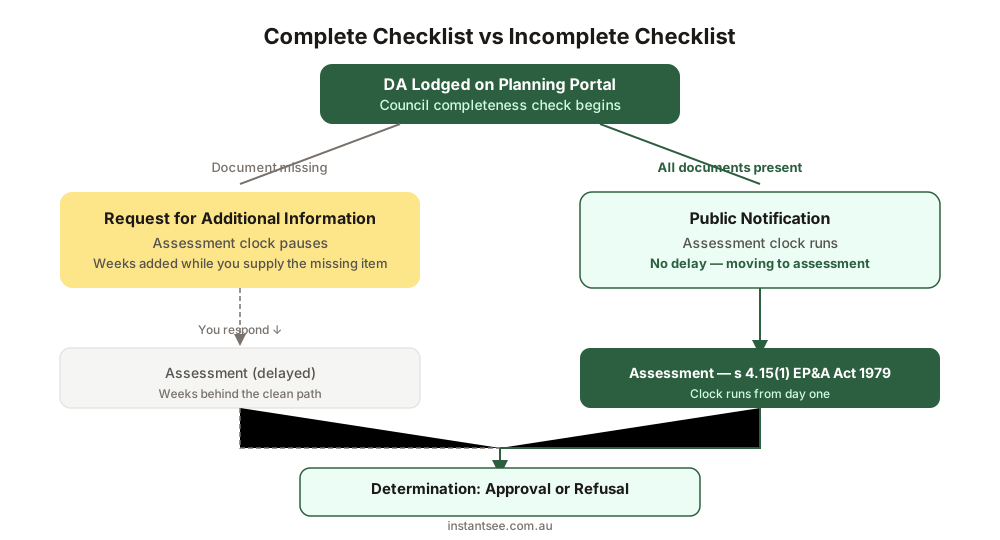
Figure 4: A complete checklist starts the clock clean. A missing document sends the DA back and adds weeks.
Work through a structured list before you submit: confirm your plans, form and SEE all describe the same project; confirm your SEE addresses your council's LEP and DCP, not just a generic template; attach written owner's consent if your name is not on the title; generate a valid BASIX on the portal for residential work; and give an honest cost estimate. Our free DA Lodgement Checklist for NSW lets you tick off every item for your project type so nothing is missing on the day. Because the plans and BASIX are largely mechanical, the difference between a DA that progresses and one that waits almost always comes down to whether the SEE is complete and council-specific.
Frequently asked questions
What documents do I need to lodge a DA in NSW?
Is a Statement of Environmental Effects mandatory for a DA?
What happens if my DA is missing a document?
Do all NSW councils have the same DA requirements?
Do I need a BASIX certificate for my DA?
Ready to get your SEE report?
Skip the writing. Get a DA-ready Statement of Environmental Effects in 5 minutes.
Get your SEE report