Key takeaways
- The 40-day clock sets appeal rights, not a decision deadline
- Real assessment times range from 20 to over 250 days
- A request for information stops the assessment clock entirely
- Non-minor amendments reset your lodgement date and clock
- A council-specific SEE is the fastest path to approval
DA approval in NSW usually takes longer than the statutory clock suggests. The deemed refusal period for a standard local Development Application is 40 days under the Environmental Planning and Assessment Regulation 2021, but that is the point at which you can appeal, not a promise of a decision. Actual council assessment times vary widely, from around 20 days at the fastest councils to well over 250 days at the slowest in 2023 to 2024.
For a homeowner with a builder booked and finance approved, that uncertainty is the hard part. The 40-day figure gets quoted everywhere, then the reality is months, and the gap is rarely explained. The single biggest reason a straightforward DA drifts past the clock is avoidable: an incomplete application that triggers a request for information and pauses the assessment.
Get a council-ready Statement of Environmental Effects for your DA in 5 minutes — no town planner, no waiting.
Get your SEE report →- The statutory deemed refusal periods for different DA types in NSW
- The five stages every DA passes through before determination
- What stops the assessment clock and adds weeks to your timeline
- How a request for additional information affects your application
- Five practical steps to give your DA the best chance of a fast decision
How Long Does DA Approval Take in NSW on Average?
There are two timelines to understand — the statutory clock that sets appeal rights, and the actual assessment time that reflects real-world council workloads.
There are two timelines to understand: the statutory clock and the actual assessment time, and they are not the same thing. The statutory deemed refusal periods under the EP&A Regulation 2021 are 40 days for a standard local DA, 60 days for designated, integrated or concurrence development, and 90 days for State significant development. These periods set when you gain a right to appeal a non-decision; they do not oblige the council to decide within that window.
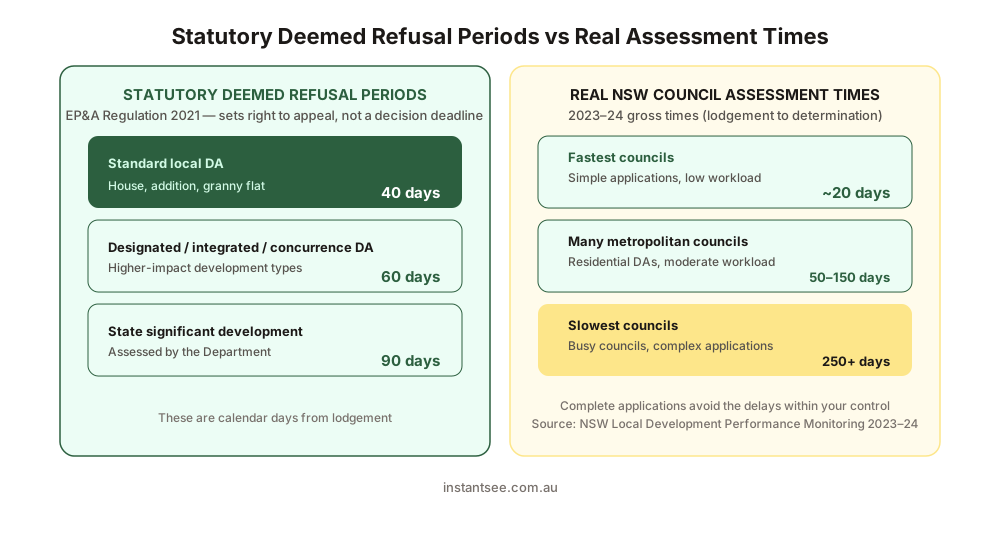
Figure 1: The statutory clock sets when a deemed refusal applies. Real assessment times vary widely by council.
In practice, the gross assessment time, measured from lodgement to determination, is often much longer than 40 days. NSW publishes assessment times by council, and in 2023 to 2024 these ranged from around 20 days at the fastest councils to more than 250 days at the slowest, with many sitting somewhere in the hundred-day range. A simple alteration in a fast council can be decided in weeks; a contested two-storey addition in a busy metropolitan council can take several months. The figure for your specific project depends far more on your council's workload and the completeness of your application than on the statutory number.
The DA Approval Timeline, Stage by Stage
Knowing the five stages your DA passes through tells you where the time goes and, more importantly, which stages you can influence.
Knowing the stages your DA passes through helps you see where the time goes and where you can influence it. Every residential DA follows the same broad path, even though the duration of each stage differs by council.
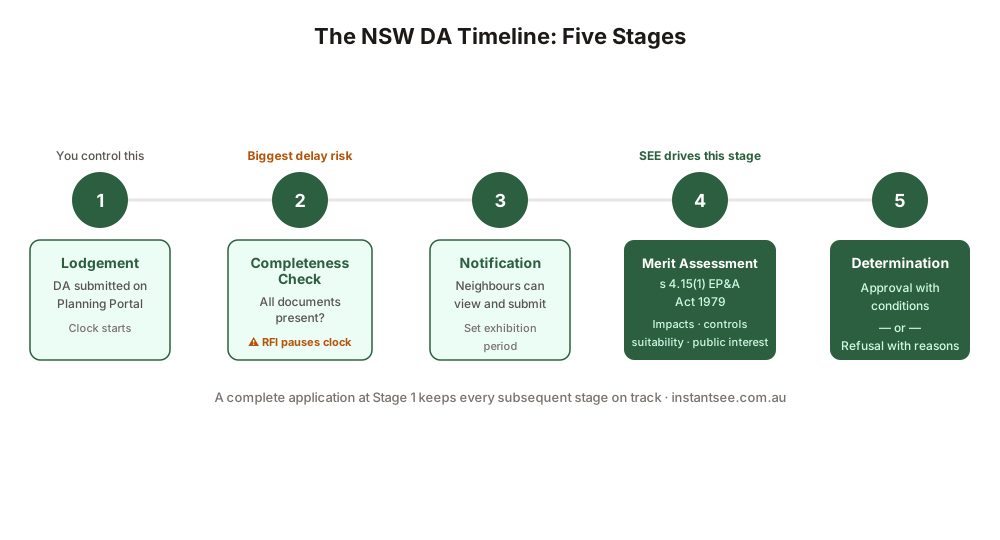
Figure 2: The five stages of a NSW DA, from lodgement on the Planning Portal to determination.
First comes lodgement on the NSW Planning Portal, which starts the process. Second, within about 14 days the council checks the application is complete and either accepts it or asks for what is missing. Third is public notification, where neighbours can view the proposal and make submissions, typically over a set exhibition period. Fourth is the merit assessment, where the assessing officer reviews the proposal against section 4.15(1) of the EP&A Act 1979. Fifth is determination, where the council approves the DA with conditions or refuses it with reasons. If you want the detail of getting to stage one cleanly, our guide on how to lodge a DA in NSW covers the portal process, and the DA Lodgement Checklist NSW lists what each stage expects from you. The notification and assessment stages are where most of the calendar time accumulates.
What Stops the Clock and Adds Weeks
Spend 5 minutes, not 3 weeks
instantSEE generates a complete, DA-ready Statement of Environmental Effects online. No town planner. No waiting.
Get your SEE report in 5 minutes →The reason real assessment times outrun the 40-day clock is that several things pause or restart it — and the most common one, a request for additional information, is entirely within your control to prevent.
The reason real assessment times outrun the 40-day clock is that several things pause or restart it. The most common is the request for additional information. When the council asks for something missing, the assessment period stops running until you respond, so every gap in your application becomes dead time on your timeline.
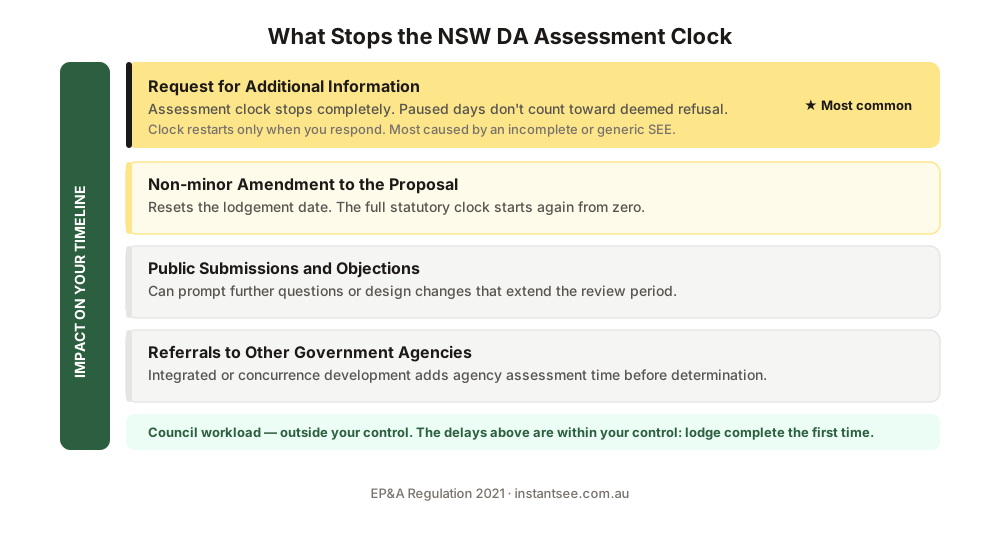
Figure 3: A request for information pauses the clock. The other delays compound from there.
Beyond the request for information, a non-minor amendment to your proposal resets the lodgement date and starts the statutory clock again, which is why mid-assessment design changes are costly in time. Public submissions and objections can prompt further questions or design changes that extend the review. Referrals to other agencies, where your development needs concurrence or is integrated development, add their own assessment time. And council workload sits behind all of it. The one delay fully within your control is the request for information, and it is avoided by lodging a complete application. The document most likely to draw a request is the Statement of Environmental Effects, because an officer cannot finish the assessment if the SEE skips a control they must consider.
How to Get Your DA Approved Faster
You cannot control your council's queue, but you can control the quality of what you lodge — and that is what decides whether your DA moves straight to assessment or stalls.
You cannot control your council's queue, but you can control the quality of what you lodge, and that is what decides whether your DA moves straight to assessment or stalls. A complete, consistent, council-specific application is the difference between weeks and months.
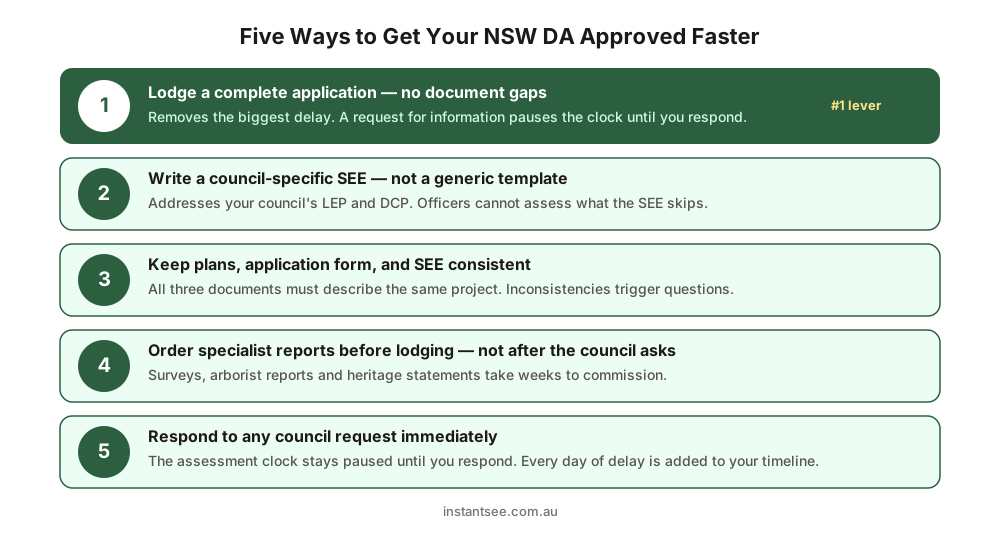
Figure 4: A complete lodgement removes the biggest delay. The rest is keeping your documents consistent and responding quickly.
Five things make the biggest difference. Lodge a complete application so the council has no reason to issue a request for information. Write a SEE that addresses your council's Local Environmental Plan and Development Control Plan controls, not a generic template. Keep your plans, application form and SEE consistent, so they all describe the same project. Order any specialist reports, such as a survey or arborist report, before you lodge rather than after the council asks. And if the council does request something, respond quickly, because the clock stays paused until you do. Working through a DA Lodgement Checklist for NSW before you submit catches the gaps that cause requests for information, which is the most effective thing you can do for your timeline.
- Lodge a complete application with no document gaps
- Write a council-specific SEE (not a generic template)
- Keep plans, form and SEE describing the same project
- Order specialist reports before lodging, not after the council asks
- Respond to any council request immediately — the clock stays paused until you do
Frequently asked questions
How long does a DA take to be approved in NSW?
What is the 40-day rule for DAs in NSW?
Why is my DA taking so long in NSW?
Does a request for information stop the DA clock in NSW?
How can I get my DA approved faster in NSW?
Ready to get your SEE report?
Skip the writing. Get a DA-ready Statement of Environmental Effects in 5 minutes.
Get your SEE report