Key takeaways
- A SEE is required for most NSW residential DAs
- Must address LEP, DCP, and Section 4.15 impacts
- Missing or weak SEEs cause delays or refusal
- You can write your own — no planner required
- instantSEE generates yours in 5 min
A Statement of Environmental Effects is a written report that explains what you want to build, how it affects the surrounding environment, and why your council should approve it. In NSW, a Statement of Environmental Effects is required for most Development Applications under the Environmental Planning and Assessment Regulation 2021. If your project needs council consent, it almost certainly needs a SEE.
For most homeowners and owner-builders, this is the document that stalls the whole project. You have your plans, you have your BASIX certificate, and then you hit the one item that needs to be written from scratch in planning language you have never used before. A town planner can write it for you, but that usually costs $800 to $2,500 and takes one to three weeks.
Get a council-ready Statement of Environmental Effects for your DA in 5 minutes — no town planner, no waiting.
Get your SEE report →- What a Statement of Environmental Effects actually is and when you need one
- Exactly what must be included for your council to accept it
- How a SEE is structured and how it differs from an Environmental Impact Statement
- What happens if your SEE is missing or inadequate
- How much a SEE costs and the fastest way to get yours prepared
What Is a Statement of Environmental Effects in NSW?
The core document every NSW homeowner needs before lodging a Development Application — what it is, why councils require it, and how it fits into the DA process.
A Statement of Environmental Effects, often shortened to SEE or SOEE, is the report that accompanies your Development Application and assesses the likely impact of your proposal on its surroundings. It is sometimes called a planning statement or a SEE report. Whatever you call it, it does one job: it shows your council that you have thought about the effects of your build and that those effects are acceptable.
The requirement is not optional, and it is not just council preference. Under the Environmental Planning and Assessment Regulation 2021, Schedule 1, a Development Application for local development must be accompanied by a Statement of Environmental Effects. The only common exception is designated development, which needs a much larger Environmental Impact Statement instead. The Regulation sits under the Environmental Planning and Assessment Act 1979, the core piece of planning law in NSW that everyone in the industry calls the EP&A Act.
The SEE is where you connect your proposal to the planning rules that apply to your land. That means your council's Local Environmental Plan (LEP), its Development Control Plan (DCP), and any State Environmental Planning Policy (SEPP) that applies. A good SEE does not just describe the building. It demonstrates that the building fits the rules, and where it does not perfectly fit, it explains why the variation is reasonable.
Who Needs a SEE in NSW?
Not every project needs a SEE — but most do. Here is how to tell which approval pathway your build falls into, and when a SEE becomes mandatory.
You need a Statement of Environmental Effects in NSW whenever you lodge a Development Application that requires development consent. That covers the large majority of residential building work that is not minor enough to be exempt and not standard enough to be complying development.
Here is the distinction that trips people up. NSW has three approval pathways. Exempt development, such as a small garden shed or a minor deck, needs no approval at all and therefore no SEE. Complying development is assessed against a fixed code and approved through a Complying Development Certificate (CDC), again with no SEE. A Development Application is the third pathway, and it is the one that requires a SEE.
So if your project is too large or too close to a boundary to qualify as complying development, or your land has a constraint such as heritage or flood that pushes it out of the CDC pathway, you are lodging a DA, and you need a SEE. Typical examples include a new dwelling that exceeds the complying code, a knock-down rebuild, a second storey addition, a granny flat that does not meet the CDC standards, and most renovations in a heritage conservation area. As a rule of thumb, if the council is your consent authority rather than a private certifier, your DA documents must include a SEE.
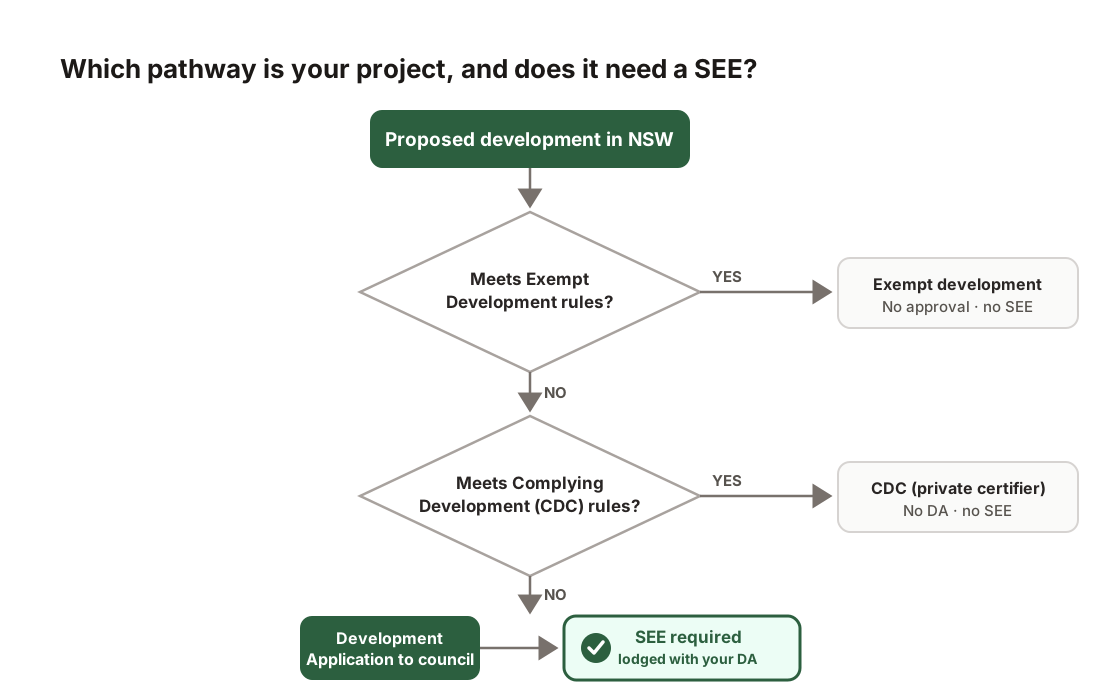
Figure 1: In NSW, only the Development Application pathway requires a Statement of Environmental Effects. Exempt and complying development do not.
If you are not sure which pathway applies to your project, the quickest way to check is your property's planning certificate, also called a 10.7 certificate, which sets out the zoning and the constraints on your land. Constraints such as a heritage listing, a flood planning area, or bushfire-prone land will often rule out the complying development pathway and push your project into a DA, which means you will need a SEE.
Your council's duty planner can confirm the pathway, and a quick call before you design too far can save you redrawing plans later.
What Must Be Included in a Statement of Environmental Effects
Spend 5 minutes, not 3 weeks
instantSEE generates a complete, DA-ready Statement of Environmental Effects online. No town planner. No waiting.
Get your SEE report in 5 minutes →NSW councils assess every SEE against Section 4.15 of the EP&A Act. Here is exactly what your report must cover to pass that assessment.
A Statement of Environmental Effects must describe your development, assess its likely environmental impacts, and show how it responds to the planning controls that apply to your site. The matters a SEE must address flow from section 4.15 of the EP&A Act, which lists what a council must consider when it assesses a DA. Your SEE is your chance to answer each of those considerations before the assessing officer raises them.
At a minimum, a residential SEE should cover:
- A description of the proposed development and the site
- The relevant LEP zoning and development standards (height, floor space ratio)
- Compliance with your council's DCP controls (setbacks, landscaping, private open space)
- An assessment of impacts on neighbours (privacy, overshadowing, views, noise)
- Site suitability, stormwater and drainage, construction waste, and the public interest
The level of detail should match the scale of the project. A single-storey alteration needs a short, focused SEE. A two-storey new dwelling next to neighbours needs more on overshadowing and privacy. To see exactly what your council expects for your project type, use our free SEE Checklist for NSW, which lists every item your SEE should address before you lodge.
What Does a SEE Report Look Like? The Standard Structure
There is no single government template, but every NSW SEE follows the same five-part logic. Knowing the structure helps you write faster and gives the assessing officer what they expect.
Most SEE reports in NSW follow the same logical structure, even though there is no single mandated template. Knowing the standard sections helps you write a SEE that an assessing officer can move through quickly, which is exactly what speeds up your approval.
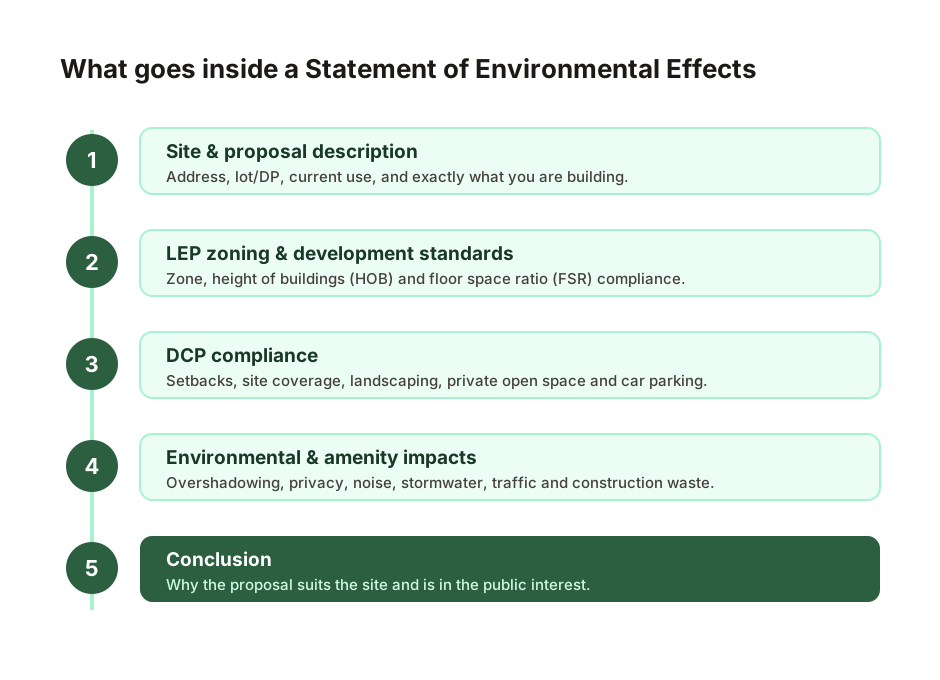
Figure 2: The five standard sections of a SEE report. The structure stays the same; only the depth changes with the scale of your project.
A typical SEE report opens with an introduction and a description of the site. This covers the address, the lot and deposited plan number, the current use of the land, and the existing buildings. It then describes the proposed development in plain detail: what is being built, the materials, the dimensions, and how the site will be used once the work is finished. An assessing officer should be able to picture your project clearly from this section alone.
The middle of the document is the assessment, and it carries most of the weight. This is where the SEE works through the planning controls one by one. It identifies the zoning under the council's LEP and checks the proposal against the development standards that apply, such as height of buildings and floor space ratio. It then steps through the relevant DCP controls, including setbacks, site coverage, landscaping, private open space, and car parking, and states clearly whether the proposal complies with each control.
The third part addresses environmental and amenity impacts. This covers overshadowing of neighbouring properties, privacy and overlooking, visual and streetscape impact, noise, stormwater and drainage, traffic, and waste management during construction. Where the proposal does not comply with a control, this is where you justify the variation and explain why the impact is acceptable.
The SEE then closes with a short conclusion that ties the assessment together and states why the proposal suits the site and serves the public interest. For a single dwelling, this structure might fill five to ten pages. For a more complex proposal with neighbours close by, it can run longer because the impact assessment carries more weight. The structure stays the same; only the depth changes with the scale of the project.
SEE vs Environmental Impact Statement: What's the Difference?
A Statement of Environmental Effects and an Environmental Impact Statement (EIS) are not the same document, and confusing them is a costly mistake. A SEE is the standard report for ordinary local DAs, including almost all residential work. An EIS is a far larger and more technical document reserved for designated development and State significant development, such as major infrastructure, large industrial facilities, or projects with high potential environmental impact.
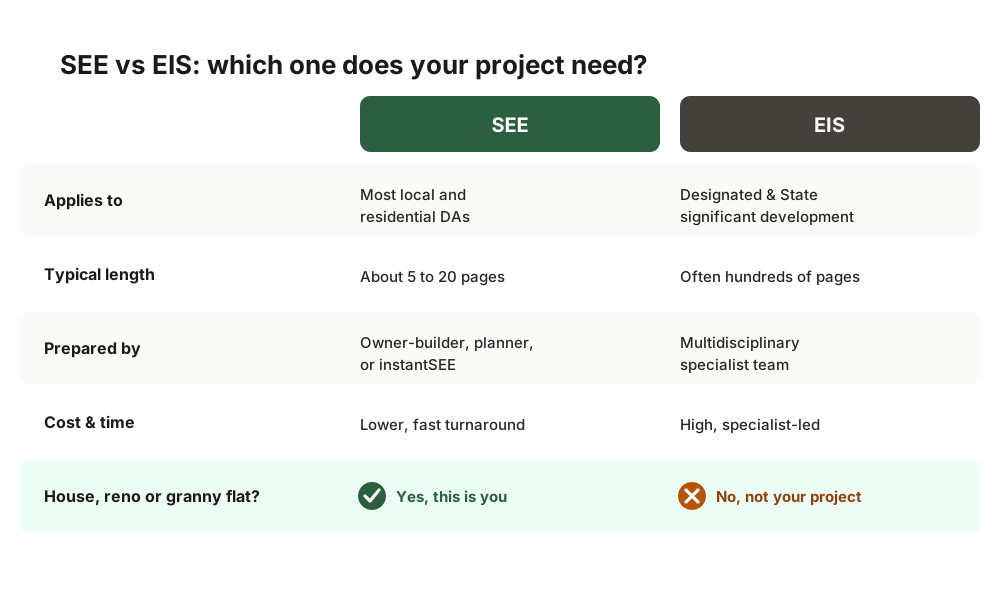
Figure 3: A SEE covers most residential DAs. An EIS is reserved for designated and State significant development.
The practical difference is scale. A residential SEE might run from a few pages to twenty. An EIS is prepared by accredited specialists, often runs to hundreds of pages, and follows the Planning Secretary's requirements. If you are building a house, an extension, or a granny flat in NSW, you need a SEE, not an EIS, and you should be wary of any quote that prices your job as if it needs the latter.
One more point of confusion worth clearing up. The term "environmental effects statement" is the Victorian equivalent and refers to a different process under different legislation. In NSW, the correct term is Statement of Environmental Effects. If you find a template or a guide built around the Victorian system, it will not match what a NSW council expects in your DA documents.
What Happens If Your SEE Is Missing or Inadequate
If your Development Application is missing a required Statement of Environmental Effects, your council can refuse to accept it. A DA is only properly made once it is in the approved form, contains the documents required by the Regulation, has the fees paid, and is lodged on the NSW Planning Portal. A missing SEE makes the application incomplete, so it can be returned to you before assessment even begins. The NSW Land and Environment Court has confirmed that an incomplete DA is not validly made, which means the clock on your approval does not even start.
An inadequate SEE causes a different and slower problem. If your SEE is accepted but does not properly address the impacts of your proposal, the assessing officer cannot complete their assessment. In practice this leads to a request for additional information, which can add weeks to your timeline, or in the worst case a refusal of consent on the merits. Either way, a weak SEE is one of the most common reasons a straightforward DA gets delayed.
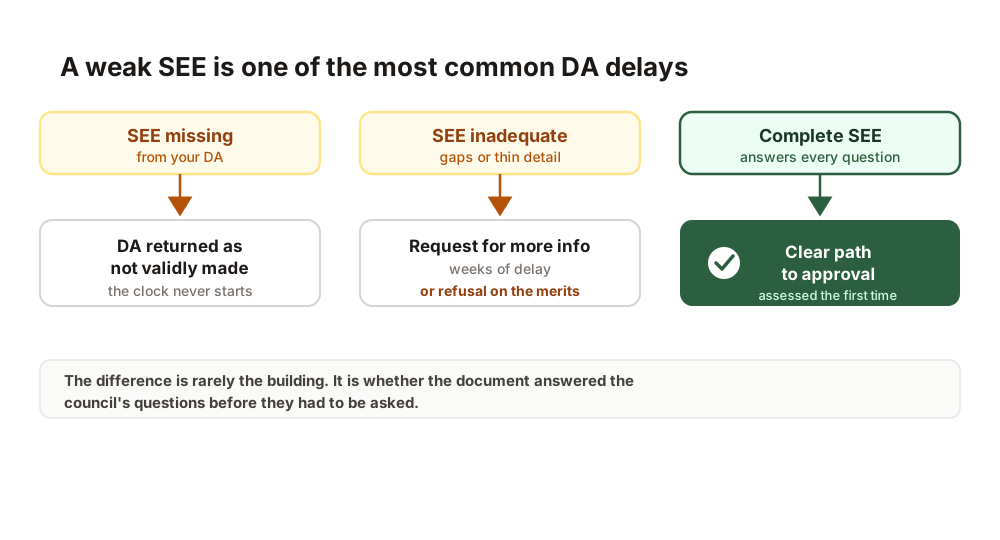
Figure 4: A missing SEE can have your DA returned before assessment starts. An inadequate SEE causes weeks of delay or refusal on the merits.
The gaps that cause these problems are usually predictable. An assessing officer most often pushes back when the SEE fails to address overshadowing of a neighbour's living areas or private open space, ignores privacy and overlooking from new upper-floor windows, or lists a non-compliance with a development standard without explaining why it should be accepted. Each of those is straightforward to cover if you know to look for it, and each is easy to miss if you are writing your first SEE without a checklist. The difference between a SEE that sails through and one that triggers a delay is rarely the building itself. It is whether the document answered the council's questions before they had to be asked.
This is why the quality of the document matters as much as its presence. A SEE that simply describes the building without connecting it to the LEP, the DCP, and the impacts on neighbours gives the council nothing to approve. A SEE that addresses each consideration head-on gives the officer a clear path to a yes.
How Much Does a Statement of Environmental Effects Cost in NSW?
A town planner in NSW typically charges $800 to $2,500 to prepare a Statement of Environmental Effects, and usually takes one to three weeks to deliver it. The exact fee depends on the complexity of your project, the planner's workload, and how much back-and-forth your site constraints require. For a complex commercial or multi-dwelling proposal, fees can climb well beyond that range.
You have three broad options for getting your SEE prepared. You can write it yourself, which costs nothing but your time and carries the risk of missing something the council requires. You can hire a town planner, which gives you professional input at the price and timeframe above. Or you can use instantSEE, which produces a complete, DA-ready SEE in 5 minutes online, with no quote process and no waiting.
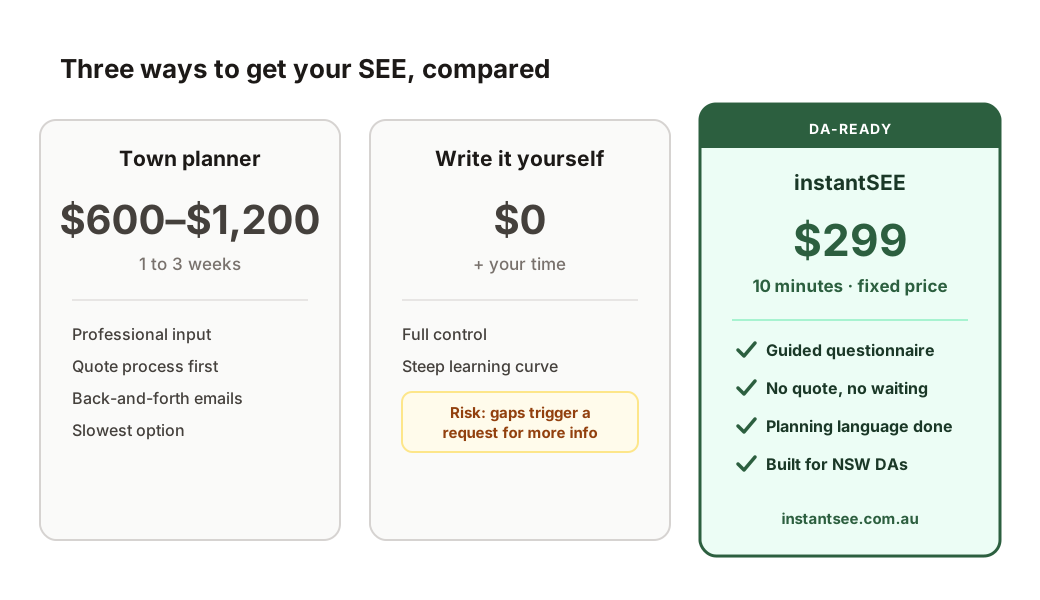
Figure 5: Town planners charge $800 to $2,500 over one to three weeks. instantSEE produces a DA-ready SEE in 5 minutes online.
How to Prepare and Lodge Your SEE in NSW
Lodging your SEE is the final step before your DA goes to council. Get the order right and check for the three most common gaps before you upload.
Once your SEE is written, you lodge it together with the rest of your DA documents through the NSW Planning Portal at planningportal.nsw.gov.au. This is the NSW Government's online lodgement platform, and almost every council now requires DAs to be submitted through it rather than over the counter. You create an application, upload your SEE alongside your plans, BASIX certificate, and other supporting documents, pay the council fee, and the portal notifies your council that the DA has been lodged.
Before you upload, run a final check on your SEE. Confirm it names the correct LEP and zoning for your property, addresses the specific DCP controls your council applies, and deals with every impact a neighbour might reasonably raise. The most frequent gaps in a self-prepared SEE are overshadowing diagrams not being referenced, privacy to adjoining windows not being addressed, and the proposal's non-compliances not being justified.
The order that works best is to finalise your architectural plans first, obtain your BASIX certificate, then prepare the SEE last so it can accurately describe the final design. Preparing the SEE before the plans are locked in is the most common reason a SEE has to be rewritten. If you would rather not write it at all, instantSEE generates your SEE from a guided questionnaire, so the planning language and structure are handled while you focus on the build.
What Has Changed for SEEs in NSW in 2025 and 2026
The core requirement for a Statement of Environmental Effects has not changed in 2025 or 2026. A SEE is still required for most residential DAs under Schedule 1 of the EP&A Regulation 2021, and the matters it must address still flow from section 4.15 of the EP&A Act. If you have read older guides, the fundamentals they describe still apply.
What has shifted is the context around the document. The Environmental Planning and Assessment Amendment (Planning System Reforms) Act 2025 introduced new objects into the EP&A Act from December 2025, with a stronger focus on housing supply, resilience to climate change and natural disasters, and a proportionate, risk-based approach to assessment. In practical terms, a well-written SEE in 2026 should address climate and hazard resilience where relevant, such as flood, bushfire, or heat, and should be proportionate to the scale of the project rather than padded with material that does not apply.
A second change worth watching is the new targeted assessment pathway commencing in 2026, which will eventually narrow what some DAs must address once the supporting State policies are made. Until those policies are in force, assume your residential SEE needs to cover the full set of section 4.15 matters. The expansion of complying development and the Pattern Book Development Code 2025 also mean more minor, low-risk homes can be approved through a CDC, which removes the SEE requirement for those projects entirely. If your project still needs a DA, though, the SEE remains essential.
Every council has its own LEP and DCP with different standards — see our council-specific requirements hub to find your LGA and the controls that apply.
Frequently asked questions
Do I need a Statement of Environmental Effects for a DA in NSW?
What is the difference between a SEE and a SOEE?
How much does a Statement of Environmental Effects cost in NSW?
Can I write my own Statement of Environmental Effects?
What happens if my SEE is inadequate?
Ready to get your SEE report?
Skip the writing. Get a DA-ready Statement of Environmental Effects in 5 minutes.
Get your SEE report