Key takeaways
- A SEE must indicate impacts, locality effects, and management
- Required under Schedule 1; answers section 4.15 matters
- Cover site, proposal, LEP, DCP, impacts, and conclusion
- Detail follows impact, not a fixed page count
- Missing overshadowing or privacy triggers RFIs and delays
A Statement of Environmental Effects in NSW must indicate three things: the environmental impacts of your development, its impact on the natural and built environment together with the social and economic effects in the locality, and the steps you will take to protect the environment or lessen any harm. Those SEE requirements in NSW are set by Schedule 1 of the Environmental Planning and Assessment Regulation 2021. Everything else in a good SEE exists to prove those three points to your council.
For most homeowners and owner-builders, this is where a Development Application stalls. You have your plans and your BASIX certificate, then you reach the one document that has to be written from scratch in planning language you have never used. Leave out a control your council cares about and you can trigger a request for more information that adds weeks to your approval. A town planner will write it for you, but that usually costs $800 to $2,500 and takes one to three weeks.
Get a council-ready Statement of Environmental Effects for your DA in 5 minutes — no town planner, no waiting.
Get your SEE report →- The exact legal SEE requirements under Schedule 1 of the EP&A Regulation 2021
- The section-by-section content councils expect in a residential SEE
- How the section 4.15 assessment matters shape what your SEE must cover
- How much detail your SEE actually needs, and why padding works against you
- The gaps that most often get a self-prepared SEE sent back
What Are the Legal SEE Requirements in NSW?
The statutory test is short and specific: a SEE must indicate three things.
Under Schedule 1, Part 1 of the Environmental Planning and Assessment Regulation 2021, a Development Application (other than for complying development) must be accompanied by a Statement of Environmental Effects. That SEE must indicate the environmental impacts of the development, the impact of the development on the natural and built environment and the social and economic impacts in the locality, and the steps to be taken to protect the environment or to lessen the expected harm to the environment.
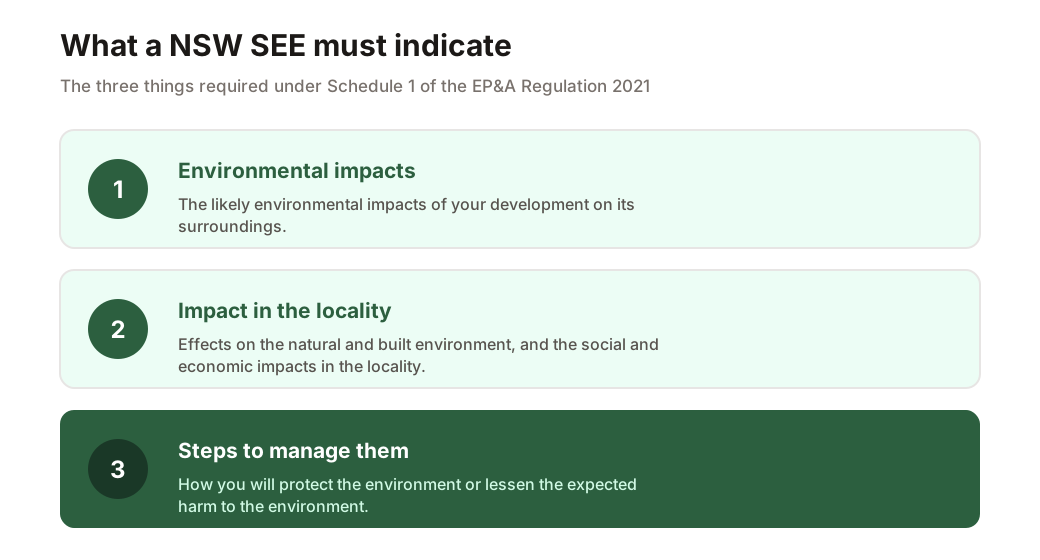
Figure 1: The legal minimum. Schedule 1 of the EP&A Regulation 2021 requires a SEE to indicate three things.
That is the entire statutory test, and it is worth reading twice. The Regulation does not prescribe a template, a page count, or a list of headings. It requires you to identify the impacts, assess them honestly, and explain how you will manage them. A SEE that names a likely impact and then says nothing about how it will be handled has not met the third limb of the test. A two-page description of the building with no impact assessment has not met the first or second. The shortest path to a compliant SEE is to make sure each of the three indicators is clearly answered for your specific site.
What Must Be Included in a SEE, Section by Section
In practice, the three legal indicators expand into a standard set of sections.
A residential SEE that an assessing officer can move through quickly will describe the site and the proposal, work through the planning controls, assess the impacts, and conclude on suitability. This is the same structure used across the Statement of Environmental Effects for almost every local DA in NSW.
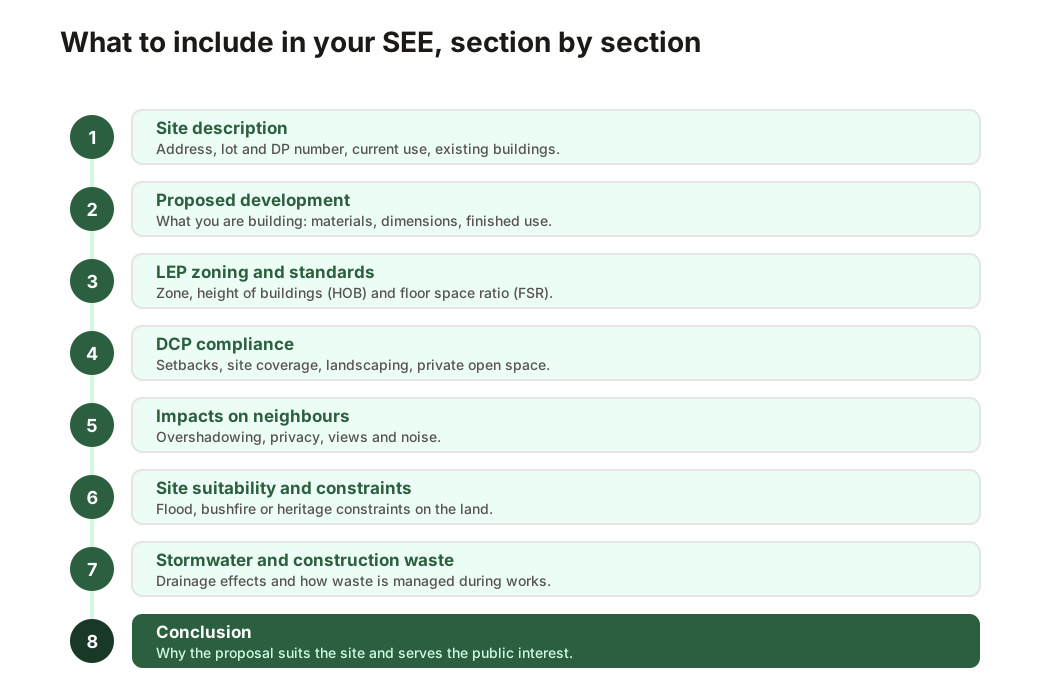
Figure 2: What to include, section by section. The depth of each section scales with the size of your project.
At a minimum, your SEE content in NSW should cover the following. Each item below corresponds to a section assessing officers expect to find:
- Site description — address, lot and DP number, current use, existing buildings
- Proposed development — materials, dimensions, and finished use
- LEP zoning and development standards — height of buildings and floor space ratio
- DCP compliance — setbacks, site coverage, landscaping, private open space
- Impacts on neighbours — overshadowing, privacy, views, noise
- Site suitability and constraints — flood, bushfire, heritage
- Stormwater, drainage and construction waste
- Conclusion on suitability and the public interest
The depth of each section should scale with the project. A single-storey alteration might cover each item in a paragraph. A two-storey dwelling next to neighbours needs far more on overshadowing and privacy, because that is where the genuine impact, and the genuine risk to your approval, sits.
How Section 4.15 Shapes Your SEE Requirements
Spend 5 minutes, not 3 weeks
instantSEE generates a complete, DA-ready Statement of Environmental Effects online. No town planner. No waiting.
Get your SEE report in 5 minutes →Your SEE has to cover those sections because your council is bound to consider a fixed list of matters.
Under section 4.15(1) of the Environmental Planning and Assessment Act 1979, a consent authority must take into account the provisions of any environmental planning instrument and development control plan, the likely impacts of the development on the natural and built environment and the social and economic impacts in the locality, the suitability of the site, any submissions received, and the public interest. Your SEE is your chance to answer each of those matters before the officer has to ask.
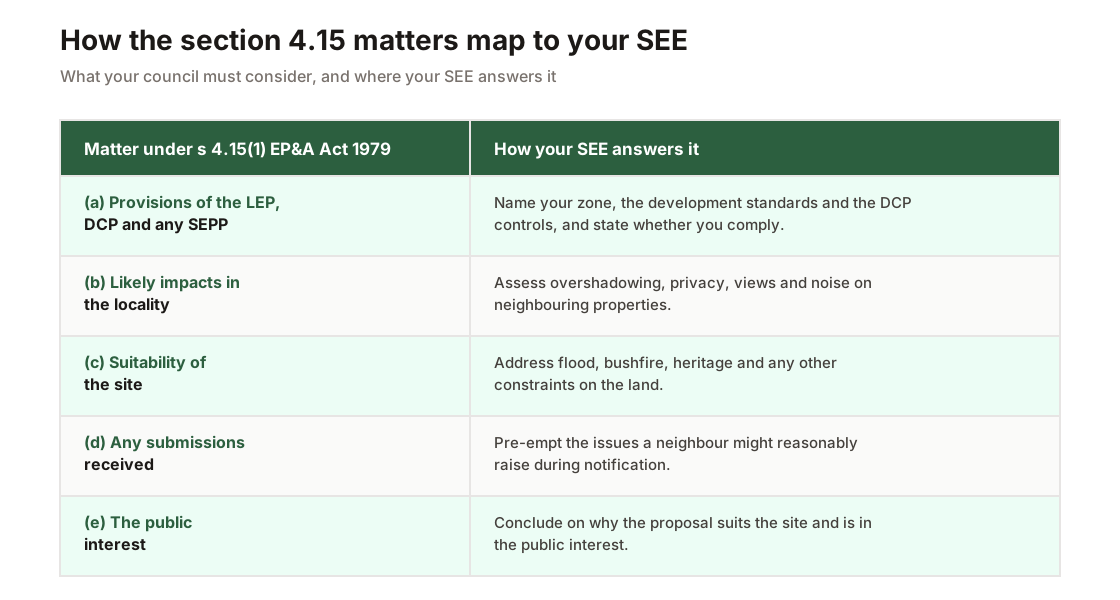
Figure 3: Each matter your council must consider under section 4.15 has a matching section in a well-written SEE.
This is why a strong SEE reads like a direct response to section 4.15 rather than a brochure for the build. When the Act says the council must consider the provisions of the LEP and DCP, your SEE names the zone, the standards, and whether you comply. When it says the council must consider the likely impacts in the locality, your SEE assesses overshadowing, privacy, and noise. When it says suitability of the site, your SEE deals with the constraints. Map your content to the five matters and you have covered both the Regulation's three indicators and the Act's assessment test in one document.
How Much Detail Does Your SEE Need?
The level of detail should match the scale and impact of your project, not a fixed page count.
The Regulation requires the impacts to be indicated and managed; it does not require a forty-page report for a rear deck. A proportionate SEE answers every relevant matter and skips the ones that do not apply. Padding a SEE with irrelevant material does not strengthen it, and it can bury the answers an assessing officer actually needs.
A useful rule is to scale each section to the impact it carries. A single-storey alteration at the rear of a dwelling might run to five pages, because overshadowing and privacy are minor and the planning controls are largely met. A two-storey addition with new upper-floor windows facing a neighbour needs a much fuller treatment of privacy and overshadowing, often with reference to shadow diagrams, because that is where the real impact sits. If you are weighing up how long this will take to prepare, see how long a SEE report takes to write in NSW. The reforms introduced into the EP&A Act from December 2025 reinforce this proportionate, risk-based approach, and a 2026 SEE should also address climate and hazard resilience, such as flood, bushfire, or heat, where the site calls for it. Detail follows impact.
What Happens If Your SEE Leaves Something Out
An incomplete SEE is one of the most common reasons a straightforward DA gets delayed.
If your SEE does not address a matter the council must consider, the assessing officer cannot finish the assessment, so they issue a request for additional information. That pauses your application while you go back and write the missing section, and it can add weeks to a timeline that should have run smoothly.
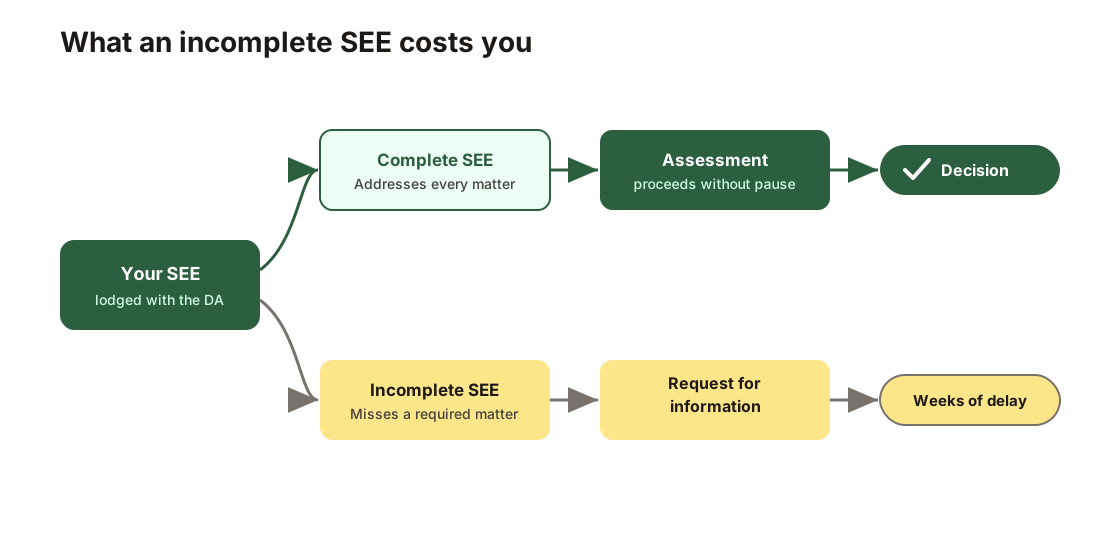
Figure 4: A complete SEE moves straight to assessment. An incomplete SEE triggers a request for information and weeks of delay.
The gaps are predictable. Assessing officers most often push back when a SEE fails to address overshadowing of a neighbour's living areas or private open space, ignores privacy and overlooking from new upper-floor windows, lists a non-compliance with a development standard without explaining why it should be accepted, or describes the building in detail while saying almost nothing about its impacts. A missing SEE is worse than an inadequate one: under Schedule 1 your DA must be accompanied by a SEE to be properly made, so an application lodged without one can be returned as incomplete before assessment even begins. Covering each section the first time is the difference between a DA that progresses and one that waits.
Do Council SEE Requirements Vary?
The legal test is the same statewide, but the controls your SEE must address change council to council.
The legal SEE requirements come from state law and are the same everywhere in NSW, but the planning controls your SEE must address vary from council to council. Every council has its own LEP and DCP, which set the specific standards your proposal is measured against, such as the height limit in your zone, the floor space ratio, the setbacks, and the landscaping and private open space requirements. Two identical houses can need different SEE content if one is in a heritage conservation area or a flood planning area and the other is not.
That is why the safest way to prepare a SEE is to start from your own council's controls and a checklist built for your project type. Our free SEE Checklist for NSW lists every item your SEE should address before you lodge, so you can confirm you have covered the LEP, the DCP, and the impacts a neighbour might reasonably raise. Check your property's planning certificate, also called a 10.7 certificate, for the constraints that apply, name the correct LEP and zone in your SEE, and address the specific DCP controls your council applies. Get those right and your council SEE requirements are met.
Frequently asked questions
What must be included in a Statement of Environmental Effects in NSW?
Is there a legal requirement for what goes in a SEE?
How long does a SEE need to be?
Do different councils require different things in a SEE?
What happens if my SEE is missing a required section?
Ready to get your SEE report?
Skip the writing. Get a DA-ready Statement of Environmental Effects in 5 minutes.
Get your SEE report