Key takeaways
- A 10.7 certificate reports your zone, standards and land constraints
- It replaced the section 149 certificate from 1 March 2018
- A 10.7(2) certificate is required by law for residential land sales
- The comprehensive 10.7(2) and (5) adds extra advisory information
- The fee is capped by regulation at approximately $107 for 2025–26
A 10.7 planning certificate is an official document issued by your local council that sets out how a parcel of land is zoned and what planning controls apply to it. In NSW it is issued under section 10.7 of the Environmental Planning and Assessment Act 1979. If you are buying, selling or developing property, this is the document that tells you the rules attached to the land.
Most people meet a 10.7 planning certificate for the first time when a contract of sale lands in their inbox, or when a council DA checklist asks for one. The certificate looks dense and legal, the numbers in its name are confusing, and older paperwork still calls it a "section 149 certificate". None of that explains what it actually does for you.
This guide explains what a 10.7 certificate reports, the difference between the two versions you can order, when you actually need one, and how to get it without overpaying.
Get a council-ready Statement of Environmental Effects for your DA in 5 minutes — no town planner, no waiting.
Get your SEE report →- What a 10.7 planning certificate tells you about a property
- The difference between a 10.7(2) and a 10.7(2) and (5) certificate
- When a 10.7 certificate is legally required versus when it is optional
- How to get one, and what it costs in NSW
- How the certificate connects to your DA and Statement of Environmental Effects
What a 10.7 Planning Certificate Tells You About Your Land
A 10.7 certificate pulls together the zone, the planning instruments, the available approval pathways, the development standards and any hazards for a single property into one legally prescribed document — it is the starting point for any buy, sell or build decision.
A 10.7 planning certificate tells you the planning rules that attach to a specific property: its zoning, the instruments that control it, whether faster approval pathways are available, the development standards that apply, and any hazards affecting the site. It is the single document that pulls all of this together in one place.
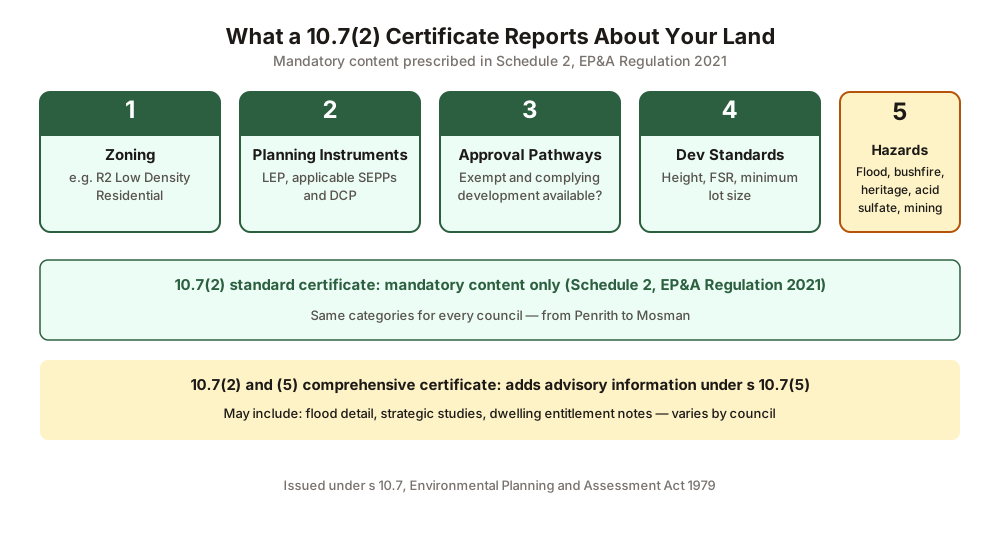
Figure 1: The five things a standard 10.7(2) certificate reports about your land.
The content is not left to each council to invent. Under the Environmental Planning and Assessment Regulation 2021, the mandatory matters a certificate must contain are prescribed in Schedule 2. That is why a certificate from Penrith and one from Mosman cover the same categories. It will state the zone, for example R2 Low Density Residential, name the Local Environmental Plan and any State Environmental Planning Policies and Development Control Plan that apply, and say whether the land can be developed as exempt or complying development.
The certificate also flags constraints that can stop or shape a build: whether the land is flood-related, bushfire prone, in a heritage conservation area, affected by contamination, on acid sulfate soils, or in a mine subsidence district. If you want to confirm your zone before ordering one, you can check it first with a council zone checker for NSW.
The Difference Between a 10.7(2) and a 10.7(2) and (5) Certificate
The two versions differ in what is required versus what is optional — the standard 10.7(2) carries the prescribed matters, while the comprehensive 10.7(2) and (5) adds whatever further advisory information the council holds and is willing to share.
The difference comes down to mandatory versus optional content. A 10.7(2) certificate carries only the matters the regulation requires. A 10.7(2) and (5) certificate adds extra advisory information the council chooses to include under section 10.7(5) of the EP&A Act.
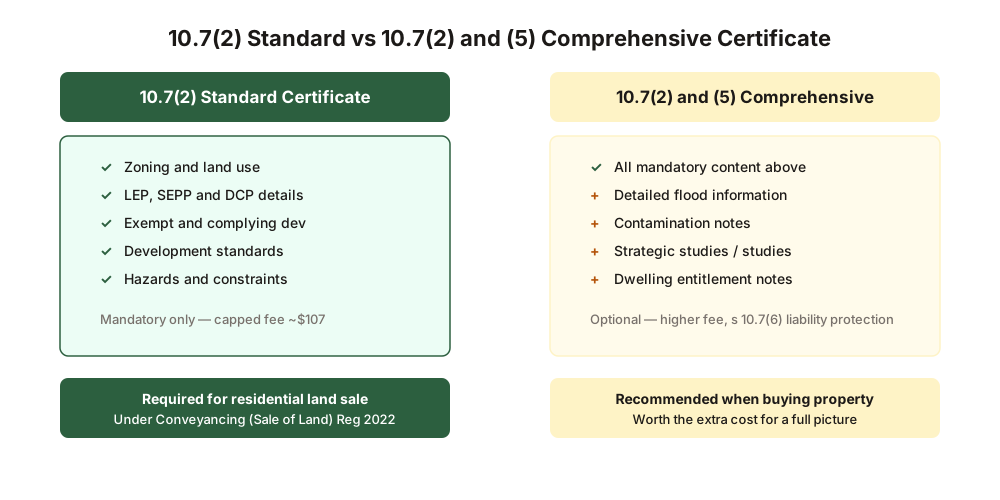
Figure 2: A standard 10.7(2) certificate versus the comprehensive 10.7(2) and (5) version.
A plain 10.7(2) is sometimes called the "standard" or "basic" certificate. It contains the prescribed matters in Schedule 2 of the regulation and nothing more. This is the version that is legally required when you sell residential land, so it is the one most people order.
A 10.7(2) and (5) certificate, often called the "comprehensive" certificate, adds whatever further advice the council holds and is willing to share, such as more detailed flood or contamination information, strategic studies, or notes on dwelling entitlement. Section 10.7(6) of the EP&A Act gives councils some protection from liability for this extra good-faith advice, which is one reason the detail is offered separately. If you are buying a property and want the fullest picture before you commit, the comprehensive certificate is worth the small extra cost.
When Do You Need a 10.7 Planning Certificate?
Spend 5 minutes, not 3 weeks
instantSEE generates a complete, DA-ready Statement of Environmental Effects online. No town planner. No waiting.
Get your SEE report in 5 minutes →You need a 10.7 certificate in three situations — when you sell land (legally required), when you lodge a DA (strongly recommended), or when you want to confirm what you can build before committing to a design (optional but valuable).
You need a 10.7 planning certificate in three situations: when you sell land, where it is legally required; when you lodge a Development Application, where it is strongly recommended; and when you simply want to confirm what you can build, where it is optional but useful.
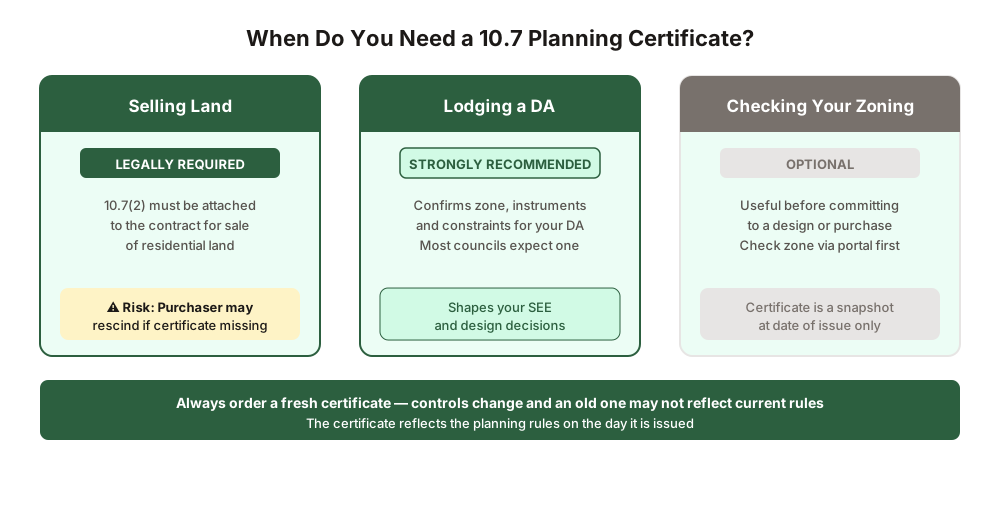
Figure 3: The three reasons to get a 10.7 certificate, and the risk of skipping it on a sale.
Selling is the one case where it is not optional. A current 10.7(2) certificate is a prescribed document that must be attached to the contract for the sale of residential land under the Conveyancing (Sale of Land) Regulation 2022. Leave it off and the purchaser may have a right to rescind the contract, which can collapse a sale at the worst possible moment.
For a Development Application, the EP&A Act does not name a 10.7 certificate as a mandatory attachment in every case, but most councils expect a current one, and the information on it shapes how your application is assessed. It confirms the zoning and constraints your proposal has to work with. If you are still working out whether your project even triggers a DA, our guide on whether you need development consent in NSW walks through the pathways.
- Apply via the NSW Planning Portal or council website
- Pay the prescribed fee (capped at approximately $107 for 2025–26)
- Receive the certificate (usually within a few business days)
- Read the zoning, applicable instruments, standards and constraints
- Order a fresh certificate if your sale or DA is delayed
How to Get a 10.7 Certificate in NSW and What It Costs
You apply to your local council, either through the NSW Planning Portal or the council's own website, pay the capped fee, and the council issues the certificate — usually within a few business days.
You get a 10.7 certificate by applying to the local council, either through the NSW Planning Portal or the council's own website, paying the fee, and waiting for the council to issue it. The whole process is usually quick, often turned around within a few business days.
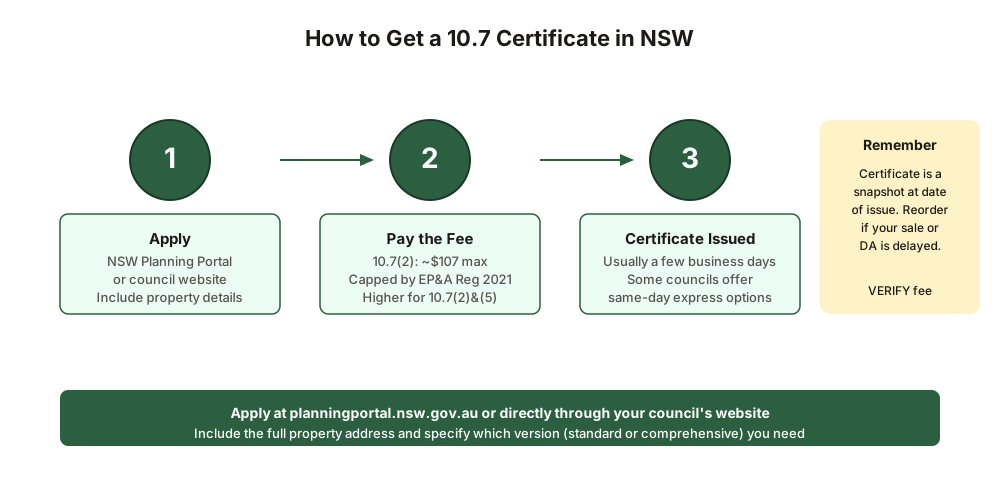
Figure 4: The three steps to getting a 10.7 planning certificate in NSW.
The fee is fixed and capped. The maximum a council can charge for a 10.7(2) certificate is set by the Environmental Planning and Assessment Regulation 2021, and the published maximum sits at around $107 for 2025 to 2026. A council can charge less but not more, and a 10.7(2) and (5) certificate carries a higher fee because of the extra information.. The prescribed maximum fee for a section 10.7(2) certificate is set under the Environmental Planning and Assessment Regulation 2021 and is updated each year, typically in July — check the current figure on the legislation site or your council's fees and charges schedule before quoting a dollar amount.
A practical tip on timing: a certificate is a snapshot of the planning rules on the day it is issued. Controls change, so for a sale or a DA you want a recent certificate, not one pulled from a file two years ago. If your matter drags on, you may need to order a fresh one.
How a 10.7 Certificate Connects to Your DA and SEE
The certificate tells you what the rules are — your Statement of Environmental Effects is the document that then explains how your specific proposal responds to all of them, making the two documents the natural pair for any DA.
A 10.7 certificate is the starting point for a DA, not the finish line. It tells you the zone, the standards and the constraints. Your Statement of Environmental Effects is the document that then explains how your specific proposal responds to all of it.
Think of the certificate as the brief and the SEE as the argument. The certificate states that your land is, say, R2 Low Density Residential with a height limit and a flood overlay. The SEE has to show the council that your design respects the zone objectives, sits within or sensibly varies the development standards, and manages the flood, privacy and streetscape impacts. A planner reads the certificate first, then writes the SEE around it.
That is why the two documents go together in a DA. The certificate proves what the rules are; the SEE proves your project works within them. Get the certificate early, read it carefully, and let it shape the design before you spend money drawing plans that the controls will not allow.
Frequently asked questions
What is a 10.7 planning certificate in NSW?
What is the difference between a section 149 and a section 10.7 certificate?
Do I need a 10.7 certificate to sell my property in NSW?
How much does a 10.7 planning certificate cost in NSW?
How long does it take to get a 10.7 certificate?
Ready to get your SEE report?
Skip the writing. Get a DA-ready Statement of Environmental Effects in 5 minutes.
Get your SEE report