Key takeaways
- An LEP is your council's legally binding planning rulebook
- It sets your zone, land use table and development standards
- SEPPs sit above LEPs; DCPs are guidelines below them
- Clause 4.6 varies a development standard but not a prohibition
- An LEP is made and changed through a formal public process
A Local Environmental Plan (LEP) is the main legal planning document for a council area in NSW. It sets the zoning of every property and the development standards that apply, such as how tall you can build and how much floor space you can have. Made under the Environmental Planning and Assessment Act 1979, your LEP decides what you can and cannot build on your land.
Most people only meet their LEP when a project hits a wall, when a council officer says a design exceeds the height limit, or that a use is not permitted in the zone. By then the plans are drawn and the money is spent. The LEP was the answer all along, and it was public the whole time.
This guide explains what an LEP is, what it controls, how it sits alongside SEPPs and DCPs, how it shapes your Development Application, and how an LEP is made and changed.
Get a council-ready Statement of Environmental Effects for your DA in 5 minutes — no town planner, no waiting.
Get your SEE report →- What a Local Environmental Plan is and why it has the force of law
- The five things your LEP controls on your land
- How an LEP sits in the planning hierarchy above a DCP and below a SEPP
- How your LEP shapes a DA and when clause 4.6 applies
- How an LEP is made and what that means for you
What Is an LEP in NSW?
An LEP is the principal statutory planning instrument for a local government area in NSW — statutory meaning it has the force of law, so both you and the council are bound by what it says.
An LEP is the principal statutory planning instrument for a local government area. "Statutory" is the key word: an LEP has the force of law, so its rules are binding on you and on the council. Under the Environmental Planning and Assessment Act 1979, an LEP is made through Part 3, Division 3.4, which is why every council area has one.
Almost every modern LEP is built from a single template, the Standard Instrument (Local Environmental Plans) Order 2006. Since 1 July 2009, new LEPs and amendments have had to use this standard format. That template gives every council the same set of land use zones, grouped into categories such as residential, business, industrial and rural, and the same clause numbering. It is the reason "R2" or "clause 4.6" means the same thing whether your property is in Penrith or Mosman.
That standardisation helps you. Once you understand the structure of one LEP, you can read any of them. The zone tells you the broad purpose of the land, the land use table tells you what is allowed, and the development standards tell you the limits. Everything else in the plan supports those three pieces.
What an LEP Controls on Your Land
Your LEP controls five things on your land — zoning, the land use table, development standards, the maps, and any local provisions — and together these decide whether a project is possible before you think about design.
Your LEP controls five things on your land: the zoning, the land use table, the development standards, the maps, and any local provisions. Together these decide whether a project is even possible before you think about design.
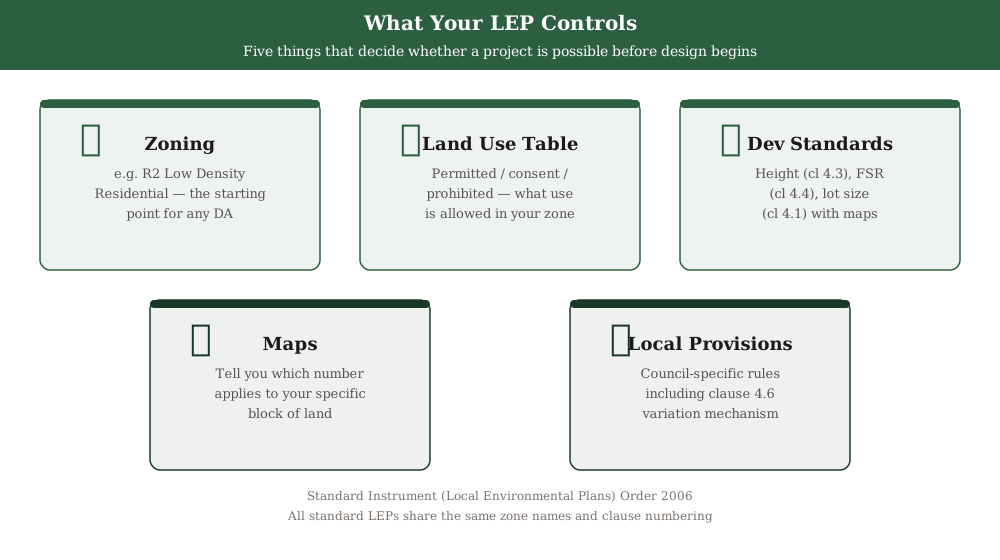
Figure 1: The five things your LEP controls on your land.
The zoning is the starting point, for example R2 Low Density Residential. The land use table for that zone then sorts every use into three buckets: permitted without consent, permitted with consent, or prohibited. If the use you want is prohibited in your zone, no design will save it. The development standards set the numbers: the maximum height of buildings (clause 4.3), the floor space ratio (clause 4.4) and the minimum lot size (clause 4.1), each backed by its own map.
The maps matter as much as the words, because they tell you which number applies to your specific block. To find your zone and standards quickly, you can check your property with a council zone checker for NSW, then read the matching land use table in your LEP. For a worked example of one zone, our guide to the R2 Low Density Residential zone shows how the table and standards play out in practice.
LEP vs SEPP vs DCP: The Planning Hierarchy
Spend 5 minutes, not 3 weeks
instantSEE generates a complete, DA-ready Statement of Environmental Effects online. No town planner. No waiting.
Get your SEE report in 5 minutes →NSW planning runs in three layers — SEPPs at the top, LEPs in the middle, DCPs at the bottom — and they do not carry equal weight: a SEPP generally prevails over an LEP, and an LEP prevails over a DCP.
Your project is governed by three layers of planning rules, and they do not carry equal weight. A SEPP sits at the top, an LEP in the middle, and a DCP at the bottom. Knowing which one wins an argument saves a lot of wasted effort.
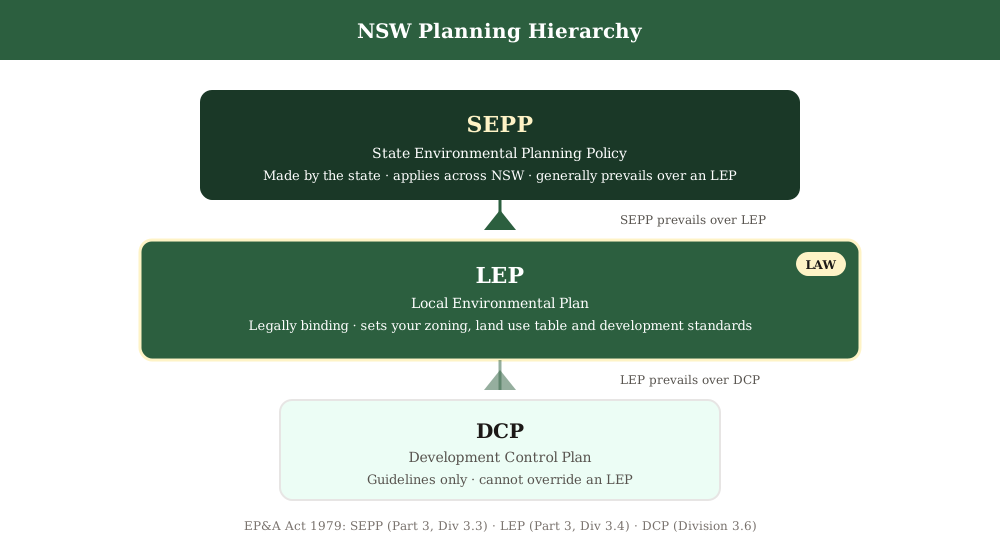
Figure 2: How a SEPP, an LEP and a DCP rank in the NSW planning hierarchy.
A State Environmental Planning Policy (SEPP) is made by the state and applies across NSW. Where a SEPP and an LEP conflict, the SEPP generally prevails, which is how state housing reforms can override a local height rule. An LEP is the local layer, legally binding, and it sets your zoning and the key development standards for your area.
A Development Control Plan (DCP) is different in kind. DCPs are made under Division 3.6 of the EP&A Act, and they are guidelines, not law. A consent authority must take a DCP into account when it assesses a DA, under section 4.15 of the Act, but a DCP cannot override an LEP or a SEPP and cannot make a prohibited use permissible. Our explainer on what a DCP is and whether you must follow it covers how councils apply that flexibility in practice.
- Find your council's current LEP on legislation.nsw.gov.au
- Check your zone and the land use table via the NSW Planning Portal
- Confirm the maximum height, FSR and minimum lot size on the relevant maps
- Check whether any SEPP overrides the LEP controls for your proposal
- Identify whether your proposed use is permitted, needs consent, or is prohibited
How Your LEP Affects Your DA
Your LEP decides whether you need a DA at all and sets the rules your DA has to satisfy — a proposal that ignores the zoning or the standards heads for a refusal or a request for more information before assessment even starts.
Your LEP decides whether you need a DA at all, and then sets the rules your DA has to satisfy. The council assesses your application against the LEP first, so a proposal that ignores the zoning or the standards is heading for a refusal or a request for more information.
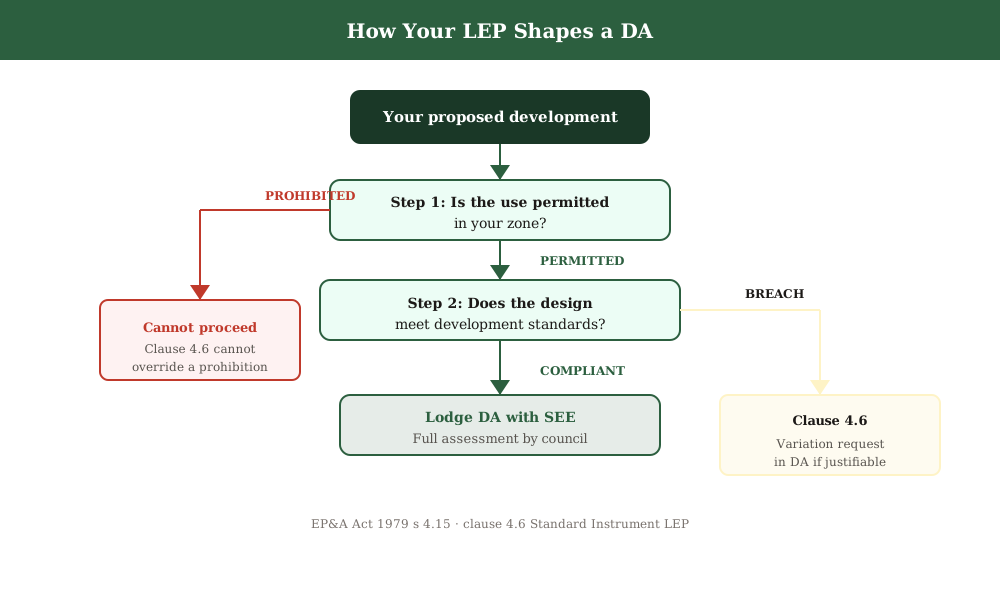
Figure 3: How your LEP shapes a DA, including the clause 4.6 variation path.
The logic runs in two steps. First, is the use permitted in your zone? If it is prohibited, you cannot proceed, and clause 4.6 cannot help you, because it only varies development standards, not prohibitions. Second, does the proposal meet the standards? If it does, you lodge a DA with a Statement of Environmental Effects that shows how your design responds to the zone objectives and the controls. If it breaches a standard by a modest amount, clause 4.6 lets you request a variation inside the DA, provided you can justify it on environmental planning grounds.
This is exactly why the SEE leans so heavily on your LEP. The SEE has to name your zone, address the relevant standards, and explain any variation. When you are ready to lodge, our step-by-step guide on how to lodge a DA in NSW walks through the process around it.
How an LEP Is Made and Changed
An LEP is made and changed through a formal public process — a planning proposal, a Gateway determination, public exhibition and then the Minister's approval — so a change can take months and your submission becomes part of the record.
An LEP is made through a set process, and the same process is used to change one, for example to rezone land or lift a height limit. It is not a quick administrative tweak; it runs through public scrutiny before it becomes law.
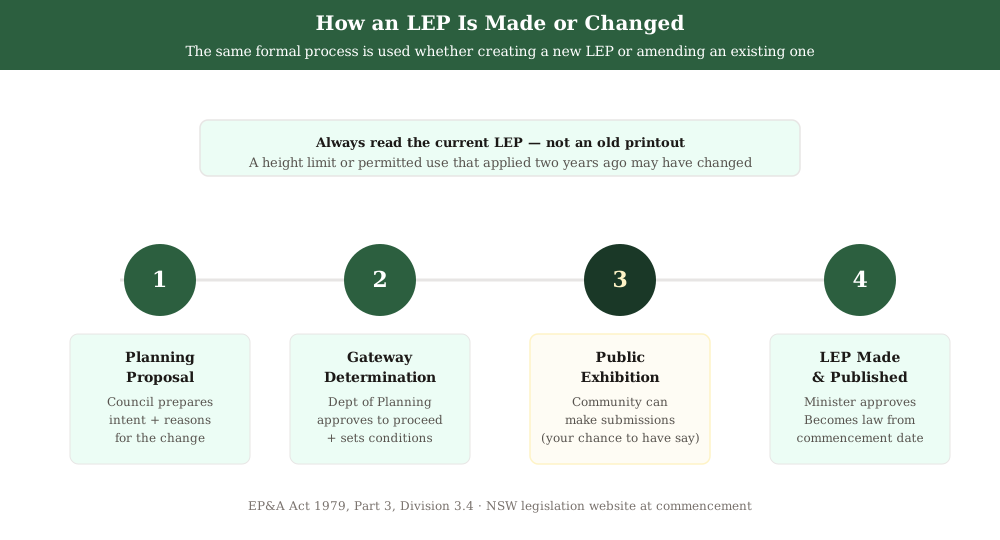
Figure 4: The four main steps in making or changing an LEP.
It starts with a planning proposal, usually prepared by the council, which explains the intended change and the reasons for it. The proposal goes to the Department of Planning for a Gateway determination, which decides whether it can proceed and sets conditions, including how long it must be exhibited. The proposal is then placed on public exhibition so the community can make submissions, which the council considers. Finally, the LEP is made by the Minister for Planning or a delegate and published on the NSW legislation website, at which point it becomes law and applies to DAs from its commencement date.
For most homeowners this matters in two ways. First, you can have a say: when an LEP affecting your area is exhibited, your submission is part of the formal record. Second, the rules can change, so a height limit or a permitted use that applied two years ago may have moved. Always read the current LEP before you design, not an old printout.
Frequently asked questions
What is an LEP in NSW?
What is the difference between an LEP and a DCP?
How do I find my LEP and my zoning?
Can an LEP development standard be varied?
Does my LEP decide whether I need a DA?
Ready to get your SEE report?
Skip the writing. Get a DA-ready Statement of Environmental Effects in 5 minutes.
Get your SEE report