Key takeaways
- SEPPs are state-wide rules that sit above your council's LEP
- Where a SEPP and LEP conflict, the SEPP prevails under s 3.28
- The Codes SEPP can make your project exempt or complying development
- BASIX now lives inside the Sustainable Buildings SEPP 2022
- Missing a SEPP in your SEE is a leading cause of DA queries
A State Environmental Planning Policy (SEPP) is a state-wide planning rule made under the Environmental Planning and Assessment Act 1979 that applies across NSW and sits above your council's Local Environmental Plan. SEPPs affect your DA by setting what you can build, which approval pathway applies, and what your Statement of Environmental Effects has to address. Where a SEPP and your council's LEP conflict, the SEPP prevails.
The catch for most homeowners is that SEPPs are easy to miss. You can read your council's LEP and DCP cover to cover and still overlook a state policy that quietly changes what your project needs, because it does not live on your council's website. When that happens, your council issues a request for more information, and your DA stalls while you work out which SEPP applied and what it required.
Get a council-ready Statement of Environmental Effects for your DA in 5 minutes — no town planner, no waiting.
Get your SEE report →- What a SEPP is and how it differs from a Local Environmental Plan
- How SEPPs sit in the NSW planning hierarchy above your LEP and DCP
- The main SEPPs that affect a residential DA in NSW
- How a SEPP can change your approval pathway from DA to exempt or complying
- Why your SEE must name and address every applicable SEPP
What Is a SEPP in NSW?
A SEPP is one of three types of environmental planning instrument in NSW, and unlike a LEP it applies across the whole state — not just one council area — because the matters it covers are too important to leave to 128 councils to decide differently.
A SEPP is one of the three types of environmental planning instrument in NSW, alongside Local Environmental Plans and the now largely historical regional plans. The difference is the level of government. A LEP is made by your council and applies to one local government area. A SEPP is made by the State, on the Minister's recommendation, under the EP&A Act 1979, and applies across the whole of NSW or to defined parts of it.
SEPPs exist to handle planning matters the State wants treated consistently everywhere, rather than left to each of the 128 councils to decide differently. Housing diversity, building sustainability, hazards such as flood and bushfire, infrastructure, and the fast-track approval codes for minor work are all dealt with through SEPPs. So when your project touches one of those themes, a state policy applies on top of your local rules. That is why a SEPP is genuinely state environmental planning policy: it is the planning rulebook that does not change when you cross a council boundary.
How SEPPs Fit With Your LEP and DCP
Planning controls in NSW stack in a fixed order — Act, then SEPPs, then LEP, then DCP — and when a SEPP and a LEP say different things, the SEPP wins under section 3.28 of the EP&A Act.
Planning controls in NSW stack in a clear order, and knowing it tells you which rule wins when two of them say different things. At the top is the EP&A Act itself. Below it sit SEPPs, then your council's LEP, then your council's Development Control Plan.
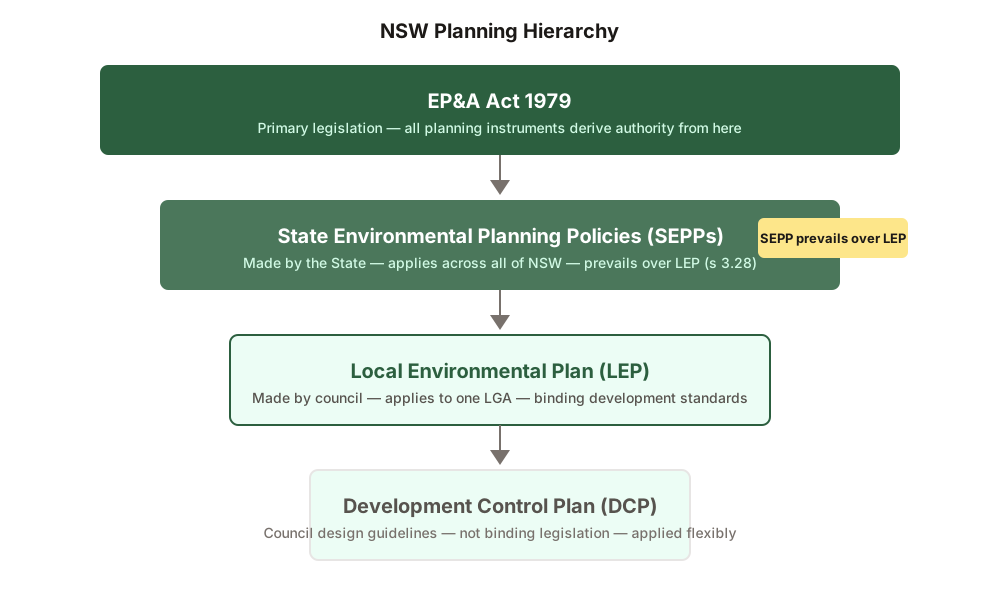
Figure 1: How planning controls stack in NSW. A SEPP sits above your council's LEP, and prevails over it where the two are inconsistent.
The order matters because of what happens in a conflict. Under section 3.28 of the EP&A Act, where a SEPP and a LEP are inconsistent, the SEPP prevails to the extent of the inconsistency. Your council cannot use its LEP to override a state policy. The DCP sits at the bottom: it is not an environmental planning instrument, so it cannot override a SEPP or a LEP, but your council must still consider it when assessing your DA. In practice you read the controls from the top down: check the SEPPs that apply, then the LEP, then the DCP, and where the SEPP says something different from the LEP, the SEPP is the one you follow.
The Main SEPPs That Affect a Residential DA
Spend 5 minutes, not 3 weeks
instantSEE generates a complete, DA-ready Statement of Environmental Effects online. No town planner. No waiting.
Get your SEE report in 5 minutes →NSW consolidated more than 40 older SEPPs into a smaller thematic set between 2021 and 2022, so the list is shorter than it used to be — but a handful still do most of the work for a typical residential DA.
NSW consolidated more than 40 older SEPPs into a smaller set of thematic policies between late 2021 and 2022, so the list is shorter than it used to be. For a typical residential DA, a handful do most of the work.
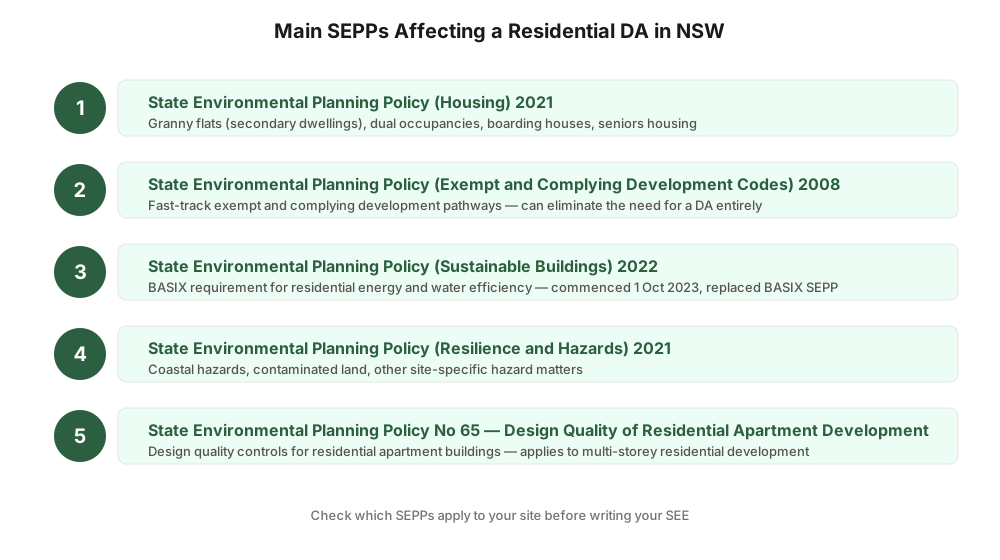
Figure 2: The SEPPs most likely to touch a residential DA. Check which ones apply to your site before you write your SEE.
The State Environmental Planning Policy (Housing) 2021 covers secondary dwellings (granny flats), dual occupancies, boarding houses, and seniors housing. The Codes SEPP, the State Environmental Planning Policy (Exempt and Complying Development Codes) 2008, sets the fast-track exempt and complying development pathways for minor and standard work. The State Environmental Planning Policy (Sustainable Buildings) 2022, which commenced on 1 October 2023 and replaced the former BASIX SEPP, is where the BASIX requirement for residential energy and water efficiency now sits. The State Environmental Planning Policy (Resilience and Hazards) 2021 deals with matters such as coastal hazards and contaminated land. And State Environmental Planning Policy No 65 applies design quality controls to residential apartment development. Which ones apply depends entirely on what you are building and where.
How a SEPP Changes What You Can Build
A SEPP affects your project in two practical ways — it can change which approval pathway you use, and it can add requirements you must meet — with the pathway effect being the more significant one for many homeowners.
A SEPP affects your project in two practical ways: it can change which approval pathway you use, and it can add requirements you have to meet. The pathway effect is the bigger one for many homeowners.
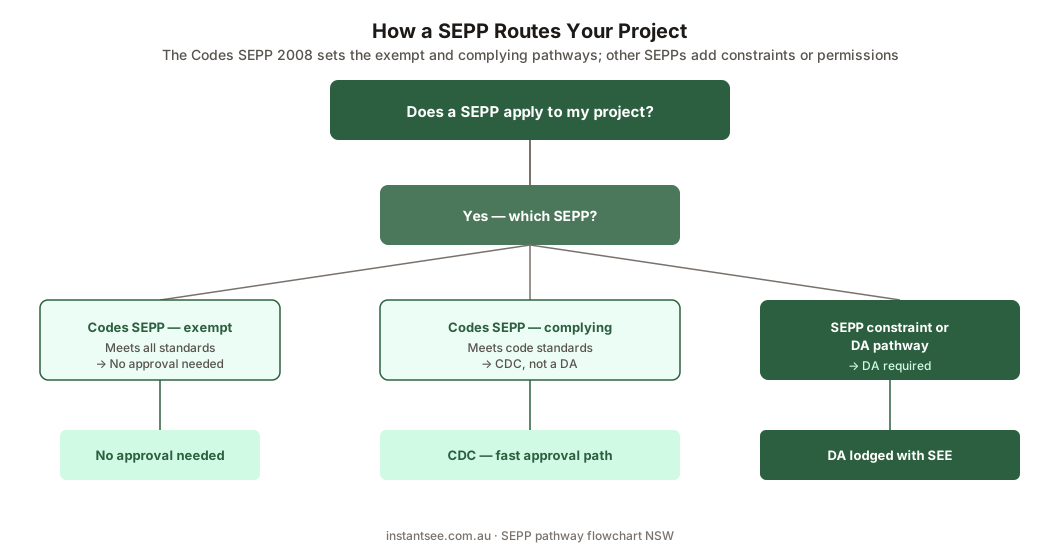
Figure 3: A SEPP can decide your approval pathway. The Codes SEPP can make minor work exempt or route standard work through a fast CDC instead of a full DA.
The Codes SEPP can take a project out of the DA process entirely. If your work meets the exempt development standards, you need no approval at all. If it meets the complying development standards, you can use a Complying Development Certificate (CDC), a faster pathway that does not need a DA or a SEE. Only when your project falls outside those codes do you lodge a Development Application with a SEE. The Housing SEPP works the other way for some projects, making a secondary dwelling permissible where the LEP alone might not, subject to its standards. When you do need a DA, the relevant SEPP also sets requirements your proposal must satisfy, such as the BASIX targets under the Sustainable Buildings SEPP, and those become matters your SEE has to address.
- Check whether the Codes SEPP makes your work exempt — no approval needed
- Check whether complying development applies — CDC pathway, no DA or SEE
- If a DA is required, identify every SEPP that applies to your site
- Address each applicable SEPP's requirements in your SEE
- Confirm BASIX obligations under the Sustainable Buildings SEPP 2022
Why Your SEE Has to Address the Relevant SEPPs
Because SEPPs are environmental planning instruments, section 4.15 of the EP&A Act requires your council to consider them when assessing your DA — which means your SEE must name them and show compliance, or the DA gets queried.
When you lodge a DA, your council assesses it under section 4.15 of the EP&A Act, which requires it to consider the provisions of any environmental planning instrument that applies. SEPPs are environmental planning instruments, so any SEPP relevant to your site is a matter the officer must weigh. If your Statement of Environmental Effects does not show how your proposal meets the applicable SEPP, the officer cannot complete that part of the assessment.
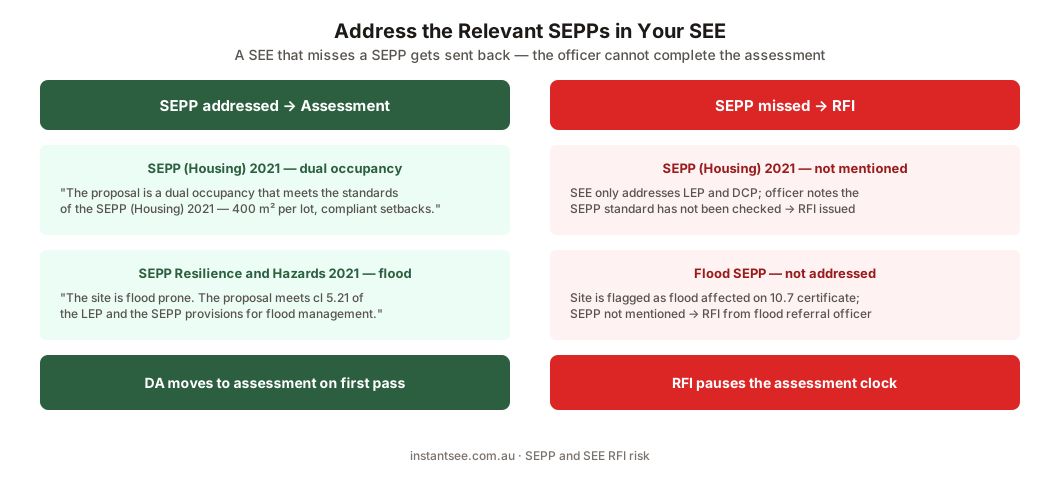
Figure 4: A SEE that addresses every applicable SEPP goes to assessment. One that misses a SEPP that applies to the site gets sent back.
In practice that means naming the SEPPs that apply and stating your compliance with each, the same way you do for the LEP and DCP. A free DA Lodgement Checklist for NSW helps you confirm you have not overlooked a state policy your site triggers. The most common SEPP gaps in a self-prepared SEE are a missing BASIX certificate under the Sustainable Buildings SEPP, and no mention of the Housing SEPP standards for a granny flat. Address the SEPPs that apply up front and you remove one of the most common reasons a DA gets queried.
Frequently asked questions
What does SEPP stand for in NSW planning?
Does a SEPP override a council LEP?
Which SEPP applies to a granny flat in NSW?
Is BASIX still required, or was it replaced by a SEPP?
How do I know which SEPPs apply to my property?
Ready to get your SEE report?
Skip the writing. Get a DA-ready Statement of Environmental Effects in 5 minutes.
Get your SEE report