Key takeaways
- A DCP sets detailed design rules beneath your council's LEP
- DCPs are not legislation — they are non-statutory guidelines
- Under s 4.15(3A) EP&A Act, DCP controls must be applied flexibly
- A justified departure requires an alternative that meets the objective
- Your SEE is where you demonstrate and justify DCP compliance
A Development Control Plan (DCP) is a council document that sets the detailed design rules for development in its area, covering things like setbacks, parking, landscaping, privacy and building form. Every council in NSW has one. You must address your council's DCP in a Development Application, but under the Environmental Planning and Assessment Act 1979 a council applies DCP controls flexibly, not as fixed limits.
That last point is where the confusion sits. A DCP can run to hundreds of pages, the controls read like hard rules, and it is rarely obvious which parts apply to your project. Miss a control your council cares about and your DA can stall with a request for more information. Treat every number as immovable and you can over-design something that never needed it.
Get a council-ready Statement of Environmental Effects for your DA in 5 minutes — no town planner, no waiting.
Get your SEE report →- What a DCP is and how it differs from your council's LEP
- What a DCP actually controls in a residential DA
- Whether you legally have to comply with every DCP control
- How a DCP shapes the content of your Statement of Environmental Effects
- How to find and read only the parts of your council's DCP that apply
What Is a DCP in NSW?
A DCP is the detailed design rulebook that sits beneath your council's LEP — it fills in setbacks, parking, landscaping and building form with the practical detail the LEP's high-level controls leave out.
A DCP is the detailed design rulebook that sits beneath your council's Local Environmental Plan. Under sections 3.42 to 3.45 of the EP&A Act, a council prepares a DCP to give practical guidance on meeting the aims of the planning instruments that apply to your land and achieving the objectives of your zone. Where the LEP sets the high-level controls such as zoning and the maximum height of buildings, the DCP fills in the design detail.
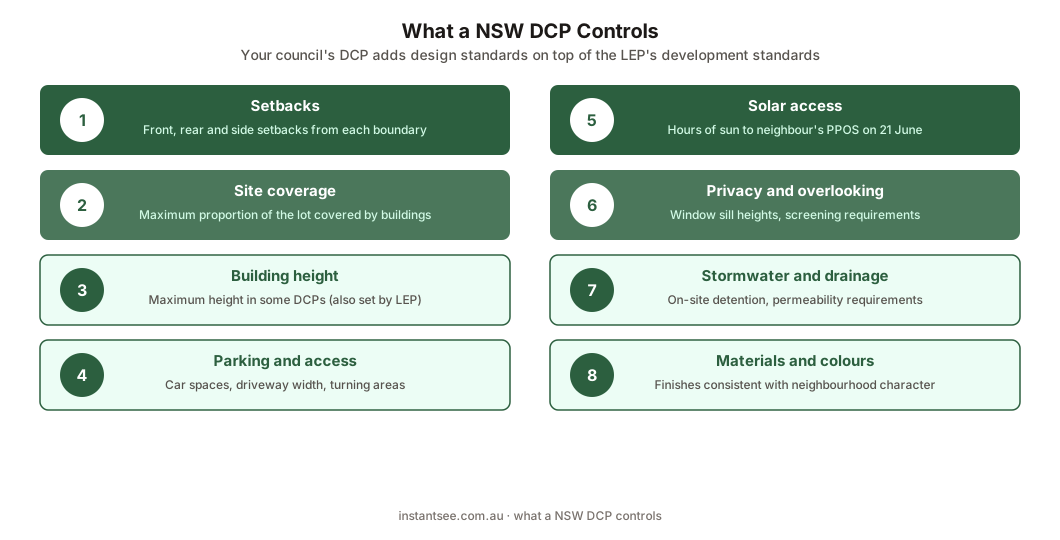
Figure 1: What a typical residential DCP controls. Each relevant control is addressed in your SEE.
For a standard residential project, the DCP is the document that tells you how far the building must sit from each boundary, how much of the block you can cover, how much landscaped area you must keep, how many car spaces you need, and how your design must protect a neighbour's privacy and sunlight. It also sets expectations for materials, fencing and how the building reads from the street. These controls are written to deliver the outcomes the LEP and the zone are aiming for, which matters when you get to the question of how strictly they apply.
DCP vs LEP: What's the Difference?
The critical distinction is legal force — an LEP is subordinate legislation with binding development standards, while a DCP is a non-statutory guideline you address and justify rather than comply with to the letter.
This is the distinction that matters most. Your LEP is an environmental planning instrument, a form of subordinate legislation made under the EP&A Act. Its development standards, such as the height limit and the floor space ratio, are legally binding. If your proposal exceeds them, it cannot be approved unless you use a formal variation mechanism like clause 4.6. A DCP is not an environmental planning instrument and is not legislation. It is a guideline.
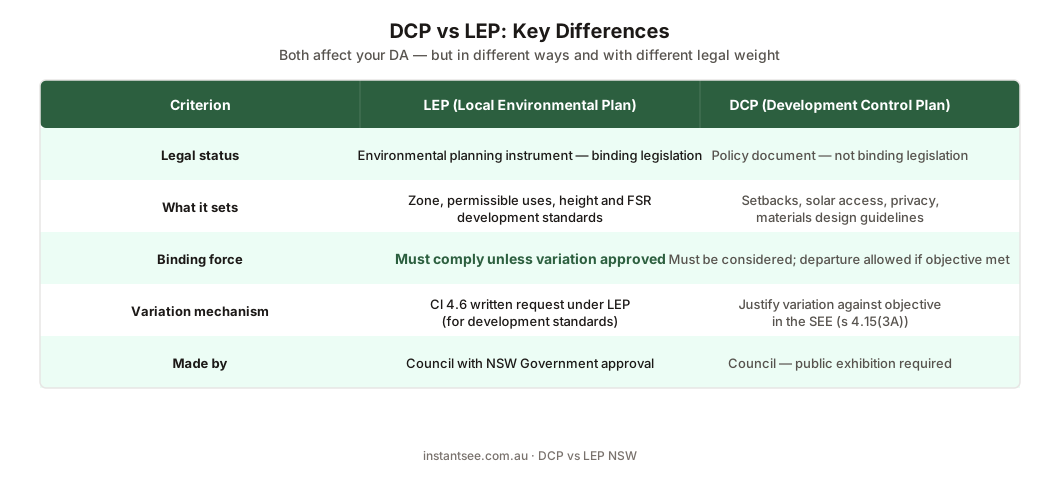
Figure 2: DCP vs LEP. The LEP is statutory and binding; the DCP is a guideline you address and justify.
Under section 4.15(1)(a)(iii) of the EP&A Act, a council must take any relevant DCP into consideration when assessing your DA, so it is not something you can ignore. But it does not bind the council the way the LEP does. The practical rule for your DA is straightforward: treat LEP development standards as limits you must meet or formally vary, and DCP controls as targets you should meet or justify departing from. If you want the full picture of what state law, your LEP and your council all expect, the DA requirements for NSW set out how those layers stack up.
Do You Have to Follow a DCP?
Spend 5 minutes, not 3 weeks
instantSEE generates a complete, DA-ready Statement of Environmental Effects online. No town planner. No waiting.
Get your SEE report in 5 minutes →Under section 4.15(3A) of the EP&A Act, DCP controls cannot be applied rigidly — if your proposal meets a standard the council cannot impose a more onerous one, and if it departs the council must accept a reasonable alternative that achieves the objective.
Not to the letter. Under section 4.15(3A) of the EP&A Act, DCP provisions cannot be applied rigidly. If your proposal meets a DCP standard, the council cannot require a more onerous one for that aspect of the development. If it does not meet the standard, the council must be flexible and allow a reasonable alternative solution that achieves the objective behind the control.
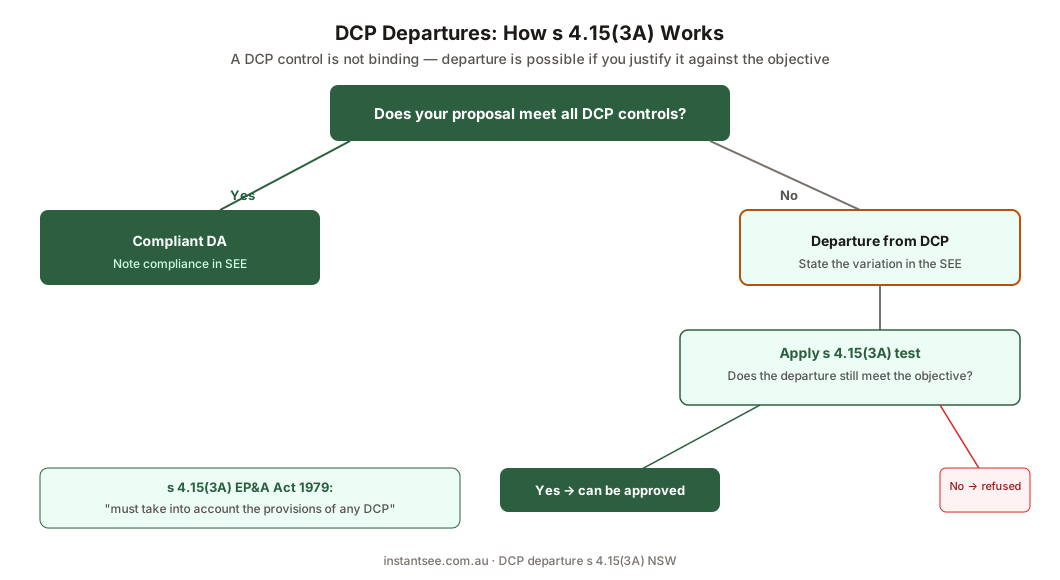
Figure 3: How a DCP control is applied. Meet it and you are clear; depart from it and you must show the objective is still met.
Take a privacy control that asks for a set window offset. If your design cannot achieve that exact offset, an alternative such as obscured glazing or a privacy screen that delivers the same privacy outcome can satisfy the control's objective. The catch is that flexibility is not a free pass. You have to show that the alternative meets the objective, and you make that case in your Statement of Environmental Effects. A departure with no justification is the version that draws a request for information or a refusal. State planning policies can also override or modify a DCP control in some cases, which is covered in the guide to how a SEPP affects your DA.
- Identify every DCP chapter that applies to your zone and development type
- Record compliance against each relevant control in your SEE
- For any departure, identify the objective behind the control
- Propose an alternative solution that achieves that objective
- Explain the alternative in your SEE — don't leave a gap without justification
How a DCP Shapes Your Statement of Environmental Effects
The DCP compliance assessment is the section of the SEE council planners read most closely — it is where they judge whether your proposal meets or justifiably departs from each design control.
Your Statement of Environmental Effects is where DCP compliance is demonstrated. A well-built SEE works through the relevant DCP controls one at a time, states whether the design complies, and where it does not, explains the alternative solution and why it still achieves the control's objective. This is the part of the SEE that council planners read most closely, because it is where they decide whether your departures are reasonable.
A common mistake is to confuse the SEE with a DCP compliance table. The compliance table is a tick-box summary of controls met or not met; the SEE is the planning argument that supports it. The difference between a SEE and a DCP statement is worth understanding before you write either. For a single-dwelling DA you might be addressing ten to fifteen DCP controls; for a dual occupancy, more. Each one needs a clear position, and any departure needs a reason tied to the objective, not just a statement that you could not comply.
How to Find and Read Your Council's DCP
You do not need to read the whole DCP — it is structured by zone and development type, so your goal is to isolate the chapters that apply to your project and record compliance against each relevant control in your SEE.
You do not need to read the whole document. A DCP is structured by topic and often by zone or development type, so most of it will not apply to your project. The goal is to find the parts that do.
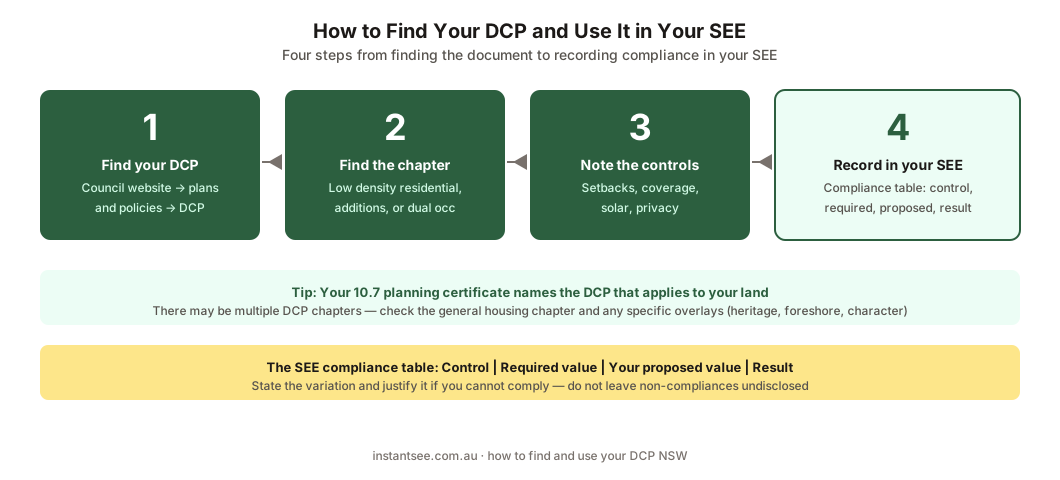
Figure 4: How to find and read your DCP. Identify your zone, download the current plan, read only what applies, then record it in your SEE.
Start by identifying your council and your zone from your address or your section 10.7 planning certificate. Then download the current DCP, which every council publishes free on its planning or development webpage. Read only the chapters that match your zone and your development type, such as the residential controls and any specific chapter for dual occupancies or secondary dwellings. Finally, check your design against each relevant control and record the result in your SEE. A free DA Lodgement Checklist for NSW helps you confirm the SEE and your other documents are complete, and the guide to how to lodge a DA in NSW covers the submission itself. Work through those steps and you will know exactly which DCP controls your DA has to answer.
Frequently asked questions
What is a DCP in NSW?
What is the difference between an LEP and a DCP?
Do I have to comply with the DCP for my DA?
Where do I find my council's DCP?
Can a council refuse my DA for not meeting the DCP?
Ready to get your SEE report?
Skip the writing. Get a DA-ready Statement of Environmental Effects in 5 minutes.
Get your SEE report