Key takeaways
- Shoalhaven LEP 2014 covers the whole LGA except Jerberra Estate
- Extensive coastline and estuaries bring coastal hazard and management controls
- Widespread bushfire-prone land requires Planning for Bush Fire Protection 2019 compliance
- Shoalhaven River flooding affects the Nowra and Bomaderry floodplain
- Significant native vegetation and biodiversity must be assessed on many sites
A Statement of Environmental Effects (SEE) is a mandatory document for most Development Applications lodged with Shoalhaven City Council. It must demonstrate how your proposal complies with the Shoalhaven Local Environmental Plan 2014 and the Shoalhaven Development Control Plan 2014, and how it manages its environmental and planning impacts across a local government area defined by extensive coastline, widespread bushfire-prone land, and the Shoalhaven River floodplain.
Get a council-ready Statement of Environmental Effects for your DA in 5 minutes — no town planner, no waiting.
Get your SEE report →What is a Statement of Environmental Effects for a Shoalhaven DA?
A Statement of Environmental Effects is the planning document that explains your proposal to council and shows how it meets every relevant planning control.
Every DA lodged with Shoalhaven City Council that requires development consent must include a Statement of Environmental Effects. The requirement is set by Schedule 1, Part 1 of the EP&A Regulation 2021, which lists the SEE as a mandatory component of any DA. The document must address every matter likely to be relevant to the assessment of your application.
Council assesses your DA under s 4.15(1) of the EP&A Act 1979. That section requires council to consider the provisions of any applicable environmental planning instrument, development control plan, the likely impacts of the development, the suitability of the site, any submissions received, and the public interest. Your SEE must step through each of these matters and explain how your proposal responds to them.
The Shoalhaven Local Environmental Plan 2014 is the primary environmental planning instrument for the area. It is a standard instrument plan made under the EP&A Act 1979 (No 179 / EPI 2014-0179) and applies to the whole Shoalhaven local government area, with one important exception: the Jerberra Estate has its own stand-alone LEP. The Shoalhaven Development Control Plan 2014 provides the detailed city-wide design controls that sit beneath the LEP.
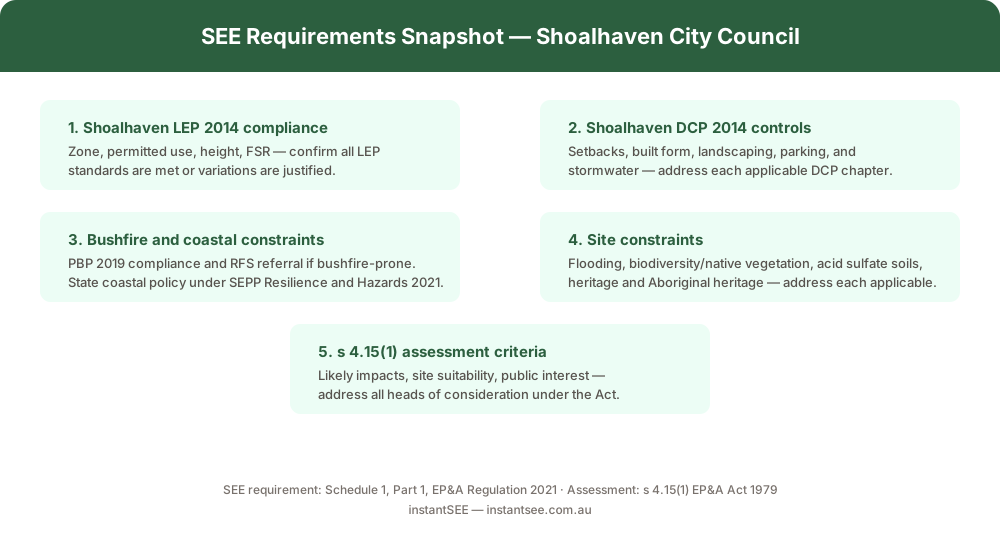 Figure 1: Key matters your SEE must address for a Shoalhaven DA.
What planning controls apply to a Shoalhaven development application?
The Shoalhaven LEP 2014 sets land use zones and development standards; the DCP 2014 adds the detailed design rules — and both apply city-wide except for Jerberra Estate.
The Shoalhaven LEP 2014 covers the principal regional centre of Nowra, Bomaderry, Ulladulla, Huskisson, Berry, Sussex Inlet, and St Georges Basin, along with the surrounding rural and coastal land. It establishes each parcel's land use zone and the permissibility of different types of development. Before writing your SEE, confirm your zone and whether your proposed use is permitted with or without consent under the LEP.
The Jerberra Estate is the main exception to the Shoalhaven LEP 2014. If your site is within the Jerberra Estate, confirm which stand-alone plan applies to your land before starting your SEE.
Where a State Environmental Planning Policy (SEPP) is inconsistent with the Shoalhaven LEP 2014, the State policy prevails. This is particularly significant for coastal land — SEPP (Resilience and Hazards) 2021 can modify or override LEP controls for land within the coastal zone. Your SEE should identify all applicable SEPPs at the outset, including SEPP (Biodiversity and Conservation) 2021 for native vegetation and biodiversity matters.
The Shoalhaven Development Control Plan 2014 applies city-wide and contains the detailed controls for setbacks, building height, landscaping, parking, stormwater, and visual impact. Your SEE must address the DCP provisions relevant to your proposal, explain where your design complies, and — where any variation is sought — justify why the variation is appropriate.
What are the key site constraints in the Shoalhaven LGA?
Spend 5 minutes, not 3 weeks
instantSEE generates a complete, DA-ready Statement of Environmental Effects online. No town planner. No waiting.
Get your SEE report in 5 minutes →Coastline, estuaries, bushfire-prone land, and the Shoalhaven River floodplain are the defining constraints — your SEE must address each that applies to your site.
The Shoalhaven local government area is one of the most geographically diverse in NSW. Its planning environment reflects an extensive coastline, major estuaries, widespread bushland, and a significant river system. These characteristics translate into a distinctive and layered set of site constraints.
Extensive coastline and estuaries — Jervis Bay, St Georges Basin, and Sussex Inlet — bring both coastal hazard and State coastal management controls into play. SEPP (Resilience and Hazards) 2021 applies to land within the coastal zone and can affect setbacks, building envelopes, and permissible uses. Your SEE must identify whether your site falls within coastal management land and address the relevant State controls alongside the LEP.
Biodiversity and native vegetation is a significant constraint across much of the Shoalhaven. Extensive bushland reserves and terrestrial biodiversity overlays apply to a large proportion of the LGA. The Biodiversity Conservation Act 2016 and SEPP (Biodiversity and Conservation) 2021 set the framework. If your development is likely to have a significant impact on threatened species or ecological communities, a Biodiversity Development Assessment Report (BDAR) may be required as a supporting document to your SEE.
Widespread bushfire-prone land is one of the Shoalhaven's most significant planning constraints. Much of the rural-residential and bushland fringe of the LGA is mapped as bushfire prone. If your land is affected, new development must comply with Planning for Bush Fire Protection 2019, and your SEE and building plans must address asset protection zones, BAL ratings, and construction requirements. A formal RFS referral may also be required.
Flooding affects the Shoalhaven River floodplain around Nowra and Bomaderry, as well as other watercourses across the LGA. If your site is in a flood planning area, your SEE must address finished floor levels, drainage, and evacuation considerations.
Additional constraints include acid sulfate soils on low-lying coastal and estuarine land, rural and agricultural land protection, and heritage items and Aboriginal heritage, all of which trigger additional assessment requirements in the SEE.
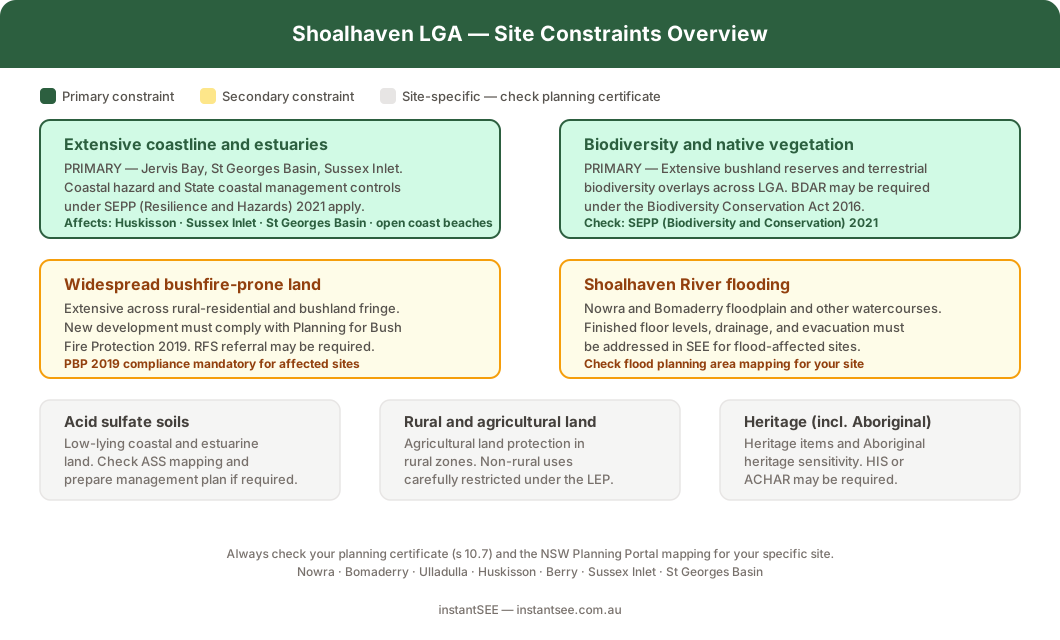 Figure 2: Common site constraints in the Shoalhaven LGA — coastline, biodiversity, bushfire, and flooding are the primary considerations.
What types of DAs are commonly lodged with Shoalhaven Council?
From coastal dwellings to rural-residential and bushland development, understanding the most common DA types helps you anticipate what your SEE needs to cover.
The most common Development Applications lodged with Shoalhaven City Council include:
- Dwelling houses and alterations in residential, coastal, and rural-residential zones, where the SEE must address DCP controls for setbacks, height, and siting, plus bushfire and coastal constraints where applicable.
- Coastal and foreshore development near Jervis Bay, St Georges Basin, and the open coast beaches, where SEPP (Resilience and Hazards) 2021 coastal management controls apply alongside the LEP and DCP.
- Rural-residential and agricultural development across the rural hinterland and coastal valleys, where bushfire-prone land, biodiversity overlays, and agricultural land protection all require specific SEE treatment.
- Secondary dwellings and dual occupancies assessed against LEP permissibility rules and DCP design standards, with bushfire and flooding constraints requiring attention where the site is affected.
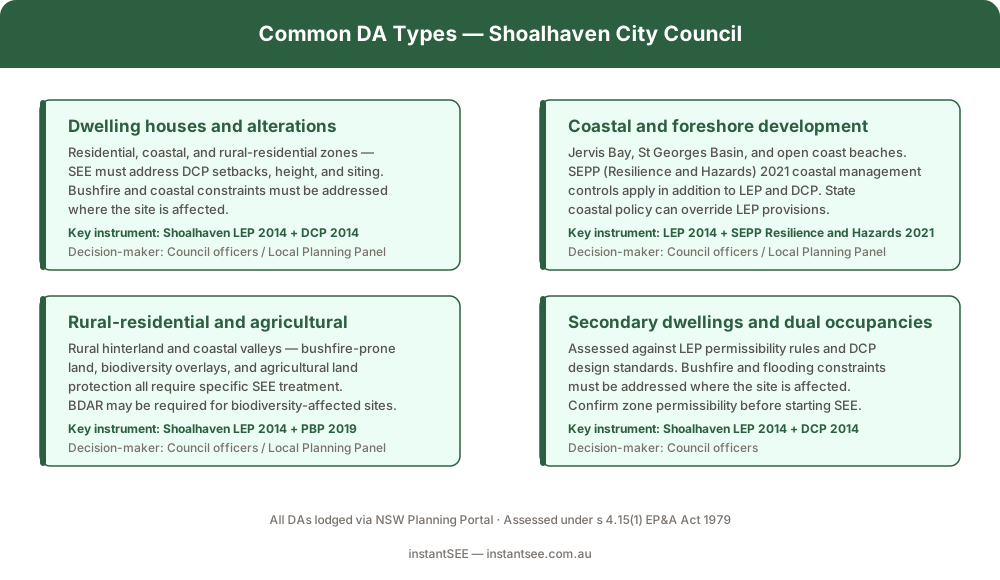 Figure 3: The most common development application types lodged with Shoalhaven City Council.
- Shoalhaven bushland or coastal DA · Bushfire-prone land check and PBP 2019 compliance · Native vegetation and biodiversity impact assessment · Coastal hazard land and State coastal policy · Shoalhaven River floodplain and finished floor levels · Aboriginal heritage sensitivity check
Who decides a Shoalhaven development application?
Most Shoalhaven DAs are determined by council officers, but more complex or regionally significant proposals go to a planning panel.
The decision-maker for your Shoalhaven DA depends on the nature, scale, and complexity of the proposal. Council officers determine the majority of routine DAs under delegated authority. More complex or sensitive applications are referred to the Shoalhaven Local Planning Panel.
Regionally significant development is determined by the Illawarra Shoalhaven Regional Planning Panel. The thresholds are set by the State government and typically relate to development cost, capital investment value, or particular land types. Your planning consultant can advise whether your proposal is likely to be assessed at the regional panel level.
How do I lodge a DA with Shoalhaven Council?
All Shoalhaven DAs are lodged online through the NSW Planning Portal — your SEE and supporting documents are uploaded at the time of lodgement.
Development Applications are lodged with Shoalhaven City Council online through the NSW Planning Portal at planningportal.nsw.gov.au. You upload your plans, owner's consent, supporting documents, and your Statement of Environmental Effects, then pay the lodgement fee online.
Council registers your application, issues a formal acknowledgement, and notifies neighbours and other stakeholders where required. The application is then assessed under s 4.15(1) of the EP&A Act 1979. The assessment period varies depending on the complexity of the proposal, whether additional information is required, and whether the application must be referred to the Rural Fire Service or other agencies.
Preparing a thorough SEE that addresses all relevant matters from the outset — including bushfire, coastal, and biodiversity constraints — is the most effective way to avoid delays caused by council requests for further information.
Frequently asked questions
Do I need a Statement of Environmental Effects for a Shoalhaven DA?
Which LEP applies to a Shoalhaven development application?
Is my Shoalhaven property bushfire prone?
How do I lodge a DA with Shoalhaven Council?
Ready to get your SEE report?
Skip the writing. Get a DA-ready Statement of Environmental Effects in 5 minutes.
Get your SEE report