Key takeaways
- No standalone medium density SEPP exists in NSW anymore
- Housing SEPP 2021 governs DA permissions for medium density
- Low-Rise Housing Diversity Code is the fast-track CDC pathway
- Manor houses and multi-dwelling housing have different standards
- A DA and SEE are required when the code pathway is unavailable
There is no standalone "medium density housing SEPP" in NSW anymore. Medium density housing, meaning duplexes, manor houses and terraces, is now governed by two instruments: the State Environmental Planning Policy (Housing) 2021, which sets where these forms are permitted, and the Low-Rise Housing Diversity Code inside the Codes State Environmental Planning Policy, which provides a fast-track complying development pathway. Together they replaced the older medium density rules.
If you have searched for "the medium density SEPP" and found conflicting information, this is why. The policy has been renamed and reorganised twice in recent years, and the 2024 and 2025 housing reforms changed which zones medium density can go in. Reading an old guide can send you down the wrong path.
This article explains what counts as medium density housing, which instruments now govern it, where it is permitted, when you need a DA versus complying development, and what your SEE must cover.
Get a council-ready Statement of Environmental Effects for your DA in 5 minutes — no town planner, no waiting.
Get your SEE report →- Why there is no standalone medium density SEPP and what replaced it
- The three defined medium density housing types and what distinguishes each
- Where medium density housing is permitted across NSW residential zones
- When you need a DA versus a Complying Development Certificate
- What your SEE must address for a medium density development application
Is There a Medium Density Housing SEPP in NSW?
There is no single medium density SEPP in force — medium density housing is now split across two instruments, and knowing which one applies to your project saves a lot of confusion and wasted effort.
No. There is no single medium density SEPP in force. Medium density housing in NSW is now handled by two separate instruments that work together, and knowing which one applies to your project saves a lot of confusion.
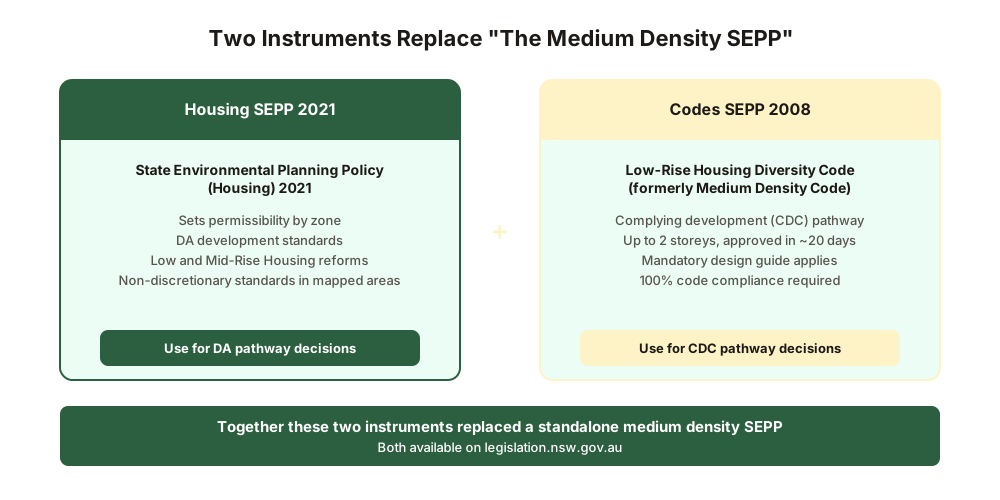
Figure 1: The two instruments that replaced a standalone medium density SEPP.
The first is the State Environmental Planning Policy (Housing) 2021, usually called the Housing SEPP. It sets the policy framework: where medium density housing is permitted, the development standards that apply through a Development Application, and the recent Low and Mid-Rise Housing reforms with their non-discretionary standards in mapped areas. The second is the State Environmental Planning Policy (Exempt and Complying Development Codes) 2008, the Codes SEPP, which contains the Low-Rise Housing Diversity Code. That code, formerly the Low-Rise Medium Density Housing Code, is the complying development pathway for low-rise medium density homes.
So when someone refers to "the medium density SEPP", they usually mean one of these two. The Housing SEPP decides whether your project is allowed and on what DA terms. The Low-Rise Housing Diversity Code decides whether you can skip a full DA and use a Complying Development Certificate instead. Both are available on legislation.nsw.gov.au.
What Counts as Medium Density Housing?
Medium density housing in NSW means three defined forms — dual occupancies, manor houses, and multi-dwelling housing — and getting the definitions right matters because the rules and pathways differ for each.
Medium density housing in NSW means three defined forms: dual occupancies, manor houses, and multi-dwelling housing such as terraces. These definitions come from the Standard Instrument that LEPs are built on, and getting them right matters because the rules differ for each.
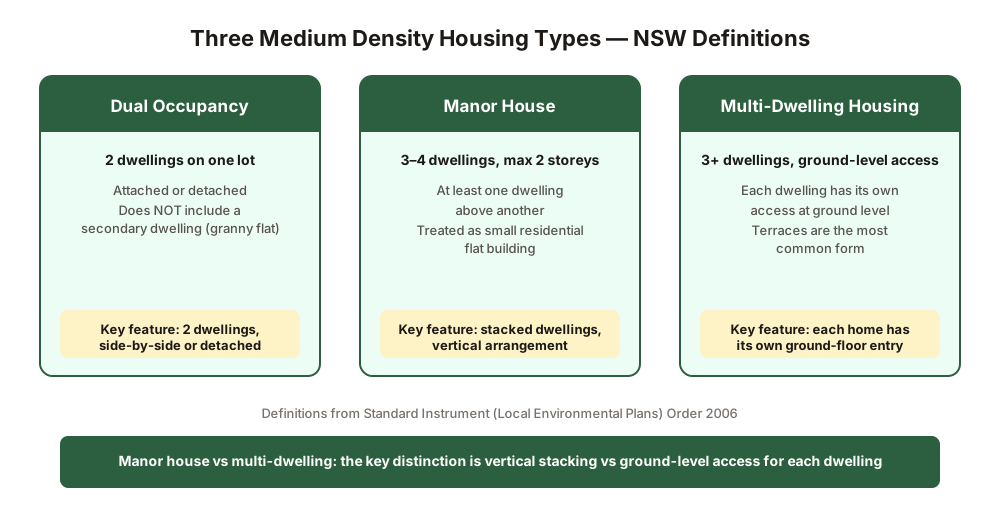
Figure 2: The three medium density housing types, with the defining feature of each.
A dual occupancy is two dwellings on one lot, whether attached or detached, but it does not include a secondary dwelling (a granny flat). A manor house is a residential flat building containing three or four dwellings, with at least one dwelling located wholly or partly above another, and no more than two storeys in height. Multi-dwelling housing is three or more dwellings on a lot, each with access at ground level, and does not include a residential flat building; a terrace is the most common form, a row of attached homes each with its own front door.
The distinction between a manor house and multi-dwelling housing is the key one people miss. A manor house stacks dwellings vertically and is treated as a small residential flat building, while multi-dwelling housing keeps each home at ground level. Both sit under the medium density banner, but they trigger different standards and, in some cases, different approval pathways.
Where Medium Density Housing Is Permitted
Spend 5 minutes, not 3 weeks
instantSEE generates a complete, DA-ready Statement of Environmental Effects online. No town planner. No waiting.
Get your SEE report in 5 minutes →Permissibility depends on your zone and your council's LEP land use table — R3 is the core medium density zone, but from 2024 and 2025 the Housing SEPP reforms expanded what is permitted in R2 and other zones.
Medium density housing is permitted in the residential zones where a council's LEP allows it, traditionally R1 General Residential and R3 Medium Density Residential, and now in R2 Low Density Residential in more cases after the recent reforms.
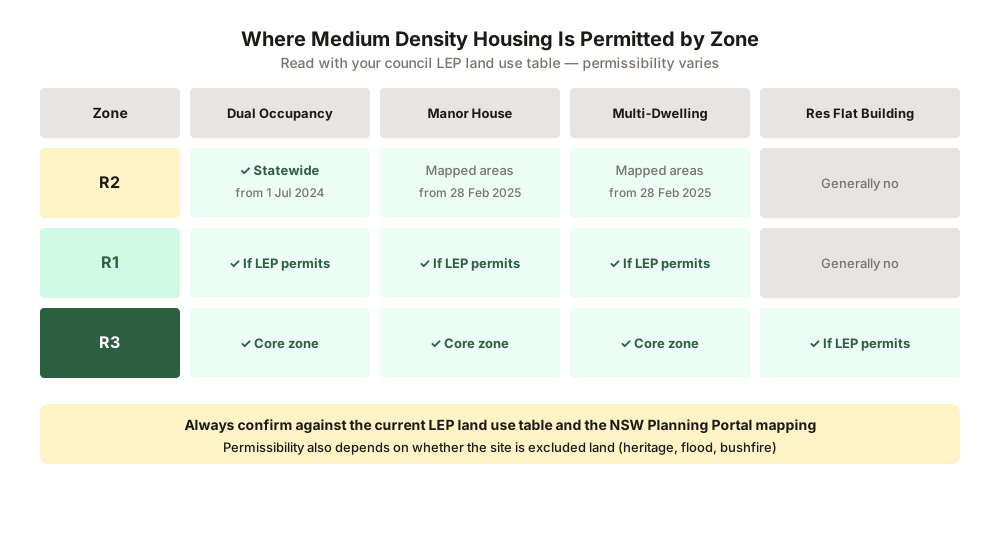
Figure 3: Where medium density housing is permitted by zone. Always confirm against your council LEP.
R3 Medium Density Residential is the core zone for this housing, where multi-dwelling housing, terraces and residential flat buildings are commonly permitted with consent. R1 General Residential typically allows multi-dwelling housing and terraces where the LEP provides for them. The big change is in R2 Low Density Residential: dual occupancies became permitted with consent across all R2 zones state-wide from 1 July 2024, and from 28 February 2025 the Low and Mid-Rise Housing reforms allow multi-dwelling housing and terraces in R2 land that sits within a mapped low and mid-rise housing area, defined as residential land within 800 metres walking distance of a nominated town centre or transport stop.
Permissibility is still set by your council's LEP land use table, read together with the Housing SEPP, so two R2 blocks in different locations can have different options.. Confirm the current land use table for your LEP on legislation.nsw.gov.au and whether your site sits in a mapped low and mid-rise housing area on the NSW Planning Portal Spatial Viewer. For more on how these policies sit above your council's rules, see our guide to what a SEPP is and how it affects your DA.
- Confirm your zone (R1, R2, R3 or other) and the LEP land use table
- Check if the site is in a mapped low and mid-rise housing area
- Confirm the housing type: dual occupancy, manor house or multi-dwelling housing
- Decide: DA or Low-Rise Housing Diversity Code (CDC) pathway
- Confirm the site is not excluded land (heritage, bushfire, flood)
DA or Complying Development? The Low-Rise Housing Diversity Code
Most medium density housing needs a DA, but the Low-Rise Housing Diversity Code offers a fast-track CDC pathway for low-rise forms that meet every standard — choosing the right pathway early changes your timeline and your documents.
Most medium density housing needs a Development Application, but some low-rise forms can be approved as complying development under the Low-Rise Housing Diversity Code. Choosing the right pathway changes your timeline and your documents.
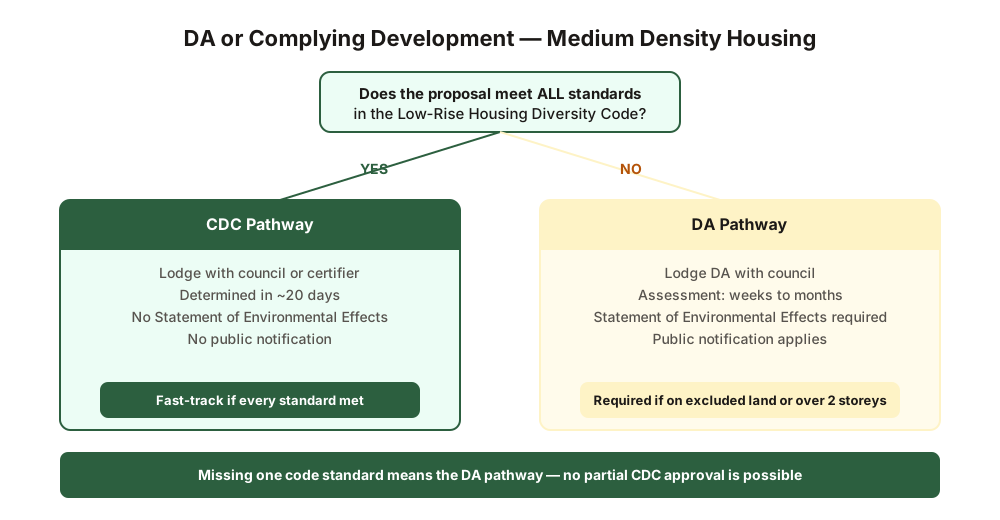
Figure 4: The two pathways. The Low-Rise Housing Diversity Code is the complying development route for low-rise forms.
The Low-Rise Housing Diversity Code allows well-designed dual occupancies, manor houses and terraces of up to two storeys to be approved as complying development, but only in R1, R2, R3 and RU5 zones where that housing is already permitted under the council's LEP. To use it, the proposal has to meet every standard in the code and the criteria in the Low-Rise Housing Diversity Design Guide for complying development, which is mandatory for this pathway, and the land must not be excluded. Excluded land includes heritage items and conservation areas, and certain bushfire-prone, flood-prone and environmentally sensitive land, so a certifier has to check the mapping carefully. If all of that is satisfied, a certifier can issue a Complying Development Certificate, often within about 20 days.
If the proposal does not fit the code, because it is taller, larger, on excluded land, or a use the code does not cover, it takes the DA route instead. For a wider explanation of these pathways, see our guide to exempt, complying and DA development in NSW, and for the R2 changes specifically, our R2 zone guide.
What Your SEE Must Address for a Medium Density DA
When your medium density project takes the DA route, the SEE has to do more work than for a single house — overshadowing, privacy, bulk and open space all become critical for a multi-dwelling proposal on one site.
When your medium density project takes the DA route, it needs a Statement of Environmental Effects like any other Development Application. The SEE has to do more work than for a single house, because medium density raises more impacts on neighbours.
Your SEE should show how the proposal meets the zone objectives and the development standards, including any non-discretionary standards that apply if the land is in a low and mid-rise housing area. It should address the things that matter most for multiple dwellings on one site: overshadowing, privacy and overlooking between dwellings and neighbours, building bulk and streetscape, deep soil and landscaping, private open space for each dwelling, parking, and waste. Where the design relies on the Low-Rise Housing Diversity Design Guide for development applications, your SEE should explain how it responds to that guide.
Because medium density DAs carry more documents than a basic house, a DA lodgement checklist for NSW helps you confirm you have everything, from architectural plans and a BASIX certificate to shadow diagrams and a landscape plan. The SEE ties them together by explaining, in plain terms, why the development is acceptable on its site.
Frequently asked questions
Is there a medium density housing SEPP in NSW?
What is the Low-Rise Housing Diversity Code?
What is the difference between a manor house and multi-dwelling housing?
Do I need a DA for medium density housing in NSW?
Can I build a duplex in an R2 zone under the medium density rules?
Ready to get your SEE report?
Skip the writing. Get a DA-ready Statement of Environmental Effects in 5 minutes.
Get your SEE report