Key takeaways
- A CDC combines planning and construction approval in one certificate
- CDC applications must be determined within 20 days of a complete lodgement
- A council or private certifier can issue a CDC
- Complying development must meet 100% of code standards with no variations
- Miss one standard and the project drops to the DA pathway
A Complying Development Certificate (CDC) is a fast-track approval in NSW that combines planning and construction approval in a single certificate, without a full Development Application. A CDC is available under the Environmental Planning and Assessment Act 1979 when a project meets every standard in the relevant development code. It is the quickest legitimate way to get a straightforward build approved.
The appeal is obvious. A DA can take weeks or months, runs past your neighbours, and needs a Statement of Environmental Effects. A CDC can be determined in about 20 days, is assessed against fixed rules, and skips the SEE entirely. The catch is that most people misunderstand what actually qualifies, who can issue the certificate, and how unforgiving the standards are.
This guide explains what a CDC is, what can be approved through it, who issues it and how fast, how it compares to a DA, and the strict rule that decides whether your project qualifies at all.
Get a council-ready Statement of Environmental Effects for your DA in 5 minutes — no town planner, no waiting.
Get your SEE report →- What a Complying Development Certificate is and what it authorises
- What types of residential work can be approved as complying development
- Who can issue a CDC and how quickly it can be determined
- How the CDC pathway compares to a Development Application
- The 100% compliance rule and what happens when a standard is missed
What Is a Complying Development Certificate?
A CDC is a combined planning and construction approval — it has effect as both a development consent and a building approval under the EP&A Act 1979, which is why it is faster and simpler than the DA route for projects that fit the codes.
A Complying Development Certificate is a certificate stating that a proposal is complying development and authorising it to be carried out. Under the Environmental Planning and Assessment Act 1979, a CDC has effect as both a development consent and a building approval, so it does the job of a DA approval and a construction certificate in one document.
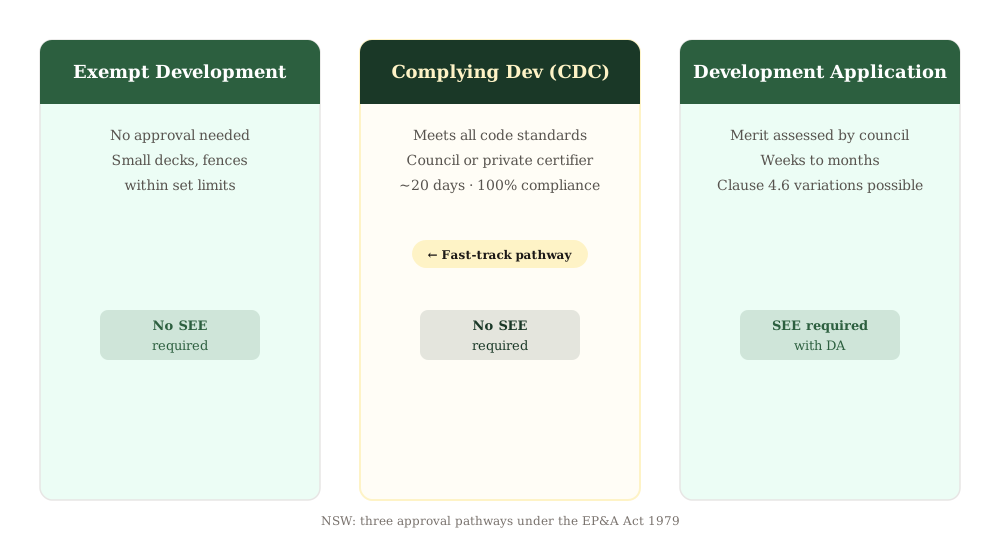
Figure 1: Where a CDC sits among the three NSW approval pathways.
NSW has three broad approval pathways. Exempt development, such as a small deck or fence within set limits, needs no approval at all. Complying development sits in the middle: it is pre-approved in principle, so if your proposal meets every standard, you get a CDC rather than going through a merit assessment. Anything that does not fit the codes, or that needs to vary a standard, falls into the third pathway and requires a DA with a Statement of Environmental Effects.
The standards that define complying development live in one main instrument: the State Environmental Planning Policy (Exempt and Complying Development Codes) 2008, usually called the Codes SEPP. It sets out the types of development that qualify and the exact rules each must meet. If your project is in our explainer on exempt, complying and DA development in NSW, the CDC is the certificate that makes the middle pathway work.
What Can Be Approved as Complying Development?
A wide range of common residential work qualifies, including new single dwellings, granny flats, home extensions and pools — but land constraints like heritage items, heritage conservation areas and certain flood or bushfire overlays can lock a site out of the CDC pathway entirely.
A wide range of common residential work can be approved as complying development, including new single dwellings, secondary dwellings (granny flats), home extensions, alterations, swimming pools, decks, carports and many internal fitouts. The Codes SEPP groups these into codes, such as the Housing Code and the Housing Alterations Code, each with its own standards.
Take a granny flat as a practical example. A secondary dwelling on a suitable lot can often be approved as complying development, provided it meets the lot size, setback, height and floor area rules in the relevant code. The same applies to a new house on a standard block: if the design sits within the height, setback and site coverage limits, it can go the CDC route instead of a DA.
The limits are real, though. Complying development pathways generally do not apply on land with significant constraints, such as heritage items, many heritage conservation areas, certain flood and bushfire land, and environmentally sensitive areas. That is why checking your land first matters. A property in a heritage conservation area that looks like an easy extension can be locked out of the CDC pathway entirely, sending you back to a DA.
Who Can Issue a Complying Development Certificate and How Fast Is It?
Spend 5 minutes, not 3 weeks
instantSEE generates a complete, DA-ready Statement of Environmental Effects online. No town planner. No waiting.
Get your SEE report in 5 minutes →A CDC can be issued by either your local council or a registered private certifier — this choice is a key difference from a DA, which only a consent authority can determine, and it is part of why the CDC pathway can be determined so quickly.
A CDC can be issued by either your local council or a registered private certifier. You choose. This is a key difference from a DA, which only a council (or other consent authority) can determine, and it is part of why the CDC pathway is faster.
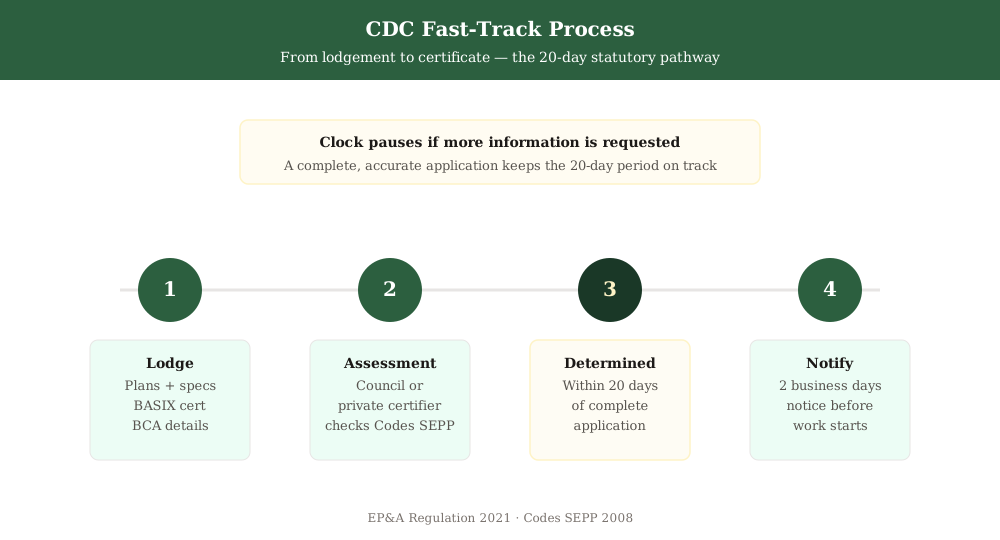
Figure 2: The four-step CDC process, with the 20-day statutory determination period.
The speed is set in law. Under the Environmental Planning and Assessment Regulation 2021, a CDC application must be determined within 20 days of a complete application being made. The clock pauses if the certifier asks for more information and restarts when you provide it, so a tidy, complete application is the single biggest thing you can do to keep the timeframe short.
There is one more step people forget. After a CDC is issued, the person carrying out the work must give at least two business days written notice before building starts, to the council and to the owners of each adjoining property. This notice of intention to commence is required under the regulation. It is not a chance for neighbours to object, but it does mean you cannot start the day your certificate lands.
CDC vs DA: Which Pathway Applies to You?
The CDC and DA pathways differ on who decides, how long it takes, whether neighbours are heard, and how much flexibility you have — a CDC trades flexibility for speed, while a DA trades speed for the ability to argue your case.
The CDC and DA pathways differ on who decides, how long it takes, whether neighbours are heard, and how much flexibility you have. A CDC trades flexibility for speed; a DA trades speed for the ability to argue your case.
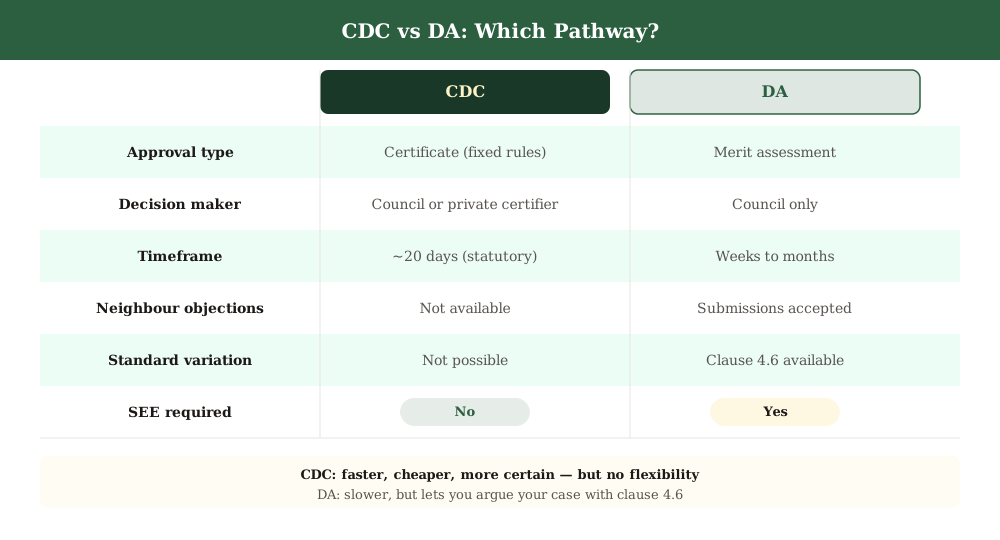
Figure 3: How the CDC and DA pathways compare across the points that matter.
With a CDC, council or a certifier decides, it takes about 20 days, neighbours are not asked for objections, there is no room to vary a standard, and no Statement of Environmental Effects is needed. With a DA, only the council decides, assessment runs from weeks to months, neighbours can make submissions, you can request a variation through clause 4.6, and a SEE is required.
The practical test is simple. If your project fits squarely inside the codes, the CDC is faster, cheaper and more certain, because the rules are fixed and the outcome is predictable. If your project is unusual, sits on constrained land, or needs to push past a development standard, the DA is the only honest option, even though it is slower. Trying to force a non-compliant project into the CDC pathway just wastes the certifier's time and yours.
- Confirm the proposed use qualifies as complying development under the Codes SEPP
- Check the site is not excluded land (heritage, heritage conservation area, flood, bushfire)
- Verify the design meets 100% of the applicable code standards
- Lodge with your council or a registered private certifier
- Give at least 2 business days notice to the council and adjoining owners before starting work
The Catch: Complying Development Must Comply 100%
Complying development must meet every single standard in the relevant code — there is no partial credit, no variation mechanism and no certifier discretion, so a design that is 200 millimetres over the setback cannot be approved as a CDC.
Complying development must meet every single standard in the relevant code. There is no partial credit and no variation mechanism. If even one standard is missed, the proposal is not complying development and cannot be approved as a CDC.
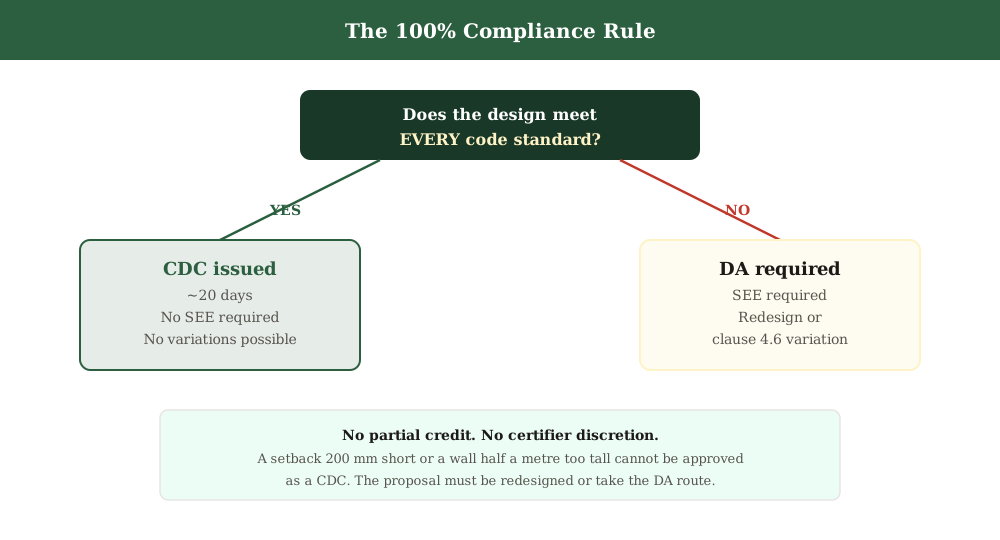
Figure 4: Miss one standard and the project drops to the DA pathway, which needs a SEE.
This is the most important thing to understand about a CDC, and the place most people come unstuck. With a DA, clause 4.6 of the standard LEP lets you request a variation to a development standard and argue why it is reasonable. That mechanism does not exist for complying development. A certifier has no power to overlook a setback that is 200 millimetres short or a wall that is half a metre too tall.
The consequence is binary. Meet every standard and a CDC can be issued in about 20 days. Miss one and you have to redesign to comply, or lodge a DA with a Statement of Environmental Effects and accept the longer timeline. There is no middle path. Before you commit to the CDC route, confirm your design hits every number in the code, because a single miss sends you all the way back to the DA pathway.
When You Need a DA and a SEE Instead
If your project cannot meet every code standard or your land is constrained, you need a DA instead — and every DA needs a Statement of Environmental Effects that does the work the CDC pathway skips.
If your project cannot meet every code standard, or your land is constrained, you need a Development Application instead, and every DA needs a Statement of Environmental Effects. The SEE is the document that explains how your proposal responds to the planning controls and manages its impacts, which is exactly the work the CDC pathway skips.
Plenty of projects end up here, and that is fine. A heritage-listed cottage, a knock-down rebuild that exceeds the height limit by a fraction, or a dual occupancy that needs a small variation all belong on the DA pathway. The trick is knowing early which pathway you are on, so you prepare the right documents once. If you are unsure whether your project even triggers approval, start with our guide on whether you need development consent in NSW, then run through the DA lodgement checklist to see everything a council expects.
When the DA route is the right one, the SEE is the part most owners dread writing. It is also the one document instantSEE produces for you, so the slower pathway does not have to mean weeks of writing.
Frequently asked questions
What is a Complying Development Certificate in NSW?
What is the difference between a CDC and a DA?
How long does a Complying Development Certificate take in NSW?
Can a CDC be refused or varied?
Do you need a Statement of Environmental Effects for a CDC?
Ready to get your SEE report?
Skip the writing. Get a DA-ready Statement of Environmental Effects in 5 minutes.
Get your SEE report