Key takeaways
- A DA is needed when your use is permitted with consent in your zone
- The Codes SEPP 2008 sets all exempt and complying development standards
- Heritage or flood constraints often rule out the complying development pathway
- Your section 10.7 certificate flags every constraint that affects your pathway
- Building without required consent risks a stop-work order or demolition order
Your property needs a DA when your project is not exempt development and not complying development, and the use requires consent under your council's Local Environmental Plan. To find out for your property, you check three things: your zoning, whether your project fits the exempt or complying development standards in the Codes SEPP, and the constraints on your land. If none of the faster pathways apply, you need a DA.
Getting this wrong is expensive in either direction. Assume you need a DA when a quick complying pathway was open and you spend weeks and hundreds of dollars you did not have to. Assume you do not need one and start building, and you risk a stop-work order, a fine, or an order to undo the work.
Get a council-ready Statement of Environmental Effects for your DA in 5 minutes — no town planner, no waiting.
Get your SEE report →- The three approval pathways and which one triggers a DA
- How to look up your zoning and read the LEP land use table
- How to test your project against the exempt and complying standards in the Codes SEPP
- What your section 10.7 certificate adds about site constraints
- How to confirm your pathway before you commit to a design
When Does Your Property Need a DA in NSW?
Whether your property requires a DA comes down to three approval pathways — exempt, complying, and DA — and only the third pathway, where your use is "permitted with consent" in your zone, requires a full Development Application.
Whether your property requires a DA comes down to three approval pathways. Most residential work in NSW falls into one of them, and only the third needs a DA.
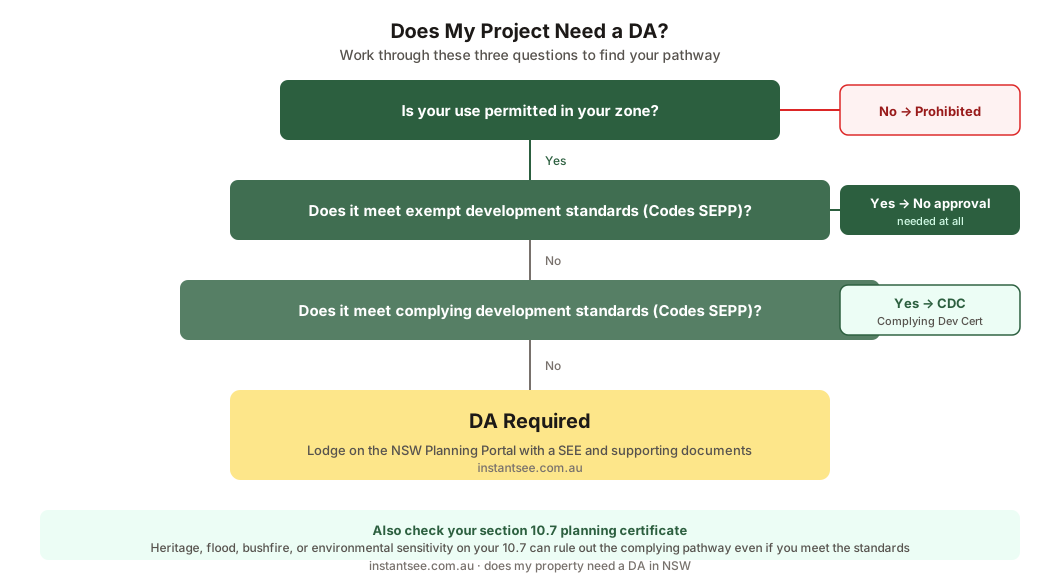
Figure 1: The decision path. Exempt needs no approval, complying uses a CDC, and everything else permitted in your zone needs a DA.
The first pathway is exempt development: minor works such as a small garden shed or a fence that meet set standards and need no approval at all. The second is complying development, which covers many standard projects that meet a detailed code and are approved through a Complying Development Certificate rather than a full DA. The third is a Development Application, which you need when your project does not fit either of the first two pathways and the use is permitted with consent in your zone. The difference between exempt, complying development and a DA is the first thing to understand, because it tells you which pathway to test your project against.
How to Check Your Property's Zoning and Planning Controls
Everything starts with your zoning — the NSW Planning Portal Spatial Viewer gives you the zone and land use table for any property in minutes, and that land use table tells you whether your use needs consent before you look at anything else.
Everything starts with your zoning, because your zone sets what you can do on your land and whether a use needs consent. You can look this up yourself in minutes.
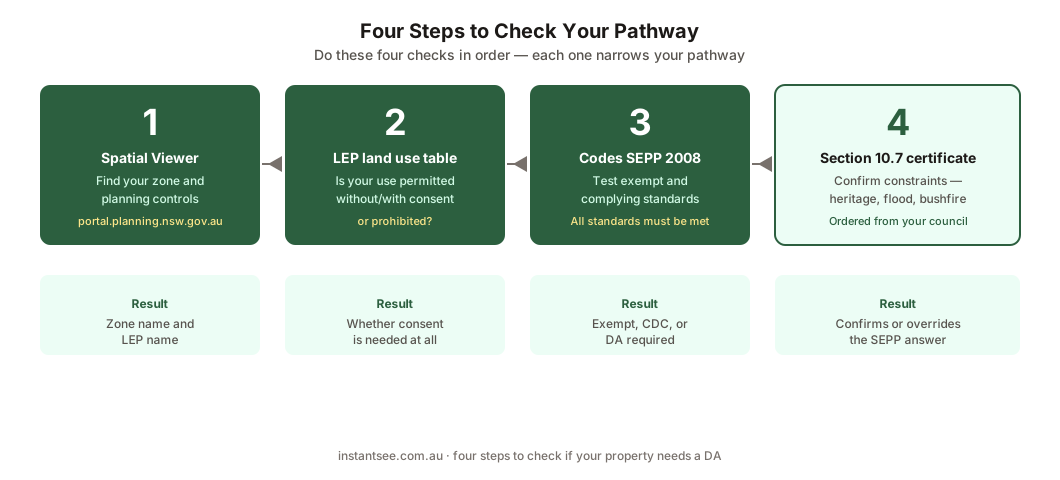
Figure 2: The four steps to check. Start with the Spatial Viewer, read the land use table, test the Codes SEPP, then get a 10.7 certificate.
Enter your address in the NSW Planning Portal Spatial Viewer, the NSW Government's free mapping service that shows the zoning and planning controls for every lot in NSW. It will tell you your zone, such as R2 Low Density Residential. Then read the land use table in your council's LEP for that zone, which classifies every use as permitted without consent, permitted with consent, or prohibited. A use that is permitted with consent is one that needs a DA. A use that is permitted without consent does not, and a prohibited use cannot be approved at all. This single step tells you whether your intended use is even allowed before you look at the detail of the pathways.
How to Check If Your Project Is Exempt or Complying Development
Spend 5 minutes, not 3 weeks
instantSEE generates a complete, DA-ready Statement of Environmental Effects online. No town planner. No waiting.
Get your SEE report in 5 minutes →If your use is permitted, the Codes SEPP is the document to test next — it sets every exempt and complying standard, and exceeding any one of them, even by a little, closes that pathway and pushes you into the DA route.
If your use is permitted, the next question is whether you can avoid a full DA by meeting the exempt or complying standards. Those standards live in one document: the State Environmental Planning Policy (Exempt and Complying Development Codes) 2008, known as the Codes SEPP.
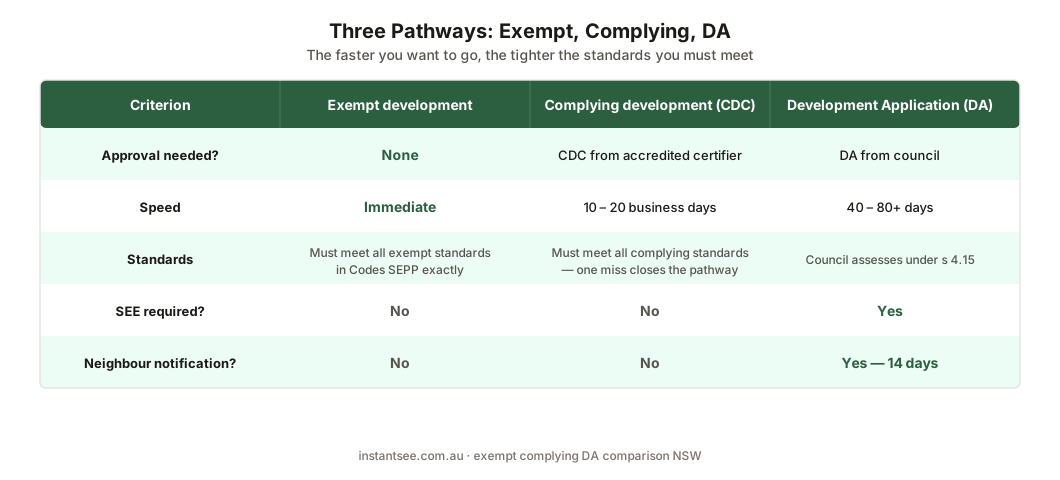
Figure 3: The three pathways compared. The further right you go, the more approval and documentation your project needs.
Under the Codes SEPP, exempt development needs no approval and no documents, but only if every relevant standard is met, such as maximum size, setbacks, and location. Complying development is approved through a CDC if it meets the more detailed code for that development type, which is faster than a DA but still needs plans prepared to the standards. If your project exceeds an exempt or complying standard, even by a little, that pathway closes and you fall into the DA pathway. This is why development consent in NSW is needed for so many ordinary projects: a second storey, a larger addition, or a knock-down rebuild often will not fit within the complying code.
- Look up your zone in the NSW Planning Portal Spatial Viewer
- Read the LEP land use table to confirm your use needs consent
- Check the Codes SEPP 2008 to test if exempt or complying development applies
- Order a section 10.7 planning certificate to confirm site constraints
- Contact your council's duty planner if the pathway is still unclear
What Your Section 10.7 Certificate Tells You
Your zoning and the Codes SEPP get you most of the way, but site constraints — heritage, flood, bushfire, environmental sensitivity — can override the faster pathways and are only visible on your section 10.7 planning certificate.
Your zoning and the Codes SEPP get you most of the way, but the constraints on your specific block can override them. Those constraints are listed on your section 10.7 planning certificate, which you order from your council.
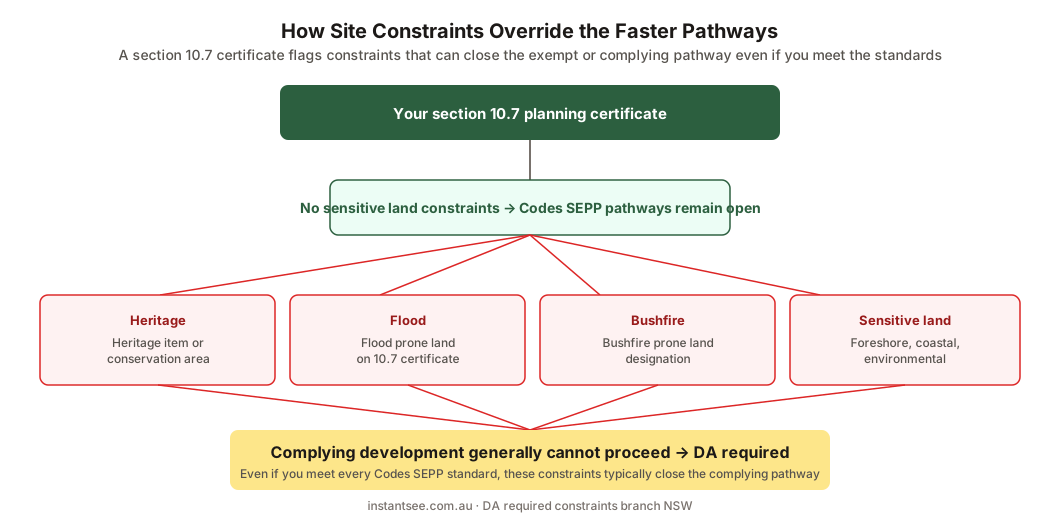
Figure 4: How constraints change the answer. Sensitive land often rules out the faster pathways and points you to a DA.
Exempt and complying development generally cannot be carried out on certain land. If your property is a heritage item or sits in a heritage conservation area, is flood or bushfire prone, or is environmentally sensitive or foreshore land, the easy pathways are often ruled out and a DA is required even for work that would otherwise be complying. The 10.7 certificate is what flags these constraints, which is why it is worth ordering early. A property that looked like a simple complying job on the Spatial Viewer can turn into a DA once its heritage or flood status appears on the certificate.
How to Confirm Before You Lodge
When the three checks still leave uncertainty, your council's duty planner can confirm the pathway for free — and confirming before you design saves far more than the time it costs.
The three checks above will usually give you a clear answer, but if you are still unsure, do not guess your way into a build. Confirming the pathway costs nothing compared to getting it wrong.
Most councils have a duty planner you can call or a pre-DA service for larger projects, and they can confirm whether your project needs a DA before you spend on design. Once you know a DA is required, you lodge it on the NSW Planning Portal, and the guide to using the NSW Planning Portal walks through that. A free DA Lodgement Checklist for NSW then helps you assemble the document set. The one document you will not be able to skip is the Statement of Environmental Effects, which is required for almost every DA and is the piece you have to write for your specific proposal.
Frequently asked questions
How do I find out if my property needs a DA in NSW?
When do I need council approval in NSW?
Can I check my property's zoning myself?
Does a heritage listing mean I need a DA?
What happens if I build without a DA when I needed one?
Ready to get your SEE report?
Skip the writing. Get a DA-ready Statement of Environmental Effects in 5 minutes.
Get your SEE report