Key takeaways
- Most building work in NSW needs development consent
- Exempt development needs no approval at all
- Complying development uses a faster CDC pathway
- Your LEP land-use table tells you which pathway applies
- Check your 10.7 planning certificate before you start
You need development consent in NSW if your project is listed as permitted with consent in your council's Local Environmental Plan and does not qualify as exempt or complying development. Consent is granted through a Development Application, or DA, lodged with your council. Minor works can be exempt, meaning no approval at all, and some standard projects can be complying development, approved by a fast-track certificate instead of a DA.
For a homeowner planning a renovation, addition or new build, this is the first question that decides everything else: time, cost, and paperwork. Get it wrong in the optimistic direction, build without the consent you needed, and your council can order the work to stop or be demolished. Get it wrong in the cautious direction and you might lodge a full DA for something that was exempt all along.
Get a council-ready Statement of Environmental Effects for your DA in 5 minutes — no town planner, no waiting.
Get your SEE report →- When NSW law requires development consent through a DA
- The three approval pathways and which projects fall into each
- How to read your LEP land use table to find your consent category
- Why only the DA pathway needs a Statement of Environmental Effects
- What happens if you build without the consent you needed
When Is Development Consent Required in NSW?
Development consent is required when your proposed development is permitted with consent in your zone — the most common category for residential building work.
Development consent is required when your proposed development is permitted with consent in your zone, which is the most common category for residential building work. The Environmental Planning and Assessment Act 1979 sets up three categories of development: under section 4.1, development that does not need consent; under section 4.2, development that needs consent; and under section 4.3, development that is prohibited. Your council's Local Environmental Plan then puts each land use into one of those boxes through its land use table.
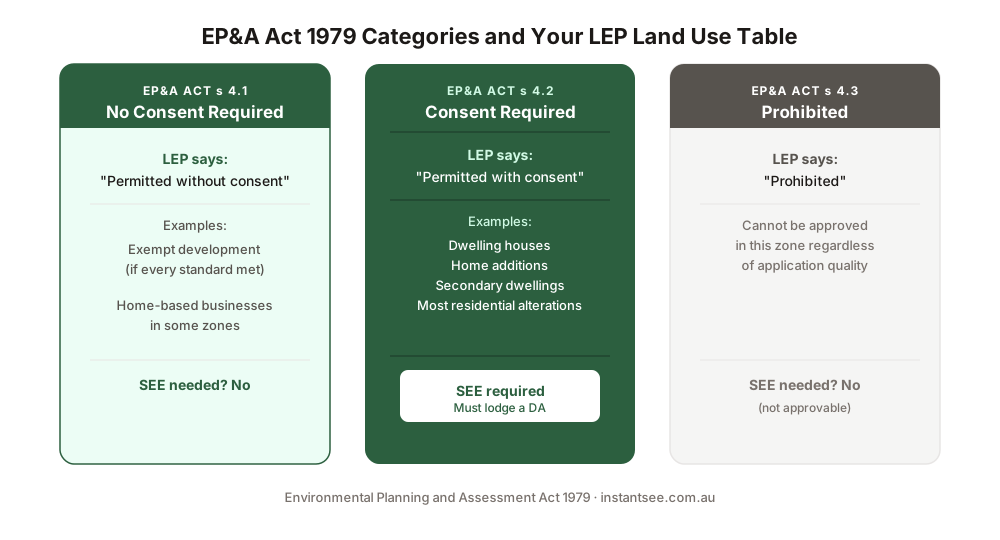
Figure 1: Your LEP land use table tells you whether a use is permitted without consent, permitted with consent, or prohibited in your zone.
In practice, a dwelling house, an addition, a secondary dwelling and most residential alterations are permitted with consent in a low-density residential zone, which means they need a DA unless they qualify as exempt or complying development. When a DA is required, it must be accompanied by a Statement of Environmental Effects that assesses the proposal against the relevant planning controls. A prohibited use, by contrast, cannot be approved at all in that zone, no matter how good the application. Knowing which of the three categories your project falls into is the difference between a smooth approval and a wasted application.
The Three Approval Pathways: Exempt, Complying, and Consent
NSW has three approval pathways, and only one of them requires full development consent — working through them in order tells you whether you can avoid a DA.
NSW has three approval pathways, and only one of them needs full development consent. Working through them in order tells you whether you can avoid a DA. The pathways are set by the Environmental Planning and Assessment Act and the State Environmental Planning Policy (Exempt and Complying Development Codes) 2008, known as the Codes SEPP.
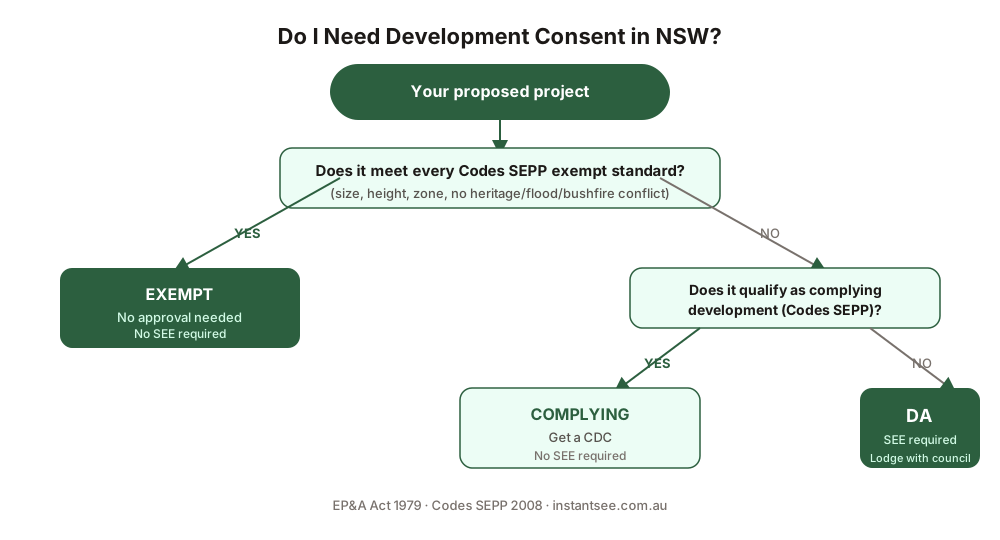
Figure 2: Work through the pathways in order. Only the final branch needs development consent through a DA.
Exempt development is very low-impact work, such as a small deck, a garden shed or some internal alterations, that needs no approval at all if it meets every standard in the Codes SEPP. Complying development is more substantial work, such as some new dwellings and major renovations, that can be approved through a Complying Development Certificate, or CDC, issued by your council or a private certifier, without a DA. If your project is neither exempt nor complying, and the use is permitted with consent in your zone, you need development consent through a DA. Only the consent pathway requires a Statement of Environmental Effects, because exempt development needs no approval and complying development is assessed against a fixed set of standards rather than the merit test that applies to a DA.
How to Find Out If You Need Consent for Your Property
Spend 5 minutes, not 3 weeks
instantSEE generates a complete, DA-ready Statement of Environmental Effects online. No town planner. No waiting.
Get your SEE report in 5 minutes →The reliable way to find out whether you need consent is to check three things in order — each step narrows the answer until you know your exact pathway.
The reliable way to find out whether you need consent is to check three things in order, rather than guess from what a neighbour did. Each step narrows the answer, and together they tell you your exact pathway.
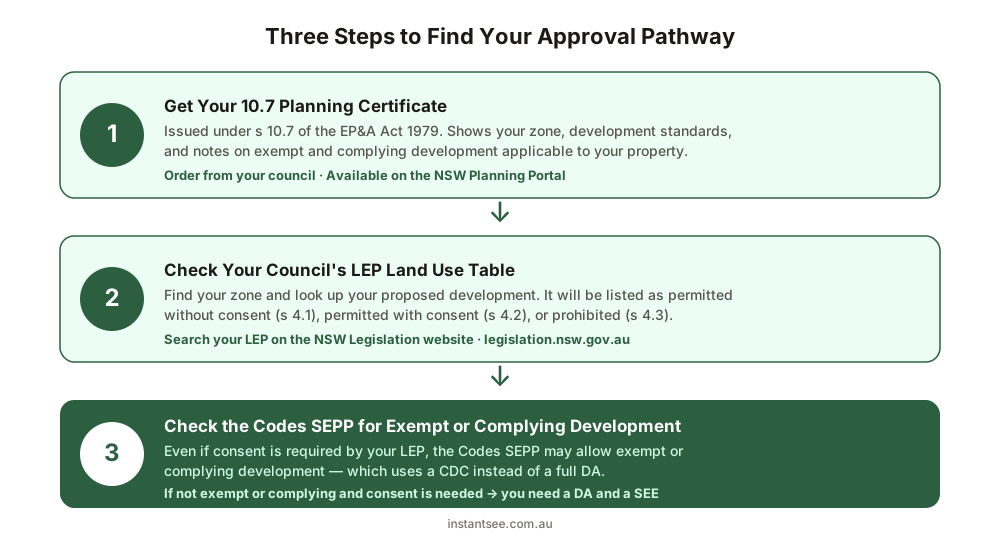
Figure 3: Check your 10.7 certificate, then your LEP land use table, then the Codes SEPP, in that order.
First, get your property's 10.7 planning certificate, issued under section 10.7 of the EP&A Act, which shows your zone and the controls that apply, including notes on exempt and complying development. Second, check your council's LEP land use table for your zone to see whether your project is permitted without consent, permitted with consent, or prohibited. Third, check the Codes SEPP to see whether the specific work can be done as exempt or complying development, which may let you skip a DA or use a faster certificate. If you land on the consent pathway, our free DA Lodgement Checklist for NSW sets out every document you will need, and our guide on how to lodge a DA in NSW walks through the portal process from there.
- Get your 10.7 planning certificate (issued under s 10.7 EP&A Act)
- Check your LEP land use table for your zone
- Check the Codes SEPP for exempt or complying development standards
- If permitted with consent and not exempt or complying — you need a DA and a SEE
What Happens If You Build Without Consent
Building without the development consent you needed is treated as unlawful work — your council has enforcement powers, and a single neighbour complaint is often enough to trigger them.
Building without the development consent you needed is treated as unlawful work, and the consequences can be serious and expensive. Your council has enforcement powers under the EP&A Act, and a single complaint from a neighbour is often all it takes to trigger them.
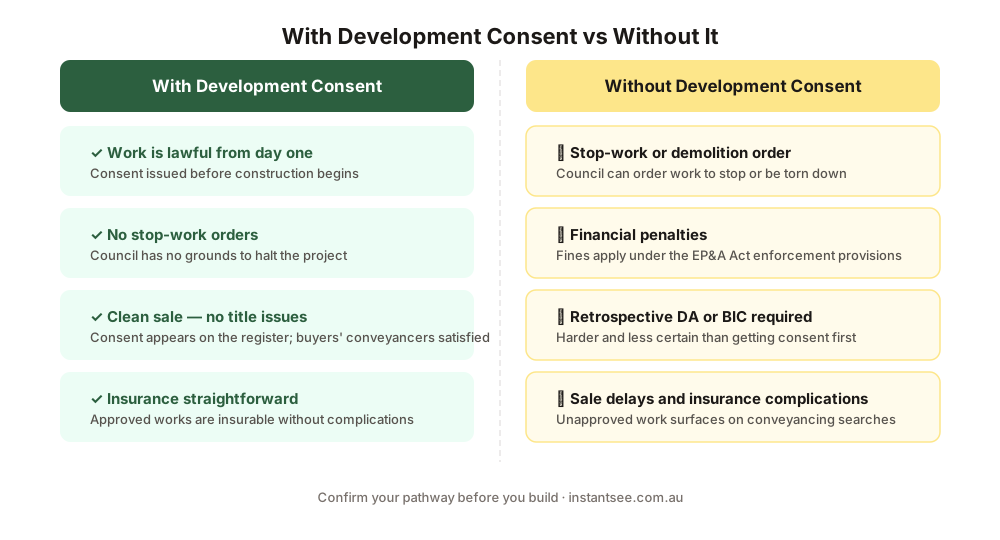
Figure 4: With consent, your work is lawful and easy to sell or insure. Without it, you risk orders, fines and a retrospective DA.
If you build without required consent, the council can issue an order to stop the work or even to demolish it, and financial penalties can apply. You may then have to lodge a retrospective DA or a building information certificate to try to regularise the work after the fact, which is harder and less certain than getting consent first, because the structure already exists and may not comply. Unapproved work also causes problems later: it can hold up a sale when a purchaser's conveyancer finds no consent on the title, and it can complicate insurance. The safe approach is to confirm your pathway before you start. If your project needs consent, lodging a complete DA up front is far cheaper than fixing an enforcement problem afterwards.
Frequently asked questions
Do I need development consent for a home renovation in NSW?
What is the difference between exempt and complying development?
How do I find out if my project needs council approval in NSW?
Do I need a Statement of Environmental Effects if my work is exempt or complying?
What happens if I build without development consent in NSW?
Ready to get your SEE report?
Skip the writing. Get a DA-ready Statement of Environmental Effects in 5 minutes.
Get your SEE report