Key takeaways
- Development consent is defined in section 1.4 of the EP&A Act 1979
- Consent is assessed against five mandatory matters under section 4.15
- A development consent lapses five years after it begins to operate
- The SEE is required for most DAs under Schedule 1, EP&A Regulation 2021
- A Construction Certificate is required before any building work can start
Development consent is formal permission from your council to carry out development on a piece of land. Under the Environmental Planning and Assessment Act 1979 (EP&A Act), if a planning instrument says your development can only be done with consent, you must obtain that consent and build in line with it before you start. You get development consent by lodging a Development Application (DA) and having the council approve it.
The catch is that "development consent" sounds like a single stamp you collect, when it is actually the outcome of an assessment process with its own documents, timeframes, and tests. People hear that they "need council approval" and have no idea whether that means a quick certificate or a months-long application.
Get a council-ready Statement of Environmental Effects for your DA in 5 minutes — no town planner, no waiting.
Get your SEE report →- What development consent is under the EP&A Act and how it differs from a CDC
- Which of the four development categories requires a DA and development consent
- The five-step process for obtaining development consent
- The five mandatory assessment matters under section 4.15 of the EP&A Act
- What happens after you receive development consent, including the lapsing rule
What Development Consent Is in NSW
Development consent is defined in section 1.4 of the EP&A Act 1979 as consent under Part 4 to carry out development — it is the planning permission that says your project can proceed, and it is entirely distinct from a Complying Development Certificate or a Construction Certificate.
Development consent is defined in section 1.4 of the EP&A Act as consent under Part 4 of that Act to carry out development. It is the permission a "consent authority", usually your local council, grants when it approves a Development Application. It is not the same thing as a Complying Development Certificate, and it is not a building approval. It is the planning approval that says your project can go ahead in principle.
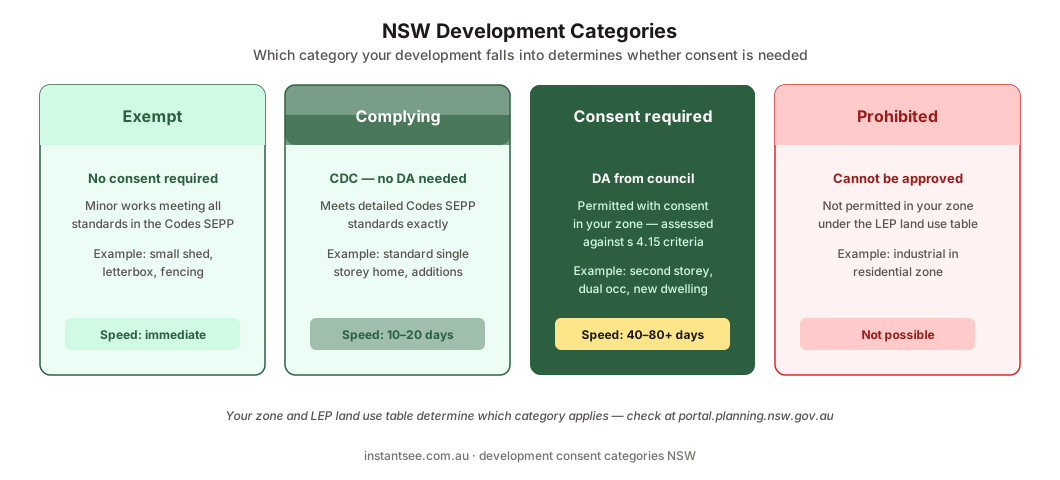
Figure 1: NSW sorts every development into one of four categories. Only development "permitted with consent" needs a DA and development consent.
NSW sorts every development into one of four categories. Exempt development, such as a small garden shed that meets the standards in the State code, needs no approval at all. Complying development is approved through a Complying Development Certificate (CDC) issued by a certifier, not through a DA. Development "permitted with consent" is the large middle ground, and that is what needs development consent through a Development Application. Prohibited development cannot be approved in that zone at all. The first job for any owner is working out which of these four buckets their project falls into, because only the third one requires the full DA route.
When Do You Need Development Consent?
You need development consent whenever your council's LEP lists your proposed development as "permitted with consent" for your zone — carrying out that development without consent is an offence under section 4.2 of the EP&A Act and the council can order you to undo it.
You need development consent whenever your local council's Local Environmental Plan (LEP) lists your proposed development as "permitted with consent" for your land's zone. Under section 4.2 of the EP&A Act, you must not carry out that development unless consent has been obtained and you build in accordance with it. Doing the work without consent is an offence, and the council can order you to undo it.
The document that decides this is the land use table in your LEP. Each zone, for example R2 Low Density Residential or E1 Local Centre, lists what is permitted without consent, what is permitted with consent, and what is prohibited. A first-floor addition, a secondary dwelling that does not qualify as complying development, a change of use to a cafe, or a swimming pool on a constrained site will usually sit in the "permitted with consent" column, which means a DA. If you are unsure which pathway applies to your project, do I need development consent in NSW walks through the test in more detail. Checking your 10.7 planning certificate and the LEP land use table before you design anything saves you from preparing a DA you never needed, or worse, building something that was prohibited.
How to Get Development Consent: The DA Process Step by Step
Spend 5 minutes, not 3 weeks
instantSEE generates a complete, DA-ready Statement of Environmental Effects online. No town planner. No waiting.
Get your SEE report in 5 minutes →You get development consent by lodging a complete Development Application on the NSW Planning Portal and having the council assess and approve it — the assessment clock starts only once the application is complete and the fee is paid.
You get development consent by lodging a Development Application and having the council assess and approve it. Under section 4.12 of the EP&A Act, any person may apply to the consent authority for consent. The application is made on the NSW Planning Portal at planningportal.nsw.gov.au, which is the State Government's online lodgement system, and the assessment clock starts once your application is complete.
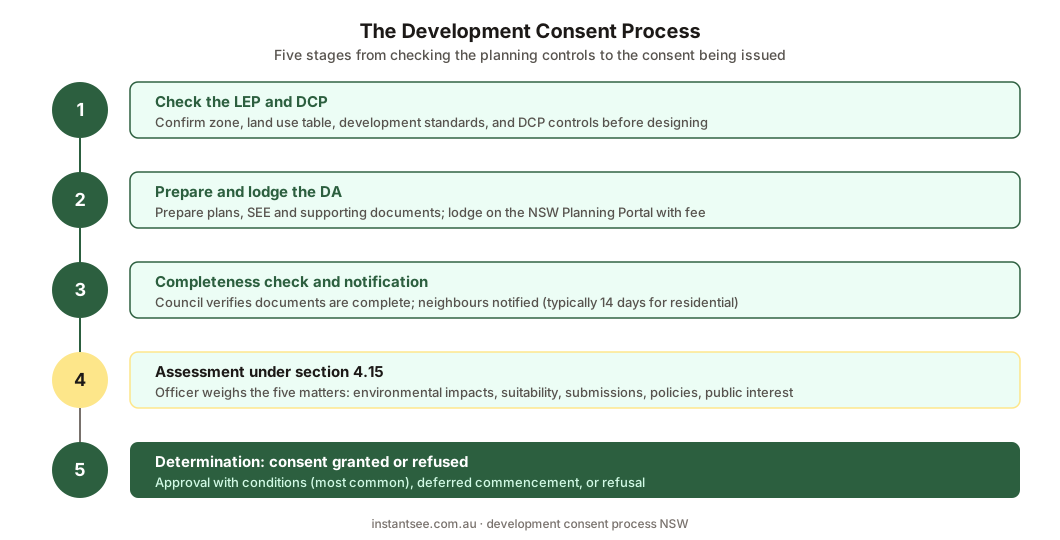
Figure 2: The five steps from confirming consent is needed to the council determining your DA. The clock starts at lodgement.
The process runs in five steps. First, confirm consent is required by checking the LEP. Second, prepare your DA package: the application form, architectural plans, owner's consent, a BASIX certificate if there is residential building work, and a Statement of Environmental Effects that addresses your project's impacts. The SEE is the document the assessing officer reads to understand your proposal, and it is required for most DAs under Schedule 1 of the EP&A Regulation 2021. Third, lodge on the Planning Portal. Fourth, the council notifies neighbours, refers the DA to its specialists, and assesses it. Fifth, the council determines it. A free DA Lodgement Checklist for NSW lists every document the completeness check looks for, and our step-by-step guide to lodging a DA in NSW covers the portal mechanics. The single biggest cause of delay is an incomplete application, so a clean package is what gets you to consent fastest.
- Confirm development consent is required by checking your LEP land use table
- Prepare the full DA package: plans, SEE, BASIX, owner's consent, cost estimate
- Lodge on the NSW Planning Portal and pay the DA fee
- Respond promptly to any council requests for additional information
- Obtain a Construction Certificate before any building work begins on site
What Your Council Considers Under Section 4.15
Before granting consent, the council must assess your DA against five mandatory matters under section 4.15(1) of the EP&A Act — these are legal tests every DA is measured against, and a well-prepared SEE answers all five before the officer has to ask.
Before granting consent, the council must assess your DA against the matters in section 4.15(1) of the EP&A Act. These are not optional considerations the officer can skip. They are the legal test every DA is measured against, and they are the reason your SEE has to address each one head on.
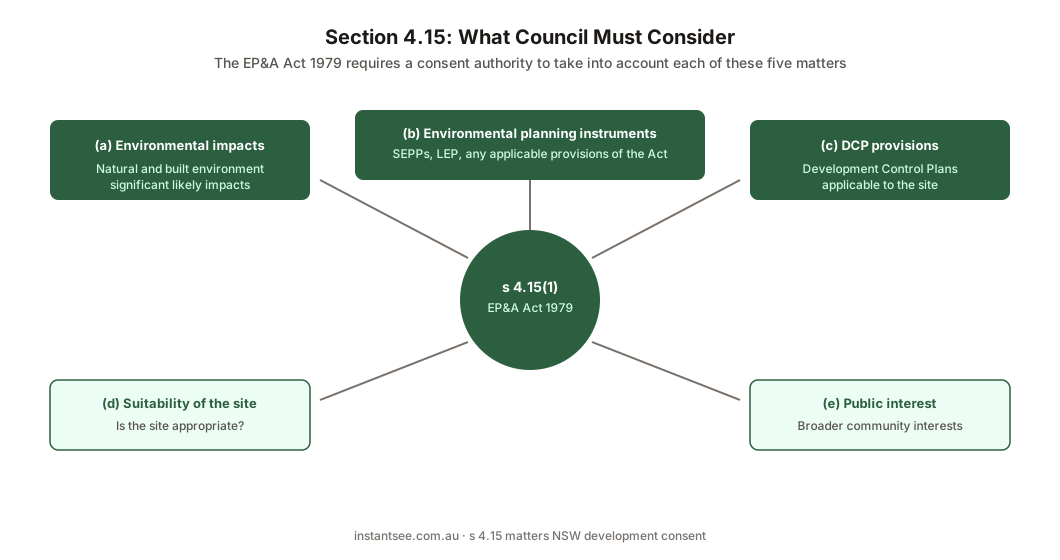
Figure 3: The five mandatory matters under section 4.15(1). A complete SEE answers every one of them.
There are five matters. The council must consider the relevant planning instruments and the Development Control Plan, which means your LEP, any applicable SEPP, and the council's DCP. It must consider the likely impacts of the development, covering environmental, social, and economic effects in the locality. It must consider the suitability of the site for what you propose. It must consider any submissions made by neighbours during notification. And it must consider the public interest, the catch-all that lets the officer weigh anything relevant the first four heads do not capture. A well-prepared SEE answers all five before the officer has to ask, which is what keeps the assessment moving rather than triggering a request for more information.
What Happens After You Get Development Consent
Development consent is not permission to start building — it must be followed by a Construction Certificate confirming BCA compliance, and under section 4.53 the consent lapses five years after it begins to operate unless physical works commence.
Development consent is not permission to start building. It approves your project in planning terms, but before any construction work begins you need a Construction Certificate (CC), which confirms your detailed plans meet the Building Code of Australia and the conditions of your consent. The CC can be issued by the council or a private certifier.
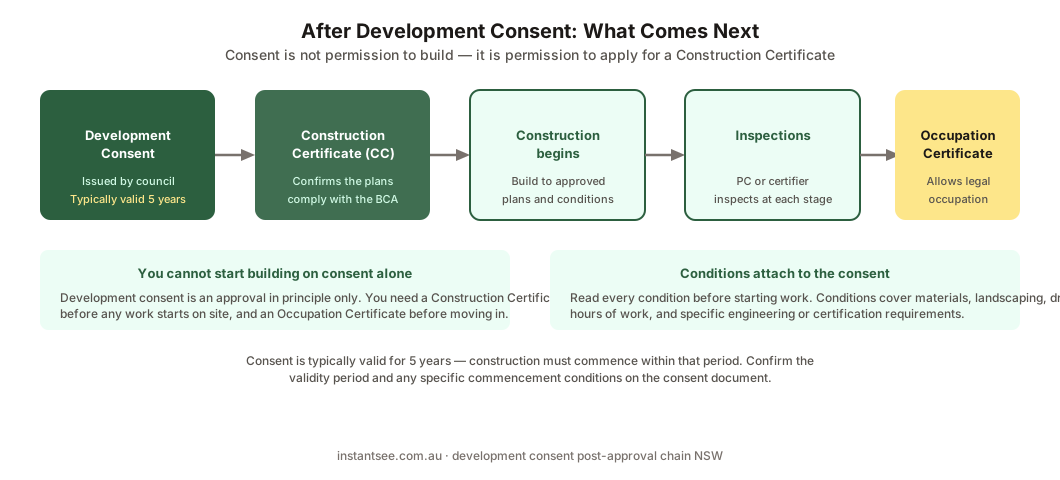
Figure 4: After consent comes the Construction Certificate, then building under a principal certifier, then an Occupation Certificate before you move in.
After the CC, you appoint a principal certifier, build, and then obtain an Occupation Certificate (OC) before the building can be used or occupied. So the full chain is consent, then Construction Certificate, then build, then Occupation Certificate. One thing to watch: under section 4.53 of the EP&A Act, a development consent lapses five years after it begins to operate unless building, engineering, or construction work physically commences before then. For straightforward residential approvals the council can set a shorter period, but not less than two years for erecting a building or subdividing land. If you expect a long gap between approval and construction, factor that lapsing date in. For a realistic sense of how long the approval stage itself takes, see our guide to how long DA approval takes in NSW.
Frequently asked questions
What is development consent in NSW?
How do I get development consent in NSW?
Do I always need development consent to build in NSW?
How long does development consent last in NSW?
Who grants development consent in NSW?
Ready to get your SEE report?
Skip the writing. Get a DA-ready Statement of Environmental Effects in 5 minutes.
Get your SEE report