DIY development application NSW steps: a complete guide
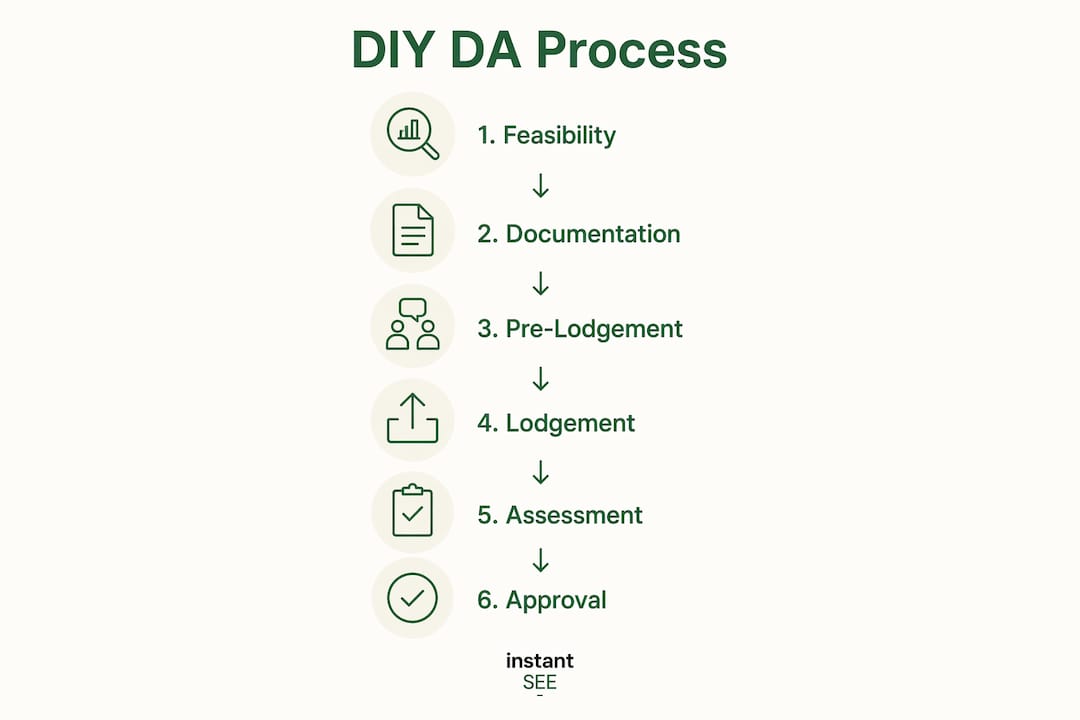
A development application (DA) is the formal request you submit to your local council for approval to carry out building or land use work in New South Wales. Following the correct DIY development application NSW steps is the difference between a smooth approval and a costly, time-consuming return. Under the Environmental Planning and Assessment Act 1979 (EP&A Act 1979), most residential building work that does not qualify as exempt or complying development requires a DA lodged through the NSW Planning Portal (planningportal.nsw.gov.au). This guide walks you through every phase, from initial feasibility to council determination, so you can prepare a complete, council-ready application with confidence. instantSEE is one tool that helps homeowners generate the mandatory Statement of Environmental Effects (SEE) in 10 minutes for $299 AUD, cutting weeks off the process.
What initial feasibility checks are required before starting a DIY DA in NSW?
Feasibility checking is the make-or-break phase of any DIY DA, and most rejected applications fail here because applicants skip it. Before you commission a single plan or engage a designer, you need to confirm that your project is permissible and viable under the relevant planning controls.
Start with these checks:
- Local Environmental Plan (LEP): Identify your property's zone under the applicable LEP. The zone determines what development is permissible with or without consent, and what is prohibited outright.
- State Environmental Planning Policies (SEPPs): SEPPs can override or supplement LEP controls. The Housing SEPP 2021 and the Exempt and Complying Development Codes SEPP 2008 are the two most relevant for residential projects.
- Spatial overlays: Use the NSW Planning Portal's spatial tools to check heritage conservation areas, bushfire prone land, flood planning areas, and acid sulfate soil categories. Each overlay triggers additional assessment requirements.
- Section 10.7 planning certificate: Order this certificate from your council. It is the authoritative document listing all planning controls, overlays, and restrictions that apply to your land. Think of it as the brief your DA must answer.
Once you have confirmed permissibility, decide on the right approval pathway. The Complying Development Certificate (CDC) pathway delivers approval in 10 to 20 days on average, compared to 40 to 90 days for a full DA. If your project meets the prescribed standards under the relevant SEPP, a CDC through a private certifier is faster and cheaper. If it does not, a DA is your pathway.
Pro Tip: Book a pre-lodgement meeting with your council's duty planner before finalising your design. Pre-lodgement meetings help you clarify the approval pathway and avoid redesigns that cost far more than the meeting itself.
How to prepare your documentation package for a DIY DA in NSW
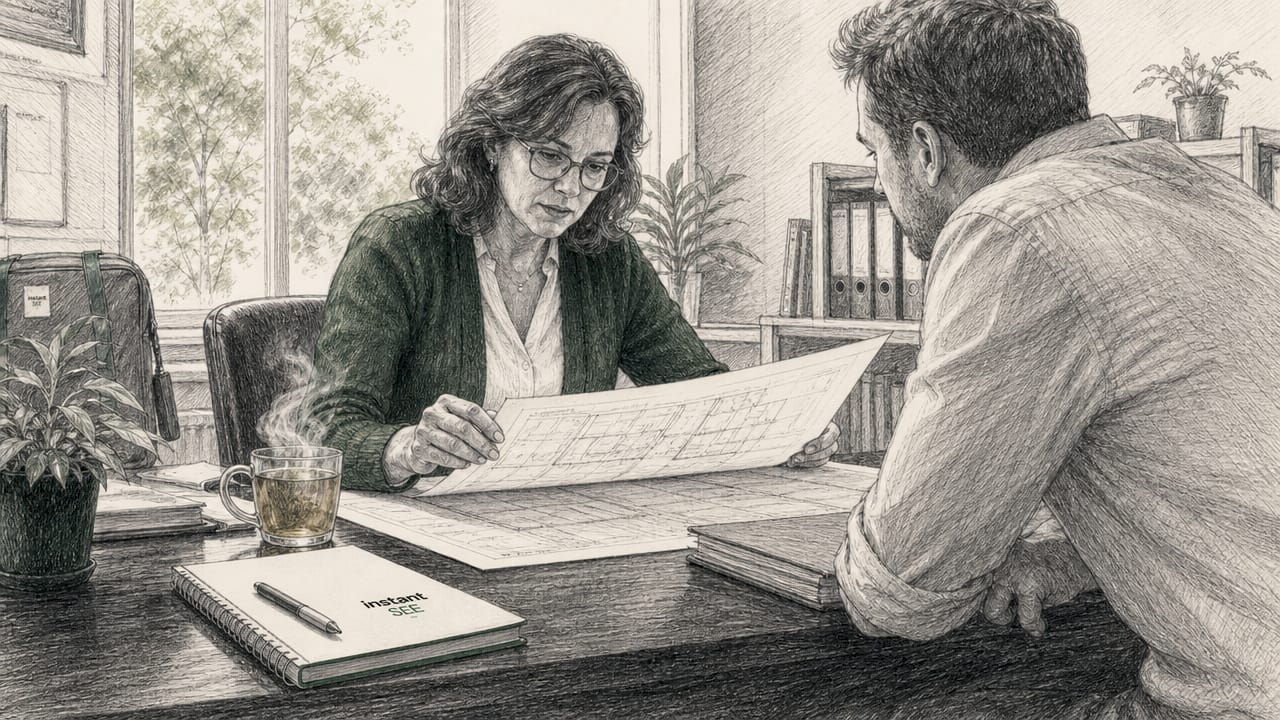
A complete documentation package is the single greatest factor in avoiding a council return. Incomplete applications trigger returns that delay assessment and restart the clock. Prepare every document before you lodge.
The standard documents required for a residential DA in NSW are:
- DA application form: Completed in full via the NSW Planning Portal. Missing fields are a common reason for returns.
- Site plan: Drawn to scale, showing property boundaries, north point, existing structures, proposed works, and setbacks to all boundaries.
- Floor plans: Dimensioned plans for each level, showing room layouts, openings, and proposed use of each space.
- Elevations and sections: All four elevations of the proposed structure, plus at least one cross-section showing floor-to-ceiling heights and roof pitch.
- Survey plan: A registered surveyor's plan confirming boundary dimensions and levels. Many councils require this for any new structure.
- BASIX certificate: Mandatory for all new dwellings and alterations over the prescribed cost threshold under the EP&A Regulation 2021. The BASIX certificate confirms your project meets energy and water efficiency targets.
- Statement of Environmental Effects (SEE): The planning report that explains how your proposal addresses the assessment criteria under section 4.15(1) of the EP&A Act 1979. A high-quality SEE is the primary differentiator between successful and unsuccessful DAs. The SEE is the argument your DA makes to council; every other document is supporting evidence.
- Specialist reports (where required): Depending on your site and project, you may need a stormwater management plan, bushfire assessment report (BAL assessment), traffic impact assessment, or arborist report for trees within the building envelope.
| Document | When required |
|---|---|
| BASIX certificate | All new dwellings and major alterations |
| Statement of Environmental Effects | All DAs (mandatory) |
| Bushfire assessment (BAL) | Bushfire prone land |
| Arborist report | Trees within or adjacent to building works |
| Stormwater management plan | Most new structures and additions |
The SEE is where many DIY applicants underinvest. The document must demonstrate compliance with planning controls and address potential impacts on neighbours and the environment. instantSEE generates a council-ready SEE in 10 minutes for $299 AUD, compared to $600 to $3,000 and one to three weeks for a traditional town planner. Review the SEE checklist for NSW to understand exactly what council officers expect to see.
Pro Tip: Name every file clearly before uploading. Use a consistent convention such as "DA_SitePlan_123MainSt" and save all documents as PDFs. Clearly named documents allow council officers to review your application without confusion, reducing the likelihood of an information request.
What are the key steps to lodge your DA using the NSW Planning Portal?
Spend 10 minutes, not 3 weeks
instantSEE generates a complete, DA-ready Statement of Environmental Effects for $299. No town planner. No waiting.
Generate your SEE in 10 minutes →All DAs in NSW must be submitted electronically through the NSW Planning Portal (planningportal.nsw.gov.au). There is no paper-based alternative. The lodgement process follows a defined sequence:
- Create or log in to your NSW Planning Portal account. You will need a MyServiceNSW account linked to the portal. Set this up before you begin assembling your documents.
- Start a new DA application and select your council. The portal will prompt you to enter the property address, which auto-populates the relevant council and application type fields.
- Upload all required documents as PDFs. The portal has a document upload section with prescribed categories. Match each file to the correct category and use clear file names.
- Submit the application for a completeness check. Council officers perform a completeness check within one to five business days. This check confirms all mandatory documents are present, not that they are compliant.
- Pay the DA fee within 48 hours of invoicing. Once council issues the fee invoice, you have 48 hours to pay. Late payment requires you to relodge the entire application, restarting the process from the beginning.
- Receive your DA number and acknowledgement. Once payment is confirmed, your DA is officially lodged. The portal will display your application number and a target determination date.
The 48-hour payment window is the step most DIY applicants overlook. Monitor your portal notifications and email closely after submission so you do not miss the invoice.
How is your DA assessed and determined by council in NSW?
After lodgement, your DA enters the statutory assessment process. Council has a target of 40 business days to determine a DA once it is accepted as complete, though complex applications involving heritage, significant tree removal, or multiple objections regularly take longer.
The assessment process includes several distinct phases:
- Public notification: Most DAs require council to notify adjoining neighbours and, in some cases, advertise the application publicly. The standard notification period is 14 days, during which any person may lodge a submission.
- Referral to specialist agencies: Applications on bushfire prone land, near waterways, or involving heritage items are referred to agencies such as the NSW Rural Fire Service or the Heritage Council of NSW for comment.
- Requests for further information (RFIs): Council may issue an RFI if the assessing officer identifies gaps in your documentation. Some councils, including Inner West Council, enforce a three-day response window for missing information. Failure to respond within the prescribed period results in the application being returned.
- Assessment report: The council planner prepares a written assessment against the criteria in section 4.15(1) of the EP&A Act 1979, covering the environmental planning instruments, likely impacts, site suitability, and public interest.
Council's determination will result in one of three outcomes: approval with conditions, deferred commencement approval (where specific conditions must be satisfied before the consent operates), or refusal with written reasons.
If your DA is approved, the consent will include conditions of approval covering construction management, hours of work, and compliance certifications. Your next step is to apply for a Construction Certificate (CC) before any building work begins. The CC confirms your detailed construction plans comply with the Building Code of Australia and the conditions of your DA consent.
Common mistakes DIY applicants make and how to avoid them
The most preventable delays in the NSW DIY building approval process come from a small set of recurring errors. Knowing them in advance puts you well ahead of most first-time applicants.
- Skipping feasibility checks. Applicants who commission architectural plans before verifying LEP zoning and overlay constraints regularly discover their design is non-compliant. Feasibility research costs nothing and saves thousands.
- Submitting an incomplete documentation package. Missing a BASIX certificate, an arborist report, or a dimensioned site plan triggers an automatic return. Use a DA lodgement checklist to verify completeness before you submit.
- Missing the 48-hour fee payment deadline. The portal notification can arrive in your spam folder. Check both your portal dashboard and email immediately after submitting, and pay the invoice the same day it arrives.
- Submitting a weak Statement of Environmental Effects. A generic or superficial SEE that does not address section 4.15(1) criteria gives council officers no basis to approve your application. The SEE must address planning controls and demonstrate that impacts on neighbours and the environment are acceptable.
- Ignoring neighbour relations. Objections from adjoining owners do not automatically result in refusal, but they do add time and complexity to the assessment. A brief conversation with your neighbours before lodgement frequently prevents formal objections.
Pro Tip: Respond to every council request for information on the day you receive it. Expert planners recommend prompt responses to council requests as one of the most effective ways to keep your assessment on track.
Key takeaways
A successful DIY development application in NSW depends on thorough feasibility research, a complete documentation package, and a high-quality Statement of Environmental Effects that directly addresses the assessment criteria under the EP&A Act 1979.
| Point | Details |
|---|---|
| Feasibility first | Verify LEP zoning, SEPPs, and overlays before spending money on plans. |
| Complete documentation | Prepare all plans, BASIX certificate, SEE, and specialist reports before lodging. |
| 48-hour fee window | Pay the council invoice within 48 hours or you must relodge the entire application. |
| SEE quality matters | A thorough SEE addressing section 4.15(1) criteria is the primary factor in approval success. |
| Respond to RFIs promptly | Late responses to council information requests result in application returns and delays. |
A practical perspective on DIY DA success in NSW
The feasibility phase is where the outcome of a DA is largely determined, yet it receives the least attention from first-time applicants. Homeowners often arrive at the lodgement stage with completed architectural drawings, only to discover a heritage overlay or a minimum lot size provision that makes their proposal non-compliant. That sequence is expensive and avoidable.
The NSW Planning Portal's spatial viewer is a genuinely useful tool that most DIY applicants underuse. Spending 30 minutes with the portal's mapping layers before engaging a designer will surface constraints that would otherwise appear as RFIs or refusal grounds months later. The portal shows zoning, heritage, flood, and bushfire overlays in a single interface, and it is free to use.
On the SEE: many applicants treat it as a formality rather than the central planning argument it actually is. Council officers assess your DA against section 4.15(1) of the EP&A Act 1979, and the SEE is your opportunity to demonstrate compliance with every criterion. A document that simply describes the project without addressing impacts, planning controls, and site suitability gives the assessing officer no basis to recommend approval. The quality of the SEE is directly correlated with the quality of the outcome.
Pre-lodgement consultation with council is underutilised for the same reason: applicants assume it signals uncertainty. In practice, it signals professionalism. Councils respond well to applicants who have done their research and are seeking to confirm their approach rather than asking basic questions.
How instantSEE simplifies your NSW DA preparation
Preparing a council-ready Statement of Environmental Effects is the most technically demanding part of the DIY DA process, and it is where most homeowners either overspend or underdeliver.
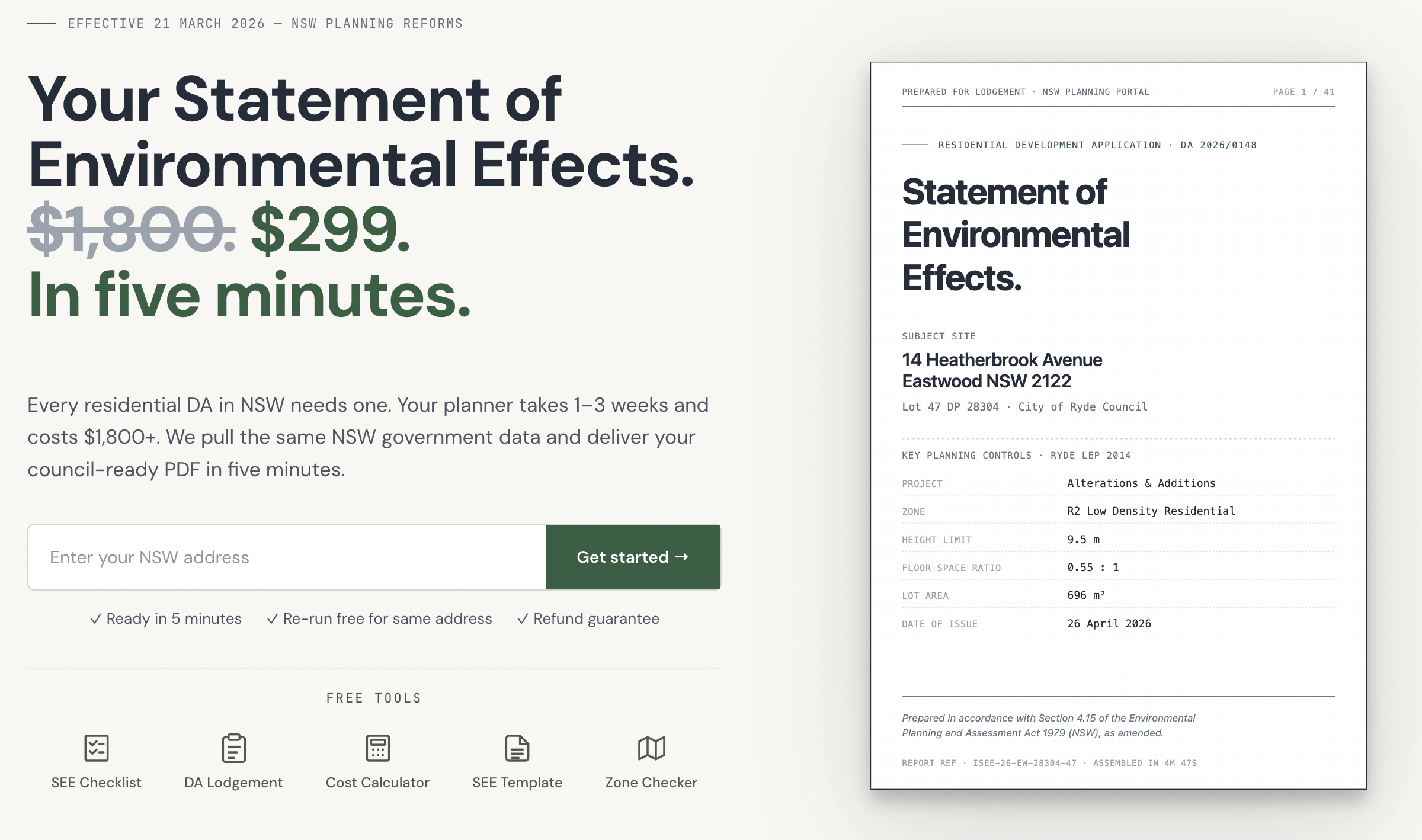
instantSEE generates a council-ready SEE for residential DAs in NSW in 10 minutes for $299 AUD. Traditional town planners charge $600 to $3,000 for the same document and typically take one to three weeks to deliver it. instantSEE draws on NSW government data sources to produce a report that addresses the statutory criteria under the EP&A Act 1979, formatted for direct upload to the NSW Planning Portal (planningportal.nsw.gov.au). For homeowners following the DIY property development guide approach, it removes the most significant documentation barrier without requiring planning expertise. Review the full SEE requirements to see exactly what a compliant document must contain.
Recommended
Frequently asked questions
What is a development application in NSW?
How long does a DIY DA take to be determined in NSW?
Is a Statement of Environmental Effects mandatory for all DAs in NSW?
Can I submit a development application without a town planner?
What happens if my DA is returned after lodgement?
Ready to generate your SEE?
Skip the writing. Get a DA-ready Statement of Environmental Effects in 10 minutes for $299.
Generate your SEE