Key takeaways
- Every DA needs a mandatory core set of documents
- Situational documents depend on what you are building
- Specialist reports are triggered by site constraints, not proposal type
- A SEE is mandatory for every NSW DA without exception
- Lodge complete the first time — returns cause costly delays
A Development Application in NSW is not just plans. Every DA must include a defined set of core documents, and most applications also require situational or specialist documents depending on what you are building and what your site looks like. Lodge with anything missing and the council will return the application as incomplete.
Get a council-ready Statement of Environmental Effects for your DA in 5 minutes — no town planner, no waiting.
Get your SEE report →- The three-tier structure of NSW DA documents and how to apply it
- Which mandatory core documents every DA must include
- Which situational documents are triggered by your proposal type
- Which specialist reports are triggered by site constraints
- How to use a DA checklist to confirm your application is complete before lodgement
The Three-Tier Structure of NSW DA Documents
NSW DA documents fall into three tiers — mandatory core, situational, and specialist — and understanding which tier each document belongs to is the fastest way to scope what your project needs.
Every NSW DA document falls into one of three tiers. The first tier is mandatory core documents: required for every DA regardless of what you are building or where. The second tier is situational documents: triggered by the nature of your proposal — residential alterations attract different requirements than commercial development or subdivision. The third tier is specialist reports: triggered by what is on or near your site, not by what you propose to build.
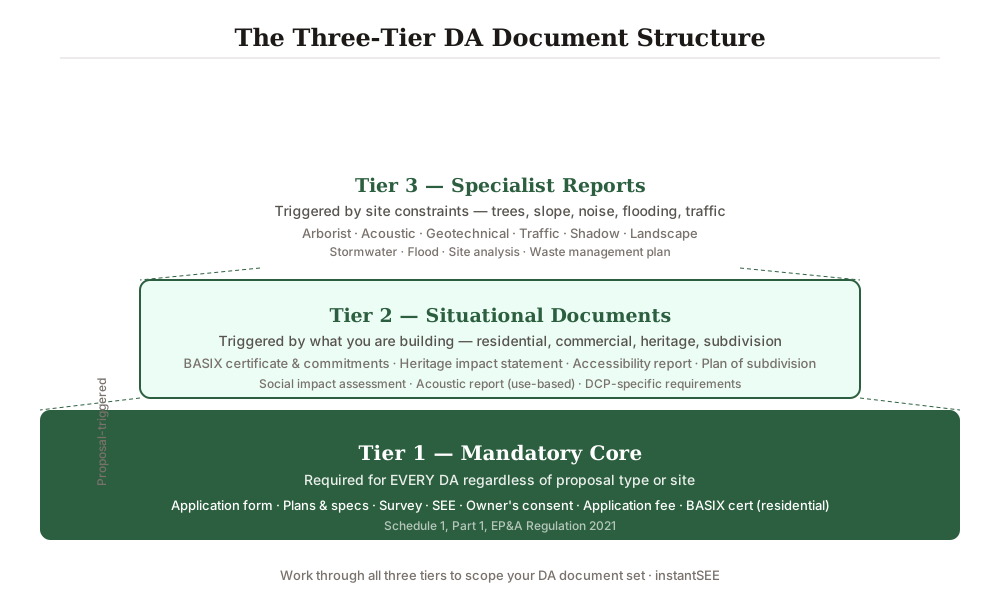
Figure 1: Every NSW DA document falls into one of three tiers.
Most applicants underestimate the situational and specialist tier. A standard house DA in a heritage conservation area, on a sloping block with a large protected tree, can easily require six or seven documents beyond the mandatory core. The cost of getting this wrong is not just time — councils can return incomplete applications, and each return delays your approval and can trigger additional professional fees.
Mandatory Core Documents: Every DA Needs These
Regardless of what you are building or where you are building it, every NSW DA must include the same set of mandatory core documents — these are set out in Schedule 1 of the EP&A Regulation 2021.
The mandatory core documents are required for every Development Application in NSW without exception.
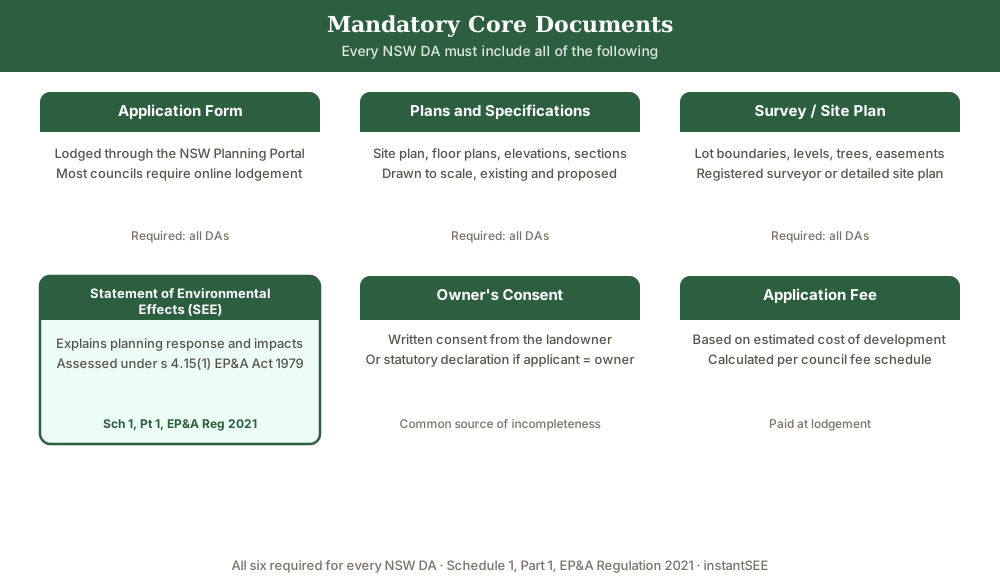
Figure 2: Core mandatory documents every NSW DA must include.
Application form. Every DA begins with a completed application form lodged through the NSW Planning Portal. The portal has largely replaced paper forms, and most councils require portal lodgement for all applications.
Architectural plans and specifications. Plans drawn to scale showing the site plan, floor plans, elevations, and sections are required for every DA. Plans must show existing and proposed conditions. Minimum plan requirements are typically set out in the council's Development Control Plan (DCP).
Survey or site plan. A registered surveyor's plan or a detailed site plan showing lot boundaries, existing structures, trees, contours, and easements. Councils need this to assess setbacks, height, site coverage, and deep soil zones against the applicable standards.
Statement of Environmental Effects. A Statement of Environmental Effects (SEE) is required under Schedule 1, Part 1 of the EP&A Regulation 2021 for every DA. The SEE explains how the proposal responds to the planning controls — the LEP, the DCP, and the applicable SEPPs — and how it manages its impacts on neighbours, the streetscape, the environment, and the community. Council assesses the DA against the matters in s 4.15(1) of the EP&A Act 1979, and the SEE is the primary document demonstrating how each of those matters has been addressed. For a full explanation of what a SEE must cover, see our SEE requirements guide for NSW.
Owner's consent. Written consent from the landowner — or a statutory declaration if the applicant and owner are the same person — must accompany every DA. This is a common source of technical incompleteness.
Application fee. The lodgement fee, calculated under the council's fee schedule or the standard formula in the EP&A Regulation. Fees are based on the estimated cost of development declared on the application form.
Situational Documents: Triggered by What You Are Building
Spend 5 minutes, not 3 weeks
instantSEE generates a complete, DA-ready Statement of Environmental Effects online. No town planner. No waiting.
Get your SEE report in 5 minutes →Beyond the mandatory core, your proposal type determines which additional documents are required — residential development, commercial development, heritage properties, and subdivision each attract a different set.
Situational documents are triggered by the nature of your development proposal. They are predictable if you know what you are building.
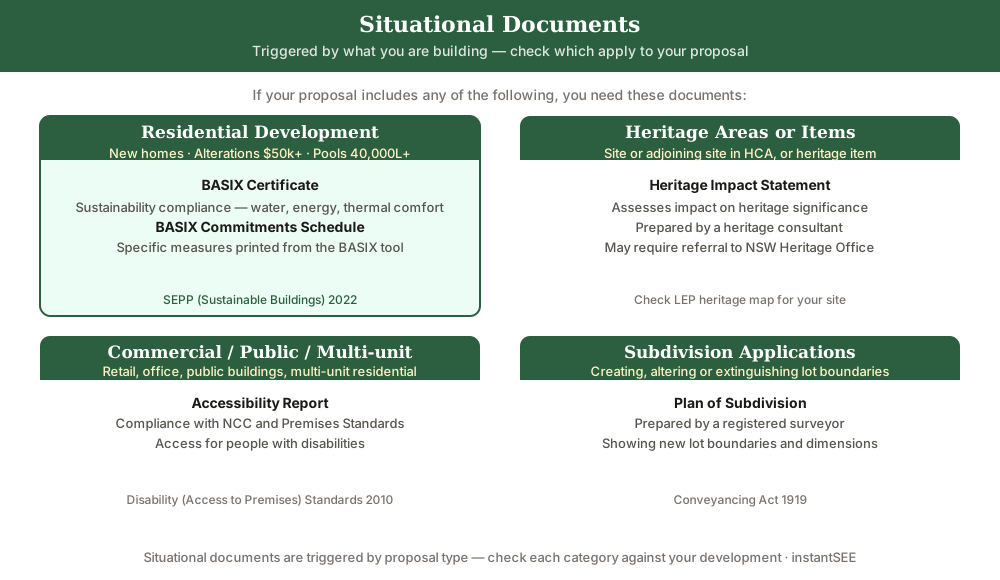
Figure 3: Situational documents are triggered by the type of development proposed.
BASIX certificate and BASIX commitments schedule (residential development). For any new home, alteration or addition costing $50,000 or more, or a swimming pool or spa of 40,000 litres or more, a current BASIX certificate is required under the State Environmental Planning Policy (Sustainable Buildings) 2022. The certificate is generated through the online BASIX tool on the NSW Planning Portal and must be no more than three months old at lodgement. The BASIX commitments schedule — printed alongside the certificate — must also be included. For the difference between the BASIX tool and the BASIX certificate, see our BASIX certificate vs assessment guide.
Heritage impact statement. Required where the site or an adjoining site is in a heritage conservation area, or where the building or structure is a heritage item listed in the LEP. A heritage impact statement assesses the potential impact of the proposal on the heritage significance of the item or area. It is typically prepared by a heritage consultant and sometimes requires a referral to the NSW Heritage Office.
Social impact assessment. Required for some developments where a SEPP or DCP specifies it — most commonly for licensed premises, high-density residential, or aged care developments. The triggers and required content are specified in the relevant SEPP or DCP.
Accessibility report. Required for commercial, retail, and public buildings, and for new multi-unit residential development. Demonstrates compliance with the access requirements in the National Construction Code and the Disability (Access to Premises — Buildings) Standards 2010.
Plan of subdivision. For applications that involve creating, altering, or extinguishing lot boundaries, a plan of subdivision prepared by a registered surveyor must accompany or follow the DA consent.
Specialist Reports: Triggered by Site Constraints
Specialist reports are the tier most applicants underestimate — they are triggered by what is on or near the site, not by what you plan to build, and missing one is the most common reason for a DA to be returned as incomplete.
Specialist reports are driven by site conditions. The same house DA on two different sites — one flat and clear, one sloping with trees, near a highway — can require a very different set of specialist reports.
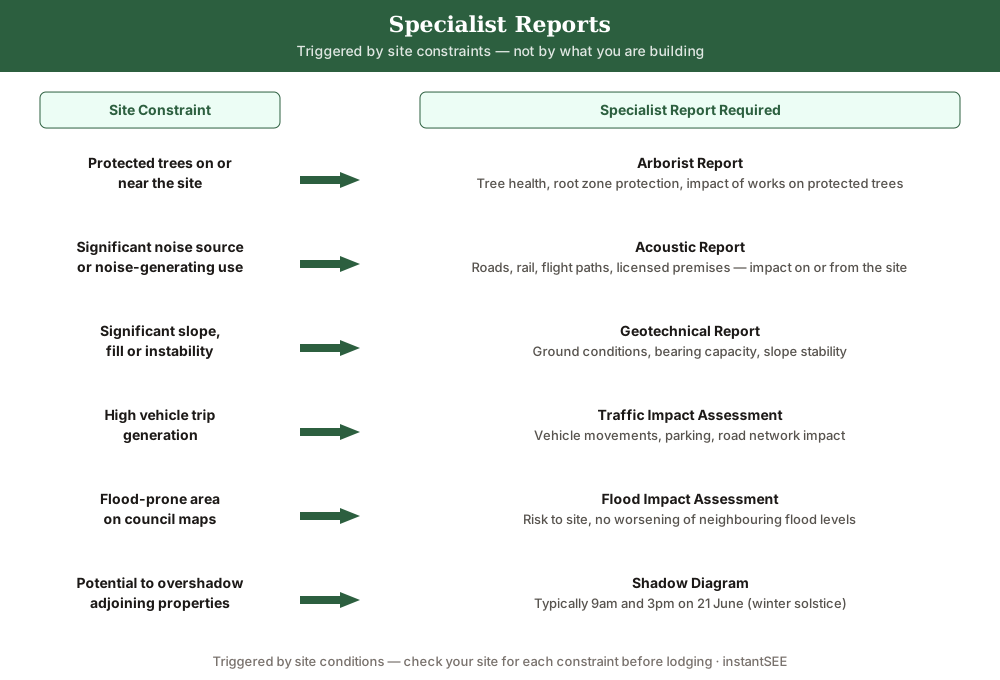
Figure 4: Specialist reports are triggered by site constraints, not proposal type.
Waste management plan. Required by most NSW councils for development involving demolition or significant construction. The plan sets out how demolition and construction waste will be sorted, recycled, and disposed of, including targets for diversion from landfill. See our waste management plan guide.
Site analysis report. Some councils — particularly those with design review panels or strong design-led DCP frameworks — require a formal site analysis report documenting the physical and contextual characteristics of the site: sun access, views, prevailing winds, streetscape character, and neighbouring development patterns. See our site analysis report guide.
Shadow diagram. Required where a proposal may overshadow adjoining properties or affect solar access to neighbouring dwellings. Most councils specify the standard times at which diagrams must be prepared — typically 9 am and 3 pm on 21 June (winter solstice). See our shadow diagram requirements guide.
Arborist report. Required where significant trees on or near the site are protected under the council's DCP or the Biodiversity Conservation Act 2016. The report assesses tree health, root zone protection requirements, and the potential impact of the proposed works on protected trees. See our arborist report guide.
Traffic impact assessment. Required for development that is likely to generate a significant number of vehicle movements. The threshold for requiring a traffic impact assessment varies by council and by land use, and is often stated in the DCP or council's development application requirements. See our traffic impact assessment guide.
Acoustic report. Required where the development site is near a significant noise source — a classified road, a railway, a flight path, or a licensed premises — or where the proposed use may generate noise that could affect neighbouring properties. See our acoustic report guide.
Geotechnical report. Required where a site has significant slope, a history of filling or cut, known soil instability, or is in an area flagged for geological risk on the council's mapping. The report assesses ground conditions, bearing capacity, and slope stability. See our geotechnical report guide.
Landscape plan. Required by most councils for residential and commercial development. The landscape plan shows proposed planting, species selection, canopy coverage, and deep soil areas. See our landscape plan guide.
BASIX certificate vs assessment. For BASIX-affected residential development, understanding the difference between running the BASIX tool (the assessment) and generating the BASIX certificate (the output) matters at lodgement. See our BASIX certificate vs assessment guide.
Stormwater management plan. Required for most residential and commercial development to demonstrate how site runoff will be managed, typically to a pre-development flow rate standard. This is separate from the BASIX water target and is assessed against the council's DCP stormwater controls.
Flood impact assessment. Required for sites within a flood-prone area identified on the council's flood planning maps or the NSW Flood Data Portal. The report assesses flood risk to the site and must demonstrate that the development will not worsen flooding on neighbouring properties or upstream/downstream.
How to Use a DA Checklist Before You Lodge
A DA checklist is the practical tool for confirming nothing is missing before lodgement — work through it in three passes: mandatory core, situational, then specialist.
A DA checklist is the practical tool for making sure your application is complete before it goes in. Work through it in the same three-tier order: mandatory core first, situational second, specialist third. For each document, confirm it is in the correct format, is current, and is addressed to the correct council.
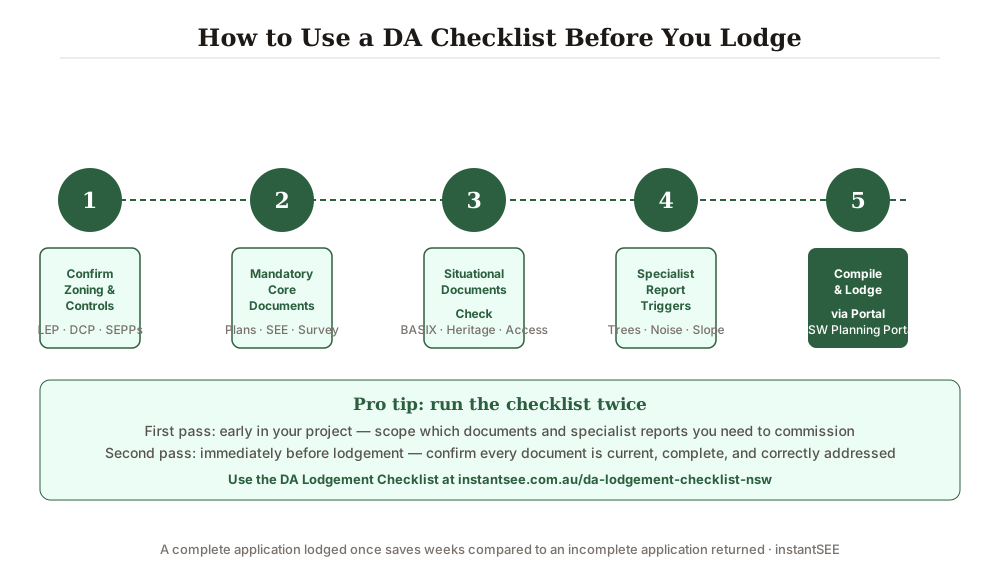
Figure 5: A five-step approach to using a DA checklist before you lodge.
- Confirm the zoning, LEP controls, and applicable DCP for the site
- Work through mandatory core documents — plans, SEE, survey, owner's consent, fee
- Identify situational documents triggered by your proposal type
- Identify specialist reports triggered by site constraints
- Lodge through the NSW Planning Portal with all documents in place
The DA Lodgement Checklist for NSW sets out every category in one place. Run through it twice: once early in your project to scope which documents you need to commission, and again immediately before lodgement to confirm everything is in order. The DA lodgement checklist guide walks through each document in detail, and our DA supporting documents guide explains the role each document plays in the assessment.
While you're preparing your DA documents — your SEE is the one we handle for you → https://instantsee.com.au/report/new
Frequently asked questions
What documents are required for a DA in NSW?
Is a Statement of Environmental Effects required for every DA?
When is an arborist report required for a NSW DA?
Do I need a BASIX certificate for a renovation?
How do I know which specialist reports my DA needs?
Ready to get your SEE report?
Skip the writing. Get a DA-ready Statement of Environmental Effects in 5 minutes.
Get your SEE report