Key takeaways
- Clause 4.6 allows a DA to breach a development standard lawfully
- Both limbs of the two-part test must be satisfied
- The 1 November 2023 reforms removed Planning Secretary concurrence
- Clause 4.6 cannot overcome a prohibition or an excluded standard
- Your clause 4.6 request must accompany the DA under cl 35B
A clause 4.6 variation is the mechanism that lets a NSW council approve a development application that breaches a development standard, such as a height limit or floor space ratio. It sits in clause 4.6 of the Standard Instrument (Local Environmental Plans) Order 2006, made under the Environmental Planning and Assessment Act 1979. If your project exceeds a numeric control in your council's Local Environmental Plan, clause 4.6 is how you ask for it to be approved anyway.
The problem is that a breach without a proper clause 4.6 request is one of the fastest ways to have a DA refused or sent back for more information. Councils cannot lawfully approve a contravention unless the request stacks up, and the rules changed on 1 November 2023, so older templates are now out of date.
This guide explains what a clause 4.6 variation is, the two-part test your request must meet, what the 2023 reforms changed, what you can and cannot vary, and how the variation fits into your DA.
Get a council-ready Statement of Environmental Effects for your DA in 5 minutes — no town planner, no waiting.
Get your SEE report →- What a clause 4.6 variation is and when you need one
- The exact two-part test your request must satisfy
- What the 2023 reforms changed and why old templates are out of date
- What clause 4.6 can vary — and what it cannot
- How to lodge the request as part of your DA
What Is a Clause 4.6 Variation?
A clause 4.6 variation is a written request lodged with your DA that asks the consent authority to approve development that breaches a development standard — without it, the council has no legal basis to grant consent.
A clause 4.6 variation is a written request, lodged with your DA, that asks the consent authority to grant consent even though the development contravenes a development standard. Clause 4.6 is headed "exceptions to development standards" and appears in almost every NSW Local Environmental Plan because it comes from the Standard Instrument that all standard LEPs are built on.
A development standard is a measurable control: the maximum height of buildings, the floor space ratio, a minimum lot size, a setback, or a minimum landscaped area. These are the numbers in your LEP and its maps. When your design pushes past one of them, you have two choices. You can redesign to comply, or you can keep the design and justify the breach through clause 4.6.
For example, if the maximum height of buildings on your land is set in the LEP and your proposed addition sits above it because of a sloping site, you do not automatically lose. You prepare a clause 4.6 request that explains why strict compliance with that height does not make sense for your site and why approving the extra height is still good planning. The council then decides whether it is satisfied.
The Two-Part Test Your Clause 4.6 Request Must Meet
Under clause 4.6(3) of the Standard Instrument, a consent authority must not grant consent unless the applicant demonstrates both limbs of the test — failure on either limb means the DA cannot be approved on that standard.
Under clause 4.6(3) of the Standard Instrument, a consent authority must not grant consent to development that contravenes a development standard unless it is satisfied the applicant has demonstrated two things: that compliance with the standard is unreasonable or unnecessary in the circumstances of the case, and that there are sufficient environmental planning grounds to justify the contravention.
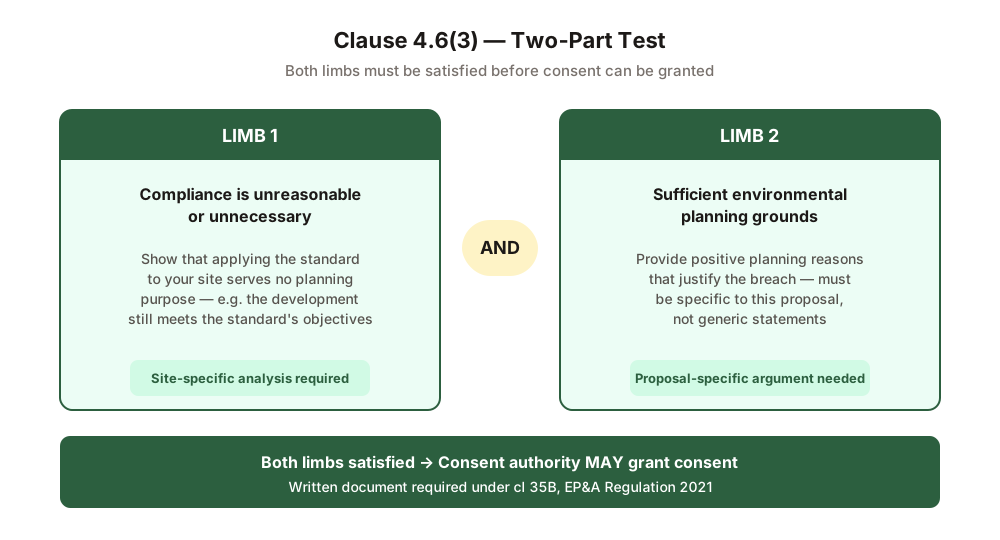
Figure 1: The two-part clause 4.6 test. Both limbs must be satisfied before consent can be granted.
Both limbs have to be met. The first limb asks why the standard does not need to be applied to your particular site and proposal. A common way to show this is that your development still achieves the objectives of the standard even though it breaks the number, so insisting on the number serves no planning purpose. The second limb asks for the positive planning reasons that justify the breach, which must be specific to your proposal rather than generic statements that could apply to any site.
Since the reforms, the requirement to put this justification in a document sits in clause 35B of the Environmental Planning and Assessment Regulation 2021. Your DA must be accompanied by a document setting out the grounds for both limbs. There is no fixed percentage cap on how far you can vary a standard, but the larger the contravention, the stronger your environmental planning grounds need to be.
What the 2023 Clause 4.6 Reforms Changed
Spend 5 minutes, not 3 weeks
instantSEE generates a complete, DA-ready Statement of Environmental Effects online. No town planner. No waiting.
Get your SEE report in 5 minutes →The reforms that took effect on 1 November 2023 simplified the structure around the two-part test — applications lodged before that date are assessed under the old wording, so the date your DA was lodged determines which version applies.
The reforms to clause 4.6 commenced on 1 November 2023 and apply to development applications lodged after that date. Applications lodged on or before that date are assessed under the old wording. The substance of the test did not change, but the structure around it was simplified.
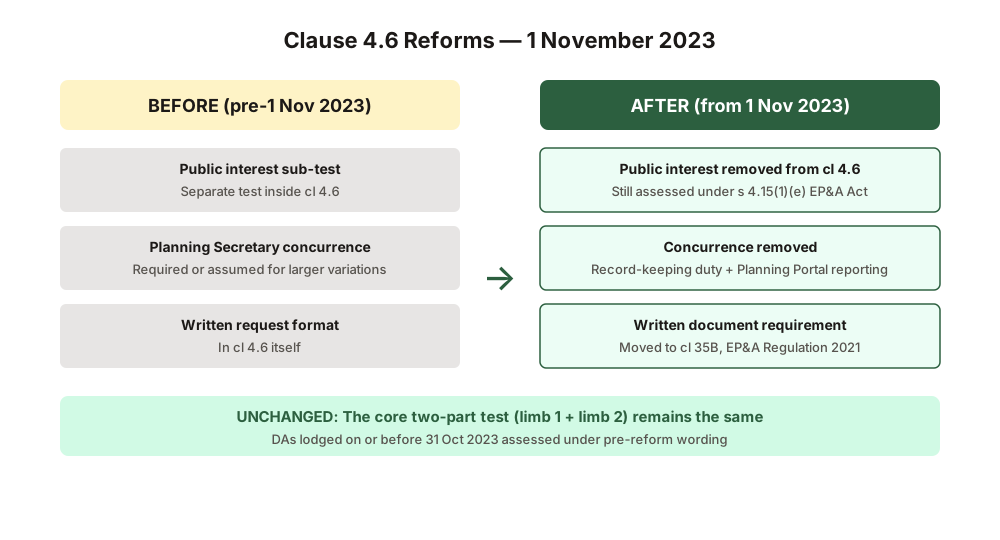
Figure 2: What the 2023 reforms changed. The two-part test stayed; the wrapper around it was trimmed.
Three changes matter most. First, the old separate "public interest" sub-test inside clause 4.6, which asked whether the proposal was consistent with the objectives of the standard and the zone, was removed from the clause. Public interest did not disappear, because a council must still consider it under section 4.15(1)(e) of the EP&A Act 1979 when it assesses any DA. Second, the requirement for the concurrence of the Planning Secretary, or assumed concurrence, was removed. In its place, clause 4.6(4) now requires the consent authority to keep a record of its assessment, and variations are reported through the NSW Planning Portal. Third, the wording shifted from the authority "considering a written request" to the authority being "satisfied the applicant has demonstrated" the test, with the written document requirement moved into clause 35B of the EP&A Regulation 2021.
The practical takeaway is that a clause 4.6 request written to a pre-2023 template can cite tests that no longer sit in the clause. Use the current two-limb structure.
What You Can and Cannot Vary Under Clause 4.6
Clause 4.6 varies development standards — it does not make a prohibited use permissible, and it cannot vary a standard that is expressly excluded from the clause, so the first check is always whether the use is permitted and the standard is open to variation.
Clause 4.6 can vary a development standard. It cannot make a prohibited development permissible. This is the single most important distinction, and getting it wrong wastes the cost of a DA.
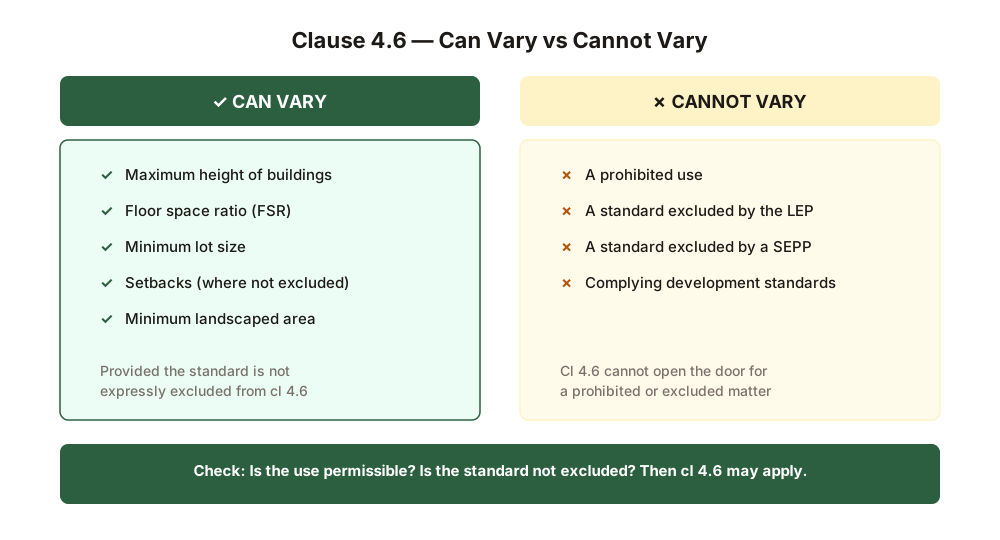
Figure 3: What clause 4.6 can and cannot vary. Standards are negotiable; prohibitions and exclusions are not.
You can use clause 4.6 to seek a variation to numeric standards like the maximum height of buildings, the floor space ratio, minimum lot size, and setbacks, provided that standard is not excluded. You cannot use it to approve a use that the LEP land use table prohibits in your zone, because a prohibition is not a development standard. You also cannot vary a standard that is expressly excluded from clause 4.6, either by your LEP itself or by a State Environmental Planning Policy that disapplies the clause to a particular standard. New exclusions added by councils must follow the section 9.1 Ministerial Direction and the NSW planning guide to exclusions.
Clause 4.6 also does not apply to complying development. A Complying Development Certificate must meet every standard in the relevant codes State Environmental Planning Policy exactly. If your project cannot meet those standards, the CDC pathway is closed and you move to a DA, where clause 4.6 may then be available. Before relying on clause 4.6, check the current text of clause 4.6 and any exclusions in your specific LEP on legislation.nsw.gov.au, because exclusions are instrument-specific. Before lodging, confirm the current text of clause 4.6 and any site-specific exclusions in your LEP on legislation.nsw.gov.au, as exclusions vary between instruments.
- Confirm the use is permissible in the zone
- Check the standard is not excluded from cl 4.6
- Show compliance is unreasonable or unnecessary in the circumstances
- Set out sufficient environmental planning grounds specific to your site
- Lodge the cl 35B document with the DA for the consent authority to assess
How a Clause 4.6 Variation Fits Into Your DA and SEE
A clause 4.6 request works alongside your Statement of Environmental Effects — it focuses on the standard you are breaching while the SEE addresses the wider environmental, social and economic effects of the proposal.
A clause 4.6 request does not replace your other DA documents. It works alongside your Statement of Environmental Effects and your plans, focusing only on the standard you are breaching while the SEE addresses the wider environmental, social and economic effects of the proposal.
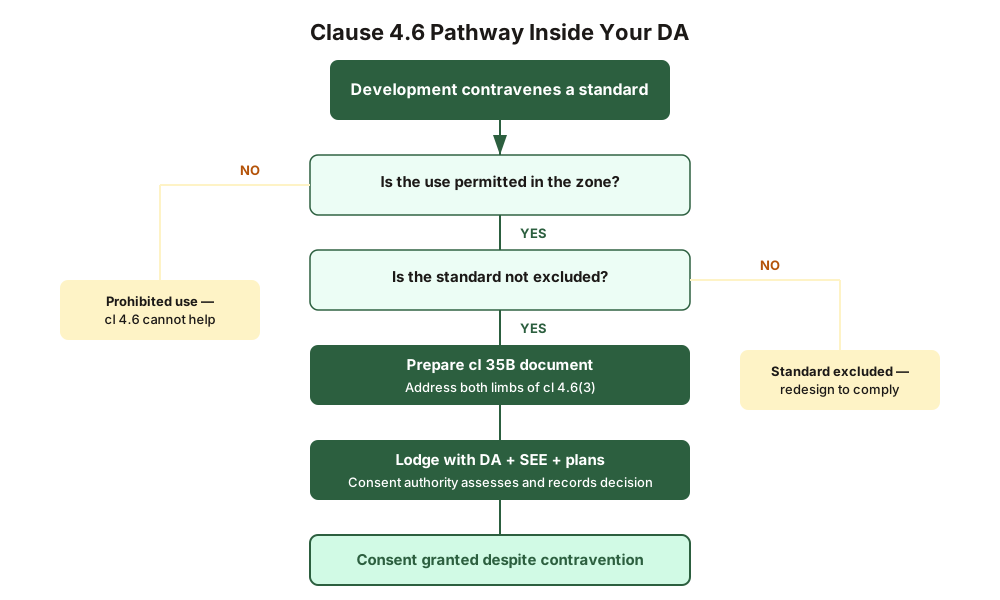
Figure 4: The clause 4.6 pathway inside your DA. The amber branch is where the request cannot be used.
The sequence is straightforward. Confirm which development standard you contravene and by how much. Check the use is permissible and the standard is not excluded. Prepare the clause 35B document addressing both limbs of the test. Lodge it with the DA so the consent authority can assess it and record its decision. If the authority is satisfied, it can grant consent despite the contravention.
Your SEE and your clause 4.6 request should tell a consistent story. The environmental planning grounds you raise in the request, such as better solar access or a design that responds to a sloping site, should match the impacts and benefits you describe in the SEE. A DA lodgement checklist for NSW helps you assemble every supporting document, and because the standards you are varying come from your council's planning controls, our guide to what a DCP is and whether you must follow it explains how those controls and the LEP work together. For the full lodgement process, see our guide to how to lodge a DA in NSW.
Frequently asked questions
What is a clause 4.6 variation in NSW?
How much can you vary a development standard under clause 4.6?
What changed in the clause 4.6 reforms in 2023?
Can clause 4.6 be used to approve a prohibited use?
Do I need a town planner to prepare a clause 4.6 request?
Ready to get your SEE report?
Skip the writing. Get a DA-ready Statement of Environmental Effects in 5 minutes.
Get your SEE report