Key takeaways
- No NSW law requires a town planner to lodge a DA
- The SEE is the part DIY applicants find hardest and most often get returned
- Some technical reports still need a qualified professional regardless
- DIY works best on simple residential sites with straightforward controls
- A planner typically costs $800 to $2,500 for the SEE alone
Yes, you can do your own DA in NSW without a planner. There is no law that requires a town planner or planning consultant to prepare or lodge a Development Application. The obligation under the planning system is on the applicant to supply the required information, so a property owner or owner-builder can fill in the forms, supply the plans, and write their own Statement of Environmental Effects.
The catch is that the work does not disappear when you skip the planner, it just moves to you. You take on interpreting the controls, writing the SEE, and managing the council back and forth. Some technical reports still need a qualified professional, no matter who lodges the DA.
Get a council-ready Statement of Environmental Effects for your DA in 5 minutes — no town planner, no waiting.
Get your SEE report →- Whether NSW law requires a planner for a DA
- The five jobs you take on when you self-prepare
- When DIY is realistic and when to get professional help
- What a town planner does that becomes your responsibility
- Why the SEE is the part most worth getting right
Can I Do My Own DA in NSW Without a Planner?
You can — nothing in the EP&A Act 1979 or the EP&A Regulation 2021 requires a town planner to prepare or lodge a DA — but the substance of the application still has to be right, and some technical documents still require a suitably qualified professional regardless of who lodges.
You can. Nothing in the Environmental Planning and Assessment Act 1979 or the Environmental Planning and Assessment Regulation 2021 requires a town planner to be involved in a DA. The applicant is responsible for the application, and that applicant can be you. Plenty of small residential DAs are prepared by owners, builders and building designers without a separate planning consultant.
What you cannot skip is the substance. The council still assesses your proposal against the matters in s 4.15(1) of the EP&A Act 1979, and your DA still needs a complete document set, including a SEE. There is also a limit to full DIY: certain supporting documents must come from suitably qualified people. A registered surveyor's survey, structural or stormwater engineering, a bushfire BAL assessment, an arborist report, and a heritage impact statement are typically prepared by accredited professionals, because councils expect them to be. You can write your own SEE, but you cannot self-certify a bushfire assessment. Our guide on whether a town planner is worth it for a small DA weighs that trade-off in more detail.
What Doing Your Own DA in NSW Involves
Doing your own DA means taking on five jobs from reading the controls through to responding to any council back and forth — each is manageable for a simple project, but together they explain why some owners decide the time is worth paying for.
Doing your own DA means taking on five jobs, from researching the rules to answering the council. Each is manageable for a straightforward project, but together they are why some owners decide the time is worth paying for.
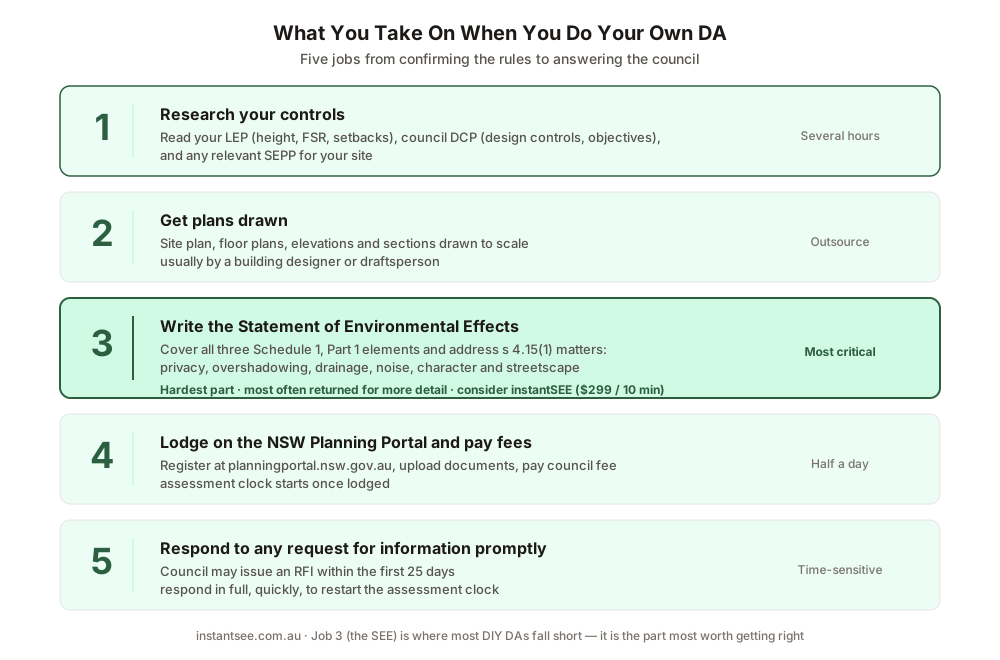
Figure 1: The five jobs you take on when you do your own DA.
First, research your controls by reading your Local Environmental Plan, the council's Development Control Plan, and any relevant State Environmental Planning Policy to find the height, floor space ratio, setback and other standards for your site. Second, get your site, floor and elevation plans drawn. Third, write your Statement of Environmental Effects. Fourth, register on the NSW Planning Portal at planningportal.nsw.gov.au, lodge the application and pay the council fee. Fifth, respond to any request for information the council sends. To make sure your document set is complete before you lodge, run it against our free DA lodgement checklist. For a full cost and time breakdown of going it alone, see our guide on the DIY development application in NSW.
When Doing Your Own DA Works, and When to Get Help
Spend 5 minutes, not 3 weeks
instantSEE generates a complete, DA-ready Statement of Environmental Effects online. No town planner. No waiting.
Get your SEE report in 5 minutes →Self-preparing works best on simple residential sites with clear, unconstrained controls — it gets risky when the site involves heritage, bushfire, flood, a variation to a development standard, or any factor that requires specialist judgement or accredited reports.
Doing your own DA works best when the project is simple and the site is unconstrained. It gets risky when the proposal needs technical judgement or specialist reports. Knowing which side your project sits on saves both money and weeks of delay.
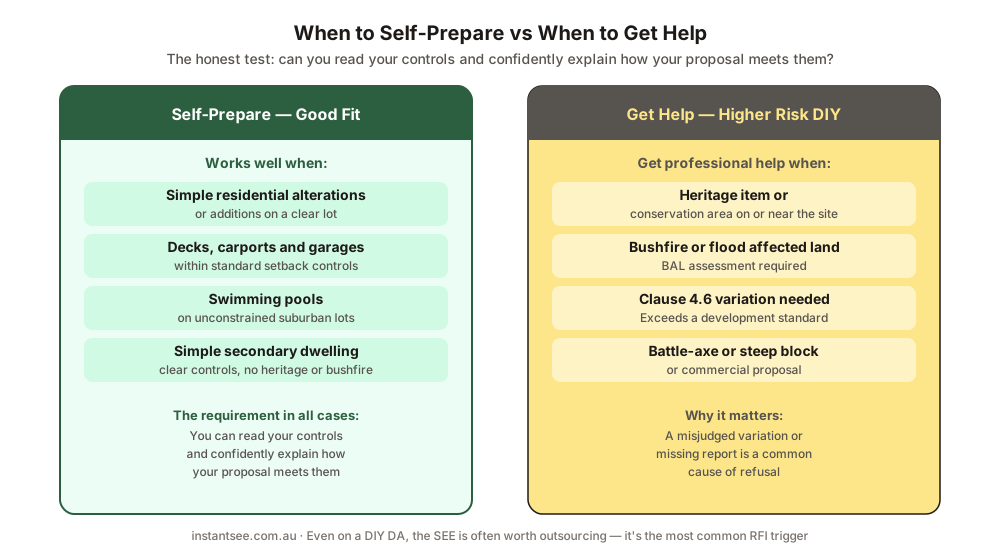
Figure 2: When self-preparing a DA is realistic, and when to bring in help.
Self-preparing tends to work for single dwelling alterations and additions, decks, carports, pools and a simple secondary dwelling on a clear residential lot, where the controls are straightforward and the impacts are modest. Get professional help when your site involves a heritage item or conservation area, bushfire or flood affected land, a clause 4.6 variation to a development standard, a battle-axe or steep block, or a commercial proposal. These trigger specialist reports and finer planning judgement, and a misjudged variation or a missing report is a common cause of refusal or a request for information. The honest test is whether you can read your controls and confidently explain how your proposal meets them.
- Can you read your LEP and DCP and confirm your proposal meets the setbacks, height and floor space controls?
- Is your site free from heritage, bushfire, flood, steep gradient and battle-axe constraints?
- Do you understand what s 4.15(1) matters you need to address in your SEE?
- Are all required technical reports — survey, stormwater, bushfire BAL — sourced from qualified professionals?
What a Town Planner Does That You Would Take On
A town planner's fee for a residential DA typically covers interpreting the controls, writing the SEE, coordinating documents, and managing council queries — seeing that list shows exactly what you are responsible for when you self-prepare.
A town planner's fee buys a defined piece of work, and seeing it laid out shows exactly what you take on by doing it yourself. For a residential DA, a planner typically charges $800 to $2,500 and takes one to three weeks to prepare the SEE.
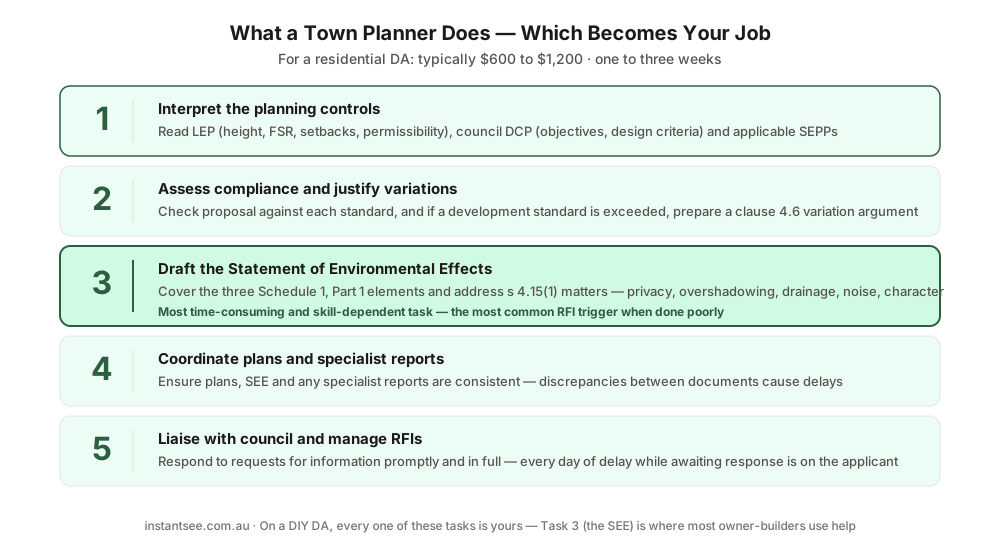
Figure 3: The planner's job, which becomes your job in a DIY DA.
For that fee, a planner interprets your LEP, DCP and SEPP controls, assesses your proposal for compliance and justifies any variations, drafts the Statement of Environmental Effects, coordinates your plans and specialist reports so they are consistent, and depending on the agreed scope, liaises with council and manages requests for information. The most time-consuming and skill-dependent part is interpreting the controls and writing the SEE that ties them to your proposal. If your project is simple, you can reasonably take this on. Our guide on owner builder DA requirements in NSW sets out the full document set you would be responsible for assembling.
The SEE Is the Hardest Part of a DIY DA
The Statement of Environmental Effects is where DIY applicants most often fall short — it must address the s 4.15(1) matters and state how each impact is controlled, and the gap between naming an impact and explaining the mitigation is where most requests for information originate.
The Statement of Environmental Effects is the document DIY applicants find hardest, and the one most worth getting right. It is where you explain your proposal against the s 4.15(1) matters and show how each impact is managed, and an incomplete one is the single most common trigger for a council request for information.
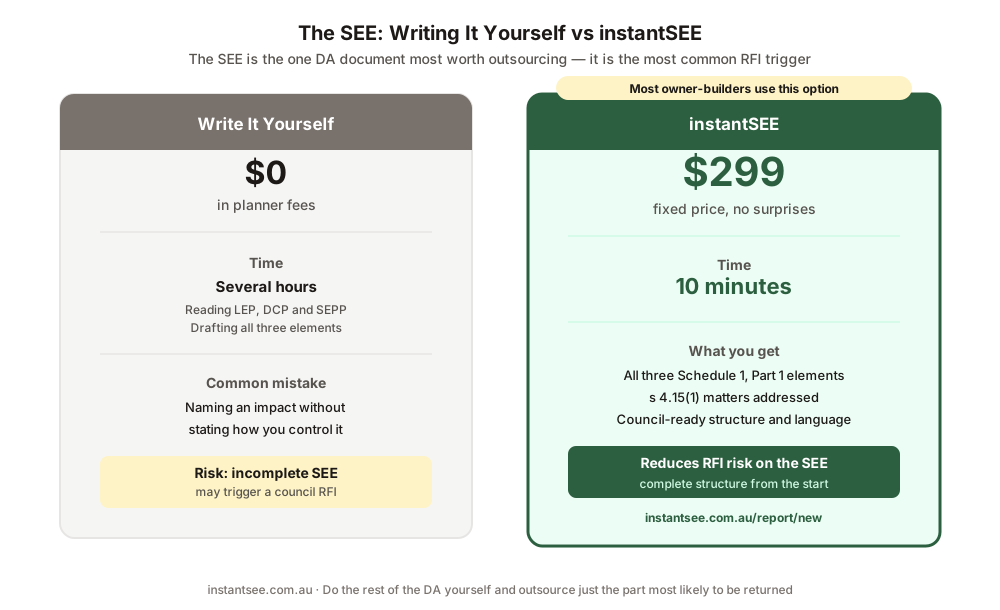
Figure 4: The SEE is the one DA document most worth outsourcing.
You can write the SEE yourself for nothing but your time, but expect several hours reading controls, and accept the risk that an incomplete Statement of Environmental Effects comes back as a request for information. The classic mistake is naming an impact, such as overshadowing or privacy, without stating how you control it. This is why many owners doing the rest of the DA themselves still outsource the SEE: instantSEE produces a DA-ready SEE in 5 minutes , covering the Schedule 1 content and the s 4.15(1) matters in the structure a council expects. Our owner builder SEE guide explains exactly what the document must cover.
Frequently asked questions
Can I do my own DA in NSW without a town planner?
Do I need a planner to write my Statement of Environmental Effects?
What parts of a DA must be done by a qualified professional?
When should I not do my own DA?
Is it cheaper to do my own DA in NSW?
Ready to get your SEE report?
Skip the writing. Get a DA-ready Statement of Environmental Effects in 5 minutes.
Get your SEE report