Key takeaways
- A planner earns their fee on complex or constrained sites
- No law requires a town planner for a NSW DA
- Compliant simple DAs are within reach for a homeowner
- Clause 4.6 variations are where planners add real value
- The SEE can be generated instead of $1,200
For most small, compliant residential DAs in NSW, hiring a town planner is not worth it. A planner earns their fee on complex or constrained sites, on applications that need a clause 4.6 variation, and on proposals likely to draw objections. For a standard addition or a code-compliant new dwelling, you can prepare and lodge the DA yourself.
Town planner fees are not small. A planner charges $800 to $2,500 just for the Statement of Environmental Effects, and $2,000 to $5,000 or more to manage a full DA. For a simple project, that can be most of your paperwork budget spent on work you could do yourself, which is exactly why the "worth it" question matters.
Get a council-ready Statement of Environmental Effects for your DA in 5 minutes — no town planner, no waiting.
Get your SEE report →- When a town planner is genuinely worth the fee in NSW
- Whether there is a legal requirement to use a planner for a DA
- What a planner actually adds beyond writing the SEE
- When you can safely prepare and lodge a DA yourself
- What a small DA costs with and without a planner
Is a Town Planner Worth It for a Small DA in NSW?
A town planner is worth it when your DA carries real planning risk, and often optional when it does not — the deciding factor is your site and your design.
A town planner is worth it when your DA carries real planning risk, and often optional when it does not. The deciding factor is your site and your design, not the size of the build or your budget.
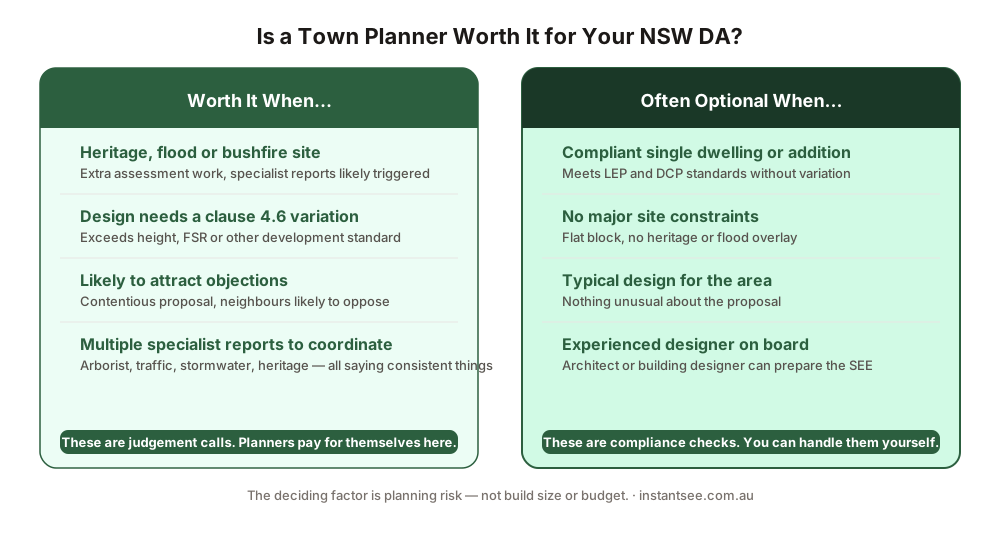
Figure 1: A town planner is worth it where there is planning risk, and often optional where there is not.
A planner is worth the fee if your site is affected by heritage, flooding or bushfire, if your design exceeds a development standard and needs a clause 4.6 variation, if the proposal is likely to attract objections, or if several specialist reports have to be coordinated into one coherent case. A planner is often optional if you are building a compliant single dwelling or addition, your site has no major constraints, your design is typical for the area, and you have an experienced designer on board. The honest test is whether your DA is a yes-or-no compliance check or a judgement call. Compliance checks you can handle. Judgement calls are where a planner pays for themselves.
Do You Legally Need a Town Planner in NSW?
No — there is no legal requirement to use a town planner for a NSW DA, and a homeowner or owner-builder can lodge one themselves through the Planning Portal.
No. There is no legal requirement in NSW to engage a town planner to prepare or lodge a Development Application. A homeowner or owner-builder can be the applicant and can lodge the DA themselves through the NSW Planning Portal.
This matters because a lot of people assume a planner is a mandatory step, the way a registered surveyor or a certifier sometimes is. They are not. A planner is a professional you choose to engage for expertise and time, not a gatekeeper you must pay to get through the door. That single fact changes the question from "how do I find a planner" to "does my project actually need one", which is a much cheaper question to answer. For a straightforward project, the people you genuinely need are usually your designer for the plans and, for a new dwelling, an assessor for the BASIX certificate.
What Does a Town Planner Actually Add?
Spend 5 minutes, not 3 weeks
instantSEE generates a complete, DA-ready Statement of Environmental Effects online. No town planner. No waiting.
Get your SEE report in 5 minutes →When a planner is worth it, the value is real and specific — on a difficult DA, it is their experience that gets the application over the line.
When a planner is worth it, the value is real and specific. A good town planner does far more than fill in a template, and on a difficult DA that work is what gets the application over the line.
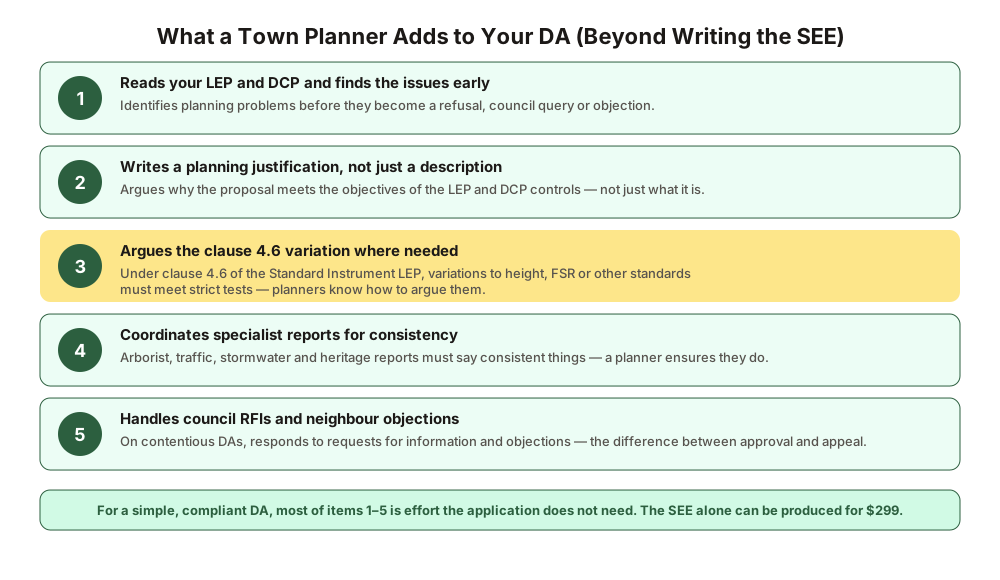
Figure 2: What a town planner adds to a DA, beyond writing the document.
A planner reads your Local Environmental Plan and Development Control Plan and finds the issues early, before they become a refusal. They write a planning justification rather than a plain description, arguing why the proposal meets the objectives of the controls. Where your design exceeds a standard, they argue the clause 4.6 variation. Under clause 4.6 of the Standard Instrument Local Environmental Plan, you can request a variation to a development standard such as building height or floor space ratio, and that request is assessed against strict planning tests and now published on a public register. They coordinate your specialist reports so they say consistent things, and they handle the council's questions and any neighbour objections. On a contentious DA, that experience can be the difference between an approval and a costly appeal. On a simple, compliant DA, much of it is effort the application does not need.
When Can You Skip the Town Planner?
You can skip the town planner when your DA is straightforward and clearly complies with the rules — the risk of doing it yourself is low precisely because there is little to argue.
You can skip the town planner when your DA is straightforward and clearly complies with the rules. The risk of doing it yourself is low precisely because there is little to argue.
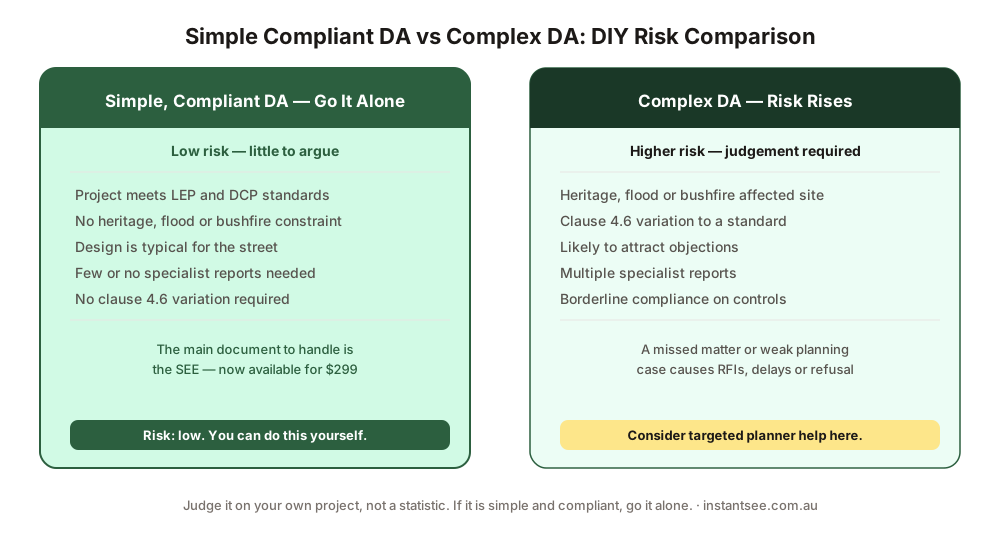
Figure 3: For a simple, compliant DA you can go it alone. For a complex or contentious one, the risk rises sharply.
If your project meets your LEP and DCP, sits on a site with no special constraints, and follows a common pattern for the street, you can prepare and lodge it yourself. The main document people worry about is the Statement of Environmental Effects, and that is the one part you can now produce without a planner. Where the picture changes is risk: a constrained site, a clause 4.6 variation, or a DA likely to draw objections all raise the chance of a request for information, a delay, or a refusal if the case is not made well. There is no reliable public figure for how often DAs are refused or queried, so judge it on your own project rather than a statistic. If it is simple and compliant, go it alone. If it is borderline, get help.
- Does your site have heritage, flood or bushfire constraints? If yes, consider a planner
- Does your design exceed a height or floor space ratio standard? If yes, a clause 4.6 variation needs a planner
- If no constraints and fully compliant, the only document worth getting help with is the SEE
What a Small DA Costs With and Without a Planner
For a small DA, the planner-or-not decision mostly changes one line — who prepares the SEE — since the plans and certificates cost much the same either way.
The cost difference between using a planner and not using one, for a small DA, comes down mostly to one line: who prepares the SEE. The plans and certificates cost much the same either way.
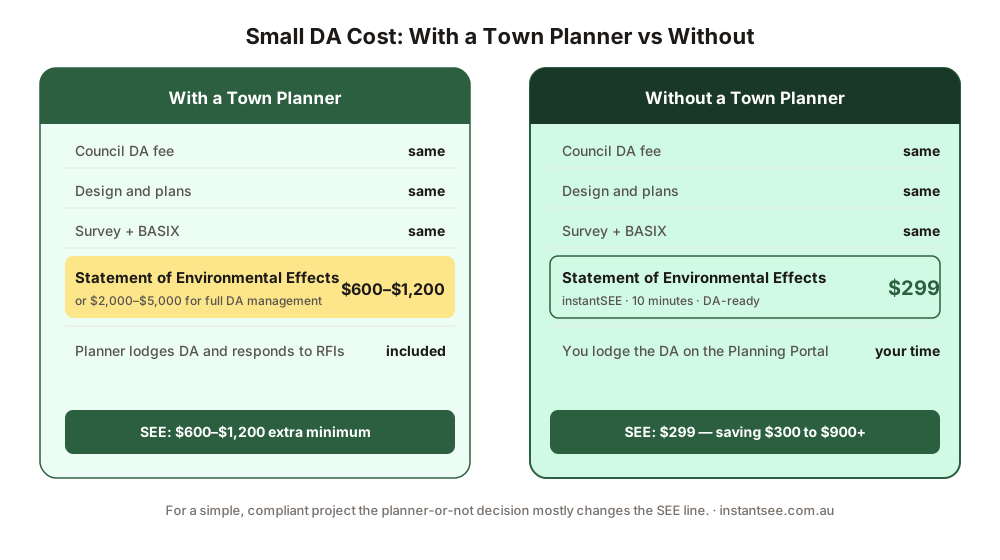
Figure 4: For a small DA, the planner-or-not decision mostly changes the SEE line.
With a town planner, you pay $800 to $2,500 for the SEE, or $2,000 to $5,000 if they manage the whole DA. Without one, your designer prepares the plans as quoted, you lodge the application yourself, and the SEE can be produced with instantSEE online. For a deeper look at the planner side, see our guide on town planner fees in NSW, and for the full picture of every line on a DA, our breakdown of how much a DA costs in NSW. You can also estimate your own with our free town planner cost calculator. For a simple, compliant project, the saving is real and the risk is low, which is the whole case for doing it yourself.
Frequently asked questions
Is a town planner worth it for a small DA in NSW?
Do I need a town planner to lodge a DA in NSW?
When should I hire a town planner?
Can my architect or designer write the SEE instead of a planner?
How much does a town planner cost for a small DA?
Ready to get your SEE report?
Skip the writing. Get a DA-ready Statement of Environmental Effects in 5 minutes.
Get your SEE report