Key takeaways
- Owner builders need a SEE whenever their project needs a DA
- The owner-builder permit never replaces the SEE — they are separate
- Complying development on a CDC is the only way to avoid a SEE
- The SEE must state impacts, how identified, and mitigation measures
- Missing mitigation statements are the leading cause of council RFIs
Yes. If your project needs a Development Application, an owner-builder needs a Statement of Environmental Effects, the same as any other applicant. Being an owner-builder is a building licence matter, not a planning exemption, so an owner builder SEE in NSW is required whenever the development needs council consent.
The trap is assuming the owner-builder permit and the planning approval are the same thing, or that doing the work yourself means lighter paperwork. It does not. Many owner-builders only discover at lodgement that their DA was always going to need a full SEE, and an incomplete one is the single most common reason a council sends an application back.
Get a council-ready Statement of Environmental Effects for your DA in 5 minutes — no town planner, no waiting.
Get your SEE report →- When an owner-builder needs a SEE and the one situation when you do not
- How the planning system and the Home Building Act 1989 interact
- What your owner-builder SEE must cover under Schedule 1 of the EP&A Regulation 2021
- How the SEE and the owner-builder permit differ in purpose and timing
- The three realistic options for preparing your owner-builder SEE
Do Owner Builders Need a SEE in NSW?
An owner-builder needs a SEE whenever the development requires consent — the SEE requirement attaches to the proposal under Schedule 1 of the EP&A Regulation 2021, not to who carries out the building work, so owner-builder status gives no planning exemption.
An owner-builder needs a SEE whenever the development requires consent, because the SEE is part of the Development Application itself. Under the Environmental Planning and Assessment Regulation 2021 (Schedule 1), a DA must be accompanied by a Statement of Environmental Effects. That requirement attaches to the proposal, not to who carries out the work.
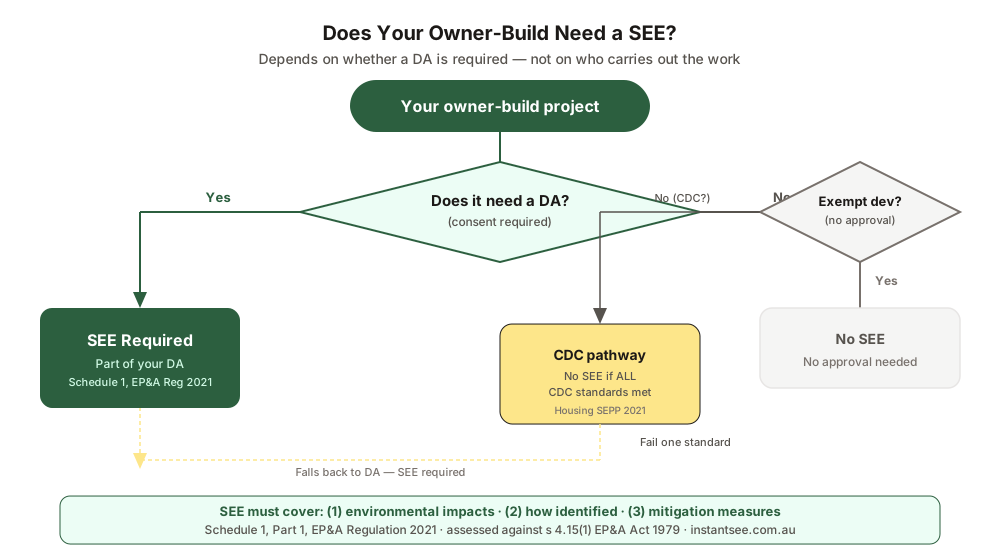
Figure 1: Whether your owner-build needs a SEE depends on whether it needs a DA.
This is where the two systems get confused. Your right to build the work yourself comes from the Home Building Act 1989, which is about licensing and who supervises construction. Whether the development can happen on the land at all comes from planning law, and that question is answered by your DA. The planning system assesses the development, not the builder, so an owner-builder, a licensed builder and a developer all lodge the same application with the same SEE. Our owner builder DA requirements guide sets out the full document set that sits alongside the SEE.
When an Owner Builder Does Not Need a SEE
You avoid a SEE only by avoiding a DA altogether — either because the work is exempt development requiring no approval, or because it qualifies as complying development approved by a private certifier on a Complying Development Certificate instead.
You do not need a SEE if your project does not need a DA. The two pathways that skip the DA, and therefore the SEE, are exempt development and complying development. Exempt development, such as a small garden shed or a minor deck within the set limits, needs no approval at all. Complying development is approved by a private or council certifier through a Complying Development Certificate (CDC) instead of a DA.
A common example is a secondary dwelling, or granny flat. If it meets every standard for complying development under the State Environmental Planning Policy (Housing) 2021, it can proceed on a CDC with no DA and no SEE. If it breaches even one standard, such as a setback or maximum floor area, it drops back to the DA pathway and a SEE is required again. Our guide on exempt and complying development in NSW explains how to tell which pathway your project falls into before you commit to one.
What Your Owner Builder SEE Must Cover
Spend 5 minutes, not 3 weeks
instantSEE generates a complete, DA-ready Statement of Environmental Effects online. No town planner. No waiting.
Get your SEE report in 5 minutes →Your owner-builder SEE must cover three statutory elements — the environmental impacts, how they were identified, and the measures to lessen the harm — and it is the third element that most incomplete SEEs leave out, triggering a council request for information.
Your owner-builder SEE must cover three things, and they are set by law, not by your council's preference. Under Schedule 1, Part 1 of the EP&A Regulation 2021, a SEE must indicate the environmental impacts of the development, how those impacts were identified, and the measures proposed to protect the environment or lessen the harm.
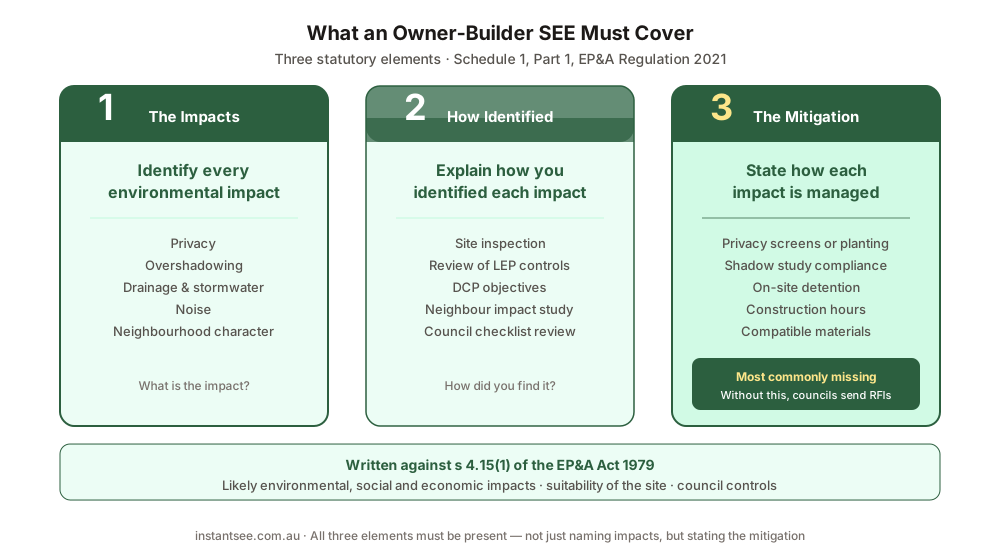
Figure 2: The three parts every SEE must cover, plus the assessment matters behind them.
You write those three parts against the matters a council must weigh under s 4.15(1) of the Environmental Planning and Assessment Act 1979, which include the likely environmental, social and economic impacts and the suitability of the site. For a typical owner-build, that means addressing privacy, overshadowing, drainage, noise and neighbourhood character, then stating how each is managed. The part owner-builders most often leave out is the third one, the mitigation. Naming an impact and forgetting to say how you control it is a classic trigger for a council request for information. To check your content before you lodge, run it against our free SEE checklist, and see what must be included in a SEE for a fuller breakdown of each section.
The SEE Is Not the Owner Builder Permit
The SEE and the owner-builder permit have different purposes, different legal bases, and different timing — the SEE belongs to the planning stage under the EP&A Act 1979, and the permit belongs to the construction stage under the Home Building Act 1989, and one never substitutes for the other.
The SEE and the owner-builder permit are two different documents, with two different jobs, under two different Acts. The SEE is a planning document inside your DA. The owner-builder permit is a construction approval that lets you supervise the building work yourself instead of engaging a licensed builder.
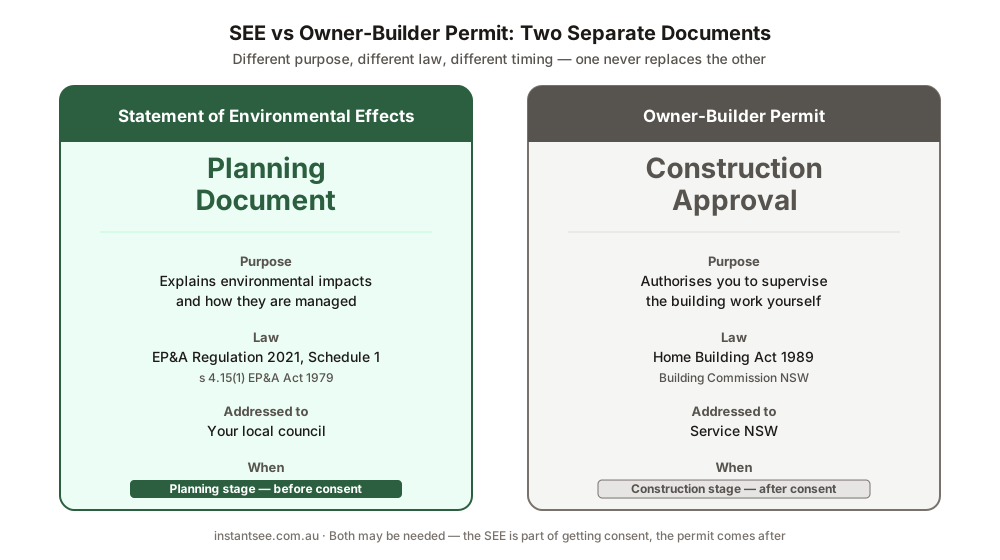
Figure 3: The SEE and the owner-builder permit are separate approvals, not the same paperwork.
The owner-builder permit is issued under the Home Building Act 1989, administered by Building Commission NSW, with applications made through Service NSW. You generally need a permit when the reasonable market cost of the residential building work is more than $10,000, and you must complete an approved owner-builder course, plus hold a White Card, when the work is worth $20,000 or more. Crucially, the permit comes after your consent, because Service NSW asks for the approved DA or CDC as part of the permit application. The SEE belongs to the planning stage that happens first. For the full order of operations and the permit detail, see our owner builder DA requirements guide.
- Confirm your project needs a DA before deciding whether a SEE is required — CDC projects skip the SEE
- Your SEE must name each environmental impact, explain how it was identified, and state the mitigation measure — all three parts
- Do not confuse the SEE with the owner-builder permit — the SEE goes in your DA, the permit comes after approval
- Check your SEE covers the s 4.15(1) matters including privacy, overshadowing, drainage and neighbourhood character
How to Prepare an Owner Builder SEE Yourself
Three options are available for an owner-builder's SEE — write it yourself, hire a town planner, or use a fixed-price tool — and the trade-off is always cost and time against the risk of an incomplete document triggering a request for information.
You have three realistic options for getting your owner-builder SEE, and they trade cost against time and risk. You can write it yourself for nothing but your time, hire a town planner, or use a tool that prepares it for you.
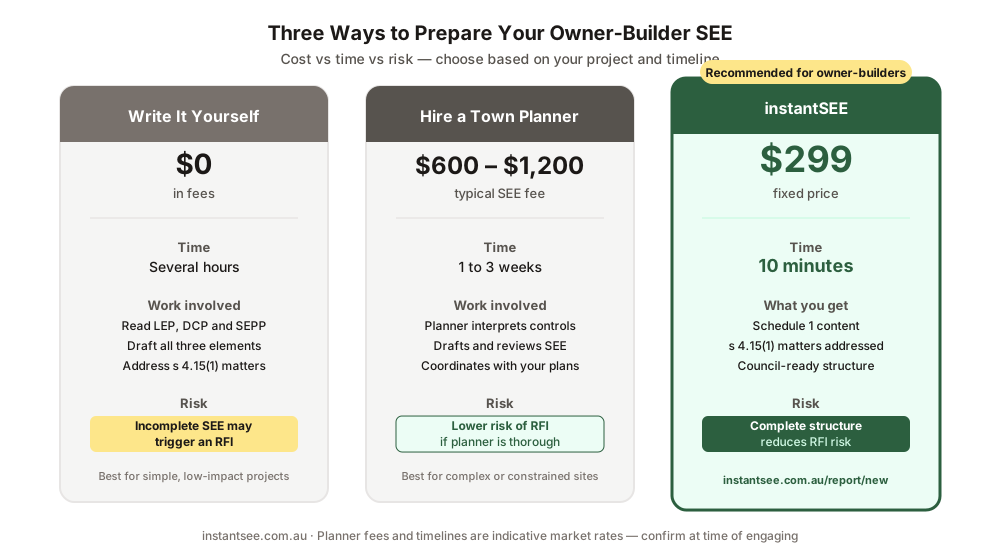
Figure 4: Three ways to get your owner-builder SEE, by cost and time.
Writing it yourself costs nothing in fees, but expect hours of reading your Local Environmental Plan, Development Control Plan and any relevant SEPP, and accept the risk that an incomplete SEE comes back as a request for information that delays your DA. A town planner in NSW typically charges $800 to $2,500 to prepare a SEE and takes one to three weeks to turn it around. instantSEE produces a complete, DA-ready SEE in 5 minutes , covering the Schedule 1 content and the s 4.15(1) matters in the structure a council expects. For an owner-builder watching both the budget and the calendar, the gap between two weeks and 5 minutes is usually the deciding factor.
Frequently asked questions
Do owner builders need a Statement of Environmental Effects in NSW?
Does an owner-builder permit replace a SEE?
Do I need a SEE for a granny flat as an owner-builder?
Can I write my own owner-builder SEE?
What owner builder planning documents do I lodge besides the SEE?
Ready to get your SEE report?
Skip the writing. Get a DA-ready Statement of Environmental Effects in 5 minutes.
Get your SEE report