Key takeaways
- Owner builder DAs need identical documents to any DA applicant
- The owner-builder permit comes after DA approval, not before
- Work over $10,000 requires a permit; $20,000 or more needs a course
- Development consent and the permit come from different bodies
- The SEE is the document that most often holds up owner-builder consent
Owner builder DA requirements in NSW are the same as for any applicant: a complete Development Application, including a Statement of Environmental Effects, architectural plans, a cost estimate and the owner's consent. Being an owner-builder does not change what your DA needs. It adds a separate step, the owner-builder permit, which comes after your DA is approved, not before.
The confusion that trips up most owner-builders is treating the DA and the owner-builder permit as one approval. They are two different things, issued by two different bodies, in a fixed order. Get the order wrong and you can waste weeks applying for a permit you are not yet eligible to hold.
Get a council-ready Statement of Environmental Effects for your DA in 5 minutes — no town planner, no waiting.
Get your SEE report →- What documents your owner-builder DA must include
- How the owner-builder permit differs from development consent
- The value thresholds that trigger the permit and the approved course
- The correct approval sequence from zoning check to permit
- What your Statement of Environmental Effects must cover to avoid delays
What Are the Owner Builder DA Requirements in NSW?
Owner builder DA requirements are the same as any DA — the planning system assesses the development, not the builder, so a complete application with a Statement of Environmental Effects is required regardless of who supervises the build.
Your Development Application as an owner-builder must include the same documents as any other DA. There is no separate, lighter owner-builder DA. Under the EP&A Regulation 2021, every DA needing council consent must be accompanied by a Statement of Environmental Effects, along with the plans and supporting material your project and council require.
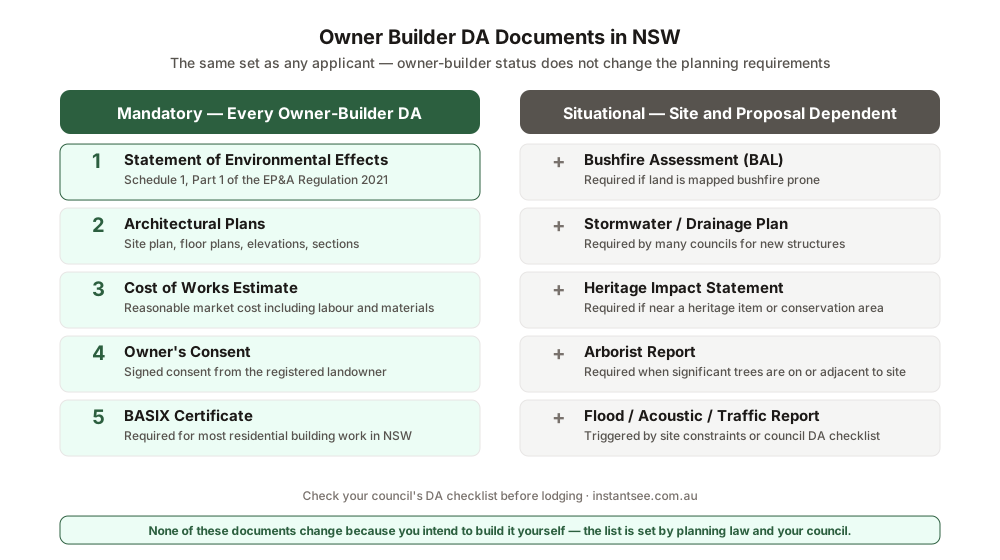
Figure 1: The DA documents an owner-builder lodges, the same set as any applicant.
A typical owner-builder DA includes site, floor and elevation plans, a Statement of Environmental Effects, a cost estimate, owner's consent, a BASIX certificate where required, and any specialist reports your site triggers, such as a bushfire, stormwater or heritage report. None of these are added or removed because you intend to build it yourself. The planning system assesses the development, not the builder. To make sure your set is complete before you lodge, run it against our free DA lodgement checklist, and see the full lodgement checklist guide for what each item should contain.
Owner Builder Permit vs Development Consent: Two Approvals
Development consent and the owner-builder permit are two separate approvals from two different bodies — conflating them is the most common owner-builder mistake and the one most likely to waste weeks of your build timeline.
Development consent and an owner-builder permit are two separate approvals, and conflating them is the most common owner-builder mistake. Development consent is the planning approval, granted by your council when it approves your DA. The owner-builder permit is a construction approval that lets you supervise the work yourself instead of engaging a licensed builder.
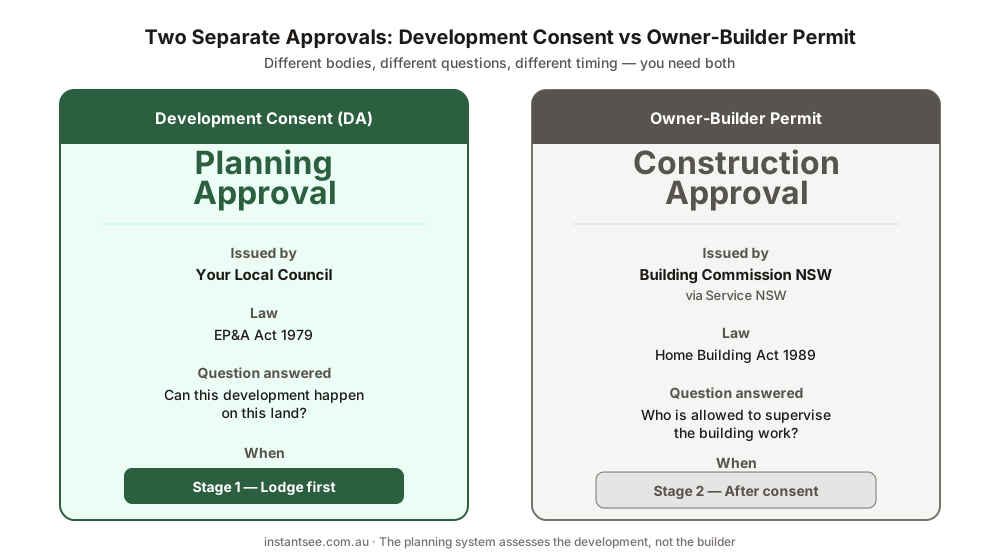
Figure 2: Development consent and the owner-builder permit are two different approvals.
The two come from different places. Development consent, your DA, is decided by your local council under the Environmental Planning and Assessment Act 1979. The owner-builder permit is issued under the Home Building Act 1989, administered by Building Commission NSW, with applications made through Service NSW. One answers whether the development can happen on the land; the other answers who is allowed to supervise building it. You need both for an owner-build that requires consent, but they are assessed independently and at different stages. If your project happens to qualify as complying development, our guide on exempt and complying development in NSW explains the faster CDC pathway that can replace a DA.
When Do You Need an Owner Builder Permit?
Spend 5 minutes, not 3 weeks
instantSEE generates a complete, DA-ready Statement of Environmental Effects online. No town planner. No waiting.
Get your SEE report in 5 minutes →The threshold that triggers the permit requirement is $10,000 in reasonable market cost of work — not what you pay out of pocket, but the full labour-and-materials value a tradesperson would charge for the same job.
You need an owner-builder permit when the reasonable market cost of the residential building work, including labour and materials, is more than $10,000 and the work requires development consent or is complying development. Below that value, and where you are not engaging a licensed builder to supervise, the permit requirement does not apply.
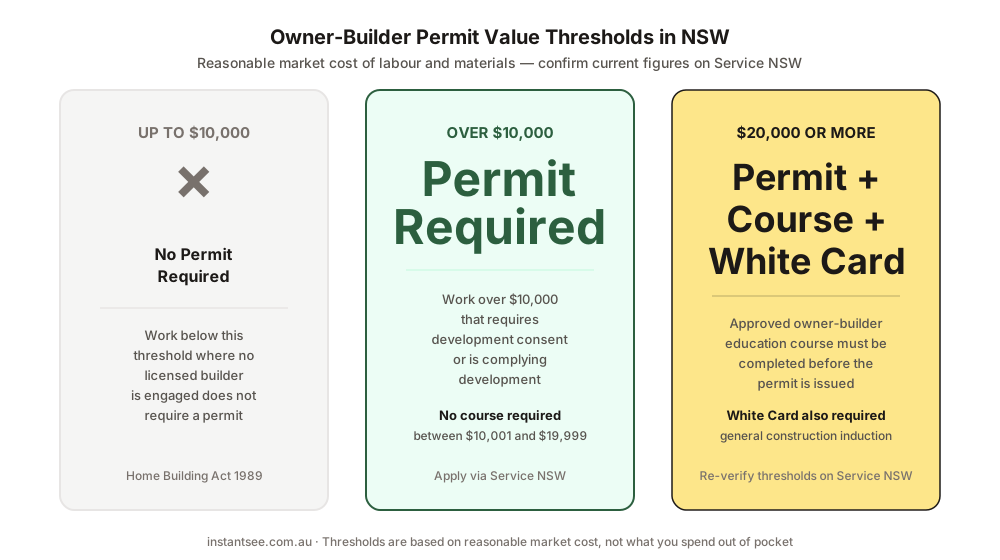
Figure 3: The value thresholds that decide when a permit and a course are required.
Two thresholds matter. If the work is worth more than $10,000, you need the owner-builder permit. If it is worth $20,000 or more, you must also complete an approved owner-builder education course before the permit is issued, and hold a current White Card for general construction induction. Between $10,001 and $19,999 the permit is required but the course is not. These figures come from the Home Building Act 1989 framework and are the current NSW thresholds, so confirm them on Service NSW before you apply. The permit covers building work on a single dwelling, a dual occupancy or a secondary dwelling such as a granny flat.
The Right Order: DA First, Then Owner Builder Permit
The sequence is fixed — consent first, permit second, build third — because the permit application requires an approved DA or CDC as part of its eligibility check, so there is no pathway to get the permit before planning approval exists.
The correct sequence is development consent first, owner-builder permit second. You cannot apply for the owner-builder permit until you already hold an approved DA or a Complying Development Certificate, because Service NSW requires the approved consent as part of the permit application.
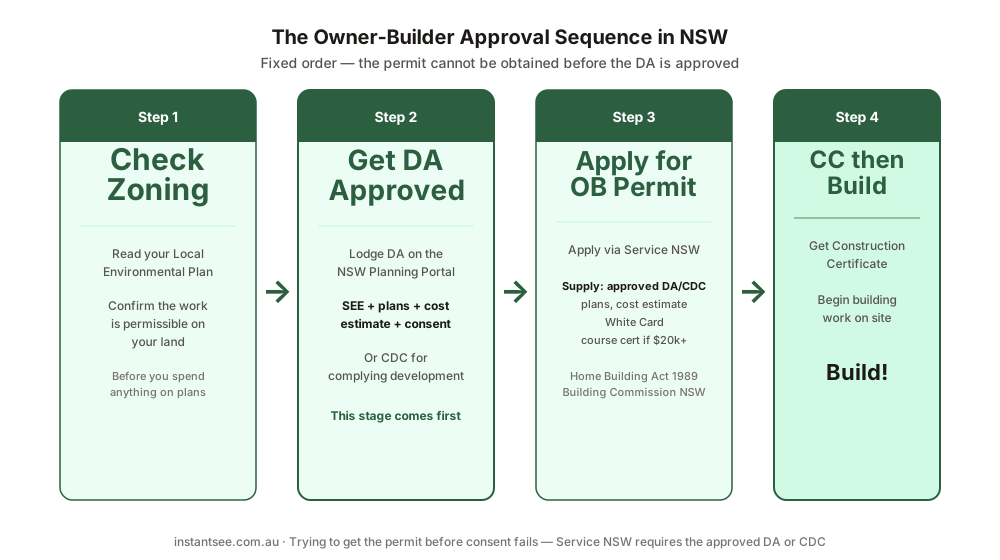
Figure 4: The owner-builder approval sequence, from zoning check to construction.
In practice the order runs like this. First, confirm the work is permissible on your land by checking your zone and the controls that apply. Second, obtain development consent by lodging a DA and having it approved, or by securing a CDC if the project is complying development. Third, apply through Service NSW for the owner-builder permit, supplying the approved consent, your plans, the cost estimate, your White Card and the course certificate if the work is $20,000 or more. Fourth, obtain a Construction Certificate, then build. Our step-by-step guide on how to lodge a DA in NSW covers the consent stage in detail. Trying to get the permit before consent simply does not work, because the eligibility check fails without an approved DA or CDC.
- Confirm your project needs a DA before applying for the owner-builder permit — the permit requires approved consent
- Include a Statement of Environmental Effects in your DA covering all Schedule 1 matters under the EP&A Regulation 2021
- Wait for your DA to be approved before applying to Service NSW for the owner-builder permit
- Complete the approved owner-builder course and hold a White Card if your work is valued at $20,000 or more
Owner Builder DA Requirements: What Your SEE Must Cover
The Statement of Environmental Effects is where most owner-builder DAs fall short — it must identify each environmental impact, explain how it was identified, and state the mitigation measure for each, and the third element is what most incomplete SEEs leave out.
The Statement of Environmental Effects is the part of your owner-builder DA documents that most often decides how smoothly the application goes. Under Schedule 1, Part 1 of the EP&A Regulation 2021, your SEE must indicate the environmental impacts of the development, how you identified them, and the measures proposed to protect the environment or lessen the harm.
You address those three points against the matters a council must consider under s 4.15(1) of the Environmental Planning and Assessment Act 1979, which include the likely environmental, social and economic impacts of the development. For a typical owner-build, that means dealing with privacy, overshadowing, drainage, noise and neighbourhood character, then explaining how each is managed. The SEE is also the document where self-preparing owner-builders most often fall short, usually by naming an impact and forgetting to state the mitigation, which is a common trigger for a council request for information. Getting it complete before you lodge keeps your consent, and therefore your permit application, moving.
Frequently asked questions
Do owner builders need a DA in NSW?
What documents does an owner builder DA need in NSW?
Do I need an owner builder permit and a DA?
When does an owner builder need a permit in NSW?
Can I lodge my own DA as an owner builder?
Ready to get your SEE report?
Skip the writing. Get a DA-ready Statement of Environmental Effects in 5 minutes.
Get your SEE report