Key takeaways
- The BASIX tool runs the assessment; the certificate is output
- Three targets must pass: water, energy, and thermal comfort
- Generate the certificate within three months of lodging your DA
- NatHERS and BASIX overlap on thermal comfort, not interchangeable
- BASIX certificate and SEE are separate mandatory DA documents
The BASIX assessment is the process you run inside the online BASIX tool; the BASIX certificate is the document that comes out the other end. You need the certificate to lodge a residential DA in NSW — not the tool printout, not a screenshot, but the issued certificate.
Get a council-ready Statement of Environmental Effects for your DA in 5 minutes — no town planner, no waiting.
Get your SEE report →- Why the BASIX tool and the BASIX certificate are not the same thing
- What the BASIX assessment actually measures across its three targets
- How BASIX and NatHERS relate — and where they differ
- Where the BASIX certificate sits inside a complete DA document set
- What happens if your certificate is more than three months old at lodgement
The BASIX Tool and the BASIX Certificate Are Not the Same Thing
The BASIX tool is the online assessment software; the BASIX certificate is the formal compliance document it generates — and councils check for the certificate, not evidence you used the tool.
The BASIX tool is the online software on the NSW Planning Portal that you use to run a sustainability assessment of your residential design. You enter the site, floor area, glazing, insulation, fittings, hot water system, and any pool or spa. When your design meets the three minimum targets — water, energy, and thermal comfort — the tool generates a certificate.
That certificate is the BASIX certificate. It is a formal compliance document, numbered and dated, that records the specific commitments your build must deliver. A council accepting a DA will check that a current certificate is attached; it will not accept a tool printout or a screenshot in its place.
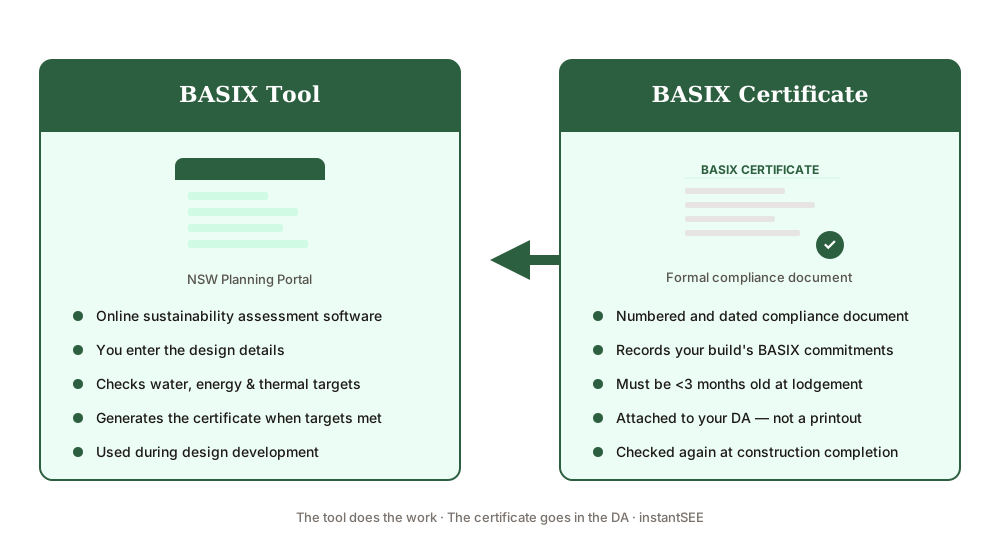
Figure 1: The BASIX tool runs the assessment; the BASIX certificate is the output you lodge.
The practical difference matters most at two points: during design, and at lodgement. Feed the assessment into your design process early, so you can adjust glazing, fittings, or the hot water system before the plans are finalised. Then generate the certificate close to lodgement — under the Environmental Planning and Assessment Regulation 2021, it must be no more than three months old when you lodge.
For a fuller explanation of what a BASIX certificate covers and when it is required, see our guide to BASIX certificates in NSW.
What the BASIX Assessment Actually Measures
The BASIX assessment applies three minimum targets — water, energy, and thermal comfort — and your design must pass all three before the tool will issue the certificate.
The BASIX assessment evaluates three things: water, energy, and thermal comfort. Your design must hit a minimum target in each before the tool will issue the certificate, which is why the assessment shapes design decisions, not just paperwork.
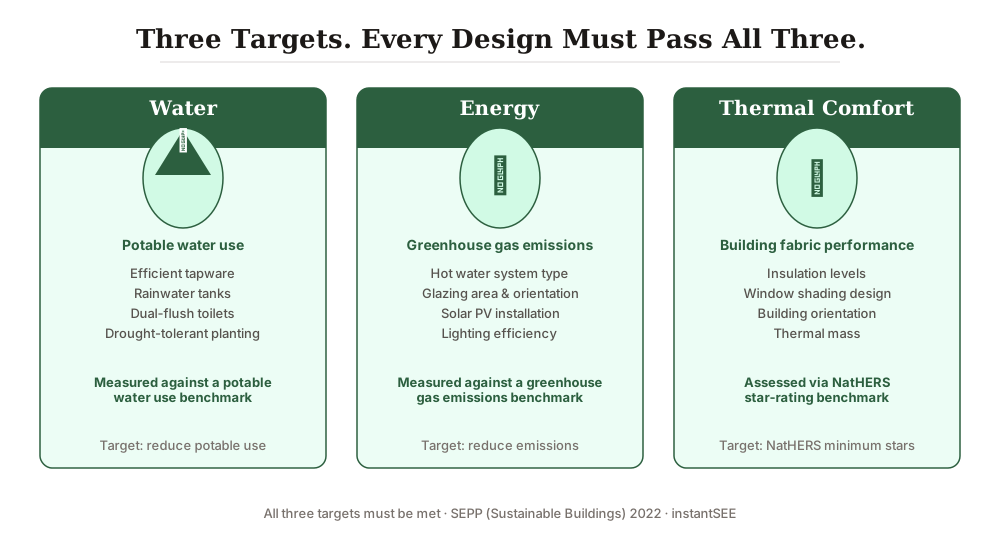
Figure 2: The three minimum targets the BASIX assessment applies to every residential design.
Water measures expected potable water use. Efficient tapware, dual-flush toilets, rainwater tanks for toilet flushing and garden irrigation, and drought-tolerant landscaping all improve the score. Energy measures estimated greenhouse gas emissions from heating, cooling, hot water, and lighting. The hot water system type, glazing area and orientation, and solar installation all influence this target. Thermal comfort assesses whether the building fabric and layout can maintain a comfortable temperature without excessive mechanical heating or cooling — it is evaluated against NatHERS (the Nationwide House Energy Rating Scheme) star-rating benchmarks.
The three targets interact. A large north-facing window can improve both the energy and thermal targets while marginally affecting the water score. BASIX is as much a design optimisation exercise as a compliance checklist. Attempting the assessment once the design is fixed, rather than during design development, commonly results in late-stage changes that cost more than incorporating them early would have.
BASIX vs NatHERS: Understanding the Overlap
Spend 5 minutes, not 3 weeks
instantSEE generates a complete, DA-ready Statement of Environmental Effects online. No town planner. No waiting.
Get your SEE report in 5 minutes →BASIX is the NSW compliance framework; NatHERS is the national rating methodology that BASIX draws on for thermal comfort — they are linked but not interchangeable.
People often ask whether BASIX and NatHERS are the same. They are not, but they overlap on thermal performance. NatHERS is the national energy rating system that measures the heating and cooling load of a building using hourly climate simulation. BASIX uses a NatHERS star-rating benchmark as the basis for its thermal comfort target, which means a full NatHERS report is typically required to satisfy BASIX for Class 1 buildings (houses and duplexes).
So: BASIX is the NSW-specific compliance framework, setting minimum targets across water, energy, and thermal comfort. NatHERS is the national methodology BASIX draws on for one of those three targets. They are linked, not interchangeable.
Where the BASIX Certificate Fits in Your DA Document Set
The BASIX certificate is one of several mandatory documents in a residential DA, sitting alongside the SEE, the BASIX commitments schedule, plans, and any specialist reports the site requires.
A BASIX certificate is one of several mandatory documents in a residential DA. Understanding where it fits helps you prepare the full application without missing anything.
The core mandatory documents for a residential DA typically include: plans and specifications, a survey or site plan, a Statement of Environmental Effects (SEE), a BASIX certificate for BASIX-affected development, and a BASIX commitments schedule. Depending on your site and proposal, specialist reports — such as a shadow diagram, arborist report, or stormwater management plan — may also be required.
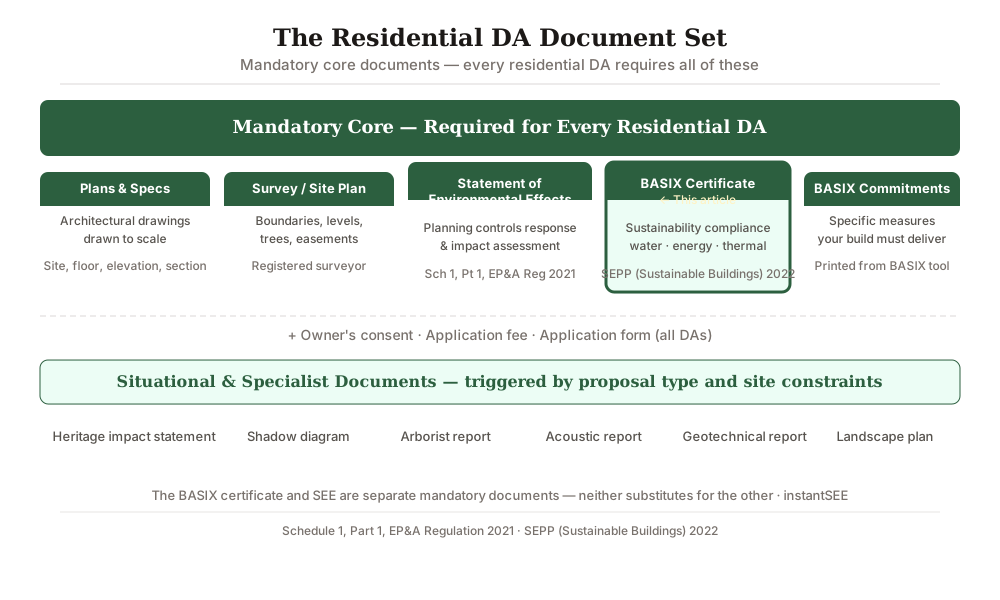
Figure 3: The BASIX certificate is one of several mandatory documents in a residential DA document set.
The BASIX certificate and the Statement of Environmental Effects do different jobs. The BASIX certificate proves your design meets the sustainability standards. The SEE explains how your whole proposal responds to the planning controls and manages its impacts on neighbours, the streetscape, and the environment. Both are required under Schedule 1, Part 1 of the EP&A Regulation 2021 for residential DAs; neither substitutes for the other.
- Confirm whether your project is BASIX-affected (new home, $50,000+ alteration, or 40,000 L+ pool)
- Run the BASIX assessment during design, not after plans are fixed
- Generate the certificate within 3 months of your lodgement date
- Attach the BASIX certificate and commitments schedule to your DA
- Confirm all other mandatory documents are in order using the DA Lodgement Checklist
To confirm every document your application requires before you lodge, use the DA Lodgement Checklist for NSW.
While you're preparing your DA documents — your SEE is the one we handle for you → https://instantsee.com.au/report/new
Frequently asked questions
What is the difference between the BASIX tool and the BASIX certificate?
Is BASIX the same as NatHERS?
Do I need both a BASIX certificate and a Statement of Environmental Effects?
How long is a BASIX certificate valid for lodgement?
Ready to get your SEE report?
Skip the writing. Get a DA-ready Statement of Environmental Effects in 5 minutes.
Get your SEE report