Key takeaways
- BASIX certifies water, energy and thermal comfort standards
- New homes always need a BASIX certificate to lodge
- Renovations over $50,000 and pools over 40,000 litres trigger BASIX
- Generate the certificate within three months of lodging your DA
- BASIX and the SEE are two separate mandatory documents
A BASIX certificate is a NSW sustainability certificate that shows a new home or major residential project meets minimum standards for water, energy and thermal comfort. It is required for most residential Development Applications. BASIX stands for Building Sustainability Index, and the certificate is generated through the NSW Planning Portal.
For most owners the BASIX certificate is a hurdle they did not see coming. A council will not accept a residential DA without one, the standards rose on 1 October 2023, and it is easy to misjudge whether your renovation or pool even triggers the requirement. Get it wrong and your application stalls before assessment begins.
Get a council-ready Statement of Environmental Effects for your DA in 5 minutes — no town planner, no waiting.
Get your SEE report →- What a BASIX certificate is and why it has the force of law
- The three things a BASIX certificate assesses
- When a BASIX certificate is required for your project
- How to generate a BASIX certificate through the NSW Planning Portal
- How BASIX sits alongside the SEE in your DA document set
What Is a BASIX Certificate?
A BASIX certificate is a NSW sustainability document confirming a residential design meets minimum standards for water, energy and thermal performance — "minimum" meaning legally required, not optional.
A BASIX certificate is a document confirming that a residential design meets the NSW sustainability standards for water, energy and thermal performance. It records the specific commitments your build must deliver, such as a rainwater tank or a minimum insulation level, and those commitments are then checked again at construction and completion.
The standards behind it sit in law. Under the State Environmental Planning Policy (Sustainable Buildings) 2022, which commenced on 1 October 2023, residential development must meet minimum BASIX standards. That policy replaced the older 2004 BASIX policy and lifted the bar, with higher thermal performance and energy targets than before. The procedural rules, including when a certificate is required and how long it stays valid, come from the Environmental Planning and Assessment Regulation 2021.
A practical point worth knowing: the 2023 changes raised the thermal and energy standards, so an older design or an out-of-date certificate may no longer comply.. Confirm the current BASIX target levels, including the applicable NatHERS thermal benchmark, on the NSW Planning Portal, as the standards are phased and updated periodically. If your project was approved before October 2023, transition arrangements may apply.
What a BASIX Certificate Assesses
A BASIX certificate assesses three things — water use, energy emissions, and thermal comfort — and your design must hit a target in each before the tool will issue the certificate.
A BASIX certificate assesses three things: water, energy and thermal comfort. Your design has to hit a target in each category before the tool will issue a certificate, which is why BASIX shapes design choices, not just paperwork.
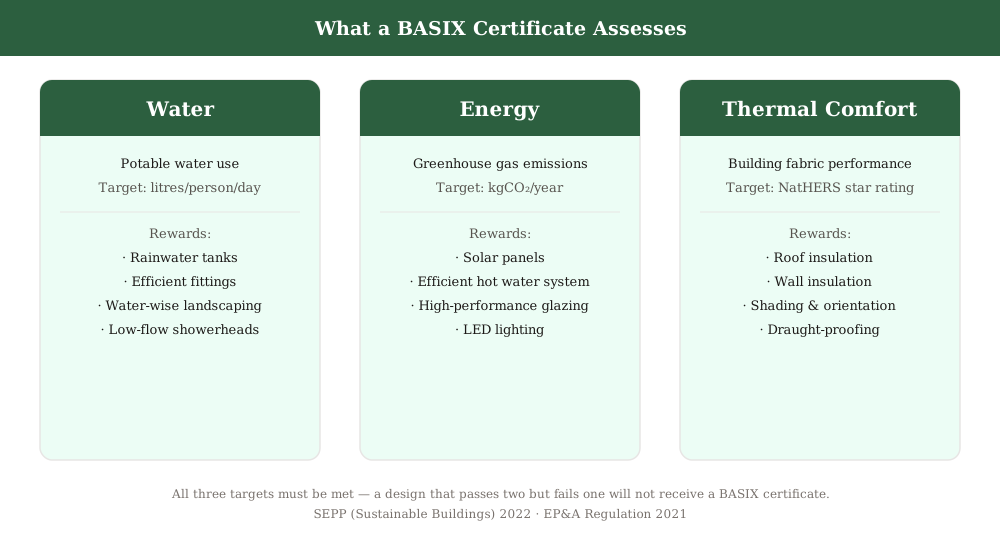
Figure 1: The three categories a BASIX certificate assesses.
Water looks at how much potable water the home is likely to use, and rewards efficient fittings, rainwater tanks and sensible landscaping. Energy targets the greenhouse gas emissions from heating, cooling, hot water and lighting, which pushes choices like the hot water system, glazing and whether you install solar. Thermal comfort assesses the building fabric and design, so that the home can hold a comfortable temperature with less mechanical heating and cooling.
The three work together. A large window that helps one target can hurt another, so the certificate is really a balancing exercise across all three. That is also why it is best assessed early, while the design can still change, rather than bolted on once the plans are fixed.
When You Need a BASIX Certificate
Spend 5 minutes, not 3 weeks
instantSEE generates a complete, DA-ready Statement of Environmental Effects online. No town planner. No waiting.
Get your SEE report in 5 minutes →Three triggers — a new home, alterations costing $50,000 or more, and a pool or spa of 40,000 litres or more — are all it takes to make a project BASIX-affected under the EP&A Regulation 2021.
You need a BASIX certificate for any new home, for alterations and additions costing $50,000 or more, and for a swimming pool or spa with a capacity of 40,000 litres or more. These are the three triggers that make a project BASIX-affected.
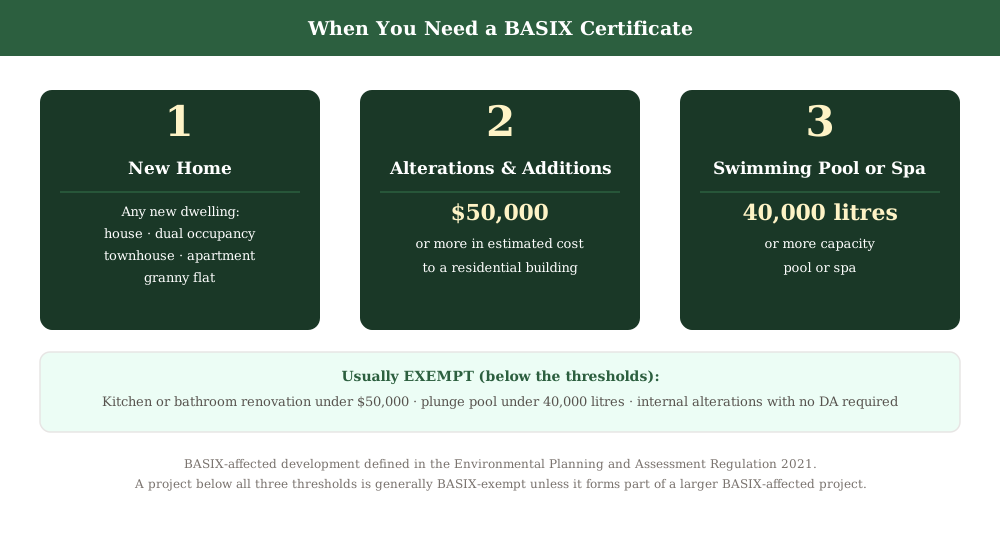
Figure 2: The three triggers that require a BASIX certificate, and what is usually exempt.
A new home is the clearest case. Any new dwelling, dual occupancy, townhouse, apartment or granny flat needs a BASIX certificate. For renovations, the trigger is cost: alterations and additions to a residential building need one once the work is valued at $50,000 or more. For pools and spas, the trigger is volume, set at 40,000 litres.
Below those thresholds, you are usually exempt. A modest kitchen renovation under $50,000 or a small plunge pool under 40,000 litres generally does not need a BASIX certificate, unless it forms part of a larger BASIX-affected project. If you are unsure which documents your specific project needs, our guide to DA supporting documents in NSW sets out the full picture.
- Confirm whether your project is BASIX-affected (new home, $50,000+ alteration, or 40,000 L+ pool)
- Build the water, energy and thermal targets into your design early
- Access the BASIX tool through the NSW Planning Portal
- Generate the certificate within 3 months of lodgement
- Attach the current certificate to your DA or CDC
How to Get a BASIX Certificate
You get a BASIX certificate by entering your design into the online BASIX tool on the NSW Planning Portal, meeting the water, energy and thermal targets, and generating the certificate — the tool does the assessment, your job is to feed it an accurate design.
You get a BASIX certificate by entering your design into the online BASIX tool on the NSW Planning Portal, meeting the targets, and generating the certificate. The tool does the assessment; your job is to feed it an accurate, compliant design.
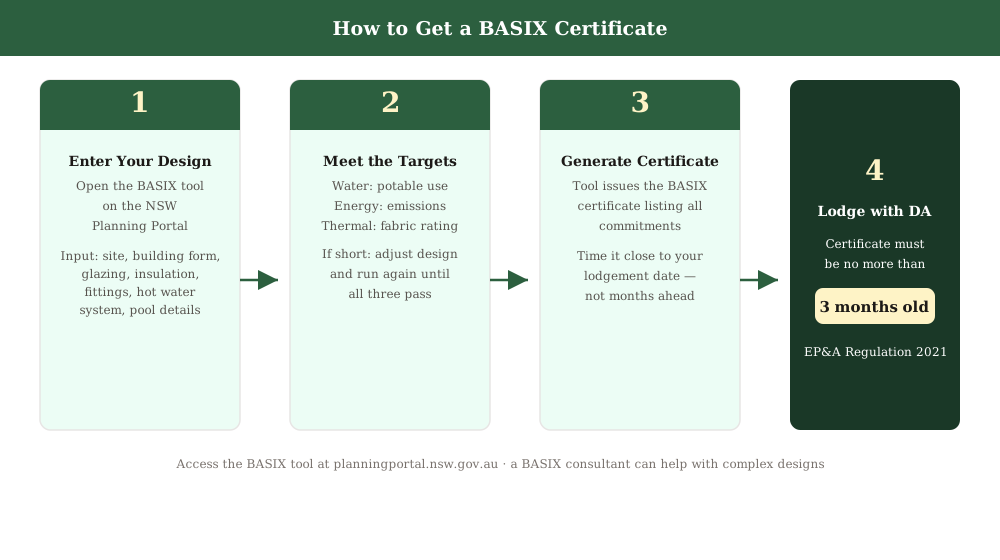
Figure 3: The four steps to getting a BASIX certificate and lodging it.
You input the site, building form, glazing, insulation, fittings, hot water system and any pool details. If the design meets the water, energy and thermal targets, the tool generates a certificate listing the commitments. If it falls short, you adjust the design and run it again. Many owners use a BASIX consultant for anything beyond a simple build, with fees commonly in the few-hundred-dollar range, though you can complete a straightforward assessment yourself.
Timing matters. The certificate must be no more than three months old when you lodge your application, so generate it close to lodgement, not months ahead. If your DA is delayed, you may need to refresh it.
BASIX, Your DA and Your SEE
A BASIX certificate and a Statement of Environmental Effects are two separate mandatory documents in a residential DA — one proves sustainability compliance, the other explains why the development is acceptable on its site.
A BASIX certificate is one of several mandatory documents in a residential DA, and it is separate from your Statement of Environmental Effects. The Environmental Planning and Assessment Regulation 2021 requires a current BASIX certificate to accompany a DA for BASIX-affected development, and councils will not accept the application without it.
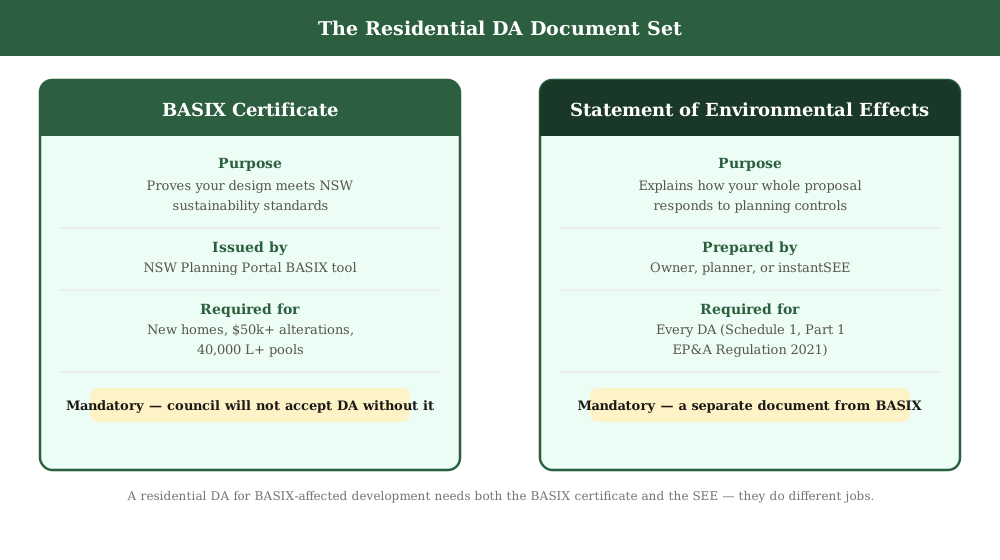
Figure 4: BASIX and the SEE are two separate documents in your DA pack.
People often confuse the two, but they do different jobs. The BASIX certificate proves your design meets the sustainability standards. The Statement of Environmental Effects explains how your whole proposal responds to the planning controls and manages its impacts on neighbours and the streetscape. Your DA needs both, along with plans, a survey and any specialist reports your site triggers.
To make sure nothing is missing before you lodge, run through a DA Lodgement Checklist for NSW, and the matching DA lodgement checklist guide walks through each document. Treat BASIX as a design input you sort early, and the SEE as the document that ties the whole application together.
Frequently asked questions
What is a BASIX certificate in NSW?
When do I need a BASIX certificate?
How much does a BASIX certificate cost in NSW?
Is a BASIX certificate the same as a Statement of Environmental Effects?
How long is a BASIX certificate valid?
Ready to get your SEE report?
Skip the writing. Get a DA-ready Statement of Environmental Effects in 5 minutes.
Get your SEE report