Key takeaways
- Required when protected trees are removed or works enter the TPZ
- Prepared by an AQF Level 5 arborist using AS 4970-2009
- TPZ is calculated as 12 times the trunk DBH in centimetres
- Recommendations translate directly into conditions of consent
- Commission early — a protected tree can limit your building footprint
An arborist report is a technical assessment of the trees on or near a development site, prepared by a qualified arborist and submitted with a Development Application where trees are at risk from proposed works. NSW councils require them to protect significant trees and to ensure development near trees does not cause hidden root or canopy damage that emerges after consent is granted.
Get a council-ready Statement of Environmental Effects for your DA in 5 minutes — no town planner, no waiting.
Get your SEE report →- When an arborist report triggers as part of a NSW DA
- What a compliant AQF Level 5 arborist report must assess
- How the Tree Protection Zone is calculated under AS 4970-2009
- How arborist recommendations become conditions of development consent
- Why commissioning the report early protects your building footprint
When Is an Arborist Report Required for a NSW DA?
The trigger is a tree covered by a tree preservation order or listed as significant in the LEP or DCP, or construction works that will occur within the Tree Protection Zone of any retained tree on or near the site.
The trigger is usually a tree covered by your council's tree preservation order or listed as a significant tree in the local environmental plan or DCP, or construction works that will occur within the Tree Protection Zone of any tree on or near the site.
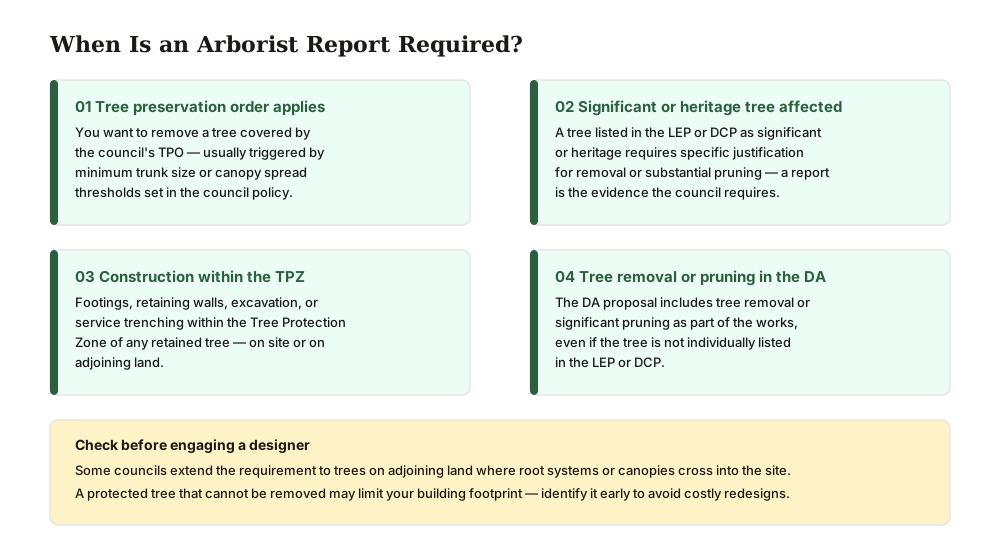
Figure 1: When an arborist report is required — the main triggers for a NSW DA.
An arborist report is required in four main situations. The first is when you want to remove a tree that is protected under the council's tree preservation order, which typically sets size thresholds such as a minimum trunk circumference or canopy spread. The second is when a tree is identified as a significant or heritage tree in the LEP or DCP, requiring specific justification for removal or substantial pruning. The third is when construction works — footings, retaining walls, excavation, or service trenching — will occur inside the Tree Protection Zone of any tree that must be retained. The fourth is when a DA involves tree removal or significant pruning as part of the proposal, even if the tree is not individually listed.
Some councils extend the requirement to trees on adjoining land where root systems or canopies extend into the development site. If you are uncertain whether your trees are covered, check your council's tree management policy before engaging a designer, because a tree that cannot be removed may limit your building footprint in ways that affect the whole design.
What an Arborist Report Assesses
A compliant arborist report for a NSW DA is prepared by an AQF Level 5 arborist and applies Australian Standard AS 4970-2009, recording species, condition, DBH, canopy spread, and the Tree Protection Zone for every tree on and near the site.
A compliant arborist report for a NSW DA is prepared by an arborist holding at least an AQF Level 5 qualification (Diploma of Horticulture — Arboriculture). Councils often specify this qualification level in their DA requirements, and a report prepared by someone below this level may be rejected.
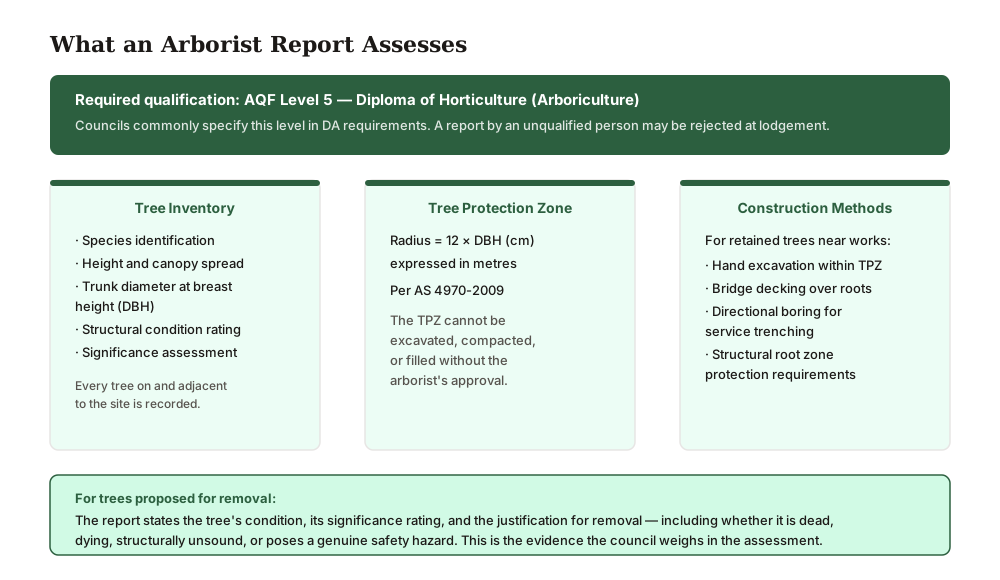
Figure 2: What a compliant arborist report covers — species, condition, TPZ, and structural root zone.
The report identifies every tree on and adjacent to the site, records its species, height, trunk diameter at breast height (DBH), canopy spread, and structural condition. From these measurements the arborist calculates the Tree Protection Zone (TPZ) for each tree. The TPZ is the ground area around a tree that must be protected from compaction, excavation, and fill to preserve root health, and it is calculated under Australian Standard AS 4970-2009 as a radius equal to twelve times the DBH in centimetres, expressed in metres, capped at certain limits.
For trees proposed for removal, the report provides a statement of the tree's condition, its significance rating, and the justification for removal, including whether it is dead, dying, structurally unsound, or poses a genuine safety hazard. For trees to be retained near works, the report sets the TPZ, identifies the structural root zone, and specifies the construction methods required to avoid damage — such as hand excavation within the TPZ, bridge decking over roots, or the use of directional boring for service trenching.
How Arborist Recommendations Flow into DA Conditions
Spend 5 minutes, not 3 weeks
instantSEE generates a complete, DA-ready Statement of Environmental Effects online. No town planner. No waiting.
Get your SEE report in 5 minutes →The arborist report's recommendations directly shape the conditions of development consent — tree removal must be authorised, and retained trees attract fencing, supervision, and replanting conditions that run to the occupation certificate.
The arborist report does not just describe the trees — it recommends what happens to each one, and those recommendations directly shape the conditions of development consent if the DA is approved.
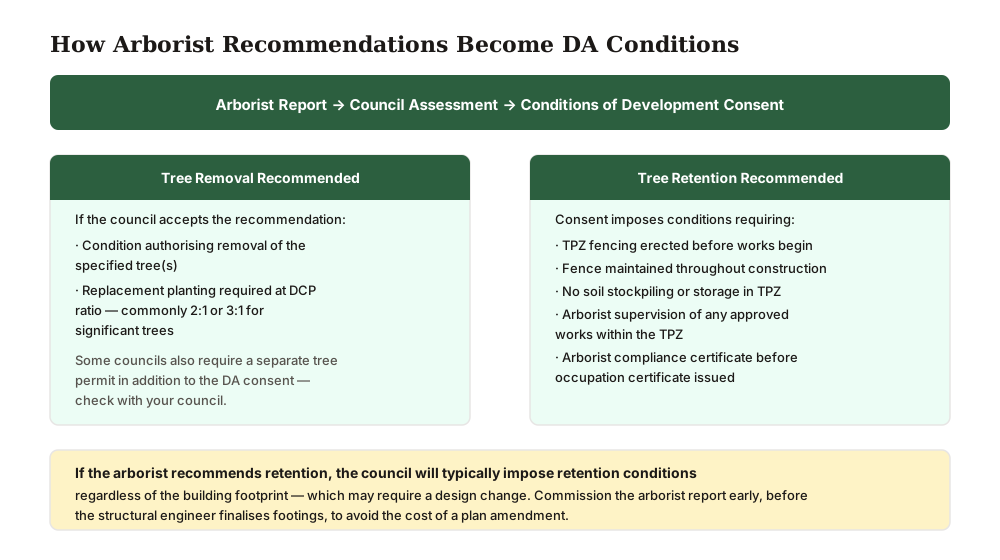
Figure 3: How the arborist's recommendations translate into conditions of development consent.
Where removal is recommended and the council accepts it, the consent will include a condition authorising removal of the specified tree, often with a requirement to plant a replacement at a ratio the DCP sets, commonly two to three replacement trees for each significant tree removed. Where retention is recommended, the consent will impose conditions requiring the erection of TPZ fencing before works begin, keeping the fence in place throughout construction, prohibiting soil stockpiling or material storage within the TPZ, and engaging the arborist to supervise any approved works within the TPZ and to certify compliance before an occupation certificate is issued.
Some councils require a separate tree permit for removal even after DA approval, particularly for trees listed in a significant tree register. The arborist report is the evidence base for both the DA and any subsequent tree permit. If the report finds a tree to be healthy and significant and recommends retention, the council will typically impose retention conditions regardless of the development footprint, which may require a design change.
- Check your council's tree preservation order thresholds before engaging a designer
- Identify all trees on and adjacent to the site in the site survey
- Engage an AQF Level 5 arborist to prepare the report
- Calculate TPZ for every retained tree and reflect it in the site plan
- Ask your arborist whether a separate tree permit is required after DA approval
How the Arborist Report Fits Your DA and SEE
The arborist report travels with your plans and Statement of Environmental Effects, which addresses tree impacts under s 4.15(1) of the EP&A Act 1979 and explains how the development meets the council's tree preservation objectives.
The arborist report is a supporting document to your DA. It travels with your plans and Statement of Environmental Effects, which addresses the tree impacts under s 4.15(1) of the EP&A Act 1979. Your SEE summarises the arborist's findings, states which trees are proposed for removal and which will be retained, and explains how the development meets the council's tree preservation objectives.
Use the DA Lodgement Checklist to confirm the specific arborist qualification level your council requires and whether a tree survey plan is needed as a separate drawing. Getting the specification right avoids requests for additional information that can delay the assessment by weeks.
Frequently asked questions
When is an arborist report required for a NSW DA?
What qualification does a NSW DA arborist need?
How is the Tree Protection Zone calculated?
What happens if a significant tree cannot be removed?
Does DA approval for tree removal replace a separate tree permit?
Ready to get your SEE report?
Skip the writing. Get a DA-ready Statement of Environmental Effects in 5 minutes.
Get your SEE report