Key takeaways
- Most councils require a waste plan for any demolition work
- The plan covers three phases: demolition, construction, occupation
- Councils expect at least 80% recycling from demolition waste
- Asbestos requires a separate removal and disposal plan
- Bin storage must appear on the plans, not just the text
A waste management plan is a document you lodge with your Development Application that explains how waste will be managed across every stage of the project — from demolition through construction to ongoing occupation. Most councils in NSW require one for new dwellings, significant alterations, and any development involving demolition.
Get a council-ready Statement of Environmental Effects for your DA in 5 minutes — no town planner, no waiting.
Get your SEE report →- When your council requires a waste management plan for a NSW DA
- What the three-phase structure of a waste management plan covers
- What recycling and disposal obligations apply under NSW policy
- How the waste plan fits in the DA document set
- How to avoid the most common waste plan mistakes that trigger information requests
When Is a Waste Management Plan Required?
The threshold is set by your council's DCP — not state law — and most councils now require a waste management plan for any development involving demolition, a new dwelling, or alterations above a floor area threshold, regardless of project scale.
Your council's Development Control Plan (DCP) sets the requirement. Most councils that have updated their DCP since the NSW Waste and Sustainable Materials Strategy 2041 apply a relatively low threshold. Common triggers include new dwellings or multi-dwelling developments, alterations and additions above a floor area threshold, any development involving demolition, commercial and industrial development, and sometimes subdivision.
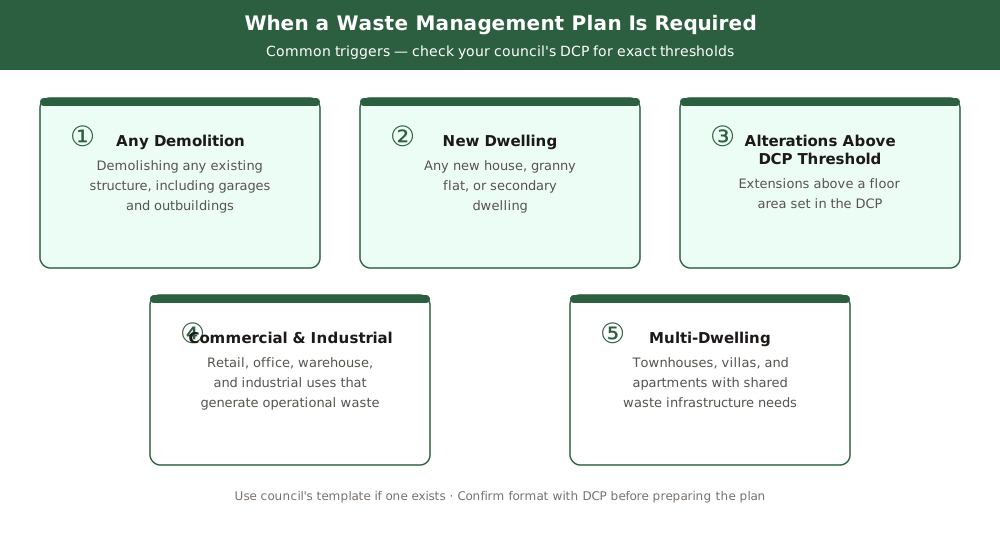
Figure 1: Common triggers for a waste management plan. Check your council's DCP for the exact thresholds.
Some councils exempt minor works — a small shed or a patio — but most require a plan for anything involving structural demolition. Metropolitan councils with high demolition activity tend to apply the requirement to any project involving demolition, regardless of size.
Checking your council's DCP waste management chapter before lodging will confirm the threshold and tell you whether a template format is required. Some councils provide a template; submitting a different format can trigger an information request even when the content is correct.
What a Waste Management Plan Must Cover
The plan addresses three distinct phases — demolition, construction, and occupation — and each phase has different waste streams and management strategies that council will read separately.
A waste management plan for a NSW DA addresses three phases: demolition, construction, and occupation. Getting the three-phase structure right is the most important thing, because councils assess each phase separately.
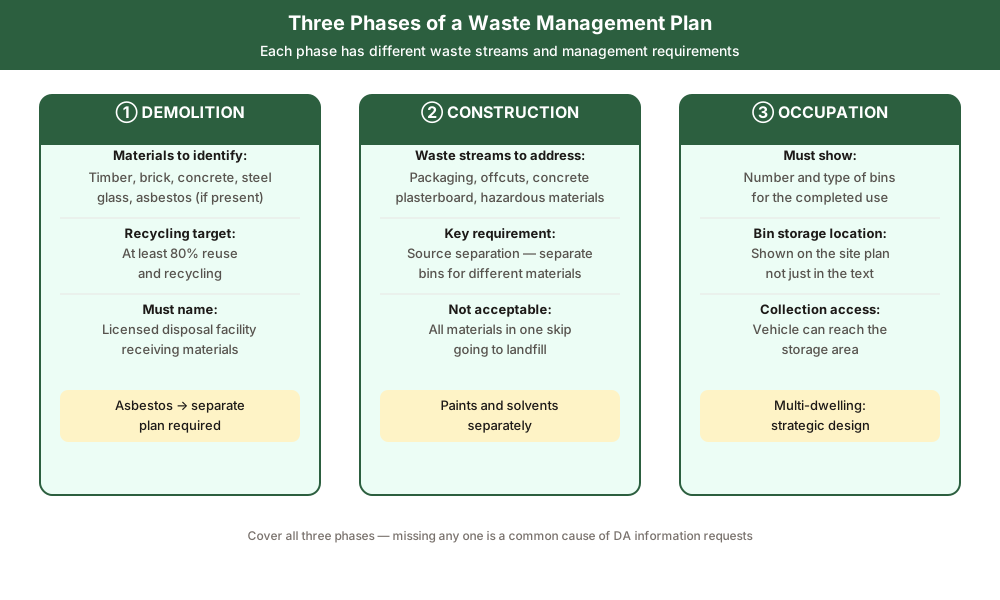
Figure 2: The three-phase structure of a waste management plan — demolition, construction, and occupation.
Demolition phase. The plan must identify the materials in the existing structure — timber, brick, concrete, steel, asbestos, glass — and state how each will be sorted, reused, or disposed of. Councils expect a target recycling and reuse rate, commonly 80%, in line with the NSW Waste and Sustainable Materials Strategy 2041. The plan must identify the licensed facility that will receive the waste. Where asbestos is present, a separate asbestos removal and disposal plan is typically required — unlicensed asbestos removal is illegal in NSW.
Construction phase. The plan must describe the types of construction waste expected — packaging, offcuts, concrete, plasterboard — and how it will be separated on site, collected, and disposed of. Councils look for source separation, meaning separate bins for different material types, rather than everything going to a single skip and landfill. Hazardous materials such as paints and solvents must also be addressed.
Occupation phase. The plan must show that the completed development has adequate waste storage and collection infrastructure — the number and type of bins, the location of bin storage, how bins are accessed by the collection vehicle, and whether the bin storage area is shown on the plans. For a dwelling this is simple. For a multi-dwelling development or commercial use, the waste storage and collection strategy can become a material design consideration.
- Identify all existing materials before the demolition phase section
- Set a recycling target of at least 80% for demolition waste
- Name the licensed disposal facility in the plan
- Show source separation for construction waste streams
- Show bin numbers, sizes, and storage location on the plans
How the Waste Plan Fits Your DA and SEE
Spend 5 minutes, not 3 weeks
instantSEE generates a complete, DA-ready Statement of Environmental Effects online. No town planner. No waiting.
Get your SEE report in 5 minutes →The waste management plan is a supporting document lodged alongside the DA — your Statement of Environmental Effects should briefly address waste and cross-reference the plan, because council assesses waste as an environmental impact under s 4.15(1) of the EP&A Act 1979.
The waste management plan is lodged as a supporting document alongside the DA form, plans, Statement of Environmental Effects, and other required reports. Your SEE should briefly address waste management and cross-reference the plan. Council assesses waste impacts under s 4.15(1) of the Environmental Planning and Assessment Act 1979 — it is one of the environmental impacts your development must manage.
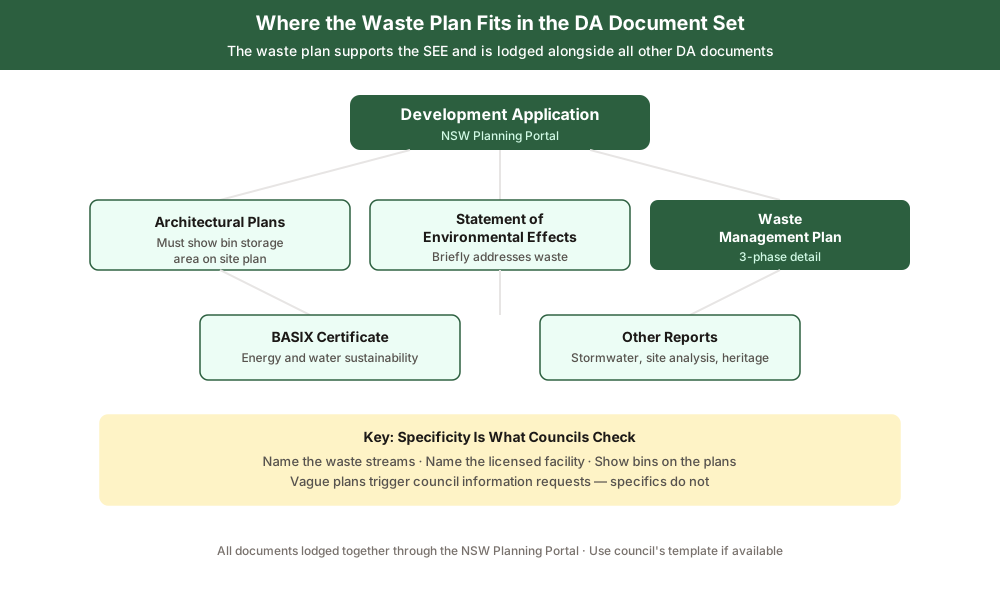
Figure 3: Where the waste management plan fits in the DA document set.
Waste is not a technical discipline requiring an engineer. The applicant or their designer can usually prepare a straightforward waste management plan using the council's template or the format described in the DCP. The key is to be specific: name the waste streams, state quantities in cubic metres or tonnes where possible, name the licensed disposal facility, and show the bin storage on the plans.
Use the DA lodgement checklist for NSW to confirm the waste plan is included before lodging through the NSW Planning Portal at planningportal.nsw.gov.au. The guides to DA supporting documents and the complete DA documents list explain where the waste plan fits among the full set.
Frequently asked questions
Is a waste management plan always required for a DA in NSW?
Can I prepare my own waste management plan?
What recycling rate does a NSW council expect for demolition waste?
What happens if asbestos is present in the existing building?
Does the bin storage area need to be on the architectural plans?
Ready to get your SEE report?
Skip the writing. Get a DA-ready Statement of Environmental Effects in 5 minutes.
Get your SEE report