Key takeaways
- Required when development generates over 100 additional daily vehicle trips
- Location near a state road triggers Transport for NSW requirements
- TIA analyses trip generation, parking, access geometry, and road safety
- TIA findings become binding conditions of development consent
- Engage a traffic engineer early to identify access constraints upfront
A traffic impact assessment is a technical report that analyses how a proposed development will affect the surrounding road network and whether the site can be safely accessed. NSW councils and Transport for NSW require them when a development is large enough, or located in a sensitive traffic environment, to create traffic volumes or access conditions that the existing infrastructure may not accommodate without intervention.
Get a council-ready Statement of Environmental Effects for your DA in 5 minutes — no town planner, no waiting.
Get your SEE report →- When a traffic impact assessment is required under NSW council and Transport for NSW rules
- What scale and location triggers apply for different development types
- What a TIA analyses — trip generation, parking, access, and road safety
- How TIA findings translate into conditions of development consent
- How the TIA connects to your SEE and DA lodgement
When Is a Traffic Impact Assessment Required for a NSW DA?
The threshold varies by development type and location, and the requirement comes from two sources — your council's DCP and, where a classified road is affected, Transport for NSW guidance.
The threshold varies by development type and location, and the requirement comes from two sources: your council's DCP and, where a classified road is affected, Transport for NSW guidance. There is no single statewide threshold that applies uniformly.
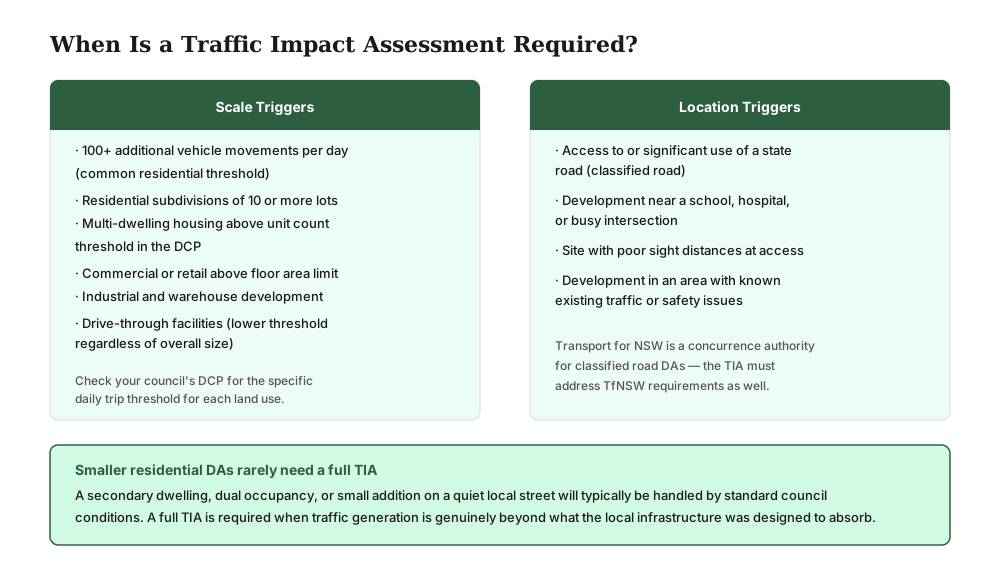
Figure 1: When a TIA is required — the main scale and location triggers for a NSW DA.
Council DCPs typically require a traffic impact assessment when a development generates vehicle trips above a defined daily threshold — commonly 100 or more additional vehicle movements per day for residential developments, and lower thresholds for developments near schools, hospitals, intersections with poor sight distances, or classified roads. Common triggers include residential subdivisions of ten or more lots, multi-dwelling housing above a certain unit count, commercial or retail development above a floor area threshold, industrial or warehouse development, and development with drive-through facilities.
Location matters as much as scale. A modest development on a busy state road may need a TIA where the same development on a quiet local street does not, because Transport for NSW is a concurrence authority for DAs affecting classified roads and has its own Traffic Impact Assessment Guidelines. If your proposal has access to or significantly uses a state road, the TIA must address Transport for NSW requirements as well as the council's.
For smaller residential DAs — a secondary dwelling or a dual occupancy, for example — a full traffic impact assessment is rarely required. The council's standard conditions will address parking and access. The TIA requirement appears once the traffic generation is genuinely beyond what the local infrastructure was designed to absorb.
What a Traffic Impact Assessment Analyses
A TIA prepared by a traffic engineer covers the existing environment, the trip generation of the proposal, parking compliance, access geometry, and intersection capacity — all modelled against the peak AM and PM hours.
A traffic impact assessment is prepared by a traffic engineer and covers the existing traffic environment, the trip generation of the proposed development, and the ability of the road network and site access to accommodate the additional traffic safely.
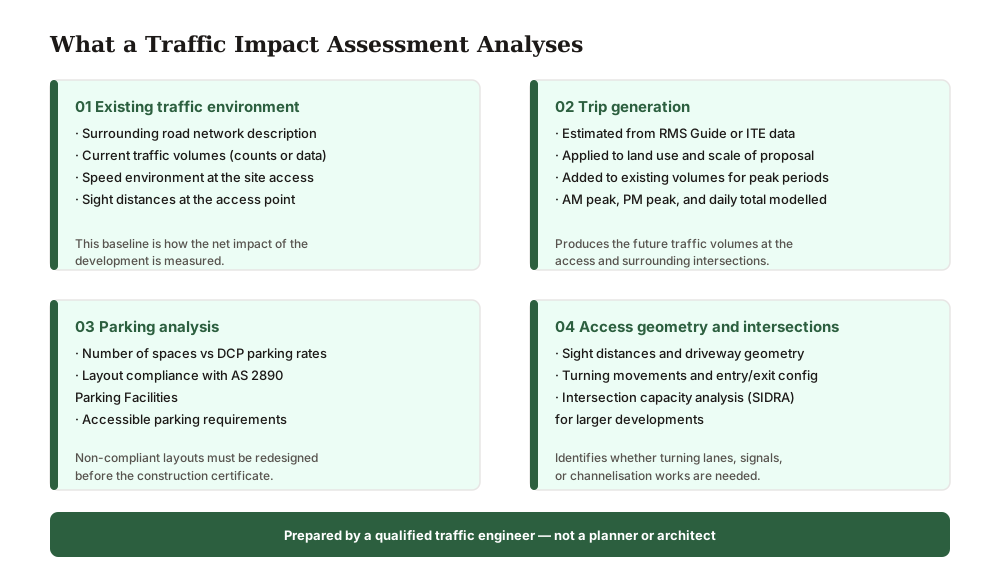
Figure 2: What a TIA covers — trip generation, parking, access, and road safety.
The existing environment section describes the surrounding road network, current traffic volumes from counts or published data, speed environments, sight distances at the access point, and any existing crash history. This baseline is important because the TIA must show the net impact of the proposal against a known existing condition.
Trip generation is estimated using recognised traffic engineering sources such as the RMS Guide to Traffic Generating Developments or the Institute of Transportation Engineers Trip Generation Manual, applied to the specific land use and scale of the proposal. The TIA then adds those trips to the existing volumes to model the future situation during peak periods — usually the AM and PM peaks plus the daily total.
Parking analysis confirms that the number of spaces proposed meets the DCP parking rates for the land use and, where applicable, that the layout complies with Australian Standard AS 2890. Access geometry analysis checks sight distances at the driveway, entry and exit configurations, turning movements, and whether intersection works or new traffic controls are needed. For larger developments, a formal intersection capacity analysis using SIDRA or similar software may be required.
How TIA Findings Feed into DA Conditions
Spend 5 minutes, not 3 weeks
instantSEE generates a complete, DA-ready Statement of Environmental Effects online. No town planner. No waiting.
Get your SEE report in 5 minutes →The TIA's recommendations directly shape conditions of development consent — access geometry, turning lane requirements, parking layout, and Transport for NSW concurrence conditions all flow from what the assessment finds.
The traffic impact assessment does not just describe traffic — its recommendations directly shape the conditions of development consent, the works required before an occupation certificate is granted, and in some cases contributions under a voluntary planning agreement.
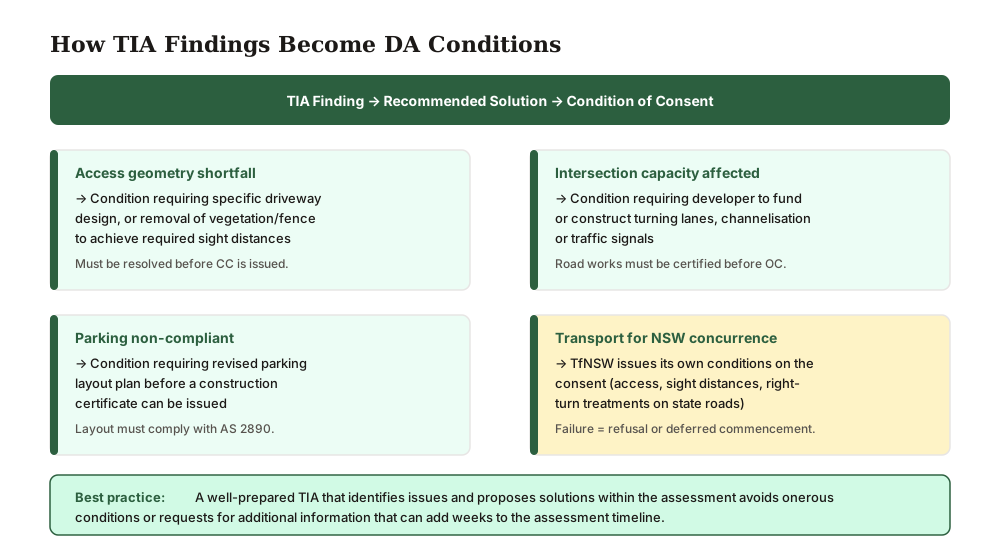
Figure 3: How the TIA's findings translate into DA conditions.
Where the TIA identifies that the proposed access geometry does not meet sight distance requirements, the consent will typically condition a specific driveway design or require vegetation removal or fence lowering at the access point. Where intersection capacity is affected, conditions may require the developer to fund or construct turning lanes, channelisation, or signals. Where the TIA finds that the parking layout or number of spaces does not comply, the consent may require a revised plan before a construction certificate is issued.
Transport for NSW, where it is a concurrence authority, will issue its own conditions that are imposed on the DA consent. These commonly relate to access to classified roads, including driveway geometry, sight distances, and whether a right-turn treatment is needed. Failure to satisfy Transport for NSW can lead to refusal of the DA or a deferred commencement condition requiring a separate works approval before development can proceed.
A well-prepared TIA that anticipates these issues and proposes solutions within the assessment is the most effective way to avoid onerous conditions or requests for additional information during assessment.
- Check your council DCP for the daily trip threshold and development type triggers
- Confirm whether your site has access to a classified road requiring Transport for NSW assessment
- Engage a traffic engineer early to identify access and sight distance constraints
- Confirm parking numbers and layout comply with DCP rates and AS 2890
- Address TIA findings in the SEE — parking, access, and intersection impact
How the TIA Fits Your DA and SEE
The traffic impact assessment travels with your plans and Statement of Environmental Effects, which addresses traffic and parking under s 4.15(1) of the EP&A Act 1979 and explains how the access design meets the council's and Transport for NSW's requirements.
The traffic impact assessment is a supporting document to your DA. It is assessed by the council and, where applicable, Transport for NSW, under s 4.15(1) of the EP&A Act 1979. Your Statement of Environmental Effects addresses traffic and parking impacts by summarising the TIA's findings, confirming compliance with the DCP parking rates, and explaining how the access design meets the applicable requirements.
Use the DA Lodgement Checklist to confirm whether your council requires a traffic impact assessment and the level of detail expected for your development type. For proposals near state roads, check the Transport for NSW Traffic Impact Assessment Guidelines before commissioning the report, so the traffic engineer scopes the work correctly from the outset.
Frequently asked questions
When is a traffic impact assessment required for a NSW DA?
Who prepares a traffic impact assessment for a NSW DA?
What does Transport for NSW require for a TIA on a classified road?
How do TIA findings become conditions of consent?
Does every residential DA need a traffic impact assessment?
Ready to get your SEE report?
Skip the writing. Get a DA-ready Statement of Environmental Effects in 5 minutes.
Get your SEE report