Key takeaways
- Most new dwellings in NSW require a stormwater management plan
- OSD detains runoff and limits discharge to the council drain
- Permissible site discharge is council-specific — always confirm it
- A civil engineer, not an architect, prepares the plan
- Stormwater and sewer are separate systems — never mix them
A stormwater management plan shows your council how rainwater that falls on your site will be collected, detained, and released without flooding your neighbours or overloading the public drainage network. Most new dwellings and significant alterations in NSW require one as part of the DA.
Get a council-ready Statement of Environmental Effects for your DA in 5 minutes — no town planner, no waiting.
Get your SEE report →- When your council requires a stormwater management plan for a NSW DA
- What on-site detention (OSD) is and how the permissible site discharge works
- What a stormwater management plan must contain to satisfy council
- How the stormwater plan fits in the DA document set
- How drainage is addressed in your Statement of Environmental Effects
When Is a Stormwater Management Plan Required?
The trigger is set by your council's DCP, not state law — which means it varies, but a useful rule of thumb is that any development adding more than 60 square metres of new impervious surface will require at least a drainage report from most Sydney-region councils.
Most development that changes how much hard surface is on a site — or where runoff goes — will trigger a stormwater management plan. Common triggers include new dwellings, significant additions, dual occupancies, multi-dwelling developments, and any works that increase impervious area above a DCP threshold. The DCP, not state legislation, sets those thresholds.
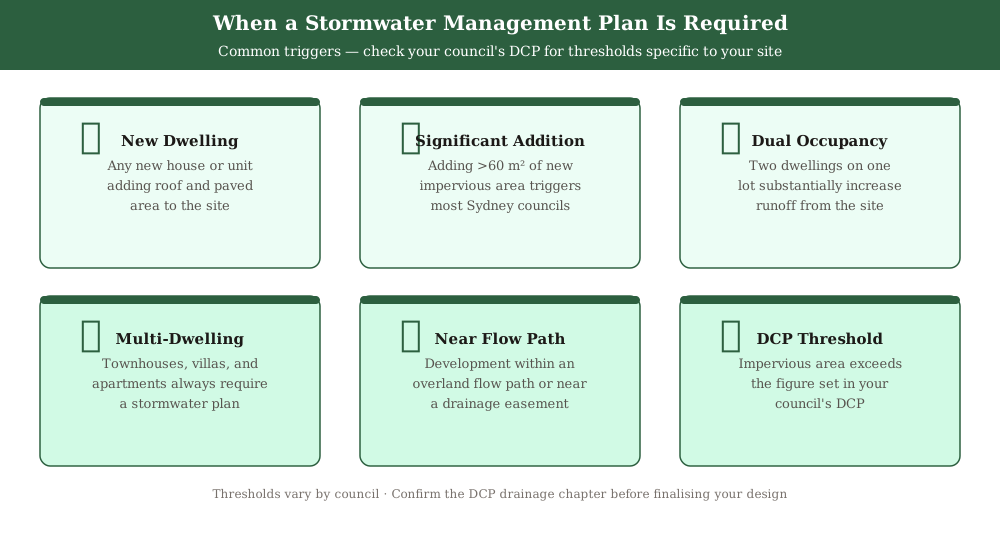
Figure 1: Common triggers for a stormwater management plan. Check your council's DCP for the exact thresholds on your site.
If your site is in a council with a known drainage problem — many inner-west, northern beaches, and lower north shore councils fall into this category — the threshold can be lower and the requirements more detailed. Some councils also require a plan when development is within a defined overland flow path or close to an existing drainage easement, even where the project is modest in scale.
Checking your council's DCP drainage chapter before engaging a designer tells you exactly where the line is. Finding out after plans are drawn that a stormwater plan is needed — and that the OSD tank changes the ground-level layout — is an avoidable delay.
What Is an OSD System and Why Does It Matter?
On-site detention temporarily holds stormwater on your property and releases it slowly — the key figure is the permissible site discharge, which caps how fast water can leave your site, and your OSD tank must be sized to stay within it.
On-site detention, or OSD, is a mechanism that temporarily holds stormwater runoff on your property and releases it slowly into the council drainage network, rather than all at once. It is the most common drainage requirement councils impose on new and altered development in NSW.
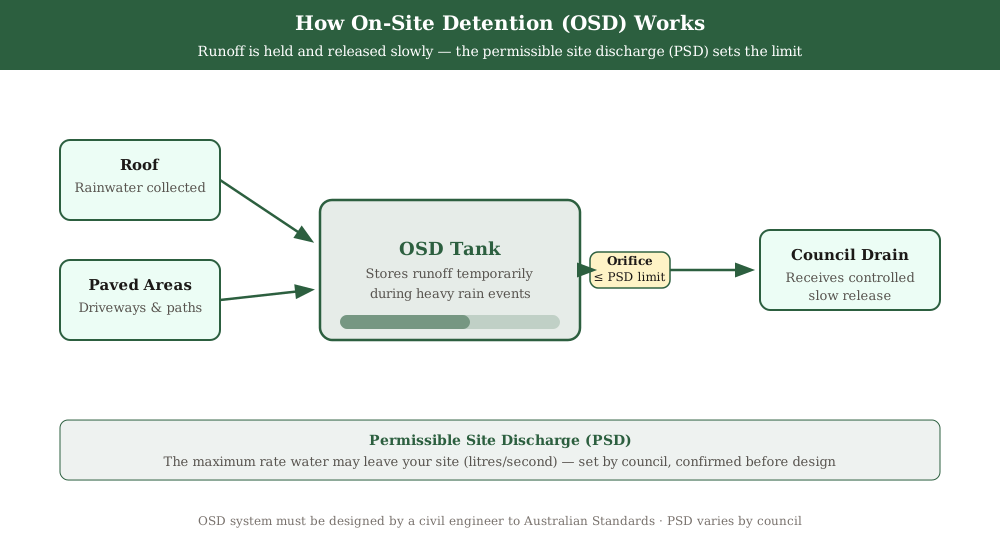
Figure 2: An OSD system holds runoff and releases it slowly. The key design figure is the permissible site discharge.
The technical measure councils use is the permissible site discharge (PSD): the maximum rate at which stormwater may leave your site, usually expressed in litres per second. Your OSD system — which may be an underground tank, a detention basin, or in some cases a re-use system — must be sized so that peak discharge does not exceed the PSD for the relevant design storms, typically the 10% AEP (one-in-ten-year) and 1% AEP (one-in-100-year) events.
OSD matters because adding impervious surfaces to a site increases the volume and speed of runoff. Without detention, that extra runoff enters the council drain at the same time as runoff from surrounding properties, amplifying peak flows and causing downstream flooding. The OSD requirement ensures new development does not worsen the local network. Your stormwater plan must demonstrate the system meets the PSD and is designed to the relevant Australian Standards.
What a Stormwater Management Plan Must Cover
Spend 5 minutes, not 3 weeks
instantSEE generates a complete, DA-ready Statement of Environmental Effects online. No town planner. No waiting.
Get your SEE report in 5 minutes →A stormwater management plan is a technical document — not a drainage sketch — and it must demonstrate that the site will manage water safely for the life of the development, covering existing conditions, proposed layout, OSD sizing, connection details, and maintenance.
A stormwater management plan for a NSW DA is prepared by a civil or hydraulic engineer and contains far more than a drainage sketch on the building plans. Most councils require the plan to address the following.
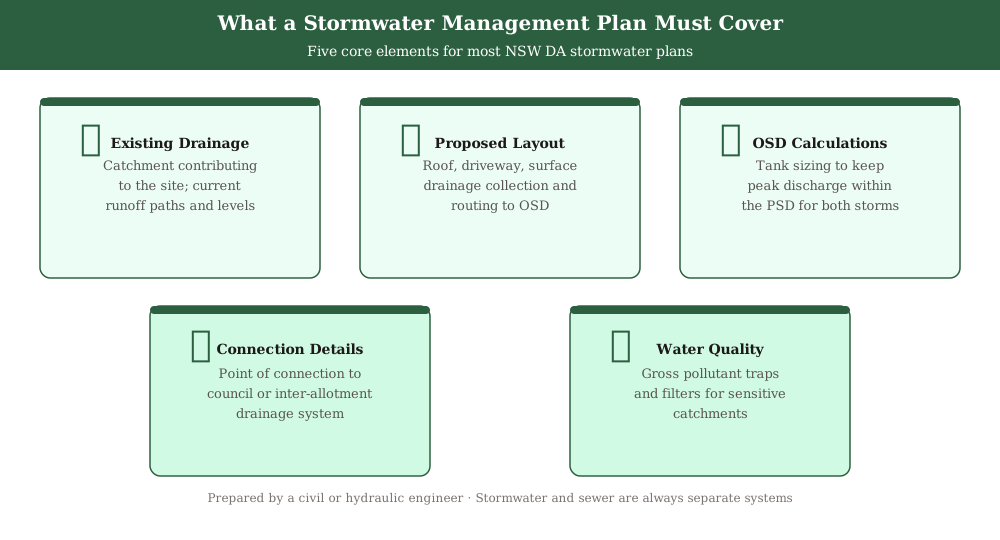
Figure 3: The core elements a stormwater management plan must cover for a NSW DA.
Existing drainage conditions, including the catchment area contributing to the site. Proposed drainage layout showing how roof, driveway, and surface water will be collected and routed. OSD sizing calculations demonstrating the PSD will not be exceeded. The point of connection to the council or inter-allotment drainage system. And any water quality measures such as gross pollutant traps, required in sensitive catchments near creeks or drinking water areas.
For larger sites or staged developments, a concept stormwater management plan at DA stage is followed by detailed civil engineering plans at the construction certificate stage.
Note also that stormwater and sewer are separate systems. Stormwater runs to council drains and waterways. Sewer runs to the Sydney Water or Hunter Water network. Connection of stormwater to the sewer — or sewer to the stormwater drain — is an illegal discharge and a breach of development conditions. Your stormwater plan should make the separation explicit.
- Confirm your council's DCP drainage thresholds before finalising the design
- Engage a civil or hydraulic engineer early to size the OSD system
- Confirm the permissible site discharge with council before design
- Ensure roof, surface, and driveway drainage are all routed through the plan
- Check whether water quality controls are required for your catchment
How Stormwater Fits Your DA and SEE
The stormwater plan is a technical annexure to the DA — your Statement of Environmental Effects summarises the drainage approach and points to it as evidence, and council assesses drainage impacts under s 4.15(1) of the EP&A Act 1979.
The stormwater management plan is one of the technical supporting documents your DA package needs alongside the plans, Statement of Environmental Effects, and other assessments. Your SEE summarises the drainage approach and points to the stormwater plan as evidence that the development will not cause an unacceptable impact on downstream drainage.
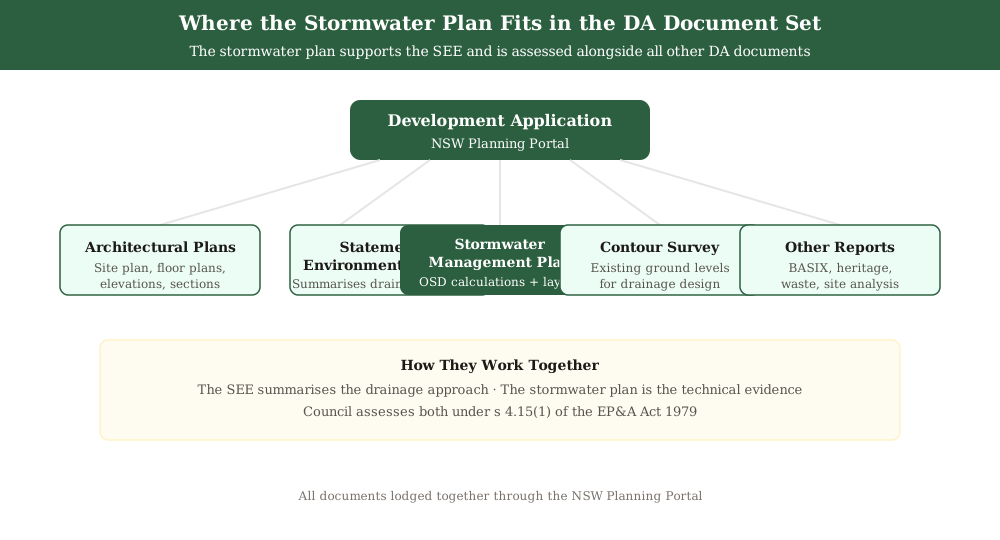
Figure 4: Where the stormwater management plan sits in the DA document set.
Council assesses your drainage approach under s 4.15(1) of the Environmental Planning and Assessment Act 1979, which requires it to consider the environmental impact of development — including stormwater. The stormwater plan is the technical basis for that assessment.
Use the DA lodgement checklist for NSW to confirm all drainage documents are in order before lodging through the NSW Planning Portal at planningportal.nsw.gov.au. The guides to DA supporting documents and flood affected land show where drainage fits in the full set.
Frequently asked questions
Do I need a stormwater management plan for a house extension in NSW?
Who prepares a stormwater management plan?
What is permissible site discharge in NSW?
Can I use rainwater tanks instead of an OSD system?
How does a stormwater plan relate to a drainage easement on my title?
Ready to get your SEE report?
Skip the writing. Get a DA-ready Statement of Environmental Effects in 5 minutes.
Get your SEE report