Key takeaways
- Flood affected land can still be developed in NSW
- Clause 5.21 sets the tests your DA must clear
- Check flood status via the section 10.7 certificate first
- Flood planning level equals the 1% AEP flood plus freeboard
- A flood impact assessment is the key DA document
If your land is flood affected, you can usually still develop it, but your NSW Development Application has to clear extra hurdles. Under clause 5.21 of your council's Local Environmental Plan, the council must be satisfied your development is compatible with the flood hazard and does not make flooding worse for other people before it grants consent.
Get a council-ready Statement of Environmental Effects for your DA in 5 minutes — no town planner, no waiting.
Get your SEE report →- How to confirm whether your land is flood affected before you design anything
- What the flood planning level is and how it is calculated for your site
- What clause 5.21 of the Standard Instrument LEP requires for flood-affected development
- The documents a flood-affected DA typically needs
- How flood risk is addressed in your DA and Statement of Environmental Effects
How Do You Know If Your Land Is Flood Affected?
You find out from your council, and there are three reliable sources — the section 10.7 planning certificate, the LEP flood planning map, and council flood advice — because a property can be in a flood planning area even if it has never visibly flooded in living memory.
You find out from your council, and there are three reliable sources. Flood affectation is not always obvious from the ground, because a property can be in a flood planning area even if it has never visibly flooded in living memory.
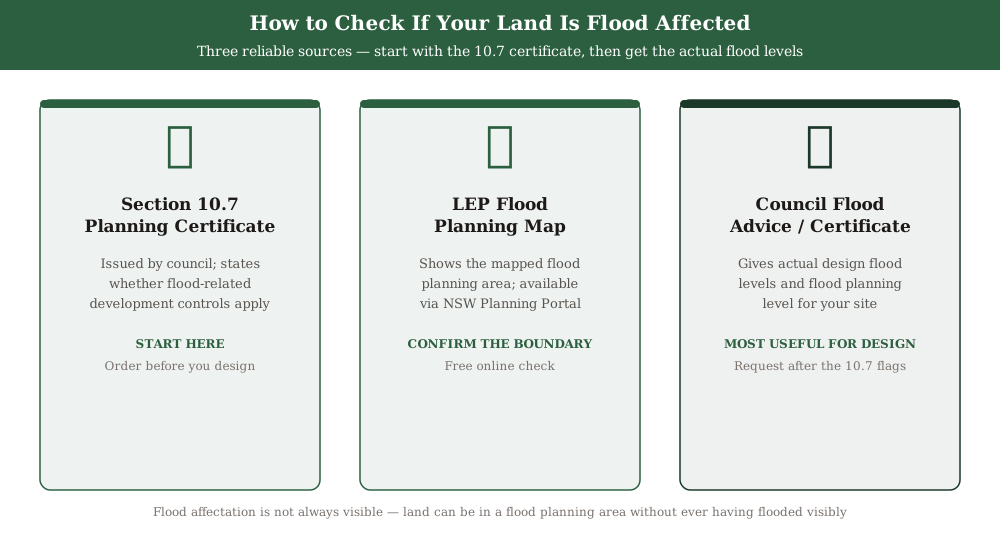
Figure 1: Three ways to confirm flood affectation before you design anything.
The first source is the section 10.7 planning certificate, which states whether the land is subject to flood-related development controls. The second is your council's LEP flood planning map, which shows the mapped flood planning area and is available through the NSW Planning Portal. The third, and the most useful for design, is flood advice or a flood certificate from the council, which gives the actual design flood levels and the flood planning level for your specific site.
Start with the section 10.7 planning certificate, because it is the document that flags the controls in the first place. If it shows a flood notation, request the council's flood advice next so your designer is working to real numbers rather than guesses. Doing this first is the single best way to avoid redrawing plans later.
What Is the Flood Planning Level?
The flood planning level is the height your habitable floors generally have to sit at or above — it is the 1% AEP flood plus a freeboard, and because both figures can differ between councils, never assume a number you have not confirmed in writing for your site.
The flood planning level, or FPL, is the height your habitable floors generally have to sit at or above. It is built from two parts: a defined flood event, which in NSW is usually the 1% Annual Exceedance Probability flood, plus a freeboard added on top.
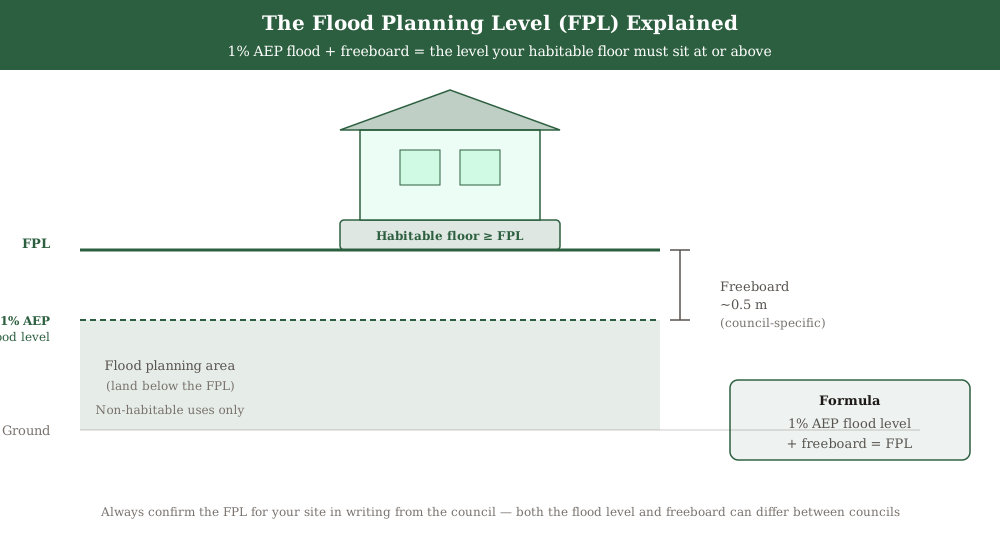
Figure 2: The flood planning level is the 1% AEP flood plus a freeboard, and your floor sits at or above it.
The 1% AEP flood is the flood with a one in a hundred chance of being equalled or exceeded in any year, often called the one-in-100-year flood. The freeboard is a safety margin added above that level, commonly around 0.5 metres, although the exact figure is set by your council in its flood policy. Add them together and you get the FPL. Land below the FPL is the flood planning area, which is the land clause 5.21 controls.
In practice the FPL drives the design. Your minimum habitable floor level usually has to be at or above it, which can mean raising the building, putting non-habitable uses like a garage or storage underneath, and using flood-compatible materials below the FPL. Because the freeboard and even the defined flood event can differ between councils, never assume a figure. Use the level the council gives you in writing for your site.
What Clause 5.21 Requires for Flood-Affected Development
Spend 5 minutes, not 3 weeks
instantSEE generates a complete, DA-ready Statement of Environmental Effects online. No town planner. No waiting.
Get your SEE report in 5 minutes →Clause 5.21 of the Standard Instrument LEP sets what the council must be satisfied of before it can approve your DA — it is about more than floor height, covering other properties, evacuation, the probable maximum flood, and the projected effects of climate change.
Clause 5.21 of the Standard Instrument LEP is the flood planning clause your council applies to land in the flood planning area. It sets out what the council has to be satisfied of before it can approve your DA, and it is about more than just floor height.
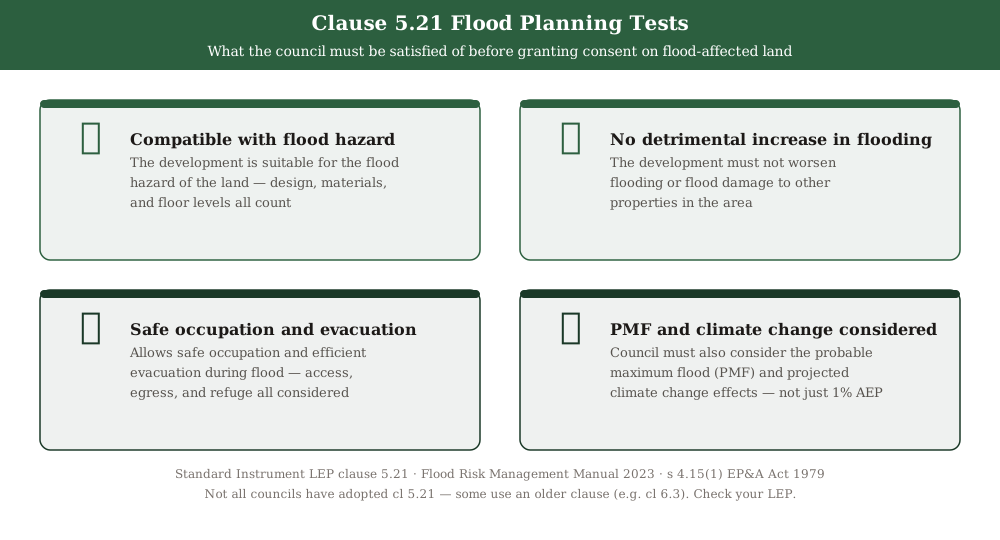
Figure 3: The clause 5.21 tests. They cover other properties and evacuation, not just your building.
The council must be satisfied that the development is compatible with the flood hazard of the land, that it will not cause a detrimental increase in flooding or flood damage on other properties, and that it allows safe occupation and efficient evacuation during a flood. The clause also asks the council to consider the probable maximum flood, which is the rare worst-case event, and the projected effects of climate change, not just the 1% AEP flood. So a design that lifts your own floor but pushes floodwater onto a neighbour will struggle.
Two points are worth knowing. First, not every council has adopted clause 5.21 yet, and some still use an older flood clause such as clause 6.3, so check your own LEP. Second, councils with sensitive uses may also apply clause 5.22, special flood considerations, to land between the flood planning level and the probable maximum flood. The framework councils work within is the NSW Flood Prone Land Policy and the Flood Risk Management Manual 2023, which replaced the older 2005 manual.
- Confirm your flood status from the section 10.7 planning certificate
- Request the council's flood advice to get design flood levels for your site
- Check whether your LEP uses clause 5.21 or an older flood clause
- Design habitable floors at or above the flood planning level
- Budget for a flood impact assessment by a flood engineer
What Documents Your DA Will Need
A flood-affected DA carries more documents than a standard one, because the council needs evidence — not assurances — that the clause 5.21 tests are met, and the exact set depends on your council and the scale of the project.
A flood-affected DA carries more documents than a standard one, because the council needs evidence, not assurances, that the flood tests are met. The exact list depends on your council and the scale of the project, but the core set is fairly consistent.
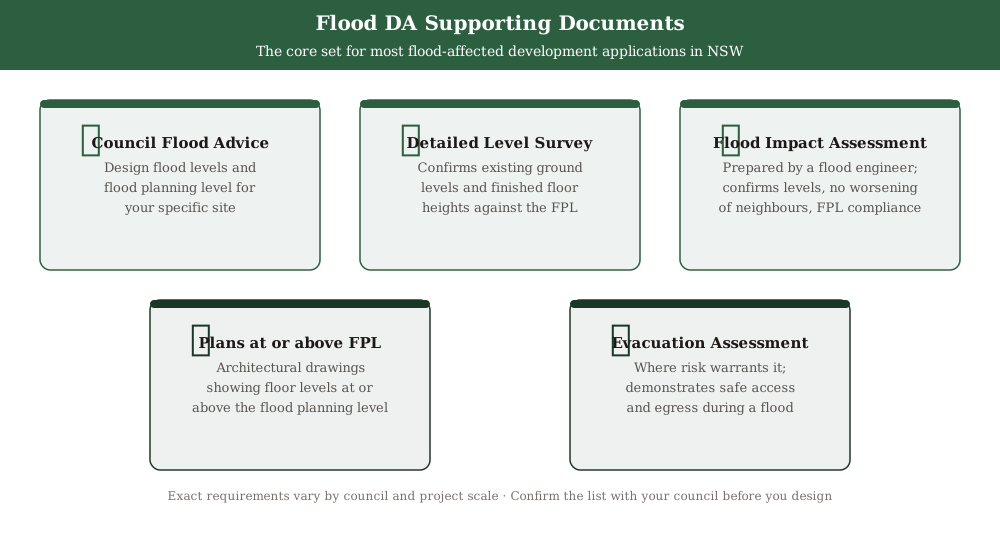
Figure 4: The usual flood DA document set. A flood engineer prepares the assessment.
Expect to provide council flood advice with the design flood levels, a detailed level survey of the land, and a flood study or flood impact assessment prepared by a flood engineer. You will also need plans showing floor levels at or above the flood planning level, and, where the risk warrants it, an evacuation and flood-resilience assessment. The flood impact assessment is the key technical document: it confirms the design flood levels, shows the development does not worsen flooding elsewhere, and demonstrates compliance with the floor level and evacuation requirements.
For a minor alteration well above the flood planning level, the council may accept a short report or even handle it through conditions. For a new dwelling or a substantial addition in the flood planning area, a full flood impact assessment by an engineer is normal. The cost and time this adds is real, which is why confirming your flood status early lets you budget for it rather than meet it as a surprise.
How Flood Risk Fits Your DA and SEE
All of the flood work feeds into your Statement of Environmental Effects — the document that explains why your development is acceptable — and flood risk is assessed by the council under clause 5.21 together with s 4.15(1) of the EP&A Act 1979.
All of the flood work feeds into your Statement of Environmental Effects, the document that explains why your development is acceptable. Your SEE summarises the flood outcome, points to the flood impact assessment, and shows how the design meets clause 5.21 and the floor level requirement. Flood risk is then assessed by the council under clause 5.21 together with s 4.15(1) of the Environmental Planning and Assessment Act 1979.
Because a flood DA has several specialist pieces, a DA lodgement checklist for NSW helps you line up the flood report, survey, and plans before you submit through the NSW Planning Portal at planningportal.nsw.gov.au. Our guides to the DA supporting documents you need and how to lodge a DA in NSW show where the flood material fits in the full set. The SEE is where the flood question gets its plain-English answer, tied to the levels and rules that apply to your land.
Frequently asked questions
Can I build on flood affected land in NSW?
What is the flood planning level in NSW?
How do I find out if my property is flood affected?
Do I need a flood study for my DA?
What is clause 5.21 of the LEP?
Ready to get your SEE report?
Skip the writing. Get a DA-ready Statement of Environmental Effects in 5 minutes.
Get your SEE report