Key takeaways
- A SEE is for standard local DAs covering most residential
- An EIS is for designated and State significant development
- The two documents differ vastly in scope, length, and cost
- Confusing SEE with EIS leads to overpriced quotes
- A Victorian EES is a different process under different law
In NSW, the document for most development applications is a Statement of Environmental Effects (SEE), not an Environmental Impact Statement (EIS). A SEE covers ordinary residential and local development. An EIS is a far larger report reserved for designated development and State significant projects. If you are building a house, an addition, or a granny flat, you need a SEE, not an EIS.
The two are easy to confuse, and the confusion is expensive. People often search for an "environmental effects statement" in NSW when they mean a Statement of Environmental Effects, and some assume the EIS is just a longer version of the same thing. It is not. An EIS is prepared by accredited specialists, runs to hundreds of pages, and is required only for a narrow class of high-impact development. Quoting or preparing the wrong document wastes weeks and, in the case of an EIS, thousands of dollars.
Get a council-ready Statement of Environmental Effects for your DA in 5 minutes — no town planner, no waiting.
Get your SEE report →- The practical differences between a SEE and an EIS in NSW
- What an EIS covers and why homeowners almost never need one
- The three legal triggers that require an EIS instead of a SEE
- Whether "environmental effects statement" is the correct NSW term
- A simple test to confirm which document your project actually needs
SEE vs EIS: Do You Need an Environmental Effects Statement?
A SEE and an EIS do the same broad job at completely different scales.
A Statement of Environmental Effects and an Environmental Impact Statement both assess a proposal's environmental effects, but at completely different scales. A SEE is the standard report for ordinary local DAs — including almost all residential work — and you can prepare it yourself. An EIS is a specialist document for development likely to have a high or significant impact, and it follows formal requirements issued by the Planning Secretary.
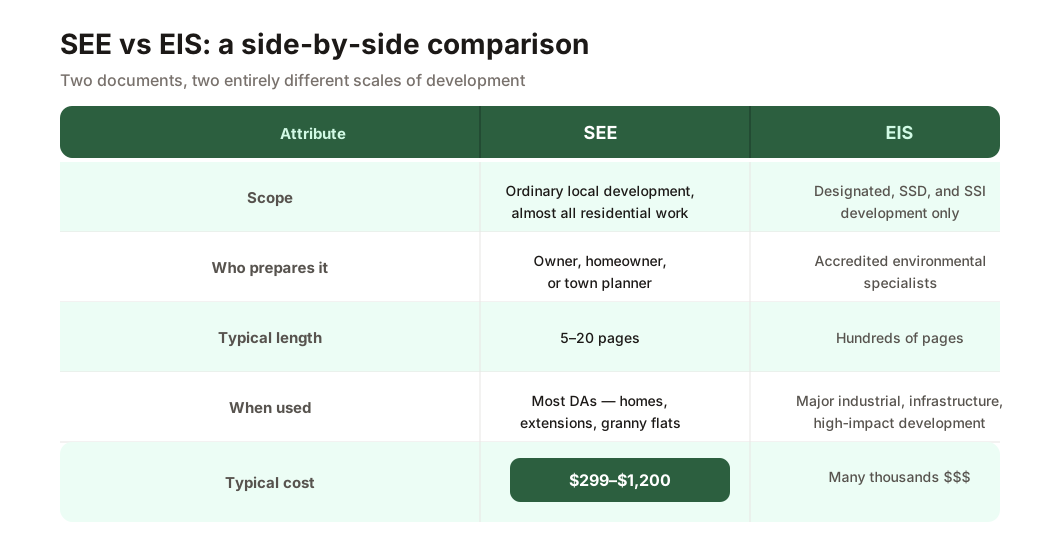
Figure 1: A SEE suits most residential DAs. An EIS is reserved for designated and State significant development.
The practical differences are large. A residential SEE might run from a few pages to twenty, can be written by the owner or a town planner, and addresses the matters set out in section 4.15(1) of the Environmental Planning and Assessment Act 1979. The same Statement of Environmental Effects sits at the centre of nearly every house, addition, and granny flat DA. An EIS, by contrast, is prepared by accredited environmental specialists, often runs to hundreds of pages with technical studies attached, and is required only for designated development and State significant projects. For an ordinary home, an EIS is not just unnecessary — it is the wrong document entirely.
What an Environmental Impact Statement Covers
An EIS investigates impacts at the scale of major infrastructure or industry, not a house or addition.
An Environmental Impact Statement is a detailed assessment of a project's likely impacts, prepared to the Planning Secretary's environmental assessment requirements, known as SEARs. Where a SEE assesses the everyday impacts of a house or addition, an EIS investigates impacts at the scale of major infrastructure or industry: ecology, water, air quality, noise, traffic, social and economic effects, and often cumulative impacts across a region.
Because of that scope, an EIS is not a document a homeowner prepares. The applicant first requests the SEARs from the Planning Secretary, which sets out exactly what the EIS must address for that specific project. Accredited specialists then prepare the studies, and the EIS is publicly exhibited so the community can make submissions. For designated development, the DA must be accompanied by an EIS, the application is notified for at least 28 days, and third parties gain merits appeal rights — none of which apply to an ordinary SEE-backed DA. The difference in process is as large as the difference in length.
When Is an EIS Required Instead of a SEE?
Spend 5 minutes, not 3 weeks
instantSEE generates a complete, DA-ready Statement of Environmental Effects online. No town planner. No waiting.
Get your SEE report in 5 minutes →An EIS is required only in three situations defined by NSW planning law — and residential work falls into none of them.
An EIS is required, instead of a SEE, in three situations defined by NSW planning law. If your project does not fall into one of them, you need a SEE. For residential work, you almost never trigger any of them.
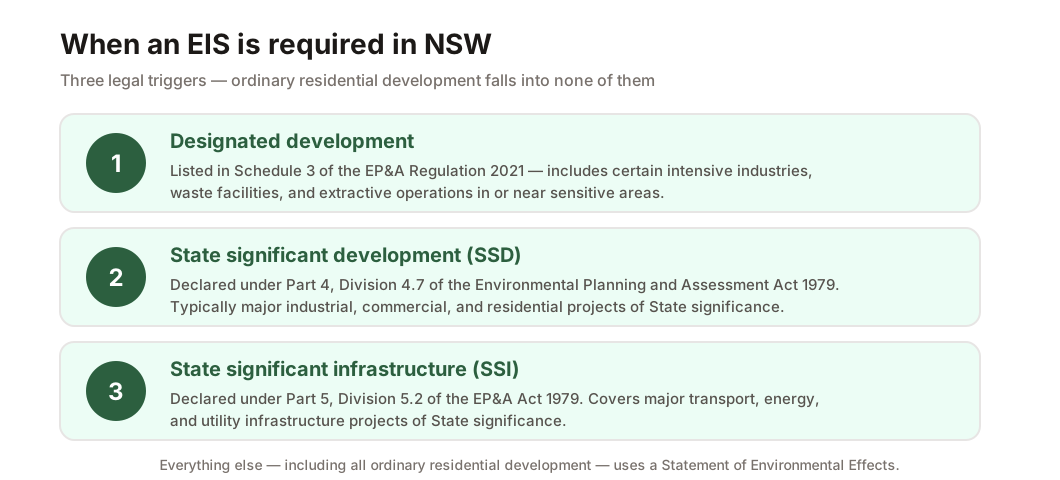
Figure 2: The three triggers for an EIS. Ordinary residential development falls into none of them.
The first trigger is designated development. Schedule 3 of the Environmental Planning and Assessment Regulation 2021 lists development likely to have a high impact or that is located in or near an environmentally sensitive area — such as certain intensive industries, waste facilities, and extractive operations. A DA for designated development must be accompanied by an EIS. The second trigger is State significant development (SSD), dealt with under Part 4, Division 4.7 of the Environmental Planning and Assessment Act 1979; all SSD applications must be accompanied by an EIS. The third trigger is State significant infrastructure (SSI), under Part 5, Division 5.2 of the EP&A Act, which also requires an EIS. Everything else — which is the overwhelming majority of local and residential development — is assessed with a Statement of Environmental Effects. Knowing exactly what must be included in a SEE matters far more for your project than anything in the EIS rules.
Is an "Environmental Effects Statement" a Real NSW Document?
"Environmental effects statement" is not a NSW term — you are almost certainly looking for a Statement of Environmental Effects.
"Environmental effects statement" is not the correct NSW term, and if you have searched for one, you are almost certainly looking for a Statement of Environmental Effects. The phrase "Environment Effects Statement", or EES, is the Victorian equivalent of the NSW environmental impact process, prepared under that state's separate Environment Effects Act 1978. It is not used in NSW planning law.
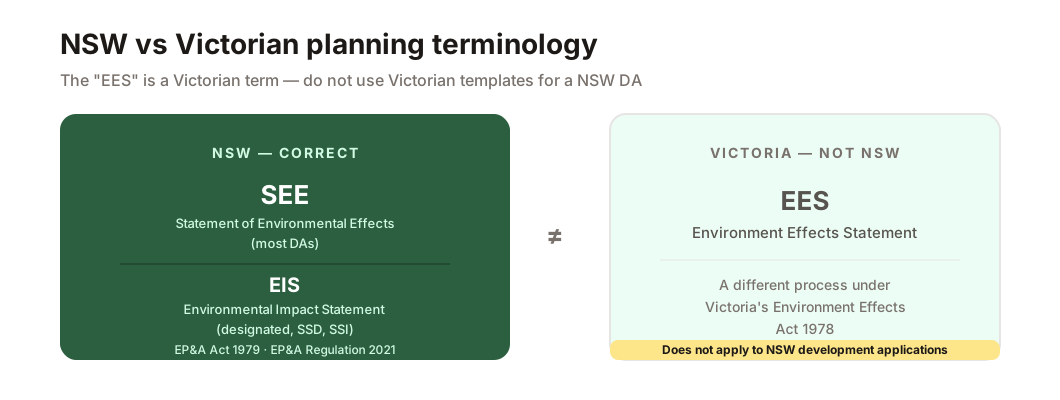
Figure 3: NSW uses the EIS. The Environment Effects Statement (EES) is the Victorian term, under different legislation.
This matters when you are searching for templates or guides online. A document or checklist built around an "environmental effects statement" or an EES is built for the Victorian system and will not match what a NSW council expects in your DA. In NSW, the two correct terms are Statement of Environmental Effects (the everyday document for local DAs) and Environmental Impact Statement (the specialist document for designated and State significant development). If a SOEE is mentioned in your DA requirements, that is simply another abbreviation for the SEE. Keep those terms straight and you will not end up preparing the wrong document or following interstate rules.
Which Document Does Your Project Actually Need?
For residential development in NSW, the answer is almost always a SEE.
For residential development in NSW, the answer is almost always a SEE. Unless your project is designated development under Schedule 3 of the EP&A Regulation, or it has been declared State significant development or infrastructure, your DA is assessed with a Statement of Environmental Effects. A new dwelling, a knock-down rebuild, a two-storey addition, and a granny flat all sit firmly in SEE territory.
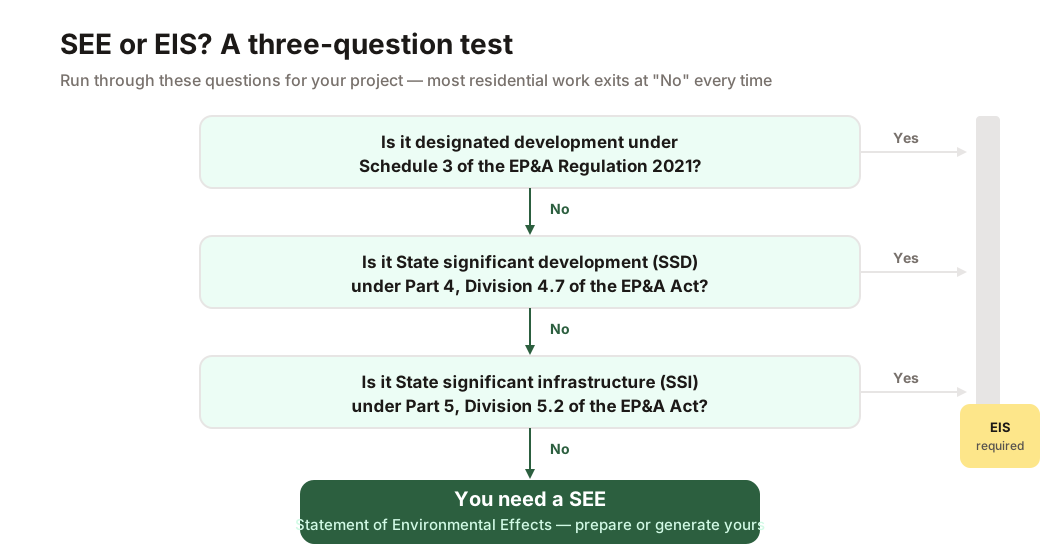
Figure 4: A simple test. If your project is not designated, SSD, or SSI, you need a SEE.
The quickest way to confirm is to run the three triggers as a checklist. Is your development listed as designated development in Schedule 3? Has it been declared State significant development or infrastructure? If the answer to both is no, you need a SEE, and you can prepare it yourself or have it generated for you. Our free SEE Checklist for NSW sets out every item your SEE should address before you lodge. A town planner will prepare a SEE for $800 to $2,500 over one to three weeks, while instantSEE produces a complete, DA-ready SEE in about 5 minutes online. Either way, for an ordinary home, the SEE is the document, and the EIS is not.
- Is your project listed as designated development in Schedule 3 of the EP&A Regulation?
- Has it been declared State significant development under Part 4, Division 4.7 of the EP&A Act?
- Has it been declared State significant infrastructure under Part 5, Division 5.2?
- If all three answers are no — you need a SEE, not an EIS
Frequently asked questions
What is the difference between a SEE and an EIS in NSW?
When do I need an EIS instead of a SEE in NSW?
Is an environmental effects statement the same as a SEE?
Do I need an EIS for a granny flat or home addition?
How much more does an EIS cost than a SEE?
Ready to get your SEE report?
Skip the writing. Get a DA-ready Statement of Environmental Effects in 5 minutes.
Get your SEE report