Key takeaways
- Woollahra LEP 2014 commenced 23 May 2015 and governs all development applications
- Heritage permeates the LGA — from Paddington terraces to Double Bay and Vaucluse
- Harbour foreshore and view-sharing controls are strict SEE requirements
- Steep sites in Vaucluse and Edgecliff require geotechnical assessment
- Sydney Eastern City Planning Panel determines larger Woollahra DAs
If you are lodging a development application with Woollahra Council, your Statement of Environmental Effects (SEE) must be prepared against the Woollahra Local Environmental Plan 2014 (which commenced 23 May 2015 and replaced the 1995 LEP), the Woollahra Development Control Plan, and the mandatory content requirements of Schedule 1, Part 1 of the Environmental Planning and Assessment Regulation 2021.
Get a council-ready Statement of Environmental Effects for your DA in 5 minutes — no town planner, no waiting.
Get your SEE report →- Which planning instruments apply to Woollahra Council DAs
- How heritage listings shape SEE requirements across Paddington, Double Bay, and Vaucluse
- What harbour foreshore and view-sharing controls require in your SEE
- Why geotechnical reports are needed for steep Woollahra sites
- When the Sydney Eastern City Planning Panel determines applications
What Planning Instruments Govern Woollahra DAs?
Woollahra's operative LEP commenced 23 May 2015, replacing the old 1995 instrument — your SEE must be prepared against LEP 2014 and the current DCP, not the superseded documents.
The Woollahra Local Environmental Plan 2014 commenced on 23 May 2015, replacing the Woollahra LEP 1995. It sets out permissibility, height of buildings, floor space ratio (FSR), and heritage controls across Paddington, Edgecliff, Double Bay, Rose Bay, Vaucluse, Watsons Bay, and surrounding suburbs.
The Woollahra Development Control Plan provides detailed design standards for residential, commercial, and mixed-use development. Your SEE must demonstrate compliance with both instruments and with the mandatory content floor set by Schedule 1, Part 1 of the EP&A Regulation 2021.
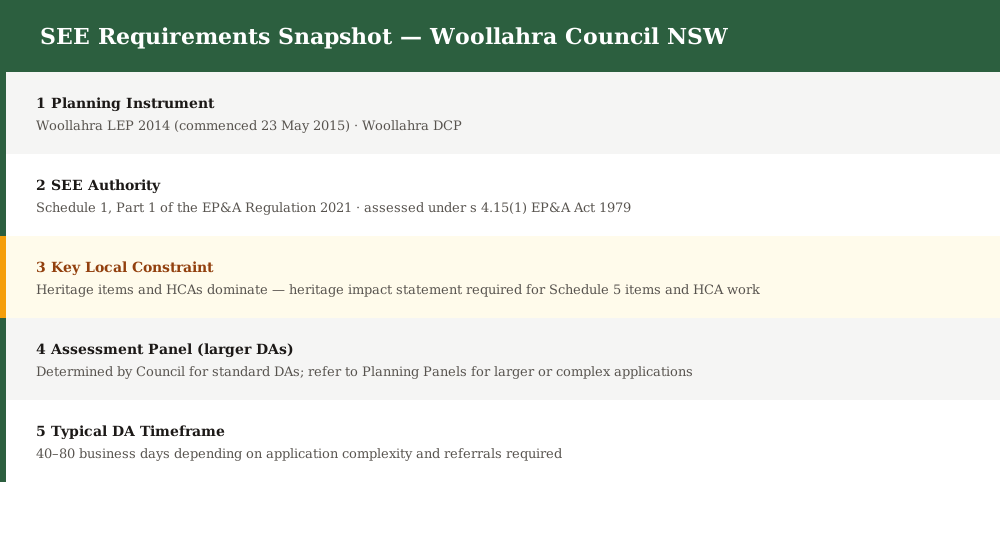
Figure 1: Key planning instruments and SEE content requirements for Woollahra Council DAs.
Heritage — The Dominant SEE Consideration
Woollahra has one of the highest concentrations of heritage-listed properties in NSW — Paddington's terrace streetscapes, Double Bay's inter-war apartments, and Vaucluse's historic estates all require heritage impact assessment.
Heritage protection is the defining planning challenge in Woollahra. The LEP 2014 identifies hundreds of individual heritage items (Schedule 5) and multiple heritage conservation areas (HCAs), including the iconic Paddington HCA, which contains terrace houses dating to the 1880s–1900s.
Any DA involving a heritage item or within an HCA must include a heritage impact statement (HIS) as part of the SEE. The HIS must follow the NSW Heritage Office guidelines and address:
- Identify the heritage item or HCA and its significance · Describe proposed works including materials and finishes · Assess the impact on heritage significance, fabric, and setting · Demonstrate sympathetic design treatment · Address view corridors and streetscape character
Harbour Foreshore and View-Sharing Controls
Spend 5 minutes, not 3 weeks
instantSEE generates a complete, DA-ready Statement of Environmental Effects online. No town planner. No waiting.
Get your SEE report in 5 minutes →Properties with harbour views in Rose Bay, Vaucluse, and Watsons Bay are subject to view-sharing controls that require careful assessment of visual impacts on neighbours in your SEE.
Woollahra Council's proximity to Sydney Harbour means that view sharing is a critical SEE consideration for many properties. The DCP contains specific view-sharing provisions requiring applicants to demonstrate:
- How the proposal preserves or reasonably shares views from adjoining properties
- That view loss, if any, is proportionate to the development benefit
- Compliance with the height of buildings and FSR controls that limit bulk in harbour-view corridors
The foreshore scenic protection area (FSPA) under the LEP adds further controls on development visible from the harbour. A SEE for a foreshore or harbour-view property must include a view analysis, shadow diagrams, and a visual impact statement.
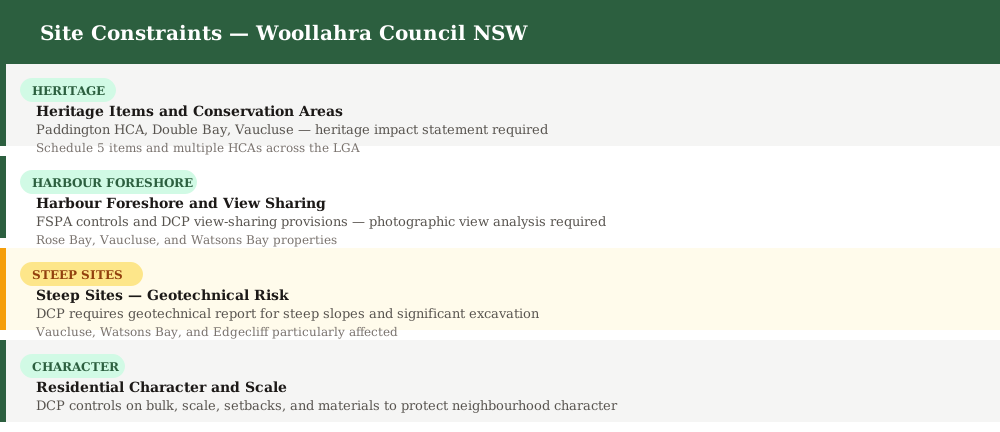
Figure 2: Key site constraints that must be addressed in a Woollahra Council SEE.
Steep Sites and Geotechnical Requirements
Much of Vaucluse and parts of Paddington and Edgecliff sit on steep, rocky ground — your SEE must address slope stability, retaining structures, and geotechnical risk.
Woollahra contains numerous properties on steeply sloping land, particularly in Vaucluse, Watsons Bay, and parts of Edgecliff. The DCP requires geotechnical assessment for proposals on slopes exceeding a specified gradient or where excavation is proposed close to boundaries.
Your SEE must address:
- Slope stability and potential for landslip or soil movement
- Proposed retaining walls, drainage, and erosion controls
- Impacts of excavation on adjoining structures and trees
- Consistency with the DCP's controls for development on steep sites
A geotechnical report by a registered geotechnical engineer is typically required and must be submitted with the DA.
Common DA Types in Woollahra
Heritage alterations, residential additions, and mixed-use developments in Double Bay and Edgecliff are the most frequent applications lodged with Woollahra Council.
Woollahra is a predominantly established residential and small commercial LGA. Common DA types include alterations and additions to dwellings, new dwellings on steep or heritage-constrained sites, and commercial or mixed-use development in Double Bay and Edgecliff.
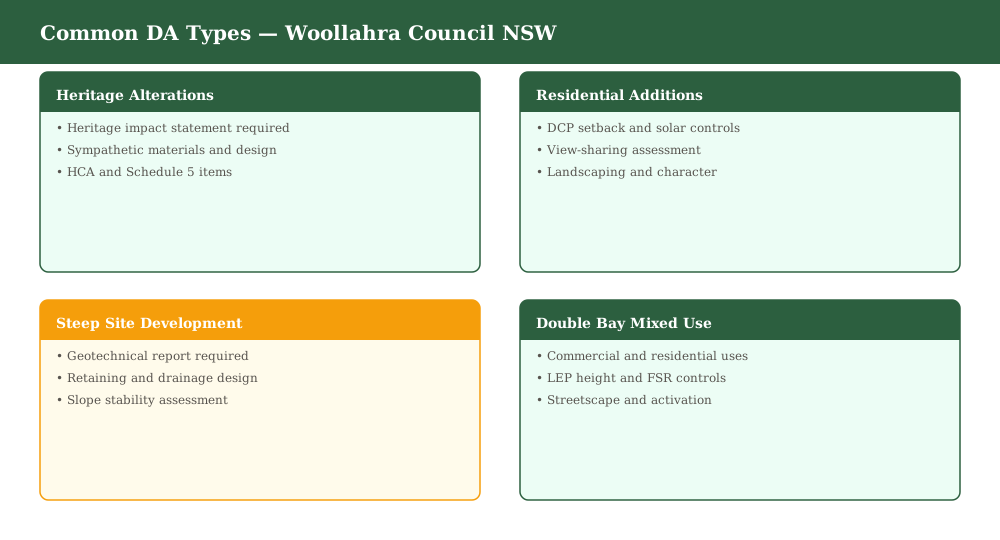
Figure 3: Common development application types lodged with Woollahra Council.
When Does the Sydney Eastern City Planning Panel Decide?
DAs with a capital investment value above $30 million in Woollahra are referred to the Sydney Eastern City Planning Panel for determination rather than Council.
The Planning and Environment (Sydney Eastern City Planning Panel) Order 2018 gives the SECPP jurisdiction over Woollahra DAs where the capital investment value (CIV) exceeds $30 million, where CIV is $5–30 million and Council is the applicant or landowner, or for certain sensitive, Crown, and designated development.
For panel applications, the SEE must meet the higher evidential standard of an independent merit assessment, with a full suite of technical reports.
Frequently asked questions
Has the Woollahra LEP been updated recently?
Do all Woollahra DAs require a heritage impact statement?
What view-sharing analysis does Woollahra Council expect in a SEE?
When is a geotechnical report required for a Woollahra DA?
Can instantSEE prepare a SEE for a Woollahra DA?
Ready to get your SEE report?
Skip the writing. Get a DA-ready Statement of Environmental Effects in 5 minutes.
Get your SEE report