Key takeaways
- Every Randwick DA requiring consent needs a Statement of Environmental Effects
- The Randwick LEP 2012 was significantly amended on 1 September 2023
- Coastal cliffs, foreshore scenic protection and flooding are key Randwick SEE issues
- Section 4.15 sets five mandatory matters for every DA assessment
- Most residential Randwick DAs are decided by a council officer
A Statement of Environmental Effects for a Randwick Development Application must show how your proposal sits with the Randwick Local Environmental Plan 2012 and the Randwick Development Control Plan, and how it manages its impacts on neighbours and the surrounding area. Every DA lodged with Randwick City Council that needs consent must include one.
Randwick is a coastal council, and that shapes almost every DA. The local government area runs along the Pacific from Clovelly and Coogee down through Maroubra to Malabar and La Perouse, so coastal cliffs, erosion, and foreshore scenic protection come into play often. At the same time, the Randwick health and education precinct around UNSW and Prince of Wales Hospital and the light rail corridor through Kensington and Kingsford are being built up. The Randwick LEP 2012 was significantly amended on 1 September 2023, so older guides can quote standards that have changed.
This guide explains what a Randwick SEE has to cover, the constraints that shape it, the common DA types in the area, how to lodge with the council, and whether you need a town planner.
Get a council-ready Statement of Environmental Effects for your DA in 5 minutes — no town planner, no waiting.
Get your SEE report →- What Randwick Council requires in a Statement of Environmental Effects
- How coastal cliffs, foreshore scenic protection, and the precinct shape your Randwick SEE
- Common DA types in Randwick and what each SEE must address
- How to lodge a Randwick DA through the NSW Planning Portal
- Who determines your application — officer, Randwick LPP, or State panel
What Randwick Council Requires in a SEE
Your SEE must address five matters under section 4.15 — LEP compliance, DCP compliance, site constraints, neighbour impacts, and the public interest — with coastal cliff erosion, foreshore scenic protection, and the health and education precinct each potentially decisive depending on your location.
Your Statement of Environmental Effects for a Randwick DA must address five things: how your proposal complies with the Randwick LEP 2012, how it meets the Randwick DCP, the constraints on your specific site, the impacts on your neighbours, and the public interest. These map directly onto the matters a council must weigh under section 4.15 of the Environmental Planning and Assessment Act 1979.
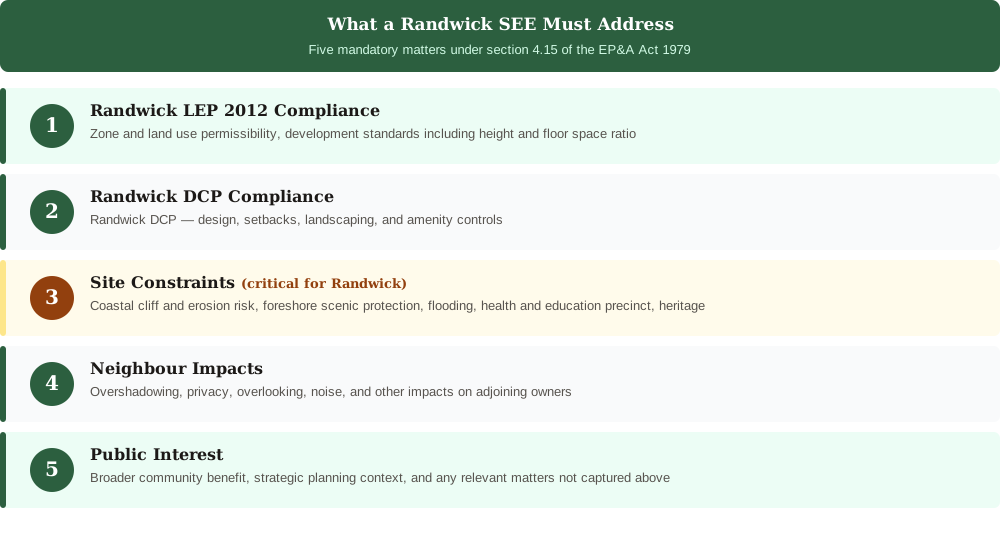
Figure 1: The five matters a Randwick SEE must address. They mirror the section 4.15 assessment the council runs.
Randwick City Council's principal planning instruments are the Randwick Local Environmental Plan 2012 and the Randwick Development Control Plan. The LEP 2012 is a standard instrument plan made under the EP&A Act 1979, and a major amendment from the council's LEP review commenced on 1 September 2023, so make sure any standard you rely on comes from the current plan.. Maximum building height, FSR, and setback standards for your zone are set by the Randwick LEP 2012 and Randwick DCP — confirm the applicable figures for your lot on the NSW ePlanning Spatial Viewer or your section 10.7 certificate. Confirm the current DCP, as staged DCP changes commenced on 1 September 2023.
The Coast, Cliff, and Precinct Constraints Your Randwick SEE Must Address
Randwick's combination of cliff-top and near-cliff coastal sites along the eastern beaches, foreshore scenic protection, a major health and education precinct, and low-lying areas that flood means the site constraints section of your SEE does substantial work.
The constraints in Randwick are the constraints of a coastal LGA with a major renewal precinct, and your SEE has to confront the ones that touch your land.
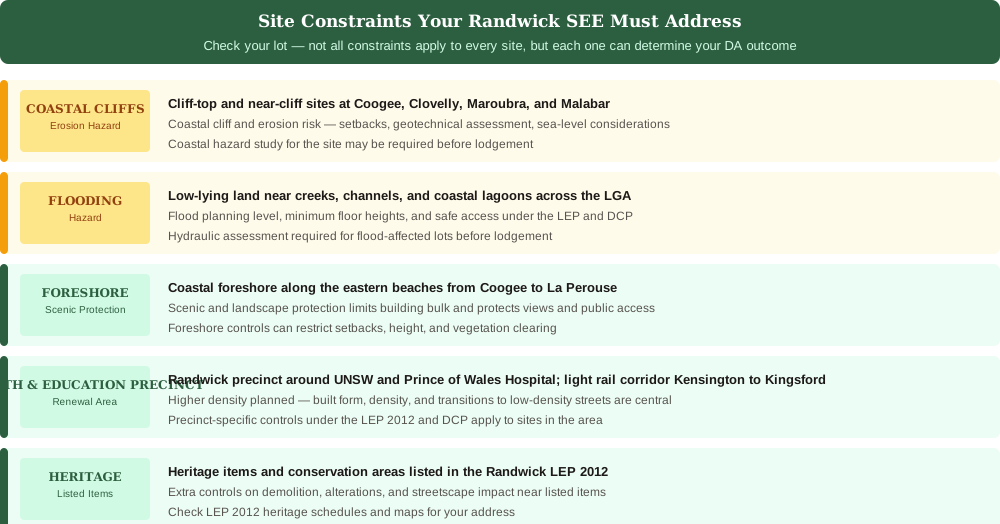
Figure 2: The constraints that shape a Randwick SEE. Coastal cliffs and flooding are flagged as hazards.
The Randwick health and education precinct around UNSW and Prince of Wales Hospital and the light rail corridor through Kensington and Kingsford are renewal areas, so built form, density, and transitions to low-density streets are central there. On the coast, cliff-top and near-cliff sites at Coogee, Clovelly, Maroubra, and Malabar carry coastal cliff and erosion risk, with setbacks and geotechnical assessment. Foreshore scenic protection limits building bulk and protects coastal views and public access. Low-lying land near creeks, channels, and coastal lagoons floods, so floor levels and safe access matter. Heritage items and conservation areas are listed in the LEP 2012. At the southern end near La Perouse and Matraville, some land sits under Sydney Airport flight paths, which brings acoustic design into play. Check the NSW Planning Portal spatial viewer for what touches your site.
Common DA Types in Randwick and What Your SEE Must Address
Spend 5 minutes, not 3 weeks
instantSEE generates a complete, DA-ready Statement of Environmental Effects online. No town planner. No waiting.
Get your SEE report in 5 minutes →The focus of your SEE shifts with the project type and the constraints on your lot — cliff-top and foreshore sites need those issues addressed upfront, while a standard addition on unconstrained residential land centres on overshadowing and privacy.
Most residential DAs lodged with Randwick City Council fall into a handful of types, and the focus of your SEE shifts with each one.
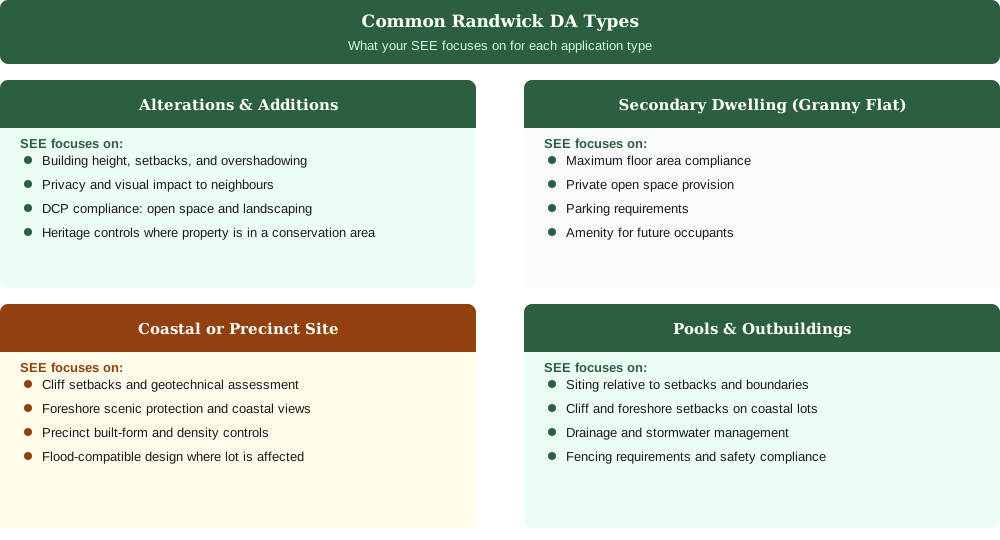
Figure 3: The four most common Randwick DA types and where each SEE puts its weight.
For alterations and additions, your SEE concentrates on height, setbacks, overshadowing, and privacy to neighbours. For a secondary dwelling, often called a granny flat, the focus is floor area, private open space, parking, and amenity. For a dual occupancy or medium-density development, it addresses density, built form, deep soil and landscaping, privacy, and parking. For pools and outbuildings, it covers siting, drainage, fencing, and the streetscape, plus cliff and foreshore setbacks where the lot is on the coast. A DA lodgement checklist for NSW helps you gather the right supporting documents for each.
- Confirm consent is required by checking your LEP 2012 zone and land use table
- Prepare plans, SEE, owner's consent, and BASIX certificate where needed
- Lodge on the NSW Planning Portal and pay the DA lodgement fee
- Respond promptly to any council requests for additional information
- Await council assessment against section 4.15 and the determination
How to Lodge a DA with Randwick Council
You lodge every Randwick DA through the NSW Planning Portal — upload plans, SEE, owner's consent, and pay the fee; the council registers it, notifies neighbours, and assesses it against section 4.15.
You lodge a Randwick DA through the NSW Planning Portal at planningportal.nsw.gov.au, the system every NSW council uses, and Randwick has required all applications to be submitted through the portal since 1 July 2021. You upload your plans, owner's consent, supporting documents, and your SEE, then pay the fee. Our step-by-step guide to lodging a DA in NSW covers the portal mechanics.
Once lodged, the council registers your DA, notifies adjoining owners where required, and assesses it against section 4.15. Most straightforward residential DAs are decided by a council officer under delegated authority. More contentious or significant applications go to the Randwick Local Planning Panel, and regionally significant development is determined by the Sydney Eastern City Planning Panel. The general DA requirements across NSW councils follow the same legislative base, so a complete Randwick lodgement looks much like any other once you are working from the right plan.
Do You Need a Town Planner for a Randwick DA?
For a straightforward residential DA on unconstrained land you can prepare the SEE yourself — but cliff-top and coastal sites, foreshore lots, and precinct sites are where a specialist earns their fee.
Not always. For a straightforward residential DA on an unconstrained lot, such as a single-storey addition, a granny flat, or a pool, you can prepare the SEE yourself or use a service rather than engaging a town planner. A traditional town planner in NSW typically charges $800 to $2,500 and takes one to three weeks, which is a lot for a clearly compliant project.
You are more likely to want a planner where the project is complex: a cliff-top or near-cliff coastal site, a foreshore lot with scenic protection controls, a site in the health and education precinct or along the light rail corridor, a flood-affected or heritage-listed property, or a proposal that seeks to vary a development standard such as height under clause 4.6. For the common residential cases, a well-structured SEE that addresses the current Randwick LEP 2012 and DCP is what you need.
Frequently asked questions
Do I need a Statement of Environmental Effects for a Randwick DA?
Which LEP applies to a Randwick development application?
Is my Randwick property affected by coastal or cliff controls?
How do I lodge a DA with Randwick Council?
Ready to get your SEE report?
Skip the writing. Get a DA-ready Statement of Environmental Effects in 5 minutes.
Get your SEE report