Key takeaways
- A SEE is legally required for every NSW Development Application
- A DCP compliance table usually sits inside your SEE
- A DCP statement cannot replace a SEE under Schedule 1
- Councils use different names but almost always want one document
- A DCP table must address objectives when controls are not met
A Statement of Environmental Effects (SEE) is the broad document your Development Application needs, which assesses the whole proposal: its impacts, the planning controls it meets, and whether the site suits it. A DCP compliance statement is a narrower table that shows only how your proposal meets your council's Development Control Plan controls. The DCP statement is usually part of the SEE, not a replacement for it, and every DA still needs a SEE.
The confusion is understandable, because councils use different names for the same things. One council's lodgement checklist asks for a "Statement of Environmental Effects," another asks for a "DCP compliance table," and a third asks for both. If you read those lists without knowing how the two documents relate, it is easy to think you are being asked for two separate reports when you are usually being asked for one document with a table inside it.
Get a council-ready Statement of Environmental Effects for your DA in 5 minutes — no town planner, no waiting.
Get your SEE report →- What a SEE covers and why every DA needs one under Schedule 1 of the EP&A Regulation 2021
- What a DCP compliance statement covers and how it differs from a SEE in scope
- How the DCP compliance table fits inside the broader SEE structure
- How to work out which document your council actually wants before you lodge
- What goes in a DCP compliance table when a control is not fully met
SEE vs DCP Statement: The Key Difference
The core difference between a SEE and a DCP compliance statement is scope — the SEE assesses everything your council must consider, while the DCP statement checks only one thing: whether your proposal meets the numerical and design controls in your council's DCP.
The key difference is scope. A SEE assesses your entire proposal against everything your council must consider. A DCP compliance statement checks one thing: whether your proposal meets the numerical and design controls in your council's DCP.
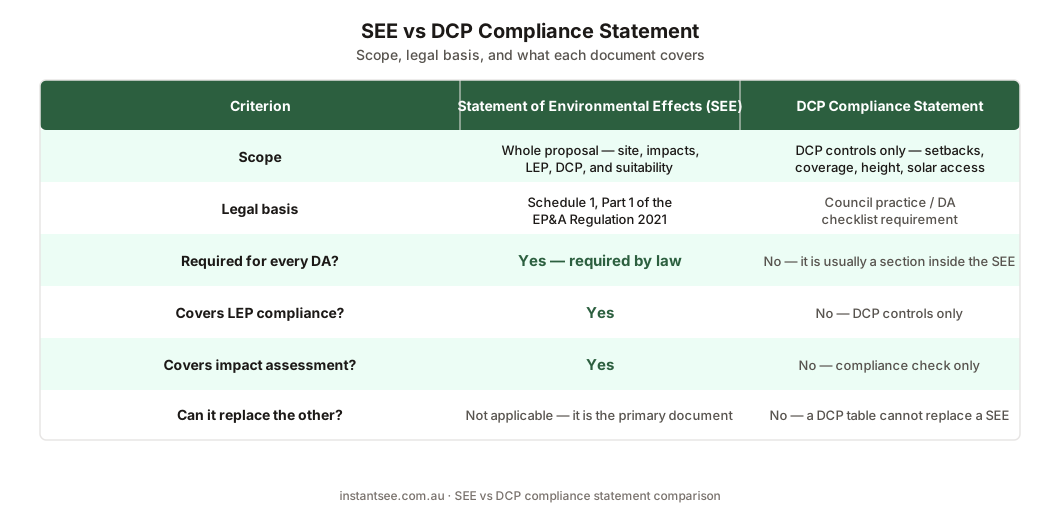
Figure 1: SEE vs DCP statement. The SEE is the broad, required document; the DCP statement is a focused compliance check that usually sits inside it.
The two also differ in standing. A SEE is required by law: under Schedule 1, Part 1 of the EP&A Regulation 2021, a Development Application (other than for complying development) must be accompanied by a Statement of Environmental Effects. A DCP compliance statement is not a separate legal requirement. It is a supporting tool, often a table, that councils ask for to make their assessment of the DCP faster. So the SEE is the document you must lodge; the DCP statement is a way of presenting part of what goes in it. One is the report, the other is a section of the report.
What a Statement of Environmental Effects Covers
A SEE covers the whole proposal — site, impacts, LEP, DCP, and suitability — because it is written to answer every matter a consent authority must consider under s 4.15(1) of the EP&A Act 1979, making it the only document in your DA that ties everything together.
A SEE covers the whole proposal. It describes the site and the development, works through the relevant planning controls in your council's LEP and DCP, assesses the likely impacts on neighbours and the locality, and concludes on the site's suitability. It is written to answer the matters a consent authority must consider under s 4.15(1) of the EP&A Act 1979, which include the planning instruments, the likely impacts, the suitability of the site, any submissions, and the public interest.
That breadth is the point. The Statement of Environmental Effects is the only document in your DA that ties the whole proposal together and argues that it is acceptable. The DCP controls are one input to that argument, alongside the LEP, the impacts, and the site constraints. A SEE that only addressed the DCP would be missing the impact assessment, the suitability conclusion, and the LEP compliance, so it would not meet the Schedule 1, Part 1 test. For more on the full content, see what must be included in a SEE for NSW.
What a DCP Compliance Statement Covers
Spend 5 minutes, not 3 weeks
instantSEE generates a complete, DA-ready Statement of Environmental Effects online. No town planner. No waiting.
Get your SEE report in 5 minutes →A DCP compliance statement covers only your council's Development Control Plan, typically as a table that lists each control, sets your proposed figure beside it, and states whether you comply — and where a control is not met, the table must address the objective behind it.
A DCP compliance statement covers only your council's Development Control Plan. It is typically a table that lists each relevant DCP control, sets your proposed figure beside it, and states whether you comply. Where a control is not met, a good DCP statement does not stop at "no": it addresses the objective behind the control and explains why the proposal still achieves it on its merits.
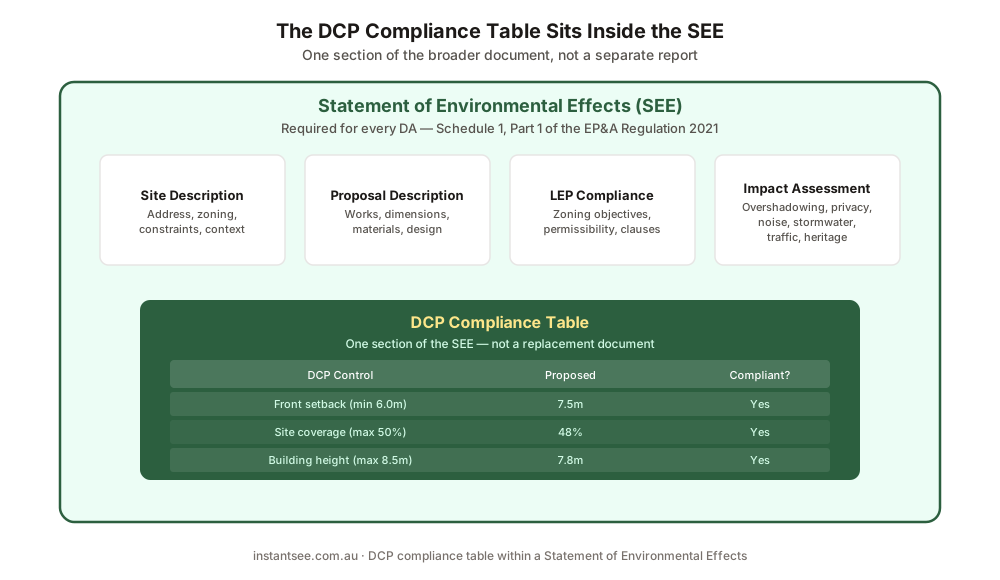
Figure 2: The DCP compliance table sits inside the SEE. It is one section of the broader document, not a substitute for it.
For a typical residential project, a DCP compliance table runs through controls such as front, side, and rear setbacks, site coverage, landscaped area, private open space, building height in storeys, and solar access. The table format is useful because it lets an assessing officer check compliance at a glance. In most DAs this table is included within the SEE, under the planning controls section, exactly where the officer expects to find it. Presenting your DCP compliance as a clear table inside the SEE is one of the simplest ways to make a self-prepared DA easier to assess.
Which One Does Your Council Want?
In almost every case your council wants a SEE with the DCP compliance table inside it — the question is only whether the table goes within the SEE or attaches separately, and your council's lodgement checklist tells you which format it expects.
In almost every case the answer is the same: you lodge a SEE, and the DCP compliance forms a table within it. Some councils provide a separate DCP compliance template and ask you to submit it alongside the SEE, but that is a formatting preference, not a second report. You will never be asked for a DCP statement instead of a SEE, because the SEE is the document the Regulation requires.
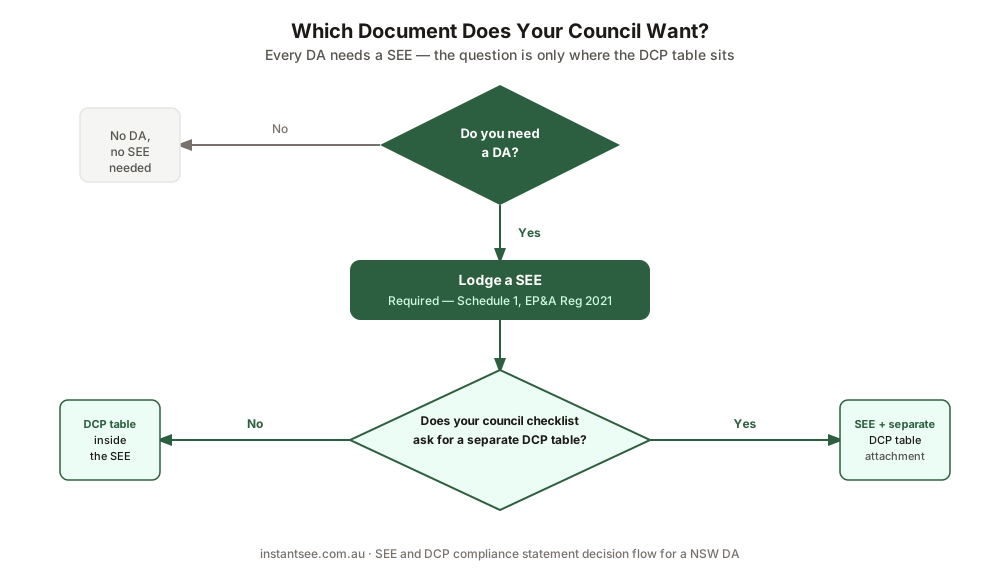
Figure 3: Every DA needs a SEE. Whether the DCP table goes inside it or attaches separately depends on your council's checklist.
To be sure, check your council's DA lodgement requirements or its application checklist, which spell out the supporting documents for your development type. If the checklist lists a separate DCP compliance table, prepare one and address every relevant control. If it does not, build the table into your SEE. Either way, the controls you address come from your council's own DCP, so confirm you are working from the current version. Our free SEE Checklist for NSW helps you confirm both the SEE content and the DCP controls your proposal needs to address before you lodge.
- Check your council's DA lodgement checklist before you start writing
- Confirm whether the DCP table goes inside your SEE or attaches separately
- Download the current version of your council's DCP before preparing the compliance table
- Address the objective behind any DCP control your proposal does not fully meet
- Use our free SEE Checklist to confirm you have covered every required matter
Frequently asked questions
Is a DCP compliance statement the same as a SEE?
Do I need both a SEE and a DCP statement?
Can a DCP statement replace a SEE?
What goes in a DCP compliance table?
Where do I find my council's DCP controls?
Ready to get your SEE report?
Skip the writing. Get a DA-ready Statement of Environmental Effects in 5 minutes.
Get your SEE report