Key takeaways
- A town planner takes 1 to 3 weeks to write a SEE
- A DIY SEE can take days depending on your experience
- instantSEE generates a complete SEE in 5 minutes
- Complexity and site constraints add the most time
- A checklist and template can cut hours off preparation
Writing a Statement of Environmental Effects takes a town planner one to three weeks, most owner-builders a weekend to a week, or about 5 minutes with instantSEE. How long a SEE report takes in NSW depends less on the size of the building and more on how familiar you are with the planning controls that apply to your site.
For most people lodging a Development Application, the SEE is the slowest single item to produce. Your plans are drawn, your BASIX certificate is ready, and then the whole DA sits waiting on the one document that has to be written in planning language. If you have hired a planner, you are in their queue. If you are writing it yourself, you are learning the format as you go.
Get a council-ready Statement of Environmental Effects for your DA in 5 minutes — no town planner, no waiting.
Get your SEE report →- Realistic timeframes for each route: planner, DIY, and instantSEE
- Why a town planner takes one to three weeks even for simple projects
- The stages of writing your own SEE and how long each takes
- The four factors that most often stretch a SEE out unexpectedly
- How to cut your preparation time without leaving gaps that trigger an RFI
How Long Does a SEE Report Take in NSW?
In practice, three routes exist, and they sit a long way apart in time.
There is no fixed turnaround for a SEE, because the time comes from preparation, not from any council deadline. A town planner typically takes one to three weeks. Writing it yourself takes anywhere from a weekend to a week or more, depending on how much you have to learn first. A guided tool such as instantSEE produces a complete, DA-ready Statement of Environmental Effects in about 5 minutes.
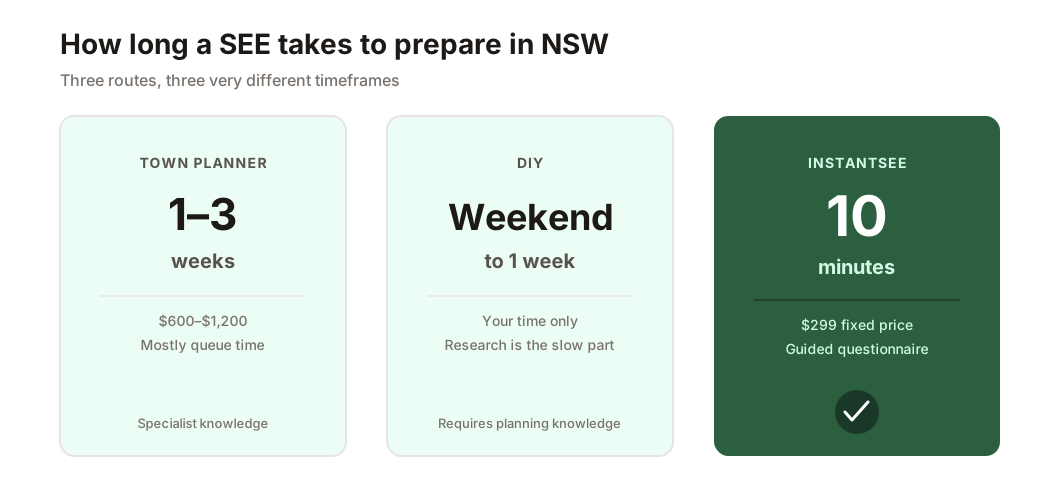
Figure 1: How long a SEE takes by route. A town planner takes one to three weeks; instantSEE takes about 5 minutes.
The gap matters because the SEE often sits on the critical path of your whole project. Every week the document is not finished is a week your DA is not lodged, which pushes back the start of your build and everything that follows. The fastest route that still produces a complete SEE is almost always the right one, because the real cost of a slow SEE is the holding time on the project behind it.
Why a Town Planner Takes One to Three Weeks
Most of a planner's one-to-three-week timeframe is queue, not writing time.
A town planner usually takes one to three weeks to prepare a SEE, and most of that time is not writing — it is the queue. A good planner is working on several DAs at once, so your job joins a list. Once they start, the work includes reviewing your plans, checking your council's Local Environmental Plan (LEP) and Development Control Plan (DCP), sometimes visiting the site, drafting the assessment against the matters in section 4.15(1) of the Environmental Planning and Assessment Act 1979, and sending it back for review.
Simple, well-documented projects move faster. A single-storey alteration with no site constraints can be turned around in a few days by a planner who specialises in quick DA packages. More complex proposals, such as a two-storey addition near neighbours or a site with heritage or flood constraints, sit at the longer end of the range because the impact assessment carries more weight and often needs more back-and-forth. The one-to-three-week figure is the normal band for residential work once your brief and documents are complete.
How Long It Takes to Write Your Own SEE
Spend 5 minutes, not 3 weeks
instantSEE generates a complete, DA-ready Statement of Environmental Effects online. No town planner. No waiting.
Get your SEE report in 5 minutes →Writing your own SEE takes a weekend to a week, and most of that is the first stage: research.
Writing your own SEE usually takes a weekend to a week of part-time effort. The writing itself is not long — what takes time is working out what your council requires, finding the right LEP and DCP controls for your zone, and learning how to present any non-compliance so it reads as reasonable rather than as a problem.
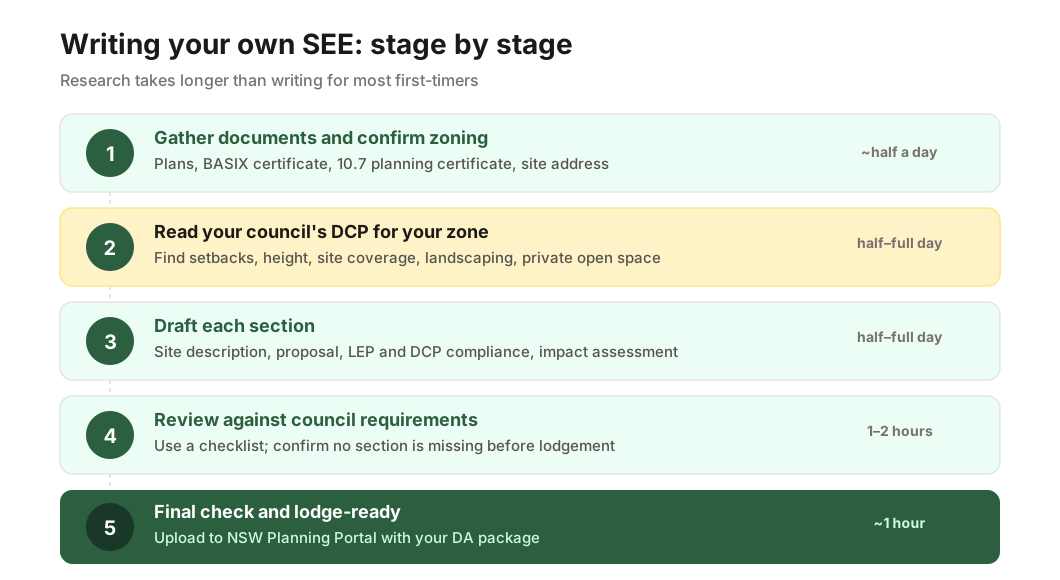
Figure 2: Writing your own SEE, stage by stage. The research at the start usually takes longer than the writing.
The stages are predictable. You gather your documents and confirm your zoning, which can take an afternoon. You read your council's DCP to find the controls that apply — this is the slow part for a first-timer. You then draft each section: site description, proposal, LEP and DCP compliance, and impacts on neighbours. Finally you review against what your council actually requires before lodging. Knowing exactly what must be included in a SEE up front is what separates a one-weekend job from a three-week one, because it stops you rewriting sections after discovering a control you missed.
What Makes a SEE Report Take Longer
Most delay comes from a short, predictable list of factors — all of which you can spot before you start.
Most of the delay in a SEE comes from a short list of factors, and you can predict all of them before you begin. Site constraints are the biggest. A heritage listing, a flood planning area, or bushfire-prone land each add an extra layer your SEE has to address, and each can push a quick job into a slow one.
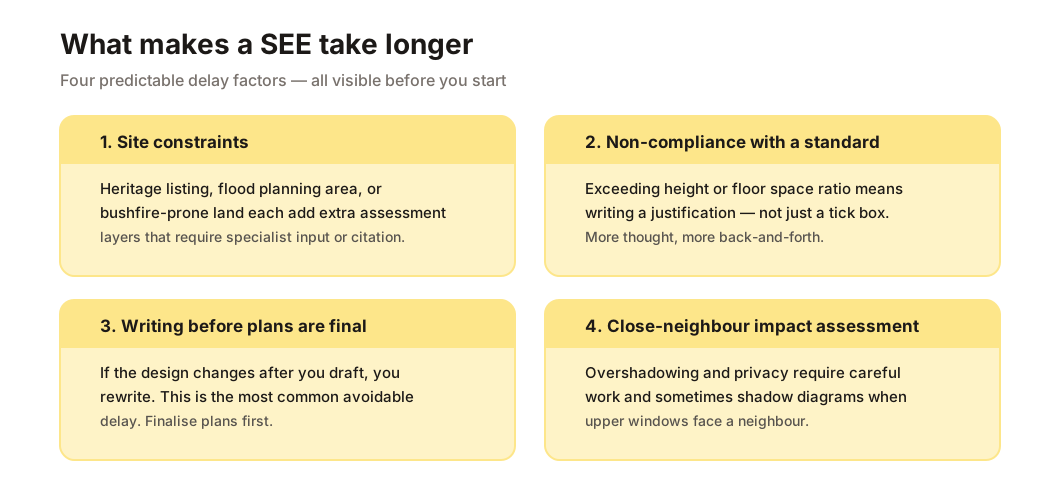
Figure 3: The four factors that most often stretch out a SEE. Each one is predictable before you begin.
The second factor is non-compliance with a development standard. If your design exceeds the height limit or the floor space ratio, your SEE has to justify the variation, which takes more thought than a straightforward compliance tick. The third is writing the SEE before your plans are final — if the design changes after you have drafted the document, you rewrite it, and that is the most common reason a SEE drags on. The fourth is the impact assessment itself: a proposal close to neighbours needs careful work on overshadowing and privacy. Finalise your plans first, confirm your constraints early, and the SEE itself is rarely the slow part.
- Confirm zoning and constraints from your 10.7 planning certificate
- Finalise architectural plans before you start writing
- Read your council's DCP for the controls that apply to your zone
- Use a checklist to cover every required section the first time
- Address any non-compliance with a standard, not just list it
How to Prepare Your SEE Faster
The fastest route is to do the research before you write a single word.
The fastest way to write a SEE without cutting corners is to finish the research before you begin drafting. Finalise your architectural plans, obtain your BASIX certificate, and confirm your zoning and constraints from your property's planning certificate (10.7 certificate). With those locked in, the document can describe a fixed design instead of a moving target.
From there, work to a checklist so you cover every matter your council requires the first time. Our free SEE Checklist for NSW lists each item your SEE should address, so you are not discovering gaps after you draft. Write each section in order, address each impact a neighbour might reasonably raise, and justify any non-compliance rather than hoping it goes unnoticed. If you would rather skip the writing entirely, instantSEE produces the full document from a guided questionnaire in about 5 minutes, so the planning language and structure are handled for you.
Frequently asked questions
How long does it take to write a SEE in NSW?
Can I get a SEE report done in a day?
Why does a town planner take so long to write a SEE?
Does a longer SEE get approved faster?
What is the fastest way to get a SEE done?
Ready to get your SEE report?
Skip the writing. Get a DA-ready Statement of Environmental Effects in 5 minutes.
Get your SEE report