Key takeaways
- Newcastle LEP 2012 lists heritage in Schedule 5 and the Heritage Map
- Extensive heritage items and conservation areas are the primary constraint
- Mine subsidence over former coal workings requires Subsidence Advisory NSW approval
- Contaminated former industrial land around the harbour requires assessment
- Hunter and Central Coast Regional Planning Panel decides regionally significant DAs
A Statement of Environmental Effects (SEE) is a mandatory document for every Development Application (DA) lodged with the City of Newcastle that requires consent. It demonstrates how your proposal addresses the Newcastle Local Environmental Plan 2012, the Newcastle Development Control Plan 2012, and the distinctive constraints — heritage, coast and harbour, mine subsidence, flooding and contaminated land — that define development assessment in this harbour city built on coal and steel.
Get a council-ready Statement of Environmental Effects for your DA in 5 minutes — no town planner, no waiting.
Get your SEE report →What is a Statement of Environmental Effects?
A Statement of Environmental Effects explains what your development is, how it relates to the planning framework, and how it manages its environmental impacts — it is the core document council officers and the planning panel read when assessing your DA.
A Statement of Environmental Effects is required under Schedule 1, Part 1 of the EP&A Regulation 2021 as part of every DA that is not exempt or complying development. It must address the matters set out in s 4.15(1) of the EP&A Act 1979 that are relevant to your proposal: the provisions of any applicable environmental planning instrument, development control plan, and any likely impacts on the natural and built environment.
For Newcastle, that means your SEE must work through the Newcastle Local Environmental Plan 2012 and the Newcastle Development Control Plan 2012, and then address any site-specific constraints — particularly heritage listings, mine subsidence districts, flooding, the coastal and harbour interface, or contaminated former industrial land — that apply to your site.
A thorough SEE does more than list the controls. It shows council that you have understood the planning framework, that your design has responded to heritage and character, and that your proposal will not create unacceptable impacts on the City of Newcastle's built and natural environment. A thin or incomplete SEE — especially one that underplays heritage or skips the mine subsidence check — invites requisitions that delay assessment and add cost.
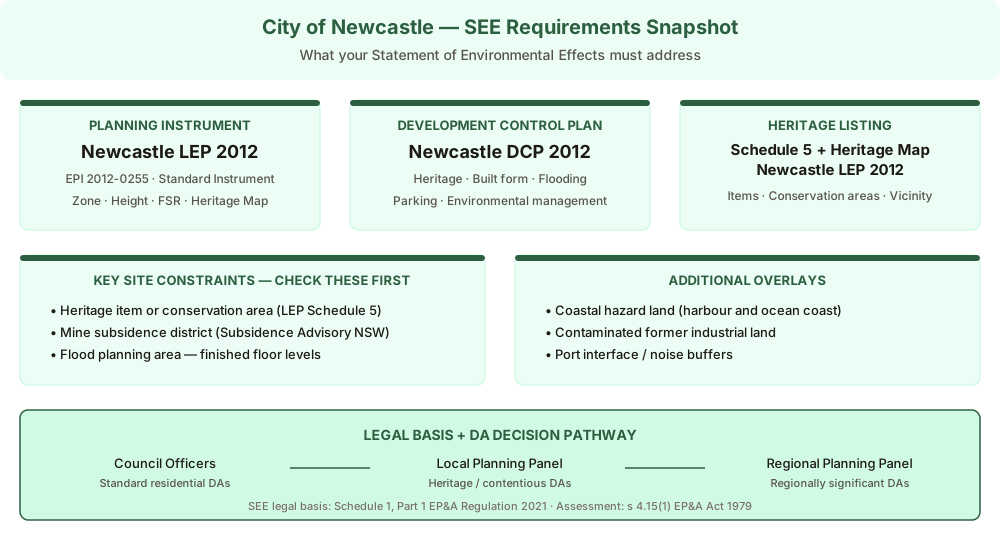 Figure 1: Key planning instruments and SEE requirements for a City of Newcastle development application.
The Newcastle Local Environmental Plan 2012
The Newcastle LEP 2012 is the principal statutory instrument — it sets the zone, permissibility, height, floor space ratio, and heritage listings for every site in the LGA.
The Newcastle Local Environmental Plan 2012 (EPI 2012-0255) is a standard instrument plan made under the EP&A Act 1979. It applies across the entire City of Newcastle local government area. The LEP:
- Zones land and determines what development is permitted with or without consent, or prohibited
- Sets maximum building height (Height of Buildings Map) and floor space ratio (Floor Space Ratio Map)
- Lists heritage items in Schedule 5 and identifies heritage conservation areas on the Heritage Map — this is the primary heritage reference for every Newcastle DA
- Identifies environmentally sensitive land, flood-prone land, coastal foreshore and other overlays
- Sets minimum lot sizes and subdivision standards
Your SEE must address zone permissibility first — is your proposed use permitted in the zone? — and then work through each relevant development standard, noting compliance or any requested variation, together with the clause 4.6 assessment if a variation is sought.
The Newcastle Development Control Plan 2012
Spend 5 minutes, not 3 weeks
instantSEE generates a complete, DA-ready Statement of Environmental Effects online. No town planner. No waiting.
Get your SEE report in 5 minutes →The DCP 2012 translates LEP standards into detailed design controls — setbacks, building heights, materials, heritage character requirements, flooding, parking and design quality provisions.
The Newcastle Development Control Plan 2012 sits below the LEP and provides the detailed design and land-use controls that shape what you build and how. Key chapters relevant to most residential and mixed-use DAs include:
- Heritage — detailed requirements for development affecting heritage items or in heritage conservation areas: materials, form, scale, sympathetic design, archival recording
- Built form and design — setbacks, site coverage, private open space, solar access, building bulk and scale
- Flooding — flood planning levels, finished floor levels, basement and car park flood management, safe access and egress
- Parking and access — rates by land use and precinct
- Environmental management — contaminated land, stormwater, tree removal
Each DCP chapter must be addressed in your SEE. Where your proposal departs from a DCP control, you need to explain why the variation is acceptable — DCP controls are not development standards subject to clause 4.6, but departures must be justified.
Heritage — The Defining Constraint
Newcastle has the most extensive heritage fabric of any regional city in NSW — heritage items and conservation areas listed under the LEP 2012 make heritage impact the first and often most demanding analysis in every inner-city SEE.
Heritage is the primary constraint across inner Newcastle, Cooks Hill, the harbour foreshore, and the former industrial precincts. The Newcastle LEP 2012 lists heritage items in Schedule 5 and identifies heritage conservation areas on the Heritage Map. For any site that is a listed heritage item, is in a heritage conservation area, or is in the vicinity of a heritage item, your SEE must address:
- Heritage significance — the item's or area's Statement of Heritage Significance and what contributes to it
- Impact assessment — how your proposal affects the significance of the heritage item or the character of the conservation area
- Design response — how materials, scale, form, articulation, and setbacks are sympathetic to heritage character
- Archival recording — photographic and measured survey where works will affect existing fabric
- Streetscape — the visual relationship between the proposed works and neighbouring heritage items and the wider streetscape
For significant items or where the proposed works are substantial, council may require a Heritage Impact Statement from a heritage consultant. The DCP heritage chapter sets out what must be addressed.
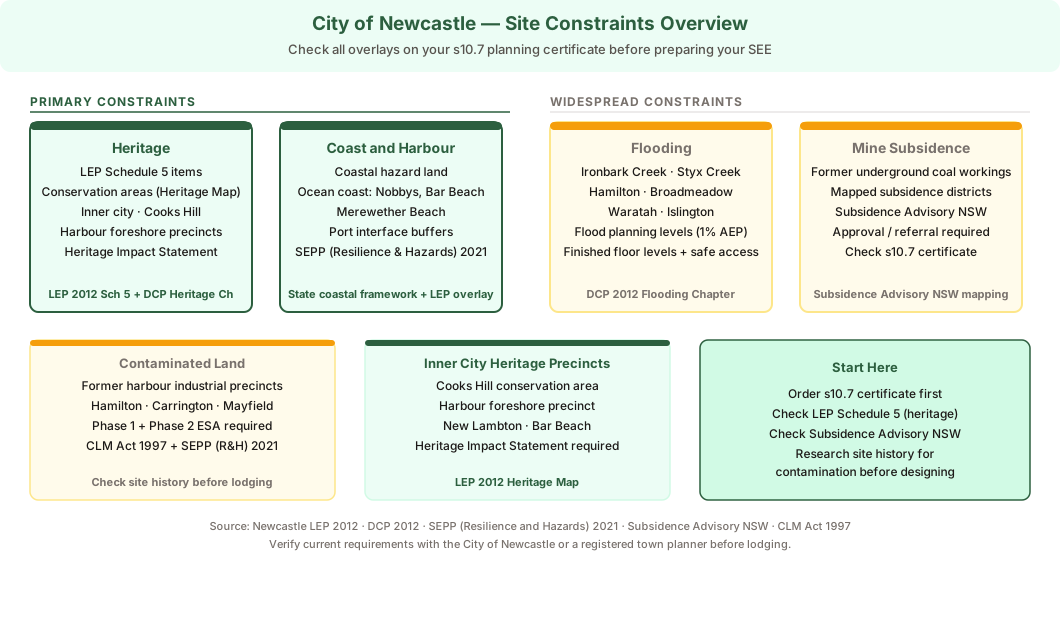 Figure 2: Key site constraints across the City of Newcastle LGA — heritage and coast/harbour lead; flooding and mine subsidence apply across broad areas.
Coast, Harbour and Flooding
Newcastle's harbour and ocean coast bring coastal hazard land controls, while low-lying land and creek corridors are flood-affected — both must be addressed in the SEE for any affected site.
The City of Newcastle has a dual coastal interface — the harbour and the open ocean coast at Nobbys Beach, Bar Beach, and Merewether Beach. For coastal and harbour-fronting land:
- SEPP (Resilience and Hazards) 2021 applies — your SEE must address coastal hazard land provisions, including coastal vulnerability areas and coastal management considerations
- Port interface provisions may apply near the port — noise, buffer distances, and operational land policies
Flooding is also a widespread constraint. Creeks through the LGA — including Ironbark Creek, Styx Creek and their tributaries — are mapped flood-affected, as are low-lying areas including parts of Hamilton, Broadmeadow, Waratah and Islington. For any flood-affected site, your SEE must address:
- Flood planning level — the finished floor level required for habitable rooms (1% AEP plus freeboard)
- Safe access and egress — evacuation route and whether occupants can safely enter and exit during the design flood
- Basement flood management — flood-resilient design, flood gates, or avoidance
- Drainage — stormwater management and downstream flood impacts
Mine Subsidence and Contaminated Land
Mine subsidence over former coal workings and contaminated former industrial land are Newcastle's two most distinctive technical constraints — both must be identified early and addressed in the SEE before design is finalised.
Mine subsidence: Newcastle sits over former underground coal workings, and parts of the LGA fall within mapped mine subsidence districts. If your site is mine-affected:
- Subsidence Advisory NSW may need to approve your development, or provide advice to council, before the DA can be determined
- Your SEE must identify the mine subsidence district and the required approval pathway
- Structural engineering may need to address subsidence risk
Check your section 10.7 planning certificate and the Subsidence Advisory NSW mapping tool before lodging.
Contaminated land: Former industrial land around the harbour, Hamilton Industrial Estate, Carrington, Mayfield, and Islington contains potential contamination from industrial use. Under the Contaminated Land Management Act 1997 and SEPP (Resilience and Hazards) 2021:
- If the site has a history of industrial use or is within a mapped investigation area, preliminary contamination assessment — typically a Phase 1 and potentially Phase 2 environmental site assessment — is required
- Your SEE must address the contaminated land provisions of the SEPP and the adequacy of the assessment
- Remediation action plans may be required if contamination is confirmed
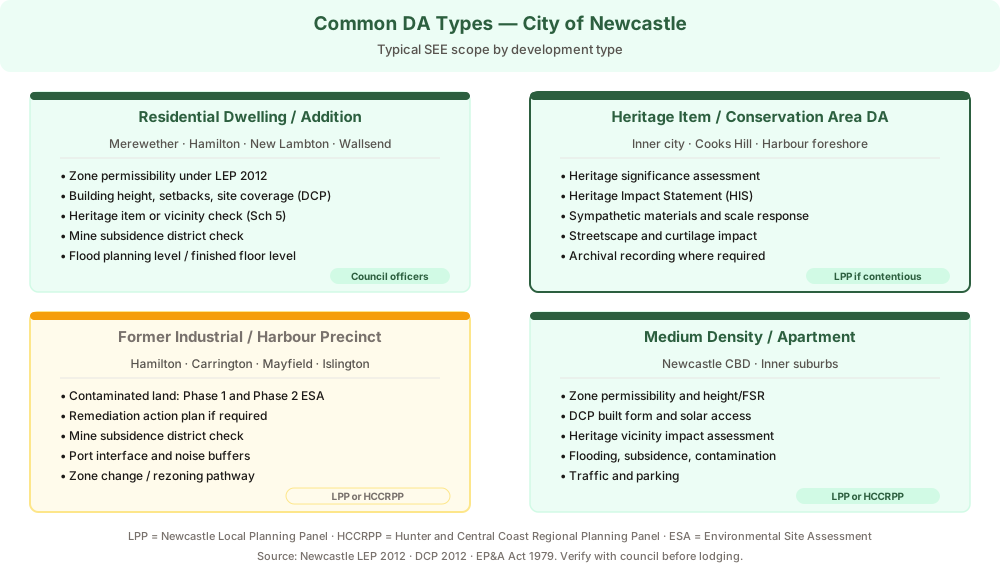 Figure 3: Common DA types lodged with the City of Newcastle and their typical SEE scope.
Who Decides a Newcastle DA?
Decision-making in Newcastle follows a tiered pathway — most DAs are determined by council officers, with larger or contentious applications going to the Local Planning Panel or the Regional Planning Panel.
The decision-maker for a Newcastle DA depends on the scale and nature of the development:
- Council officers (delegation) — most standard residential DAs, secondary dwellings, alterations and additions, and smaller commercial applications
- Newcastle Local Planning Panel — DAs that are contentious, above certain thresholds, involve a council interest, or are in sensitive locations (including heritage conservation areas); the Panel is an independent merit-review body
- Hunter and Central Coast Regional Planning Panel — regionally significant development above the applicable capital investment value threshold, and certain other categories of development specified in the regulations
Your SEE is the foundational document whichever pathway applies — the Panel or Regional Planning Panel will refer to it closely for more complex applications.
- Newcastle heritage or inner-city DA · Heritage item or conservation area check (LEP Schedule 5) · Streetscape and materials response to heritage character · Mine subsidence district check (Subsidence Advisory NSW) · Flood-affected land and finished floor levels · Contaminated land on former industrial sites
How to Lodge a Newcastle DA
All City of Newcastle DAs are lodged online through the NSW Planning Portal — you upload your SEE, plans and supporting documents, pay the fee, and council registers and assesses your application.
The City of Newcastle accepts all DA lodgements through the NSW Planning Portal at planningportal.nsw.gov.au. To lodge:
- Create or log in to your NSW Planning Portal account
- Start a new development application and select City of Newcastle
- Enter the site address and describe the proposed development
- Upload your plans, Statement of Environmental Effects, owner's consent, and all required supporting documents (heritage impact statement, flood assessment, contamination assessment, subsidence letter, etc.)
- Pay the lodgement fee (calculated on the estimated cost of development)
- Submit — council registers the application, assigns an assessment officer, and notifies neighbours where required
Council then assesses the DA under s 4.15(1) of the EP&A Act 1979, considering all matters of relevance including your SEE, the LEP 2012, the DCP 2012, agency referrals, and any public submissions.
Frequently asked questions
Do I need a Statement of Environmental Effects for a Newcastle DA?
Which LEP applies to a Newcastle development application?
Is my Newcastle property heritage-listed or affected by mine subsidence?
How do I lodge a DA with the City of Newcastle?
Ready to get your SEE report?
Skip the writing. Get a DA-ready Statement of Environmental Effects in 5 minutes.
Get your SEE report