Key takeaways
- A change of use usually needs a DA and a SEE, even when there is no building work
- The first question is whether the new use is permissible in your zone under the LEP
- The SEE addresses parking, hours of operation, noise, waste, and amenity impacts
- Some low-impact changes of use can be exempt; most commercial changes need consent
- Section 4.15 of the EP&A Act 1979 sets the matters every SEE must address
A change of use in NSW usually needs a Development Application and a Statement of Environmental Effects — even when you are not building anything. Converting a shop into a cafe, a house into an office, or starting a business in an existing building changes how the property is used and how it affects its surroundings, and that change is itself "development" requiring consent. The SEE is where you show the new use fits the zone and manages its impacts.
The first and most important question is permissibility: is the use you want allowed in your zone under the council's Local Environmental Plan. Some uses are permitted with consent, some are prohibited, and some are permitted without consent or as exempt development. If the use is prohibited in your zone, no SEE will fix that — so this is the thing to confirm before anything else.
Get a council-ready Statement of Environmental Effects for your DA in 5 minutes — no town planner, no waiting.
Get your SEE report →- When a change of use needs a SEE
- The permissibility question that comes first
- What a change of use SEE must cover
When a Change of Use Needs a SEE
Most changes of use are development requiring consent, so they go through a DA and need a SEE; a few low-impact changes are exempt, and a prohibited use cannot be approved at all.
Changing the use of premises is development, and most changes need development consent — which means a DA and, under the EP&A Regulation 2021, a SEE. A small number of low-impact changes between similar uses can be exempt development, and some home-based businesses are exempt within limits. But if the new use needs consent, you lodge a DA with a SEE; and if the use is prohibited in your zone, it cannot be approved regardless.
Permissibility Comes First
Before the SEE addresses any impact, it has to establish that the proposed use is permissible with consent in your zone under the LEP.
Your council's LEP land use table sets which uses are permitted with consent, permitted without consent, or prohibited in each zone. A change of use SEE opens by identifying the zone and confirming the new use is permissible with consent. Get this wrong and the rest of the report is moot. Check your zoning on the NSW Planning Portal spatial viewer and read the land use table for your zone before you commit to a fit-out or a lease.
What a Change of Use SEE Must Cover
Spend 5 minutes, not 3 weeks
instantSEE generates a complete, DA-ready Statement of Environmental Effects online. No town planner. No waiting.
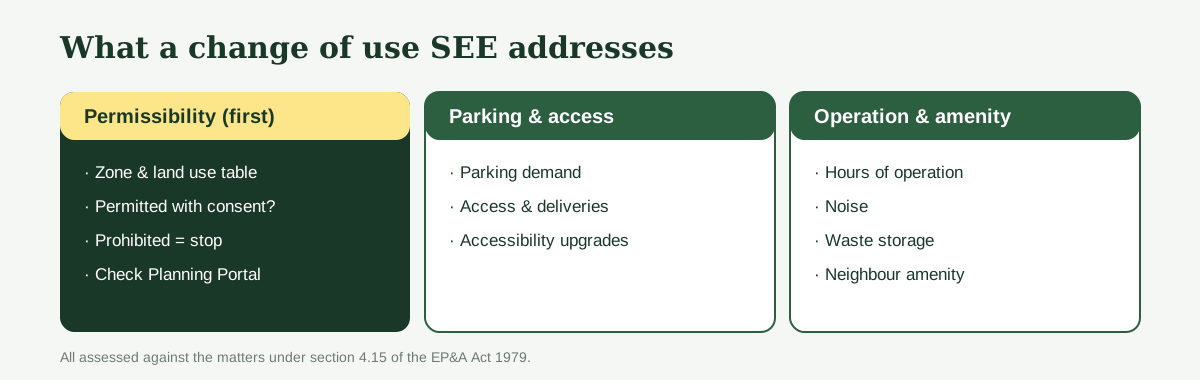
Get your SEE report in 5 minutes →Once permissibility is established, the SEE addresses the operational impacts of the new use — parking, hours, noise, waste and amenity — because that is what determines whether consent is granted.
Your SEE assesses the proposal against the matters under section 4.15 of the EP&A Act 1979. For a change of use, building work is often minor or nil, so the assessment turns on operation: car parking demand for the new use, hours of operation, noise (patrons, plant, deliveries), waste storage and collection, signage, and the amenity of neighbours — particularly where a commercial use abuts residential. Where the use involves food, additional fit-out and health requirements apply, and accessibility upgrades can be triggered by the change.
Who Should Prepare It
For a simple, clearly permissible change between low-impact uses you can prepare the SEE yourself. Where permissibility is uncertain, parking is tight, the use generates noise or traffic, or a residential interface is sensitive, a town planner's judgment is worth the fee.
The Bottom Line
A change of use usually needs a Statement of Environmental Effects because the change itself requires consent, building work or not. The SEE first proves the new use is permissible in your zone, then shows the operational impacts — parking, hours, noise, waste and amenity — are managed. Confirm permissibility before you sign a lease or start a fit-out, because nothing else in the report matters if the use is not allowed.
This guide is general information about the NSW planning system, not legal or planning advice for your specific site. Review every section of any SEE before submitting it to council.
Generate your council-ready change of use SEE and review it before you lodge → https://instantsee.com.au/report/new
Frequently asked questions
Do I need a DA for a change of use in NSW?
How do I know if my new use is allowed?
What does a change of use SEE focus on?
Do I need a DA if there is no building work?
Ready to get your SEE report?
Skip the writing. Get a DA-ready Statement of Environmental Effects in 5 minutes.
Get your SEE report