Key takeaways
- Owner builders lodge the same DA as any applicant on the Planning Portal
- No separate owner-builder DA form or lighter process exists in NSW
- The SEE is the document most often returned for more detail
- The assessment clock can pause for requests for information
- The owner-builder permit comes after DA approval, not before lodgement
An owner builder development application in NSW is the same DA as any other applicant lodges. There is no separate owner-builder DA form and no lighter process. You lodge online through the NSW Planning Portal, with the same documents, and your council assesses the development, not the builder.
The part that trips owner-builders up is order and completeness. Many start by chasing the owner-builder permit, only to find the permit comes after consent, not before. Others lodge a DA with a thin Statement of Environmental Effects and lose weeks to a council request for information.
Get a council-ready Statement of Environmental Effects for your DA in 5 minutes — no town planner, no waiting.
Get your SEE report →- What an owner builder development application is under NSW planning law
- The five steps to lodge your DA on the NSW Planning Portal
- Which documents your owner-builder DA must include
- What happens during assessment after you lodge
- Where the owner-builder permit fits after your DA is approved
What Is an Owner Builder Development Application in NSW?
An owner builder development application is a standard DA assessed under the same planning law as any other — owner-builder status is a licensing matter under the Home Building Act 1989 that affects the construction stage, not whether you need consent or what your DA must contain.
An owner builder development application is a standard Development Application lodged by a person who intends to supervise the building work themselves rather than engage a licensed builder. It is assessed under the same planning law as any DA, and it must include a Statement of Environmental Effects under Schedule 1, Part 1 of the Environmental Planning and Assessment Regulation 2021.
Being an owner-builder is a licensing status under the Home Building Act 1989. It affects who is allowed to carry out and supervise the construction, and it becomes relevant at the building stage. It does not change whether you need planning consent or what your DA must contain. The council weighs the proposal against the matters in s 4.15(1) of the Environmental Planning and Assessment Act 1979, regardless of who will hold the hammer. For the full requirements that sit around the application, see our owner builder DA requirements guide.
How to Lodge an Owner Builder Development Application: Step by Step
Lodging an owner-builder DA in NSW follows five steps from confirming you need consent through to the council starting its assessment — and the most time-sensitive step is preparing a complete Statement of Environmental Effects before you reach the portal.
Lodging an owner-builder DA in NSW follows five steps, from confirming you need consent through to the council starting its assessment.
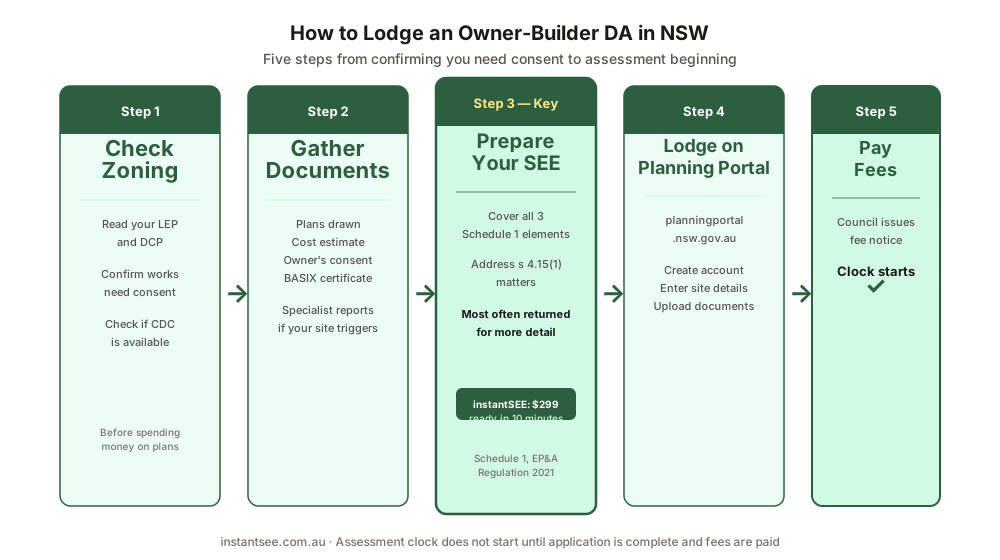
Figure 1: The five steps to lodge an owner-builder DA in NSW.
Step 1: Confirm your project needs a DA. Check your zone and the controls that apply through your Local Environmental Plan. If the work is exempt or qualifies as complying development, you may avoid a DA entirely. If it needs consent, a DA is the path.
Step 2: Gather your documents. Assemble your plans, cost estimate, owner's consent and any specialist reports your site triggers. The full set is covered in the next section.
Step 3: Prepare your Statement of Environmental Effects. This is the document owner-builders find hardest, and the one most often returned for more detail. Our owner builder SEE guide explains exactly what it must cover.
Step 4: Lodge online through the NSW Planning Portal. Register an account at planningportal.nsw.gov.au, create the application, enter the site and proposal details, and upload your documents. The portal routes your DA to the correct council.
Step 5: Pay the fees and the assessment begins. The council runs a completeness check, then issues a fee notice. Once you pay, your DA is formally lodged and assigned for assessment. Our step-by-step guide on how to lodge a DA in NSW covers the portal screens in more detail.
What Documents Your Owner Builder DA Needs
Spend 5 minutes, not 3 weeks
instantSEE generates a complete, DA-ready Statement of Environmental Effects online. No town planner. No waiting.
Get your SEE report in 5 minutes →Your owner-builder DA needs the same documents as any DA — a core mandatory set that every application requires, plus a second set of specialist reports triggered by your specific site — and none of them change because you intend to build it yourself.
Your owner-builder DA needs the same documents as any DA. There is a core set nearly every application requires, and a second set of reports triggered by your specific site.
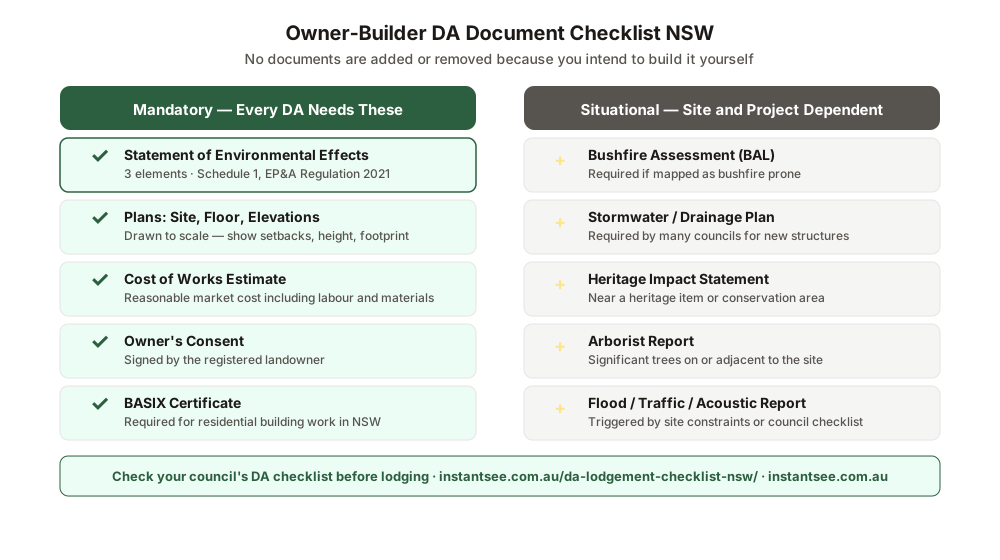
Figure 2: The documents that go into an owner-builder DA, mandatory and situational.
The core set is a Statement of Environmental Effects, site, floor and elevation plans, a cost of works estimate, owner's consent, and a BASIX certificate for residential work. Beyond that, your site may trigger extra reports such as a bushfire assessment, a stormwater or drainage plan, a heritage impact statement, an arborist report, or a flood, traffic or acoustic report. None of these are added or removed because you intend to build it yourself. To check your set is complete before you lodge, run it against our free DA lodgement checklist. A complete application avoids the most common cause of delay, which is a council asking for documents you could have supplied up front.
- Statement of Environmental Effects covering all three Schedule 1 elements — impacts, how identified, and mitigation
- Site plan, floor plans and elevations drawn to scale
- Cost of works estimate at reasonable market value
- Owner's consent signed by the registered landowner
- BASIX certificate for residential work
- Specialist reports required by your site: bushfire, stormwater, heritage, arborist or flood as applicable
What Happens After You Lodge Your DA
After lodgement, your DA moves through a registration check, assessment, and determination — and any request for information issued within the first 25 days pauses the assessment clock until you respond, which is why a complete, thorough lodgement is the most powerful speed lever you control.
After you lodge, your DA moves through registration, assessment and determination. The council first checks the application is complete, then assesses it against the planning controls and the s 4.15(1) matters, then decides.
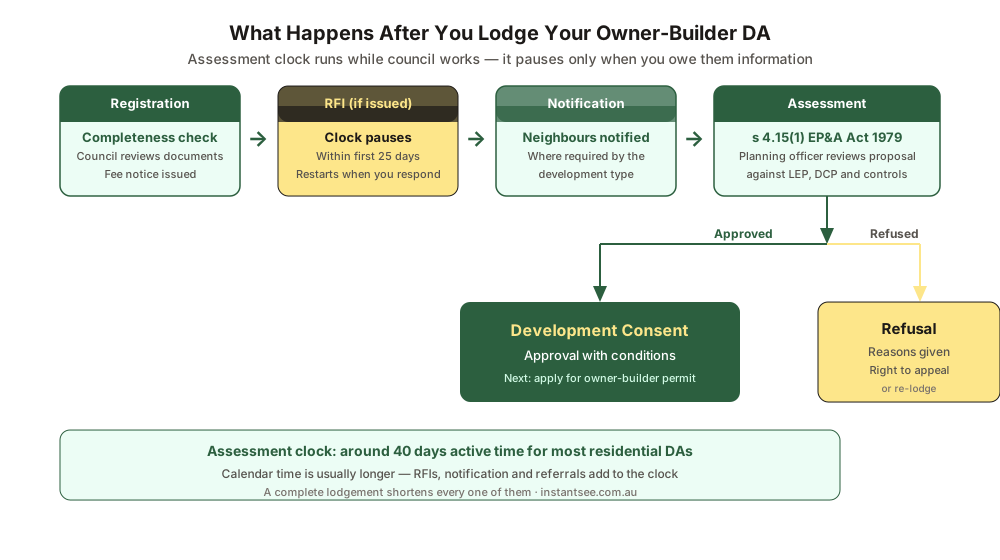
Figure 3: How an owner-builder DA is assessed after lodgement.
If anything is missing or unclear, the council issues a request for information, which can pause the assessment until you respond. Where the development type requires it, your DA is notified to neighbours for comment. The council then assesses the proposal against s 4.15(1) of the EP&A Act 1979 and the relevant controls, and may refer it to internal or external bodies. Finally it determines the application, either approving it with conditions or refusing it with reasons. Many straightforward residential DAs are determined within around 40 days of active assessment time, but calendar time is usually longer because requests for information, notification periods and referrals all add to the clock. A complete, well-prepared lodgement is the single biggest thing in your control. Our guide on how to lodge a DA in NSW covers what councils look for at each stage.
After Approval: The Owner Builder Permit and Construction
Development consent is not permission to start building — once the DA is approved, the construction stage begins, and that is where your owner-builder status first becomes relevant to the process.
Development consent is not permission to start building. Once your DA is approved, you move into the construction stage, and that is where your owner-builder status finally matters.
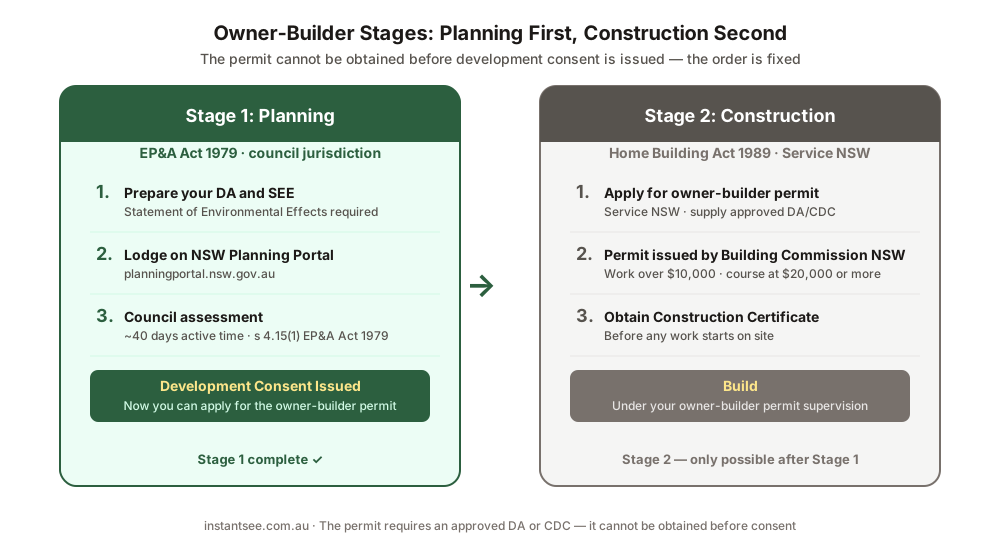
Figure 4: Planning comes first, construction second, with the permit after consent.
You apply for the owner-builder permit through Service NSW, under the Home Building Act 1989, once you hold an approved DA or Complying Development Certificate. You generally need a permit when the reasonable market cost of the work is more than $10,000, and you must complete an approved owner-builder course, plus hold a White Card, when the work is worth $20,000 or more. You then obtain a Construction Certificate before any work starts on site. The permit cannot be obtained before consent, because the approval is part of the permit application. So the order is fixed: DA first, permit second, build third. Our owner builder DA requirements guide sets out the permit detail and thresholds in full.
Frequently asked questions
Is there a special development application for owner-builders in NSW?
How do I lodge an owner builder development application in NSW?
Do I need an owner-builder permit before I lodge my DA?
How long does an owner-builder DA take to be approved?
Can I prepare and lodge my own owner-builder DA without a planner?
Ready to get your SEE report?
Skip the writing. Get a DA-ready Statement of Environmental Effects in 5 minutes.
Get your SEE report