Key takeaways
- NSW planning law sets no minimum word count or page count for a SEE
- A deck or pool typically needs only a few pages to cover all matters
- A two-storey addition near neighbours needs overshadowing and privacy assessed
- Schedule 1 of the EP&A Regulation 2021 sets the content floor for every SEE
- A too-thin SEE triggers an RFI and pauses the assessment clock
A Statement of Environmental Effects must be as detailed as the scale and likely impact of your development demand, no more and no less. There is no minimum word count, page count, or set template in NSW. A rear deck or pool needs only a few pages, while a two-storey addition next to neighbours needs a fuller assessment of overshadowing and privacy. The SEE detail requirements in NSW are about proportion, not length.
That uncertainty is exactly what makes a SEE stressful to write. With a fixed form you would know when you were finished, but a SEE has no finish line printed on it, so people either pad it with description that no assessing officer needs or leave out the one impact their council was always going to ask about. Both mistakes cost you the same thing: a request for more information and weeks added to your approval.
Get a council-ready Statement of Environmental Effects for your DA in 5 minutes — no town planner, no waiting.
Get your SEE report →- What the two factors are that decide how detailed your SEE must be
- How long a SEE typically needs to be for different project types
- The minimum content every SEE must include under Schedule 1 of the EP&A Regulation 2021
- The two failure modes that trigger a request for more information
- How to tell when your SEE is right-sized and ready to lodge
What Sets the Level of Detail in a SEE
Two things — project scale and likely impact on neighbours — determine how much your SEE has to cover, because your council needs enough detail to weigh every matter under s 4.15(1) of the EP&A Act 1979 without having to ask for more.
Two things decide how detailed your SEE has to be: the scale of what you are building and the likely impact it has on neighbours and the locality. A small, low-impact proposal carries a light SEE. A larger proposal that overshadows a yard, overlooks a bedroom, or removes a tree carries a heavier one. The document grows where the impact grows.
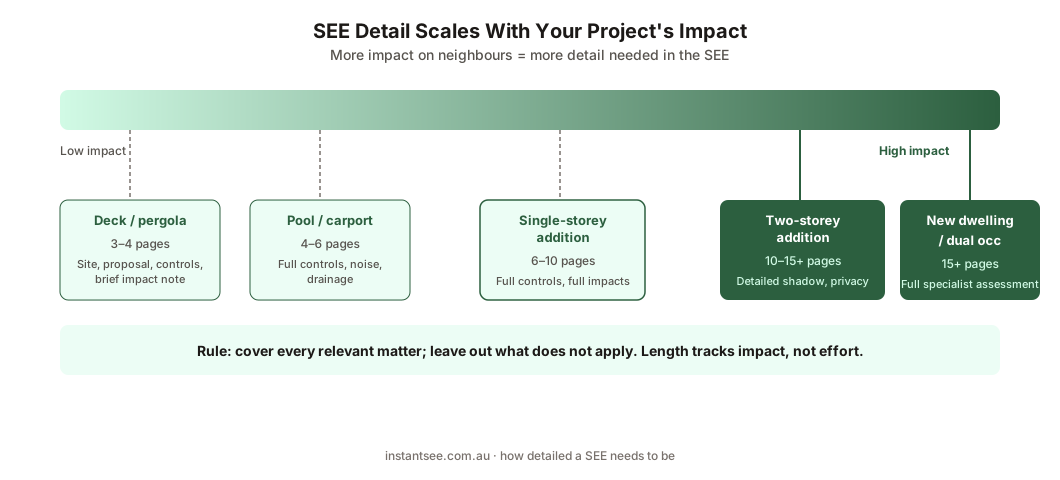
Figure 1: The detail in a SEE tracks the impact of the project. The bigger the likely effect on neighbours, the more your SEE has to assess and explain.
This is not a stylistic preference, it is how your council assesses the application. Under s 4.15(1) of the Environmental Planning and Assessment Act 1979, a consent authority must consider the likely impacts of the development, the suitability of the site, and the public interest, among other matters. Your SEE has to give the officer enough to weigh each relevant matter. From December 2025, reforms to the EP&A Act sharpened s 4.15 onto the significant likely impacts of a development, which means you put your detail where the real impact sits and keep the negligible matters brief. A deck that casts no new shadow does not need a shadow study. A second storey beside a neighbour's living room does.
How Long Should a SEE Be for Your Project?
There is no prescribed SEE length in NSW — the honest answer is that your SEE should be long enough to address every relevant matter and short enough that none of it is filler, with the page count tracking project type closely in practice.
There is no prescribed length, so the honest answer is that a SEE should be long enough to address every relevant matter and short enough that none of it is filler. In practice the page count tracks the project type closely.
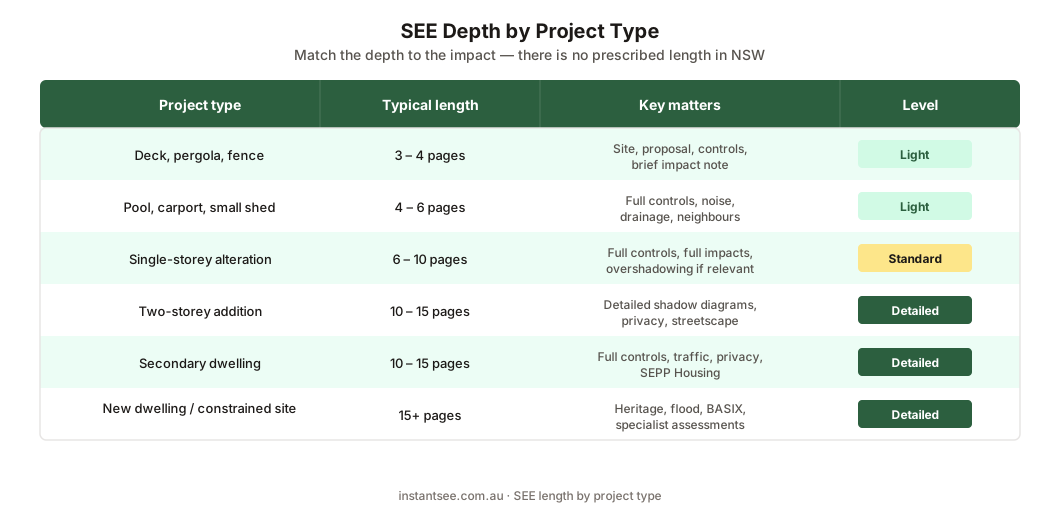
Figure 2: How SEE detail typically scales by project type. Match the depth to the impact, not to a page target.
A minor project such as a deck, carport, pool, or small shed usually needs only a few pages: describe the site, the proposal, the controls it meets, and confirm there is no real impact on neighbours. A single-storey alteration or addition runs longer because there is more to address on setbacks, site coverage, and drainage. A two-storey addition, a secondary dwelling, or a new dwelling on a constrained site carries the most detail, because overshadowing, privacy, streetscape, and stormwater all need a proper treatment. The same project also gets longer the moment a site constraint such as flood, bushfire, or heritage applies, since each one adds a matter your SEE has to work through.
The Minimum Your SEE Must Cover
Spend 5 minutes, not 3 weeks
instantSEE generates a complete, DA-ready Statement of Environmental Effects online. No town planner. No waiting.
Get your SEE report in 5 minutes →Whatever the length, every SEE must meet the content floor set by Schedule 1, Part 1 of the EP&A Regulation 2021 — three statutory items covering impacts, how they were identified, and the steps to lessen harm — and a right-sized SEE adds site description, proposal detail, and LEP/DCP compliance on top.
However short your SEE is, it cannot skip the content the law requires. Under Schedule 1, Part 1 of the Environmental Planning and Assessment Regulation 2021, a development application must be accompanied by a Statement of Environmental Effects that indicates the environmental impacts of the development, how those impacts have been identified, and the steps to be taken to protect the environment or to lessen the expected harm. That is the floor for every SEE, from a pool to a duplex.
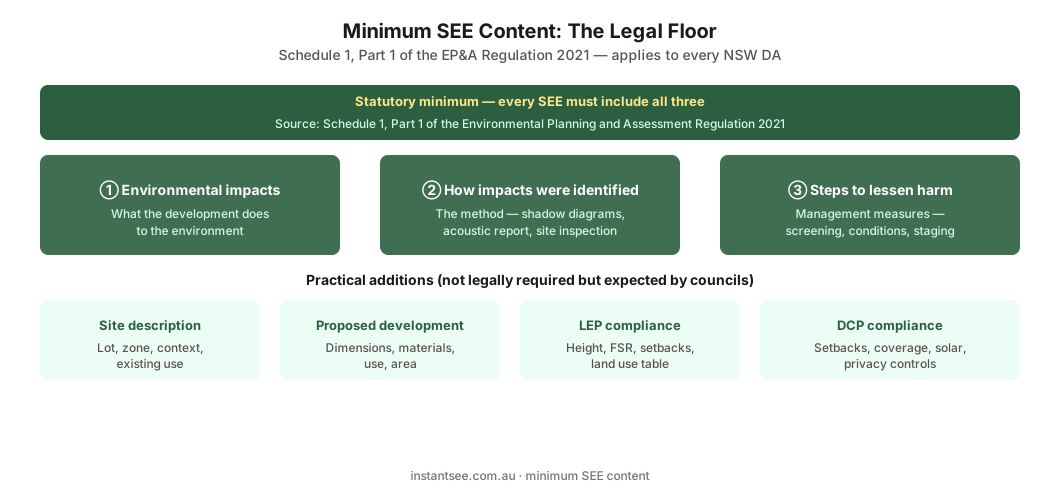
Figure 3: The minimum every SEE must cover, whatever its length. The three impact items come straight from Schedule 1, Part 1 of the EP&A Regulation 2021.
On top of those three statutory items, a SEE that an officer can assess without follow-up also describes the site and its surroundings, describes the proposed development with real numbers, and shows how the proposal sits against the standards in your council's Local Environmental Plan and Development Control Plan. A free SEE Checklist for NSW lists every item your SEE should address, so you can confirm a short SEE has not quietly dropped one. The rule is simple: address every matter that applies to your site, and leave out the ones that do not. Detail you do not need is not thoroughness, it is padding, and padding makes the document slower to assess.
- Confirm the environmental impacts of the development are described
- State how those impacts were identified
- List the steps to protect the environment or lessen the expected harm
- Describe the site and its surroundings with real measurements
- Show LEP and DCP compliance with a table for each relevant control
Too Thin or Too Thick: Where SEE Detail Goes Wrong
A SEE that is too thin leaves out an impact and triggers a request for more information that pauses your approval; a SEE that is too thick buries the relevant matters in filler and slows the officer's assessment — the fix for both is writing to the matters in s 4.15(1) and no further.
The two failure modes pull in opposite directions. A SEE that is too thin reads like a building description with the impacts missing, and the officer cannot finish the assessment without asking for them. A SEE that is too thick buries the matters that count under pages about roof colour and floor finishes, and the officer has to dig for the answer to a s 4.15(1) question.
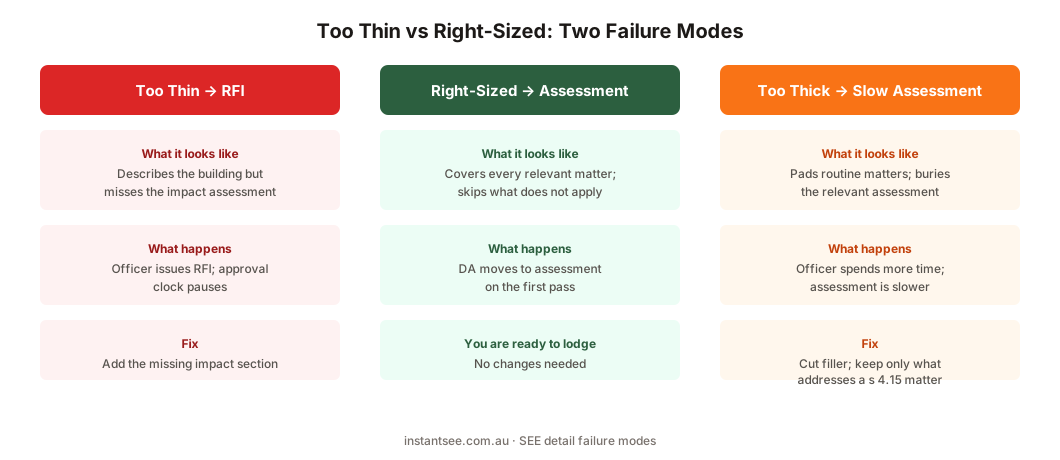
Figure 4: A SEE that drops a relevant impact gets sent back. A right-sized SEE answers every matter that applies and moves straight to assessment.
The fix for both is the same. Write to the matters in s 4.15(1) of the EP&A Act 1979, address every control in your LEP and DCP that applies, and be honest about impacts rather than quiet about them. A right-sized SEE is one where every section earns its place and no relevant matter is missing. That is what gets a DA assessed on the first pass, whether the document runs to four pages or forty.
Frequently asked questions
How long does a Statement of Environmental Effects need to be in NSW?
Is there a minimum length for a SEE?
Can a SEE be too detailed?
Does a small DA still need a SEE?
What happens if my SEE is not detailed enough?
Ready to get your SEE report?
Skip the writing. Get a DA-ready Statement of Environmental Effects in 5 minutes.
Get your SEE report