Key takeaways
- Clause 5.10 requires consent for most works to heritage-affected land
- State items also need Heritage Council approval to proceed
- Local heritage items are controlled through your council DA
- A Heritage Impact Statement describes significance and assesses your works
- Minor maintenance may be exempt so confirm with your council
If your property is a heritage item or sits within a heritage conservation area, you will almost always need a Development Application and a Heritage Impact Statement before you alter, extend, demolish or build anything on it. The key control is clause 5.10 of your council's Local Environmental Plan. For properties also listed on the State Heritage Register, the Heritage Act 1977 adds a separate layer of approval from the Heritage Council of NSW.
The catch that catches most owners off guard: a standard rear extension that would be exempt development on an ordinary suburban lot can require a full DA — with specialist documentation — the moment heritage is in the picture.
This guide cuts through both systems so you know what applies to your property before you spend money on designs.
Get a council-ready Statement of Environmental Effects for your DA in 5 minutes — no town planner, no waiting.
Get your SEE report →- When clause 5.10 requires development consent for heritage-affected land
- The difference between state and local heritage in NSW
- What a Heritage Impact Statement covers and how deep it needs to go
- When minor works might be exempt under clause 5.10(3)
- How heritage fits into your DA and Statement of Environmental Effects
Do You Need a DA in a Heritage Conservation Area?
Yes, in most cases. Clause 5.10(2) of the Standard Instrument Local Environmental Plan requires development consent for a broad range of works to heritage-affected land — including properties within a conservation area that are not individually listed.
Clause 5.10(2) is deliberately wide. It captures demolition, alterations, new construction, and subdivision — not only of the heritage item itself but also of buildings in the vicinity of a heritage item or conservation area. That means a neighbour's project can also need consent if it affects the heritage streetscape.
The triggers are set out in the figure below.
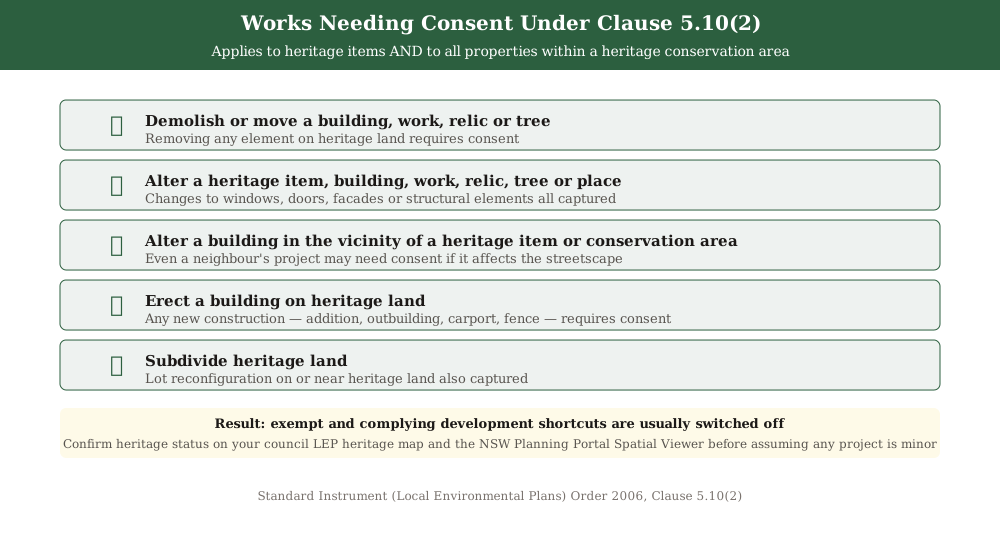
Figure 1: The works clause 5.10 captures. A heritage conservation area covers every property inside it.
The practical consequence is that the exempt and complying development pathways most homeowners rely on — which allow construction without a DA — are usually switched off for heritage-affected land. A heritage listing in the LEP schedule is often enough to take a project out of the exempt development code entirely. Check your council's LEP heritage map and the NSW Planning Portal Spatial Viewer before you assume any project is minor enough to avoid a DA. For a step-by-step overview of the application process, see our guide on how to lodge a DA in NSW.
State Heritage vs Local Heritage: Two Different Systems
NSW heritage runs on two levels — state items on the State Heritage Register need Heritage Council approval under section 60 of the Heritage Act 1977, while local items and conservation areas are decided by your council through an ordinary DA under clause 5.10.
Understanding which system applies — or whether both do — is the first thing to establish, because the process, the decision-maker and the documentation differ significantly.
State heritage items are listed on the State Heritage Register under Part 3A of the Heritage Act 1977. They are places of significance to all of New South Wales: landmark public buildings, historic bridges, major civic spaces. If your works affect a state-listed item, you need section 60 approval from the Heritage Council of NSW before you can proceed. Council does not make that call — Heritage NSW does.
Local heritage items and heritage conservation areas are listed in your council's Local Environmental Plan under clause 5.10 of the Standard Instrument. The overwhelming majority of heritage-affected homes fall into this category. Council assesses your DA against clause 5.10 and the broader planning merits under section 4.15 of the Environmental Planning and Assessment Act 1979.
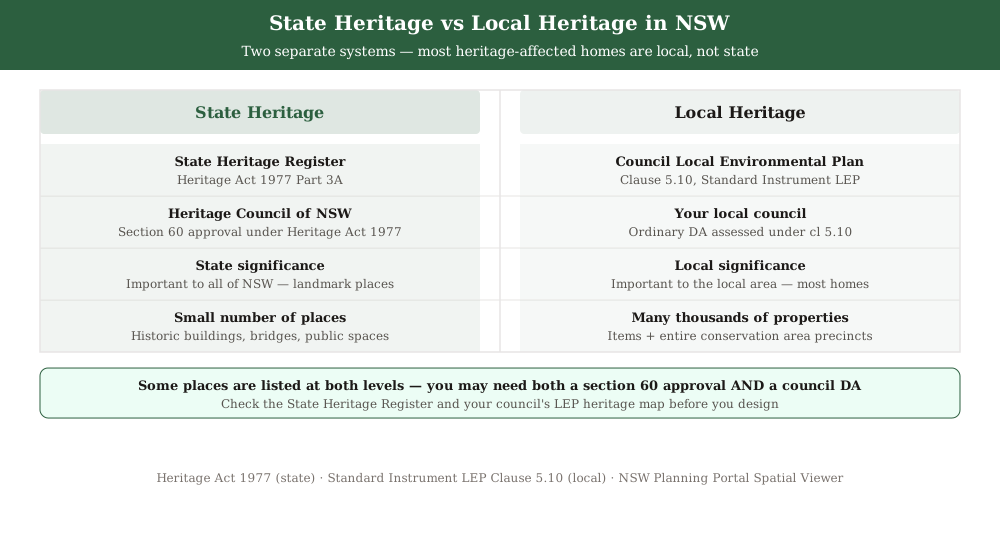
Figure 2: The two heritage systems. Most homes affected by heritage are local, not state.
A smaller number of places are listed at both state and local level. If your property is one of them, you may need both a section 60 approval from the Heritage Council and a council DA. Check both registers — the State Heritage Register via the NSW Heritage website and your council's LEP heritage schedule — before you invest in design work.
- Check your council's LEP heritage map and the NSW Planning Portal Spatial Viewer for your address
- Identify whether the listing is state (State Heritage Register) or local (LEP clause 5.10)
- If state-listed, contact the Heritage Council for section 60 guidance
- If local, prepare a Heritage Impact Statement for your council DA
- Confirm whether any minor works qualify as exempt under clause 5.10(3)
What a Heritage Impact Statement Covers
Spend 5 minutes, not 3 weeks
instantSEE generates a complete, DA-ready Statement of Environmental Effects online. No town planner. No waiting.
Get your SEE report in 5 minutes →A Heritage Impact Statement makes the case for your works by describing heritage significance, assessing how your proposal affects it, and explaining how adverse impacts are avoided or managed — a weak HIS is one of the most common reasons a heritage DA stalls.
A Heritage Impact Statement — sometimes called a Statement of Heritage Impact — is not a simple form. It is a structured document that walks from the significance of the place, through the detail of your proposed works, to a considered conclusion that the proposal respects what makes the place worth conserving.
The four core elements are set out in the figure below.
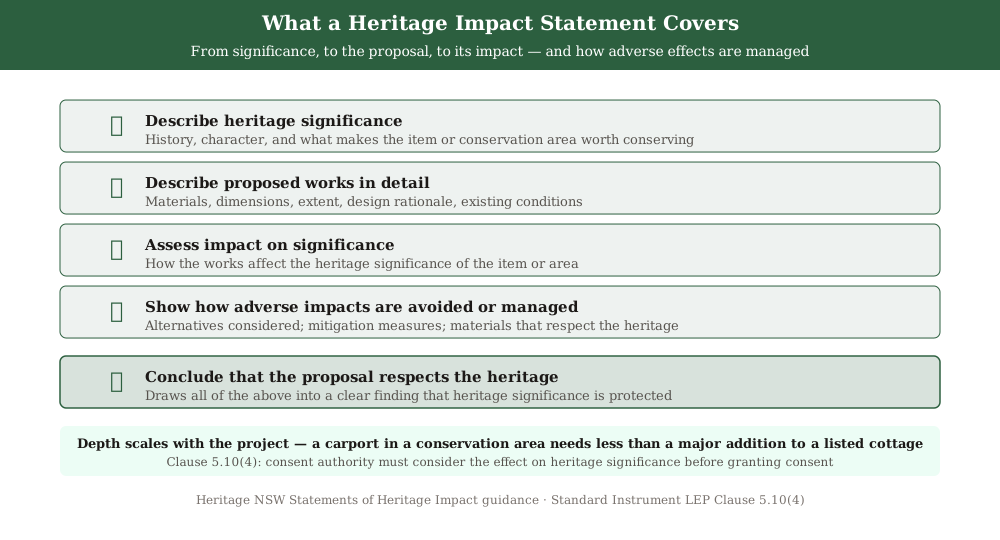
Figure 3: A Heritage Impact Statement works from significance, to the proposal, to its impact.
The depth required scales with the project. A carport on a property inside a conservation area will need less analysis than a major addition to an individually listed cottage, which in turn needs less than demolition of a contributory building. What remains constant is the logical structure: significance first, proposal second, impact third, mitigation fourth, conclusion last. Clause 5.10(4) requires the consent authority to consider the effect on heritage significance before it grants consent — the HIS is the document that gives it the information to do that.
Heritage NSW publishes guidance on preparing Statements of Heritage Impact. If your project is large or the item is significant, the HIS is normally prepared by a heritage consultant. For smaller projects within conservation areas, a detailed owner-prepared document may be accepted, but confirm this with your council before lodging.
When You Might Not Need Consent
Clause 5.10(3) lets a council treat genuinely minor works as not requiring consent — routine maintenance, cleaning, like-for-like repairs — provided the council is satisfied the work would not adversely affect heritage significance.
The exemption is real but narrow. It covers maintenance and cleaning that does not change the character of the item, minor internal alterations that do not affect heritage significance, and works listed in an approved heritage management document or conservation management plan. The test in every case is the same: the council must be satisfied the work would not adversely affect heritage significance.
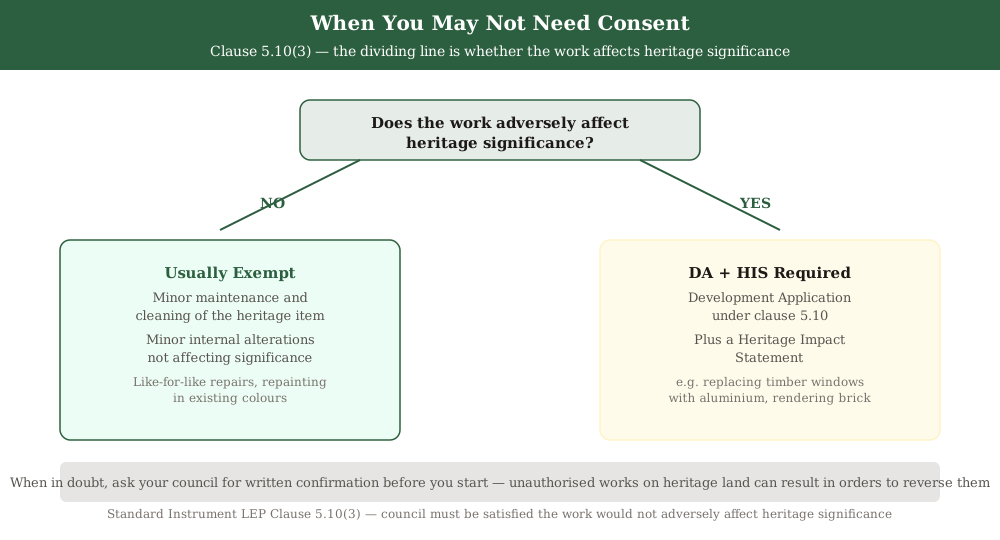
Figure 4: The dividing line is whether the work affects heritage significance.
The exemption is easy to misjudge. Repainting in the existing colour is generally fine. Changing from timber single-hung windows to aluminium double-hung is not — it affects the heritage fabric and will almost certainly need a DA. Rendering over exposed brick is another common trap. When in doubt, write to your council and ask for written confirmation before you start. Unauthorised works on heritage land can result in orders to reverse them at the owner's cost — a far more expensive outcome than a DA.
How Heritage Fits Your DA and SEE
When heritage works need a DA, the SEE and the Heritage Impact Statement must tell a consistent story — the SEE addresses the planning merits of the whole proposal, while the HIS is the specialist heritage document alongside it.
Both documents are lodged through the NSW Planning Portal as part of your DA package. The Statement of Environmental Effects covers the full range of planning considerations — permissibility, land use, amenity, traffic, drainage — assessed against section 4.15(1) of the Environmental Planning and Assessment Act 1979. The HIS sits alongside it, providing the detailed heritage analysis that clause 5.10(4) requires.
The two documents should not contradict each other. If your SEE describes the proposed materials as complementary to the existing character, your HIS needs to support that conclusion with specific heritage reasoning. A council heritage officer will read both.
For a complete list of what to include with your application, see our DA lodgement checklist and our guide to DA supporting documents.
Frequently asked questions
Does a heritage conservation area affect all properties inside it, even if my house is not individually listed?
Do I always need a Heritage Impact Statement with my DA?
What is the difference between a Heritage Impact Statement and a Statement of Environmental Effects?
Can I use the complying development pathway for work on heritage land?
How long does a heritage DA typically take?
Ready to get your SEE report?
Skip the writing. Get a DA-ready Statement of Environmental Effects in 5 minutes.
Get your SEE report