Key takeaways
- Owners can write their own SEE without a town planner
- Schedule 1 EP&A Regulation 2021 sets the SEE content requirements
- A SEE must cover impacts, how found, and mitigation steps
- Vague statements and missing mitigation are the commonest mistakes
- Generating is the lowest-effort complete option
Yes, you can write your own Statement of Environmental Effects in NSW. There is no legal requirement to use a town planner, and an applicant is free to prepare their own SEE. Under Schedule 1, Part 1 of the EP&A Regulation 2021, the rule sets out what the SEE must contain, not who has to write it. So if you want to write your own SEE in NSW, you are allowed to.
The catch is that "allowed to" is not the same as "easy to". The SEE is the one DA document where most homeowners get stuck, because knowing the rules exist is different from knowing how to address them properly.
Get a council-ready Statement of Environmental Effects for your DA in 5 minutes — no town planner, no waiting.
Get your SEE report →- Whether you are legally allowed to write your own SEE in NSW
- What a self-written SEE must cover under Schedule 1 of the EP&A Regulation 2021
- The five steps to writing your own SEE from start to finish
- The most common mistakes that send self-written SEEs back from council
- How writing it yourself compares to using a template or generating it
Can I Write My Own SEE in NSW?
Yes — a property owner or owner-builder can prepare and lodge their own Statement of Environmental Effects without a town planner, because the law sets the content requirements, not the author's qualifications.
Yes. A property owner or owner-builder can prepare and lodge their own Statement of Environmental Effects in NSW without engaging a town planner. Schedule 1, Part 1 of the Environmental Planning and Assessment Regulation 2021 requires the document, but it is silent on who must author it, which is why a DIY SEE is perfectly valid.
The reason councils and planners often recommend professional help is not a legal rule; it is the difficulty of the content. A SEE that misses a required matter draws a request for information regardless of who wrote it, so the bar is the quality of the document, not the qualification of the author. For a straightforward residential project, a careful homeowner can clear that bar. For a complex or constrained site, the judgement a planner brings is worth more. The honest position is that you can absolutely write your own SEE, and whether you should depends on how complicated your project is. Our guide on whether a town planner is worth it weighs that trade-off in detail.
What Your SEE Has to Cover If You Write It Yourself
Under Schedule 1, Part 1 of the EP&A Regulation 2021, a self-written SEE must indicate three things: the environmental impacts of your development, how you identified those impacts, and the steps to protect the environment or lessen the expected harm.
If you write your own SEE, it must indicate three things under Schedule 1, Part 1 of the EP&A Regulation 2021: the environmental impacts of your development, how you identified those impacts, and the steps to protect the environment or lessen the expected harm.
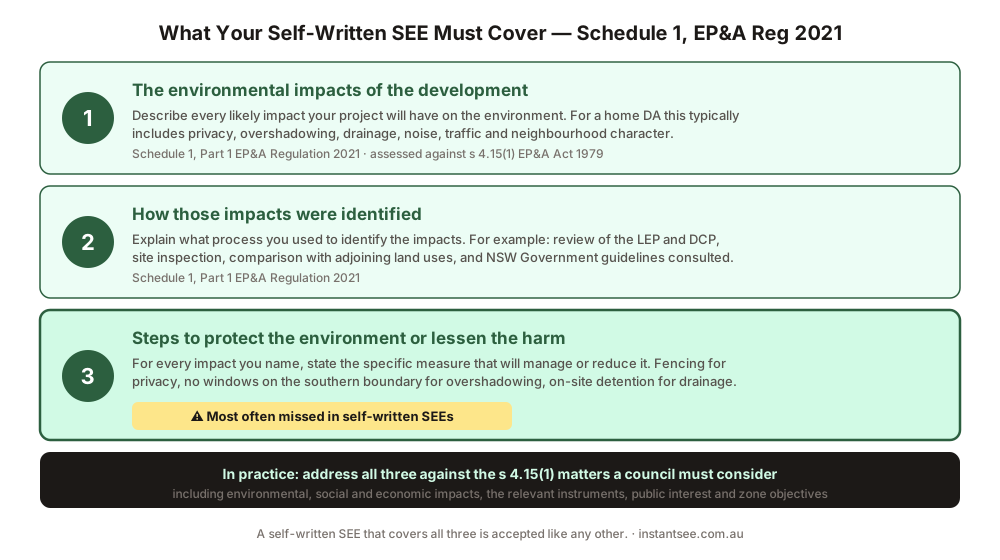
Figure 1: The three things your SEE must cover under Schedule 1.
Those three points are the legal core. In practice you address them against the matters a council must consider, which the Environmental Planning and Assessment Act 1979 sets out in s 4.15(1), including the likely environmental, social and economic impacts of the development. For a typical home project that means dealing with privacy, overshadowing, drainage, traffic, noise and neighbourhood character, then explaining how each is managed. The third point, the mitigation steps, is where self-written SEEs are most often thin: it is easy to list an impact and forget to say what you will do about it. To see the full content set out item by item, our guide on what must be included in a SEE breaks it down.
How to Write Your Own SEE, Step by Step
Spend 5 minutes, not 3 weeks
instantSEE generates a complete, DA-ready Statement of Environmental Effects online. No town planner. No waiting.
Get your SEE report in 5 minutes →Writing your own SEE follows a clear order — confirm your controls, describe the site and proposal, identify the impacts, set out the mitigation, then check it against a checklist before you lodge.
Writing your own SEE follows a clear order: confirm your controls, describe the site and proposal, identify the impacts, set out the mitigation, then check it against a checklist before you lodge. Working in that sequence keeps the document complete and stops you circling back.
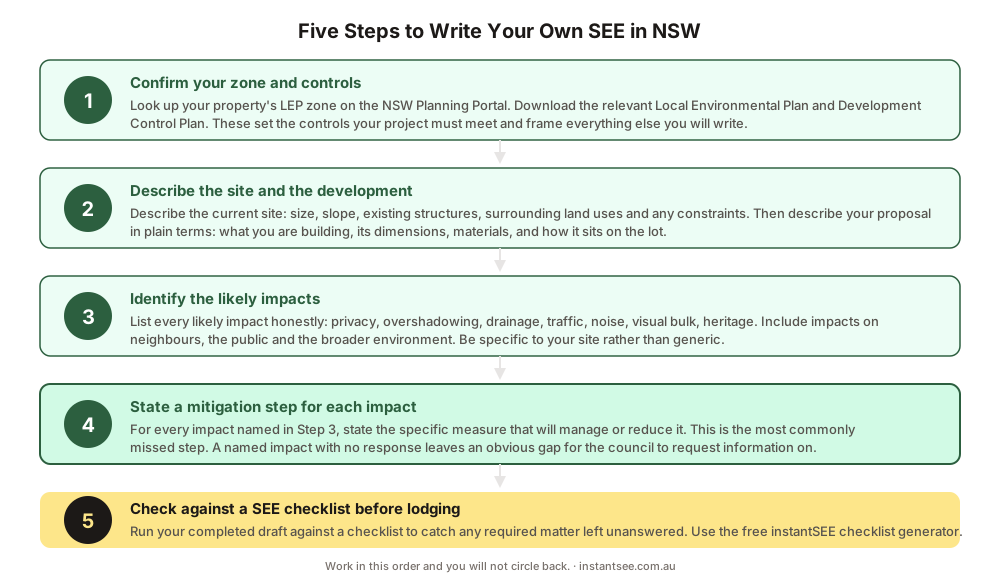
Figure 2: The five steps to writing your own SEE.
Start by confirming your zone and the Local Environmental Plan and Development Control Plan controls that apply to your property, because those controls frame everything else. Then describe the site as it is and the development you propose. Next, identify the likely impacts honestly, and for each one set out the step that manages or reduces it. Finally, before lodging, check the document against a SEE checklist so nothing required is missing. Our free SEE checklist generator gives you that final list to test your draft against. Once the SEE is ready, you lodge it with the rest of your DA on the NSW Planning Portal.
Where Self-Written SEEs Go Wrong
Self-written SEEs usually fail on the same handful of points — vague impact statements, skipping the DCP controls, ignoring neighbour impacts, and listing impacts without any mitigation — each a common trigger for a council request for information.
Self-written SEEs usually fail on the same handful of points: vague impact statements, skipping the DCP controls, ignoring neighbour impacts, and listing impacts without any mitigation. Each of these is a common reason a council issues a request for information that pauses your DA.
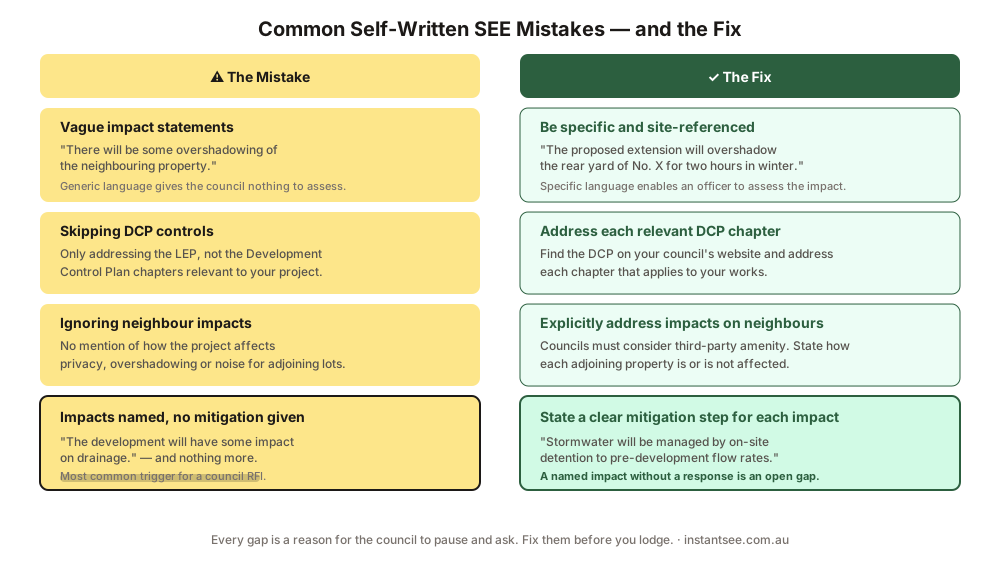
Figure 3: The common self-written SEE mistakes, and how to fix each.
The fixes are straightforward once you know them. Replace generic statements with specifics tied to your site, address each relevant DCP control rather than the LEP alone, cover the impacts on neighbours such as privacy, overshadowing and noise, and state a clear management step for every impact you raise. The thread running through all of them is the same: the council is checking whether your SEE addresses the matters it must consider, so a document that names an impact but skips the response leaves an obvious gap. Catching these before you lodge is far cheaper than fixing them after a request for information costs you weeks. Our guide on the real cost of a DIY development application covers how that delay adds up.
Should You Write It Yourself, Use a Template, or Generate It?
You have three realistic ways to prepare your own SEE — write from scratch, fill in a free council template, or generate a complete one with a tool — and they differ mainly on effort and the risk of leaving something out.
You have three realistic ways to prepare your own SEE: write it from a blank page, fill in a free council template, or generate a complete one with a tool. They differ mainly on effort and the risk of leaving something out.
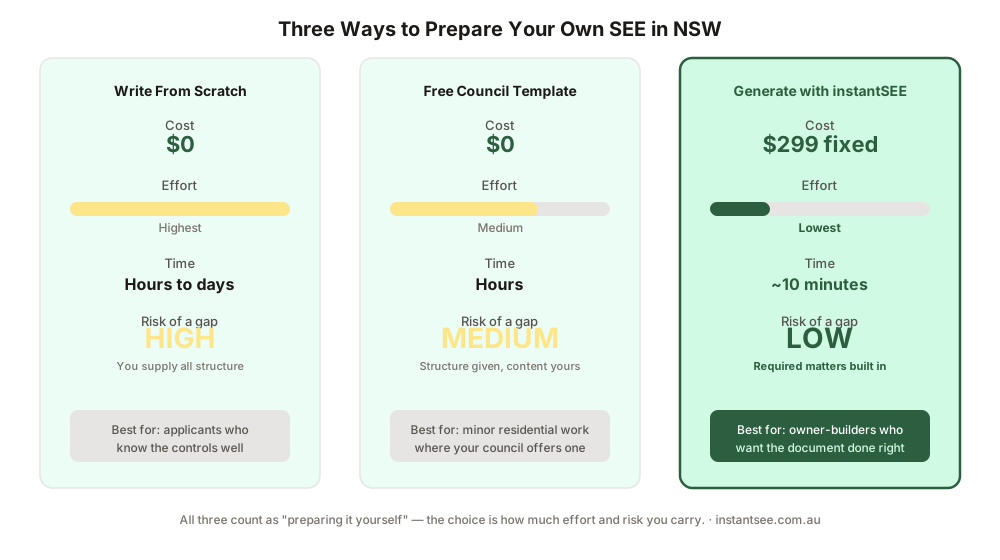
Figure 4: Three ways to prepare your own SEE, compared on cost, time and effort.
Writing from scratch is free but the highest effort, and because you supply the whole structure it is the easiest route to a gap. A free council template, where one is offered, gives you the structure to fill in and cuts the effort, though you still write all the content yourself. Generating it is the lowest effort: instantSEE produces a complete, DA-ready SEE through a guided questionnaire in about 5 minutes online, with the required matters built into the structure so nothing is left out. All three count as preparing it yourself in the sense that no planner is involved. The choice is simply how much of the work and risk you want to carry.
- Is your block simple and unconstrained with no heritage or flood overlays? Writing your own SEE is realistic
- Does your proposal comply with the LEP and DCP without needing a variation? A self-written SEE is achievable
- Are you comfortable researching your zone's controls and addressing each DCP section? Writing from scratch is the right route — if not, a template or generating the SEE removes that burden
If you want to compare the broader options, our guide on an AI SEE report versus a town planner sets them side by side.
Frequently asked questions
Can I write my own Statement of Environmental Effects in NSW?
What does a SEE need to include if I write it myself?
Is it hard to write your own SEE in NSW?
Will a council accept a SEE I wrote myself?
What is the easiest way to prepare my own SEE?
Ready to get your SEE report?
Skip the writing. Get a DA-ready Statement of Environmental Effects in 5 minutes.
Get your SEE report