Key takeaways
- DIY DA saves the $2,000 to $5,000 planner fee
- Council fees apply regardless of whether you use a planner
- The SEE is where most self-lodged DAs stall
- Section 4.15 matters must be addressed completely in the SEE
- instantSEE produces a DA-ready SEE in 5 minutes
A DIY development application in NSW saves you the $2,000 to $5,000 or more a town planner charges to manage the whole DA, but it is not free. You still pay the council DA fee, a BASIX certificate fee, any plans and specialist reports your site needs, and the largest hidden cost of all: your own time. You are legally allowed to lodge your own DA in NSW without a planner.
For an owner-builder or homeowner watching the budget, that is the appeal. The trouble is that "DIY" gets confused with "free", and the part that trips most people up is not the council form but the Statement of Environmental Effects.
Get a council-ready Statement of Environmental Effects for your DA in 5 minutes — no town planner, no waiting.
Get your SEE report →- What a DIY development application actually costs in NSW
- How much you save versus using a planner — and where the saving is real
- Which part of a DIY DA most commonly causes it to stall
- How to tell whether your project is simple enough to do yourself
- How to keep the SEE cost low without weakening your application
What a DIY Development Application Really Costs in NSW
A DIY DA removes the planner's fee but leaves several real costs — council fees, BASIX, plans, and the SEE — all of which still need to be paid.
A DIY development application in NSW removes the planner's professional fee but leaves several real costs in place. The council DA fee is unavoidable, a BASIX certificate is required for most residential work, and your plans and any specialist reports still have to be produced.
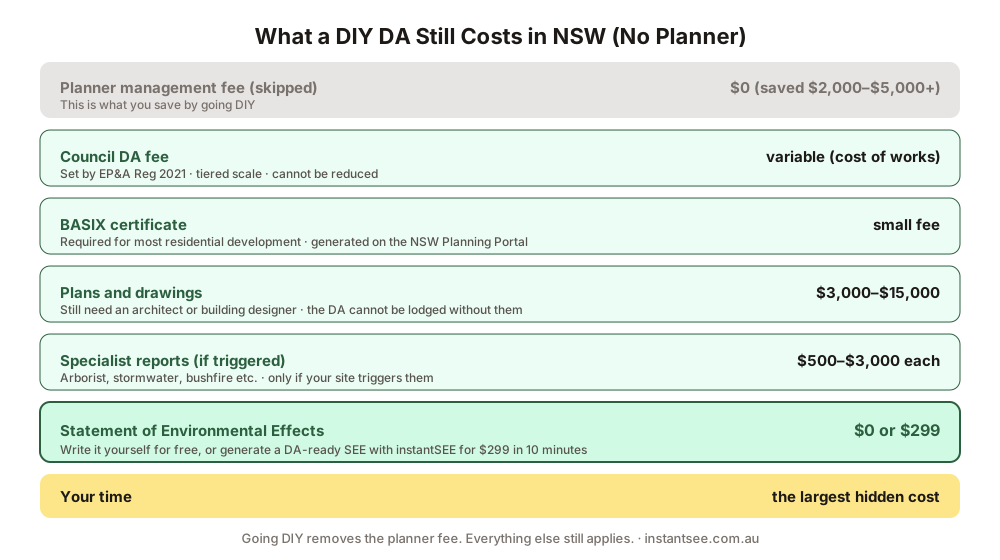
Figure 1: The real cost items in a DIY development application, even with no planner.
Under the Environmental Planning and Assessment Regulation 2021, council DA lodgement fees are set by a regulated scale based on the estimated cost of your development, so a $100,000 renovation and a $600,000 new build pay different council fees. On top of that, a BASIX certificate is required for most residential development and carries a small fee to generate on the NSW Planning Portal. Specialist reports such as an arborist, stormwater or bushfire assessment only apply if your site triggers them. The Statement of Environmental Effects costs nothing if you write it yourself, and your time is the cost that is easiest to underestimate.
DIY DA vs Hiring a Planner: What You Actually Save
Going DIY saves the full planner management fee, but the saving is smaller than it looks once you value your own time and the risk of getting something wrong.
Going DIY saves the full planner management fee of $2,000 to $5,000 or more, but the saving is smaller than it looks once you value your own time and the risk of getting something wrong. The real question is which parts of the DA you can do yourself and which are worth help.
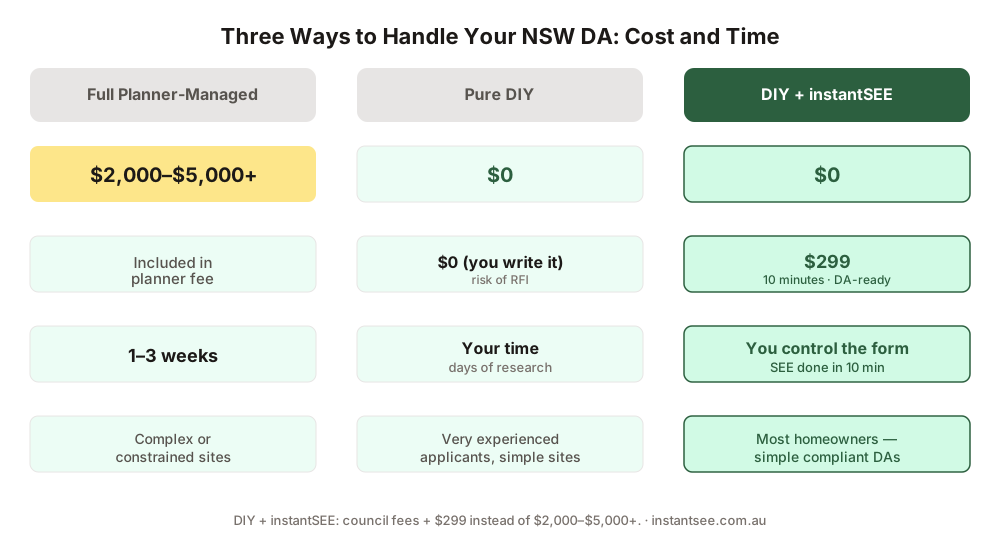
Figure 2: Three ways to handle your DA, compared on cost and time.
A full planner-managed DA is hands-off but the dearest option, running $2,000 to $5,000 or more and one to three weeks. Pure DIY costs only your council fees plus your time, but you write the SEE alone and carry the risk of a council request for information. A middle path keeps you in control while removing the hardest part: you handle the form and the plans, and use a tool for the SEE. instantSEE produces a DA-ready SEE in 5 minutes online, so a DIY DA costs your council fees plus a fixed online fee rather than thousands. You can put your own figures side by side with our free town planner cost calculator. For a deeper look at planner pricing, see our guide to town planner fees in NSW.
Where a DIY Development Application Tends to Stall
Spend 5 minutes, not 3 weeks
instantSEE generates a complete, DA-ready Statement of Environmental Effects online. No town planner. No waiting.
Get your SEE report in 5 minutes →A self-lodged DA usually stalls on the Statement of Environmental Effects, not the lodgement form — a missed matter triggers an RFI that pauses the application and adds weeks.
A DIY development application usually stalls on the Statement of Environmental Effects, not the lodgement form. A self-lodged DA that is complete and correct moves straight to assessment; one that misses a required matter draws a request for information that pauses the application and adds weeks.
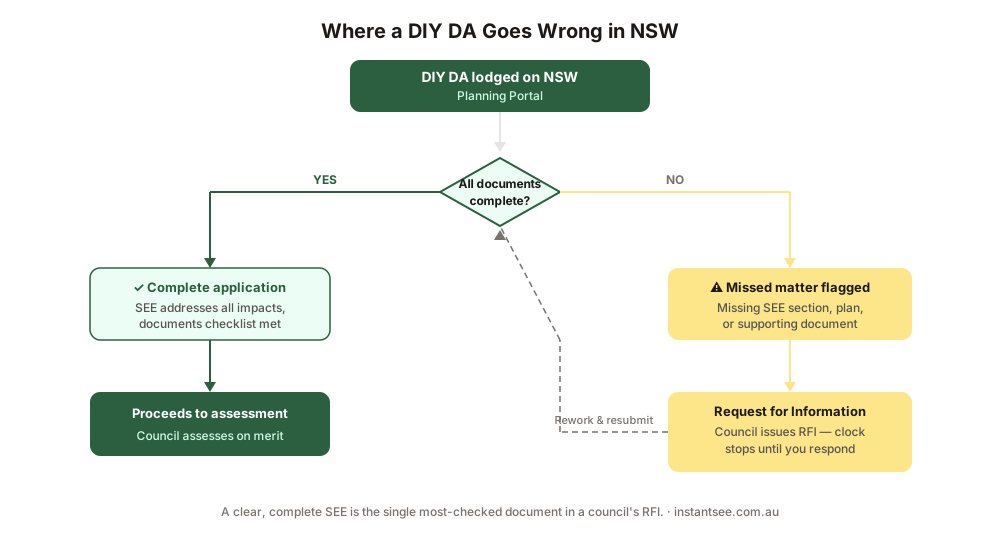
Figure 3: A DIY DA succeeds or stalls on the SEE, not the paperwork.
Under the Environmental Planning and Assessment Act 1979, a council must consider the matters in s 4.15(1) when it assesses your DA, and your SEE is where you address them. Filling in the NSW Planning Portal form is the easy part. The harder part is writing a SEE that covers the likely environmental, social and economic impacts of your project for your specific zone and site. When a DIY applicant gets a request for information, it is almost always because a matter was missed or addressed too thinly. Getting the SEE right the first time is what keeps a DIY DA on track, which is why the document deserves the most care. Our guide on how to lodge a DA in NSW walks through the portal steps once your documents are ready.
Is a DIY DA Right for Your Project?
A DIY DA is realistic when your site is simple and your project is standard — it becomes far harder when the site is constrained or you are pushing a development standard.
A DIY DA is realistic when your site is simple and your project is standard, and far harder when the site is constrained or you are pushing a development standard. Matching the route to the project saves both money and grief.
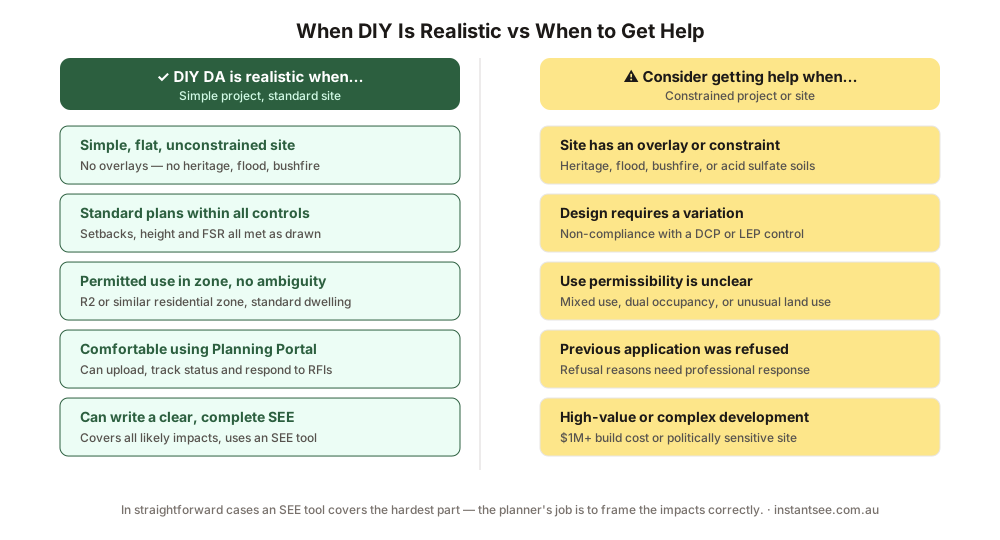
Figure 4: When to lodge it yourself, and when to get targeted help.
If your block is flat and unconstrained, your plans are standard, you need few or no specialist reports, and you are building within the development standards, a DIY DA is well within reach. If your site is heritage, flood or bushfire affected, needs several specialist reports, or you are seeking a clause 4.6 variation to exceed a height or floor space standard, the assessment gets complicated and a mistake costs you weeks. A sensible middle ground is to do the straightforward parts yourself and get targeted help only on the complex ones. For many owner-builders, the single piece worth handing over is the SEE, which you can generate rather than write from scratch. If you are weighing the trade-off more broadly, our guide on whether a town planner is worth it is a useful companion.
- Is the block flat with no heritage, flood or bushfire constraints? DIY is realistic
- Do all elements comply with your LEP and DCP without needing a clause 4.6 variation? DIY is realistic
- Are there few or no specialist reports required? DIY is realistic — and the SEE is the one part worth generating rather than writing yourself
Frequently asked questions
How much does a DIY development application cost in NSW?
Can I lodge my own DA in NSW without a town planner?
What is the hardest part of a DIY DA in NSW?
Do I still pay council fees if I do my own DA?
When should I not do a DIY DA in NSW?
Ready to get your SEE report?
Skip the writing. Get a DA-ready Statement of Environmental Effects in 5 minutes.
Get your SEE report