Key takeaways
- Acoustic reports are triggered by DCP, SEPP, and proposal type
- Qualified acoustic consultants must prepare the assessment
- EPA and ECRTN criteria set the compliance benchmark
- Specific mitigation measures become enforceable consent conditions
- The SEE summarises acoustic findings alongside the full report
An acoustic report — also called a noise impact assessment — tells your council how much noise a proposed development will generate or experience, how that noise compares to NSW EPA criteria, and what mitigation measures will bring it within acceptable limits. It is required for a wide range of commercial, industrial, and residential DAs in NSW, and lodging without one when it is needed reliably triggers a request for further information.
Get a council-ready Statement of Environmental Effects for your DA in 5 minutes — no town planner, no waiting.
Get your SEE report →- When an acoustic report is required for a NSW DA
- What an acoustic consultant assesses in the report
- Which NSW EPA criteria apply to your development type
- How acoustic findings become enforceable conditions of consent
- How the acoustic report fits alongside your SEE in the DA package
When Is an Acoustic Report Required?
The requirement is not set by a single state law — it flows from your council's DCP, relevant SEPPs, and the nature of the proposal, which means triggers vary but are more common than most applicants expect.
No single piece of NSW state legislation specifies a universal acoustic report threshold. The obligation comes from a combination of your council's Development Control Plan (DCP), relevant State Environmental Planning Policies (SEPPs), and the characteristics of the development. Councils and consent authorities can also impose acoustic report requirements through pre-lodgement advice or published policy.
Common triggers include: commercial or entertainment premises — cafes, restaurants, licensed venues, gyms — near residential zones; industrial uses or mechanical plant installations; multi-dwelling residential development near a classified road, railway, or flight path; and boarding houses, hotels, or short-term rental accommodation. State Environmental Planning Policy (Transport and Infrastructure) 2021 sets noise criteria for development near rail corridors, and many councils adopt similar rail-corridor buffers in their DCPs.
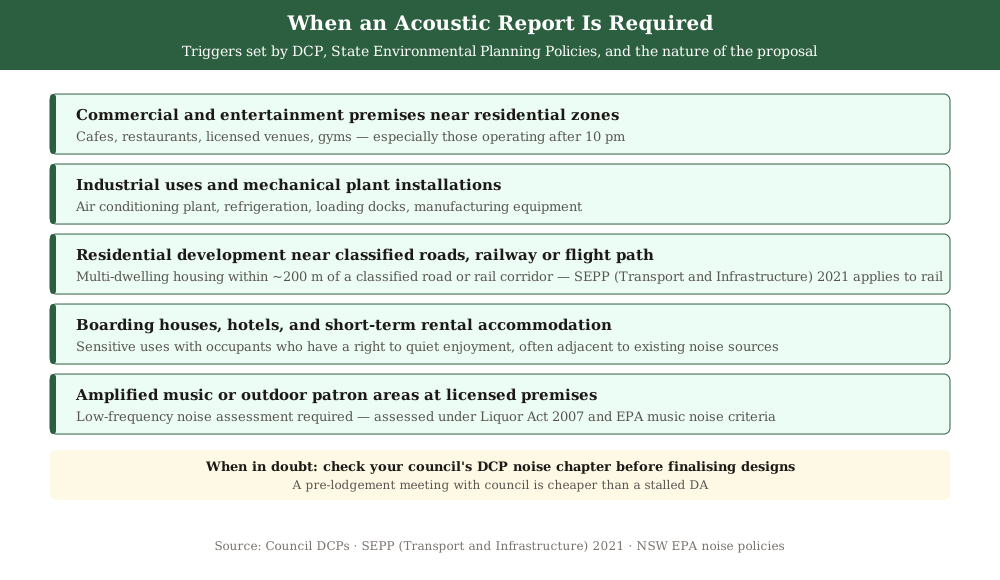 Figure 1: The main triggers for an acoustic report. Your council DCP will specify exact thresholds for your zone.
A useful indicator: if your development will generate noise after 10 pm, attract deliveries by heavy vehicles, house air conditioning or mechanical plant visible to adjoining properties, or place future residents within 200 metres of a classified road, discuss the acoustic report requirement with your council before you finalise designs.
What an Acoustic Report Assesses
An acoustic report is a technical document requiring on-site measurement or modelling, assessment against published EPA criteria, and specific mitigation recommendations — not a simple checklist.
An acoustic report for a NSW DA is prepared by an acoustic consultant — ideally a member of the Australian Acoustical Society. It requires measurements or modelling of the existing ambient noise environment, predictions of noise generated or experienced by the development, and a structured assessment against the applicable criteria.
The report typically addresses: the existing acoustic environment, established through on-site measurements or published road-traffic noise data; predicted noise levels at the nearest sensitive receivers, using recognised modelling methods; assessment against the NSW EPA's Industrial Noise Policy, the Environmental Criteria for Road Traffic Noise (ECRTN), or the relevant SEPP criteria depending on noise source type; and mitigation measures that will achieve compliance — which may include acoustic fencing, double glazing, mechanical ventilation in lieu of openable windows, or operational management.
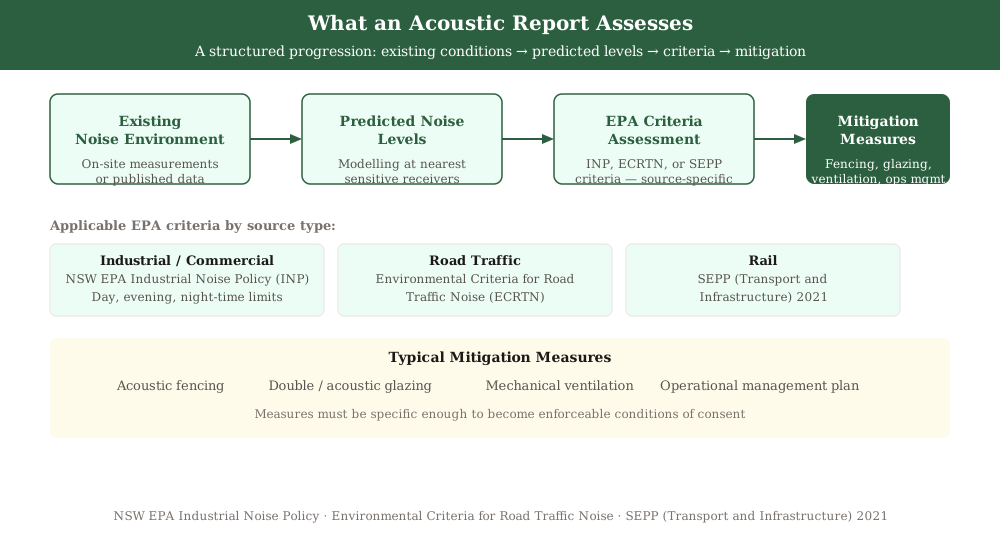 Figure 2: The core elements of an acoustic assessment. The report works from existing conditions through to a mitigation conclusion.
Where the development involves a licensed venue or premises with amplified music, the acoustic consultant will also assess low-frequency noise and vibration, which travel further and are more difficult to attenuate than broadband noise. A thorough acoustic report at lodgement reduces the likelihood of conditions that restrict operating hours.
- Confirm whether your council DCP requires an acoustic report for your development type and zone
- Engage a qualified acoustic consultant early in the design process
- Provide the consultant with plant specs, operating hours, and anticipated patron numbers
- Ensure the report assesses both day and night-time criteria
- Cross-check mitigation measures against the building plans before lodgement
How Acoustic Conditions Are Written Into Your Approval
Spend 5 minutes, not 3 weeks
instantSEE generates a complete, DA-ready Statement of Environmental Effects online. No town planner. No waiting.
Get your SEE report in 5 minutes →The acoustic report recommendations become conditions of consent — and the precision of the report's recommendations determines the precision of the conditions, which affects compliance at the construction certificate and occupation certificate stages.
If your acoustic report demonstrates compliance, or compliance subject to mitigation measures, the consent authority grants consent with conditions that give effect to those measures. Poorly worded conditions create compliance problems at the construction certificate and occupation certificate stages — the acoustic report's precision determines the condition's precision.
Typical acoustic conditions require construction to an acoustic specification — minimum wall weights, glazing acoustic ratings, or mechanical duct attenuation — with compliance verified by an acoustic consultant before the occupation certificate. For operating premises, conditions may restrict patron numbers, operating hours, outdoor amplification, or require a noise management plan before operations begin.
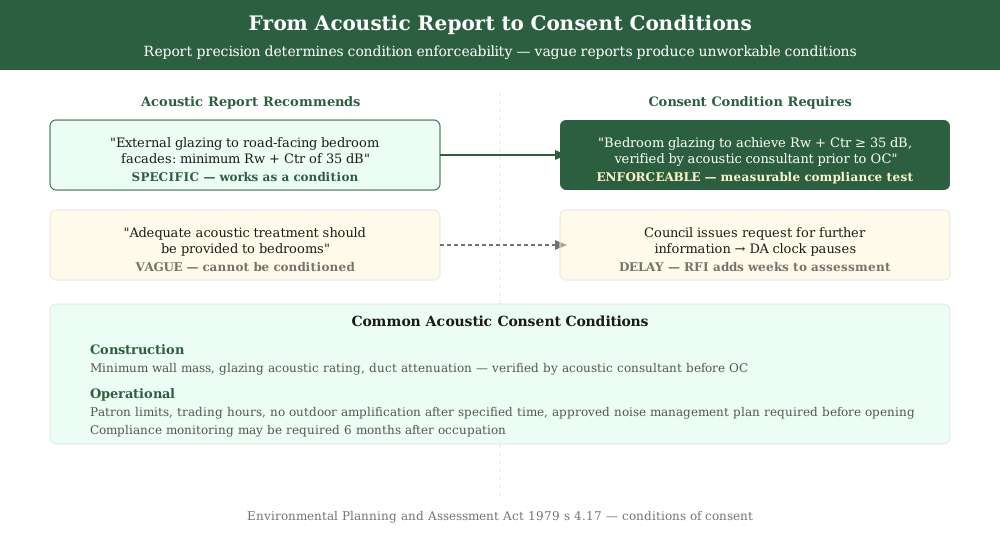 Figure 3: Acoustic conditions follow from the report's recommendations. A report that concludes "adequate treatment should be provided" gives council nothing to condition.
The acoustic report recommendations must therefore be specific. A report that specifies "external glazing to road-facing bedroom facades to achieve a minimum Rw + Ctr of 35 dB" gives the council a precise, enforceable condition. A report that concludes "acoustic treatment should be considered" gives them nothing and will generate a request for further information.
How an Acoustic Report Fits Your DA and SEE
The acoustic report is a technical supporting document lodged alongside your SEE — the SEE summarises the findings and frames noise as one environmental impact among many, while the full report provides the technical basis for council's assessment.
The acoustic report is lodged as part of your DA package through the NSW Planning Portal. Your Statement of Environmental Effects summarises the acoustic findings, references the report, and addresses noise as one of the environmental impacts under s 4.15(1) of the Environmental Planning and Assessment Act 1979. The full acoustic report sits alongside the SEE in the lodgement package.
Your SEE should not simply repeat the acoustic report — it should explain how the development, once mitigation measures are applied, will not cause an unacceptable noise impact on the surrounding area. Council's assessment officer, and if relevant a specialist acoustic referral, will read both documents together.
For a complete list of DA documents, see the DA lodgement checklist for NSW and our guide to DA supporting documents.
Frequently asked questions
Do I always need an acoustic report for a café or restaurant DA in NSW?
Who can prepare an acoustic report for a NSW DA?
What NSW EPA criteria apply to noise from development?
Can I use acoustic fencing instead of double glazing?
How does an acoustic report affect DA assessment timeline?
Ready to get your SEE report?
Skip the writing. Get a DA-ready Statement of Environmental Effects in 5 minutes.
Get your SEE report