Key takeaways
- Alterations and additions need a SEE when they go through a DA rather than exempt or complying development
- The SEE focuses on setbacks, height, floor space, overshadowing, privacy and neighbourhood character
- A second-storey addition raises overshadowing and privacy issues that a ground-floor extension may not
- Minor internal work is often exempt; whether your project needs a DA depends on the controls and your site
- Section 4.15 of the EP&A Act 1979 sets the matters every SEE must address
Alterations and additions are the most common residential Development Application in NSW, and they need a Statement of Environmental Effects whenever they take the DA route rather than being approved as exempt or complying development. Extending the back of the house, adding a second storey, or reconfiguring and enlarging a home all change how the building affects its neighbours — and the SEE is where you show those effects are acceptable.
Not every renovation needs a DA. Minor internal work and small, low-impact changes are often exempt development, and a larger but compliant project may qualify as complying development with no DA and no SEE. Your project needs a DA — and therefore a SEE — when it exceeds those standards or sits on land where the fast-track pathways are not available. The trigger is usually a change to the building's external envelope: its height, setbacks, floor space, or the way it overlooks or overshadows a neighbour.
Get a council-ready Statement of Environmental Effects for your DA in 5 minutes — no town planner, no waiting.
Get your SEE report →- When alterations and additions need a SEE
- What an alterations and additions SEE must cover
- Why a second storey is assessed more closely than a ground-floor extension
- How to lodge your DA
When Alterations and Additions Need a SEE
Exempt work needs no approval and complying development needs no SEE; your project needs a SEE when it goes through a Development Application because it exceeds those standards or your site is constrained.
Minor work — internal alterations, small decks, some fences — is often exempt or complying development and does not need a DA. Once a project changes the external building envelope beyond the complying development standards — a larger footprint, a second storey, reduced setbacks — or your site carries a heritage, flood, or bushfire overlay, the DA route applies and the EP&A Regulation 2021 requires a SEE.
What an Alterations and Additions SEE Must Cover
The SEE shows the enlarged or modified building still complies with the height, setback and floor-space controls and does not unreasonably reduce a neighbour's light, privacy or outlook.
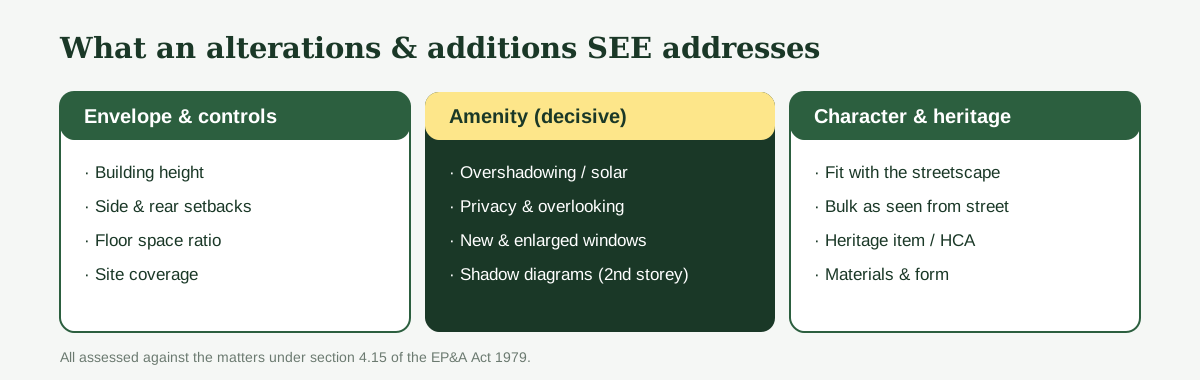
Your SEE assesses the proposal against the matters under section 4.15 of the EP&A Act 1979. For alterations and additions the controls in play are building height, side and rear setbacks, floor space ratio, and site coverage — and the amenity questions are usually decisive: overshadowing of a neighbour's living areas and private open space, overlooking and loss of privacy from new or enlarged windows and balconies, and whether the addition keeps the established character of the street. Heritage adds a further layer where the dwelling or the area is listed.
Why a Second Storey Is Assessed More Closely
Spend 5 minutes, not 3 weeks
instantSEE generates a complete, DA-ready Statement of Environmental Effects online. No town planner. No waiting.
Get your SEE report in 5 minutes →A ground-floor extension mainly affects setbacks and site coverage; a second storey adds height, longer shadows and new sightlines into neighbouring yards, so the amenity assessment carries more weight.
A rear ground-floor extension is usually assessed on setbacks, site coverage and private open space. A second-storey addition introduces height and bulk, casts longer shadows across adjoining properties, and creates new windows that can overlook neighbours — so solar access (often assessed with shadow diagrams), privacy (window placement, sill heights, screening), and streetscape character all come forward. If your addition triggers these, expect the SEE and the council to focus there, and consider whether a shadow diagram or privacy treatment strengthens your case.
How to Lodge Your DA
You lodge through the NSW Planning Portal: upload your existing and proposed plans, elevations, a shadow diagram if relevant, owner's consent, and your SEE, then pay the fee. The council registers it, notifies adjoining owners where required, and assesses it under section 4.15. For a straightforward, compliant addition you can prepare the SEE yourself; a heritage listing, a significant non-compliance, or strong overshadowing impacts are where a town planner helps.
The Bottom Line
Alterations and additions need a Statement of Environmental Effects on the DA route, which is where most non-trivial renovations land. The SEE's job is to show the bigger or modified building still meets the height, setback and floor-space controls and treats the neighbours fairly on light, privacy and outlook — with extra attention on overshadowing and overlooking for anything that adds a second storey. Confirm your overlays and controls first, because they decide both whether you need a DA and what the SEE has to prove.
This guide is general information about the NSW planning system, not legal or planning advice for your specific site. Review every section of any SEE before submitting it to council.
Frequently asked questions
Do alterations and additions need a SEE in NSW?
Do I need a DA to extend my house in NSW?
What does an alterations and additions SEE focus on?
Why does my second-storey addition need shadow diagrams?
Ready to get your SEE report?
Skip the writing. Get a DA-ready Statement of Environmental Effects in 5 minutes.
Get your SEE report