Key takeaways
- Many carports, garages and sheds are exempt or complying development and need no SEE
- A SEE is required when the structure goes through a DA — usually due to size, setback, height or a front-setback carport
- The SEE addresses setbacks, height, site coverage, streetscape and stormwater
- A carport in the front setback is the most common reason this kind of structure needs a DA
- Section 4.15 of the EP&A Act 1979 sets the matters every SEE must address
A carport, garage or shed in NSW needs a Statement of Environmental Effects only when it is lodged as a Development Application. Many of these structures are approved as exempt development (no approval needed) or complying development (a certificate, no DA), because they are small and meet the standards. You need a SEE when the structure exceeds those standards — most often on size, height, or setback — or sits on land where the fast-track pathways are not available.
The most common trigger for one of these structures needing a DA is a carport or garage proposed in the front setback, in front of the building line, where it affects the streetscape. That is a planning judgment a certifier cannot fast-track, so it goes to a DA with a SEE.
Get a council-ready Statement of Environmental Effects for your DA in 5 minutes — no town planner, no waiting.
Get your SEE report →- When a carport, garage or shed needs a SEE
- What the SEE must cover
- Why a front-setback carport almost always needs a DA
When These Structures Need a SEE
Small, compliant outbuildings are exempt or complying development; once the structure exceeds the size, height or setback standards — or sits forward of the building line — the DA route applies and a SEE is required.
Exempt development covers small sheds and the like with no approval; complying development covers larger but compliant structures with a certificate and no DA. You move to a DA — and a SEE under the EP&A Regulation 2021 — when the structure is too large or too tall for those standards, cannot meet a required setback, sits in the front setback, or your site is heritage, flood or bushfire-affected.
What the SEE Must Cover
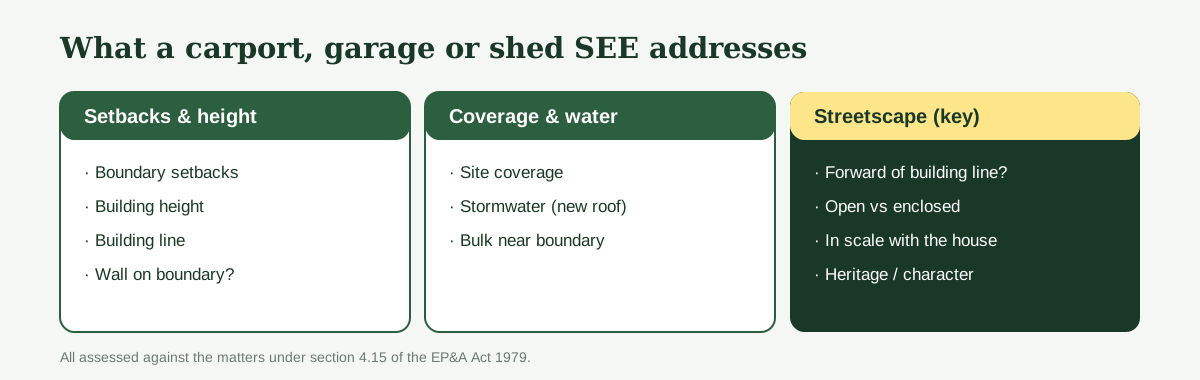
The SEE shows the structure meets the setback, height and site-coverage controls and does not dominate the streetscape or shed water onto a neighbour.
Your SEE assesses the proposal against the matters under section 4.15 of the EP&A Act 1979. For a carport, garage or shed the controls are boundary setbacks, building height, site coverage, and — for anything near or forward of the building line — the streetscape: how the structure reads from the street and whether it suits the character of the area. Stormwater from the new roof area, and overshadowing or visual bulk for a tall shed close to a boundary, round out the assessment. Heritage adds a layer where the dwelling or area is listed.
Why a Front-Setback Carport Needs a DA
Spend 5 minutes, not 3 weeks
instantSEE generates a complete, DA-ready Statement of Environmental Effects online. No town planner. No waiting.
Get your SEE report in 5 minutes →A carport in front of the building line changes how the street looks, which is a merit judgment outside the complying development standards — so it goes to a DA.
Most carports and garages sit beside or behind the building line and can be exempt or complying. A carport proposed in the front setback is different: it is in the most visible part of the site, and councils assess whether it is open rather than enclosed, in proportion to the house, and consistent with the streetscape. Because that is a judgment rather than a checklist, the complying development route is usually closed and a DA with a SEE is required. The SEE is where you make the streetscape case directly.
The Bottom Line
A carport, garage or shed needs a Statement of Environmental Effects only on the DA route — which you reach when the structure is too big, too tall, can't meet a setback, or sits forward of the building line. The SEE's job is to show it meets the setback, height and site-coverage controls and respects the street. Check your overlays and the building line first, because they decide whether you need a DA at all.
This guide is general information about the NSW planning system, not legal or planning advice for your specific site. Review every section of any SEE before submitting it to council.
Generate your council-ready SEE and review it before you lodge → https://instantsee.com.au/report/new
Frequently asked questions
Do I need a DA for a shed in NSW?
Why does my carport need a DA?
What does a carport, garage or shed SEE focus on?
Can I build a garage on the boundary?
Ready to get your SEE report?
Skip the writing. Get a DA-ready Statement of Environmental Effects in 5 minutes.
Get your SEE report