Key takeaways
- Every Campbelltown DA requiring consent needs a Statement of Environmental Effects
- Flooding, mine subsidence, and koala habitat are key Campbelltown SEE issues
- Your SEE must address the Campbelltown LEP 2015 and Sustainable City DCP 2015
- Section 4.15 sets five mandatory matters for every DA assessment
- Most residential Campbelltown DAs are decided by a council officer
A Statement of Environmental Effects for a Campbelltown City Development Application must show how your proposal sits with the Campbelltown Local Environmental Plan 2015 and the Campbelltown (Sustainable City) Development Control Plan 2015, and how it manages its impacts on neighbours, koala habitat, and the surrounding land. Every DA lodged with Campbelltown City Council that needs consent must include one, and it is the document the council reads to understand your project.
Campbelltown carries constraints you will not find in most Sydney councils. It is home to a significant, largely disease-free koala population with mapped habitat and corridors, declared mine subsidence land towards Appin in the south, flood-prone land along the Georges River and Bunbury Curran Creek, and fast-moving Greater Macarthur growth precincts where state precinct rules can apply instead of the council LEP. The wrong starting assumption sends your SEE off addressing the wrong controls.
This guide explains what a Campbelltown SEE has to cover, the constraints that shape it, the common DA types in the area, how to lodge with the council, and whether you need a town planner.
Get a council-ready Statement of Environmental Effects for your DA in 5 minutes — no town planner, no waiting.
Get your SEE report →- What Campbelltown City Council requires in a Statement of Environmental Effects
- How flooding, mine subsidence, and koala habitat shape your Campbelltown SEE
- Common DA types in Campbelltown and what each SEE must address
- How to lodge a Campbelltown DA through the NSW Planning Portal
- Who determines your application — officer, Campbelltown LPP, or State panel
What Campbelltown City Council Requires in a SEE
Your SEE must address five matters under section 4.15 — LEP compliance, DCP compliance, site constraints, neighbour impacts, and the public interest — with flooding, mine subsidence, and koala habitat each potentially decisive depending on your location.
Your Statement of Environmental Effects for a Campbelltown DA must address five things: how your proposal complies with the Campbelltown LEP, how it meets the Campbelltown DCP, the constraints on your specific site, the impacts on your neighbours, and the public interest. These map directly onto the matters a council must weigh under section 4.15 of the Environmental Planning and Assessment Act 1979.
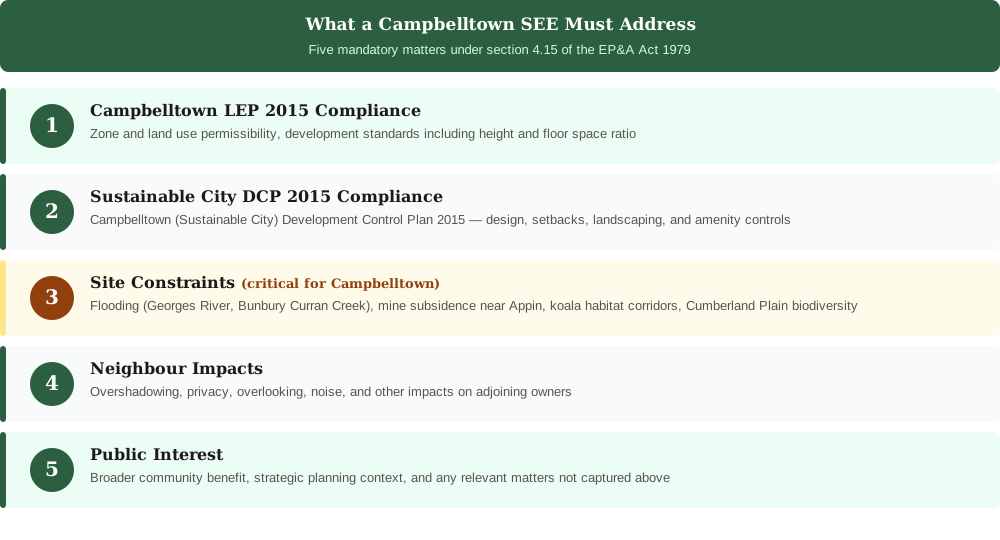
Figure 1: The five matters a Campbelltown SEE must address. They mirror the section 4.15 assessment the council runs.
Campbelltown City Council's principal planning instruments are the Campbelltown Local Environmental Plan 2015 and the Campbelltown (Sustainable City) Development Control Plan 2015. The LEP sets your land's zone and the development standards that come with it, such as the maximum height of buildings.. Maximum building height, FSR, and setback standards for your zone are set by the Campbelltown LEP 2015 and Sustainable City DCP 2015 — confirm the applicable figures for your lot on the NSW ePlanning Spatial Viewer or your section 10.7 certificate. Some Greater Macarthur growth precincts, such as Mount Gilead, Menangle Park, and the Appin direction, are controlled by the State Environmental Planning Policy (Precincts – Western Parkland City) 2021 rather than the council LEP, so confirm which instrument applies to your lot first.
The Koala, Flood, and Subsidence Constraints Your Campbelltown SEE Must Address
Campbelltown's combination of flood-prone valleys, areas of historic coal mining near Appin, koala populations under State protection, and growing South West release precincts means the site constraints section of your SEE does heavy lifting.
The site constraints in Campbelltown are heavier and more specific than in most of Sydney, and your SEE has to confront the ones that touch your land.
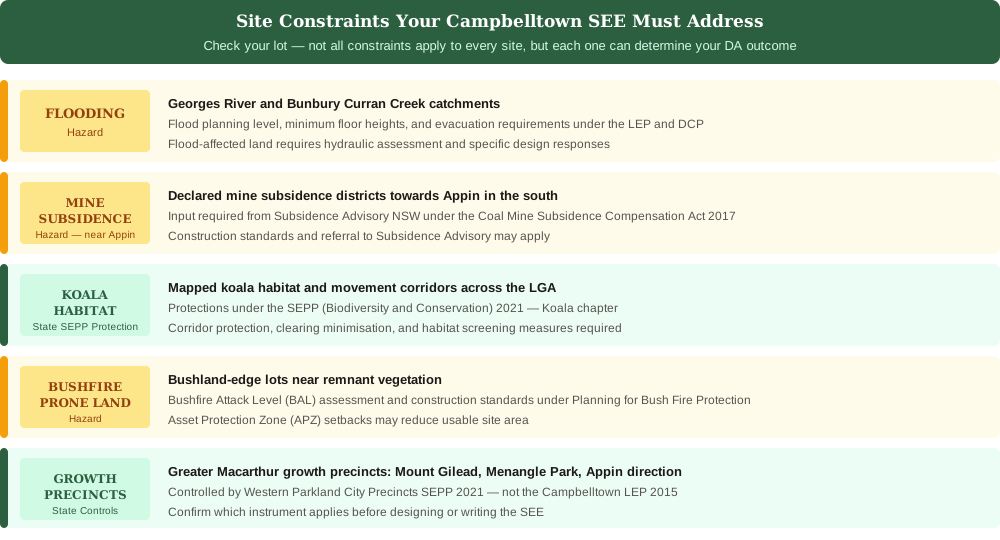
Figure 2: The constraints that shape a Campbelltown SEE. Flooding and mine subsidence are flagged as hazards.
Koala habitat and movement corridors are mapped across parts of the local government area, especially in the south and along the Georges River, and protections sit in the State Environmental Planning Policy (Biodiversity and Conservation) 2021. Flooding affects land along the Georges River and Bunbury Curran Creek, with flood controls set in the LEP and DCP. The area holds remnant Cumberland Plain Woodland, so clearing can trigger a biodiversity assessment under the Biodiversity Conservation Act 2016. Declared mine subsidence districts in the south near Appin require input from Subsidence Advisory NSW under the Coal Mine Subsidence Compensation Act 2017. Heritage items and conservation areas are listed in Schedule 5 of the Campbelltown LEP 2015.
Common DA Types in Campbelltown and What Your SEE Must Address
Spend 5 minutes, not 3 weeks
instantSEE generates a complete, DA-ready Statement of Environmental Effects online. No town planner. No waiting.
Get your SEE report in 5 minutes →The focus of your SEE shifts with the project type and the constraints on your lot — constrained sites need those issues addressed upfront, while a standard addition on unconstrained land centres on overshadowing and privacy.
Most residential DAs lodged with Campbelltown City Council fall into a handful of types, and the focus of your SEE shifts with each one.
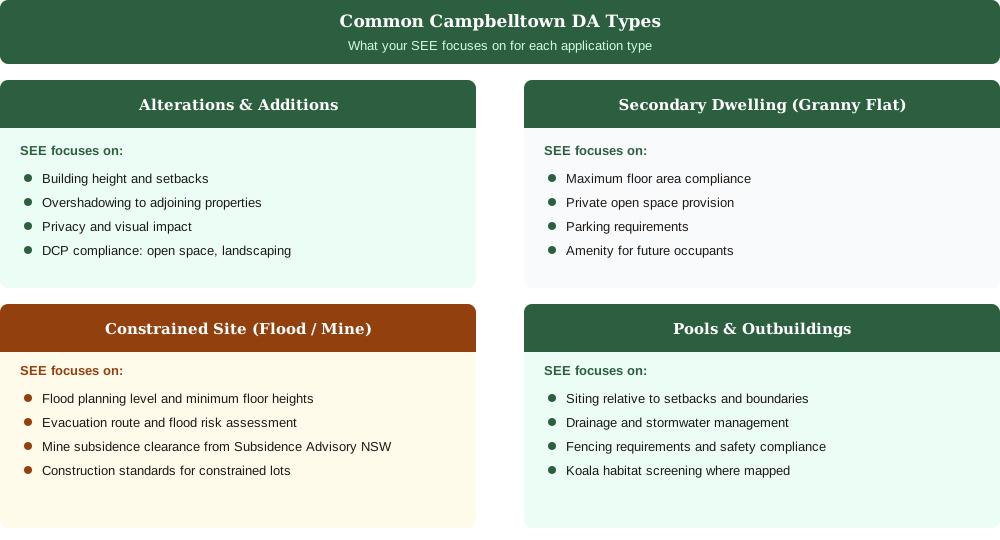
Figure 3: The four most common Campbelltown DA types and where each SEE puts its weight.
For alterations and additions, your SEE concentrates on height, setbacks, overshadowing, and privacy to neighbours. For a secondary dwelling, often called a granny flat, the focus is floor area, private open space, parking, and amenity. For a new dwelling on a growth-precinct or bushland-edge lot, it addresses the precinct controls, koala corridors, biodiversity, drainage, and the flood planning level. For pools and outbuildings, it covers siting, drainage, fencing, and the streetscape. A DA lodgement checklist for NSW helps you gather the right supporting documents for each.
How to Lodge a DA with Campbelltown City Council
You lodge every Campbelltown DA through the NSW Planning Portal — upload plans, SEE, owner's consent, and pay the fee; the council registers it, notifies neighbours, and assesses it against section 4.15.
You lodge a Campbelltown DA through the NSW Planning Portal at planningportal.nsw.gov.au, the system every NSW council uses. You upload your plans, owner's consent, supporting documents, and your SEE, then pay the fee. Our step-by-step guide to lodging a DA in NSW covers the portal mechanics.
- Confirm consent is required by checking your LEP zone and land use table
- Prepare plans, SEE, owner's consent, and BASIX certificate where needed
- Lodge on the NSW Planning Portal and pay the DA lodgement fee
- Respond promptly to any council requests for additional information
- Await council assessment against section 4.15 and the determination
Once lodged, the council registers your DA, notifies adjoining owners where required, and assesses it against section 4.15. Most straightforward residential DAs are decided by a council officer under delegated authority. More contentious or significant applications go to the Campbelltown Local Planning Panel, and regionally significant development is determined by the Sydney Western City Planning Panel. The general DA requirements across NSW councils follow the same legislative base, so a complete Campbelltown lodgement looks much like any other, with extra weight on koala, flood, and subsidence evidence where it applies.
Do You Need a Town Planner for a Campbelltown DA?
For a straightforward residential DA on unconstrained land you can prepare the SEE yourself — but flood-affected, mine-subsidence, or koala-habitat sites are where a specialist earns their fee.
Not always. For a straightforward residential DA on an unconstrained, sewered lot, such as a single-storey addition, a granny flat, or a pool, you can prepare the SEE yourself or use a service rather than engaging a town planner. A traditional town planner in NSW typically charges $800 to $2,500 and takes one to three weeks, which is a lot for a clearly compliant project.
You are more likely to want a planner where the site is genuinely complex: a lot in mapped koala habitat, a flood-affected site near the Georges River, declared mine subsidence land near Appin, a growth-precinct lot under the Western Parkland City controls, or a proposal that seeks to vary a development standard such as height under clause 4.6. For the common, low-constraint residential cases, a well-structured SEE that addresses the Campbelltown LEP and DCP is what you need.
Frequently asked questions
Do I need a Statement of Environmental Effects for a Campbelltown DA?
Which LEP applies to a Campbelltown development application?
How do I lodge a DA with Campbelltown City Council?
Does my Campbelltown site affect koala habitat?
Ready to get your SEE report?
Skip the writing. Get a DA-ready Statement of Environmental Effects in 5 minutes.
Get your SEE report