Key takeaways
- A Request for Information (RFI) is a routine part of the DA process, not a refusal
- Most RFIs ask for site-specific detail — a plan, a diagram, or clarification — not a rewrite
- Respond by addressing each point directly and re-uploading to the NSW Planning Portal
- The assessment clock can pause while an RFI is outstanding, so a prompt, complete response keeps your DA moving
- An editable SEE lets you add the requested detail without starting over
A Request for Information from your council is a routine, expected part of the Development Application process — not a refusal and not a sign your DA is in trouble. An RFI (sometimes called an additional information request) means the assessing officer needs something more to finish the assessment: a missing document, a clarification, or a detail that depends on your specific site. The great majority of DAs that are eventually approved received an RFI along the way, including those prepared by town planners.
The thing to know is that an RFI is usually about site-specific detail, not a flaw in your whole application. Respond promptly and completely, address each point the officer raised, and your DA keeps moving. This guide explains what an RFI is, why they happen, and exactly how to respond.
Get a council-ready Statement of Environmental Effects for your DA in 5 minutes — no town planner, no waiting.
Get your SEE report →- What an RFI is and why councils send them
- The most common things an RFI asks for
- How to respond, step by step
- How the assessment timeline is affected
Why Councils Send RFIs
An RFI means the assessing officer cannot complete the assessment without something more — usually a document or clarification specific to your site — so they pause and ask rather than refuse.
When a council assesses a DA against the matters under section 4.15 of the EP&A Act 1979, the officer needs enough information to be satisfied on each one. If something is missing or unclear — a plan that does not show a dimension, a constraint that needs a specialist report, a neighbour's concern that needs a response — the officer issues an RFI rather than refusing the application. It is the system working as intended: a chance to complete your case.
The Most Common RFIs
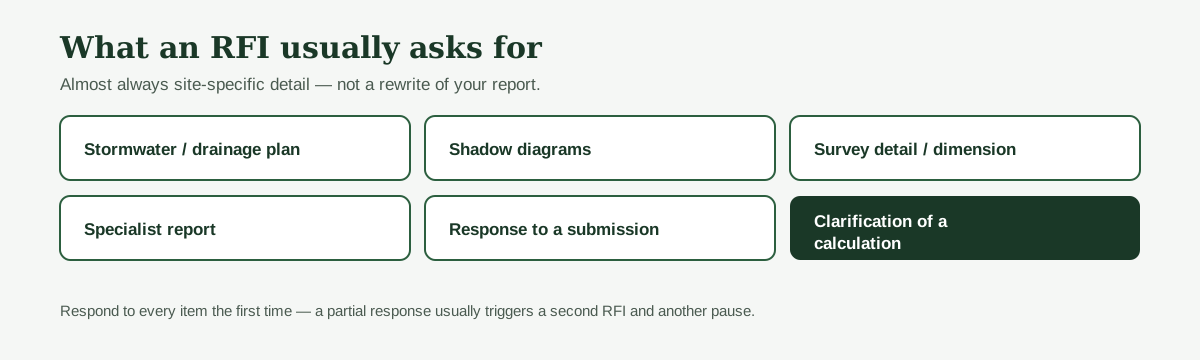
Most RFIs ask for site-specific detail that can only be confirmed on the ground — not a rewrite of your report.
The requests that come up most often are a stormwater or drainage plan, shadow diagrams for an addition that may overshadow a neighbour, a survey detail, a response to a neighbour's submission, a specialist report (arborist, acoustic, geotechnical, heritage), or clarification of a dimension or calculation. These are the parts of a DA that depend on facts specific to your property, which is exactly why they are the common gaps — and why they happen with planner-prepared applications too.
How to Respond, Step by Step
Spend 5 minutes, not 3 weeks
instantSEE generates a complete, DA-ready Statement of Environmental Effects online. No town planner. No waiting.
Get your SEE report in 5 minutes →Read the request carefully, address each point in a clear cover response, attach what was asked, and re-upload to the NSW Planning Portal.
Work through it in order. First, read the RFI in full and list every separate item the officer has asked for. Second, prepare a short cover response that answers each item in the same order, pointing to the document or change that addresses it. Third, make any change to your plans or your SEE that the request requires — your Statement of Environmental Effects is editable, so you can add the detail directly rather than starting over. Fourth, upload the response and any new documents to your application on the NSW Planning Portal. If anything in the request is unclear, it is reasonable to contact the assessing officer to confirm what they need before you respond.
How the Timeline Is Affected
The assessment clock can pause while an RFI is outstanding, so a prompt and complete response is the fastest way to keep your DA on track.
While an RFI is outstanding, the council's assessment time can be "stopped" — the days do not count toward the statutory assessment period until you respond. That means a slow or partial response extends your overall timeline, and a prompt, complete one keeps it short. Answer every item the first time; a response that addresses only some points usually triggers a second RFI and another pause.
The Bottom Line
A Request for Information is the council asking you to complete the picture, not rejecting it — and most RFIs are about site-specific detail rather than a flaw in your whole application. Address every item directly, add any required detail to your editable SEE, and re-upload to the NSW Planning Portal promptly to keep the assessment clock running. Handled well, an RFI is just a step on the way to consent.
This guide is general information about the NSW planning system, not legal or planning advice for your specific site.
Frequently asked questions
Is a Request for Information a bad sign for my DA?
What do councils most commonly ask for in an RFI?
How do I respond to an RFI?
Will an RFI delay my approval?
Ready to get your SEE report?
Skip the writing. Get a DA-ready Statement of Environmental Effects in 5 minutes.
Get your SEE report