Key takeaways
- Standard local DAs have a 40-day statutory assessment period
- A request for information pauses the assessment clock completely
- Thin or incomplete lodgement is the most common delay cause
- A pre-lodgement meeting finds issues before the clock starts
- The SEE is the leading trigger for council RFIs
To get your DA approved faster in NSW, lodge a complete application, comply with your council's controls, and respond quickly to any request for information. Most delay is self-inflicted, caused by gaps that pause the assessment clock, not by the council being slow. These DA approval tips show you where the time actually goes.
A standard residential Development Application has a statutory assessment period of 40 days, yet many take months to determine. The gap between those two numbers is where applicants quietly lose weeks they could have kept.
Get a council-ready Statement of Environmental Effects for your DA in 5 minutes — no town planner, no waiting.
Get your SEE report →- What the statutory assessment clock is and what pauses it
- Why lodging a complete application is the single biggest speed lever
- How a pre-lodgement meeting removes issues before the clock starts
- How to respond to a request for information to avoid losing weeks
- The five DA approval tips that keep your assessment on track
What Decides How Fast a DA Is Approved in NSW?
The single biggest factor is the assessment clock — a standard local DA has a 40-day statutory assessment period under the EP&A Act 1979 and EP&A Regulation 2021, and that clock can be paused by a request for information, so the levers you control are keeping it running and keeping it short.
The single biggest factor is the assessment clock. Under s 8.11 of the Environmental Planning and Assessment Act 1979 and the EP&A Regulation 2021, a standard local DA has an assessment period of 40 calendar days. If the council has not determined it by then, the DA is treated as a deemed refusal and you gain a right to appeal. That period stretches to 60 days for designated, integrated, or concurrence development.
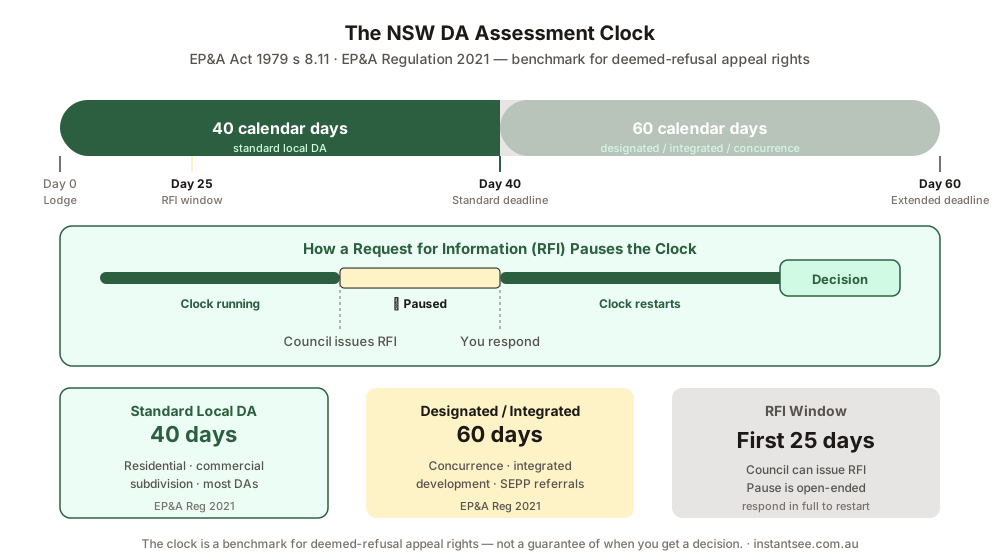
Figure 1: The statutory assessment clock and the pause that a request for information triggers.
Two things matter about that clock. First, it can be paused, so a "40-day" DA can run far longer on the calendar without breaching anything. Second, the statutory period is a benchmark for your appeal rights, not a promise of when you will get a decision; busy councils often take longer in practice. The levers you actually control are keeping the clock running and keeping it short, which is what every tip below comes back to. Our guide on the DA approval timeline in NSW sets out the full sequence of stages.
Lodge a Complete DA the First Time
A complete lodgement is the highest-value thing you can do for speed — the assessment clock does not start until your application is complete and fees are paid, so an incomplete submission does not just risk a later request for information; it can stop the clock from ever starting.
A complete lodgement is the highest-value thing you can do for speed. Under the EP&A Regulation 2021, a council can reject a DA that is not properly made, and the assessment clock does not start until your application is complete and the fees are paid. An incomplete submission does not just risk a request for information later; it can stop the clock from ever starting.
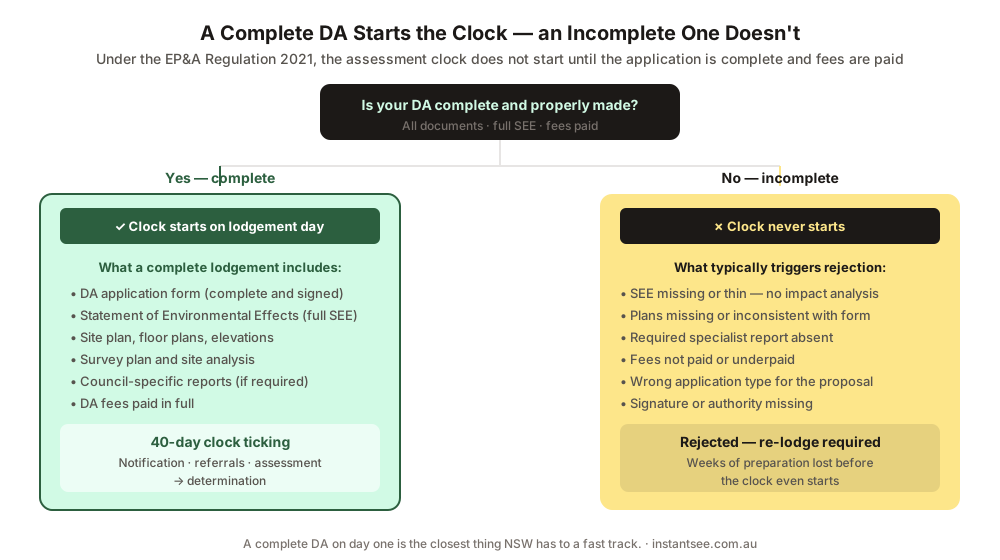
Figure 2: A complete lodgement starts the clock; an incomplete one never gets it running.
The most common missing or weak piece is the Statement of Environmental Effects, the document that addresses your project's impacts and how you will manage them. A thin SEE is the leading trigger for a request for information on an otherwise sound DA. Before you lodge, run your documents against our free DA lodgement checklist so nothing required is missing, and see our full DA lodgement checklist guide for what each item needs to contain. A complete DA on day one is the closest thing NSW has to a fast track.
Book a Pre-Lodgement Meeting With Your Council
Spend 5 minutes, not 3 weeks
instantSEE generates a complete, DA-ready Statement of Environmental Effects online. No town planner. No waiting.
Get your SEE report in 5 minutes →A pre-lodgement meeting is free or low-cost insurance against delay — most NSW councils offer pre-DA advice that moves the council's questions to before lodgement rather than after, so issues that would pause the clock mid-assessment are fixed on your own time instead.
A pre-lodgement meeting is free or low-cost insurance against delay. Most NSW councils offer pre-DA advice, where a planner reviews your concept before you lodge and tells you which controls you do not meet and which reports they will expect. It is not a statutory step, but it routinely saves weeks.
The value is that it moves the council's questions to before lodgement instead of after. If an officer flags that you need a stormwater plan or that your setback breaches the Development Control Plan, you fix it on your own time rather than mid-assessment when the clock is running or paused. For anything slightly unusual, a corner block, a heritage neighbour, a variation you want to argue, the meeting is worth booking. Our step-by-step guide on how to lodge a DA in NSW covers where the pre-lodgement step fits in the process.
Respond Quickly to a Request for Information
When the council issues a formal request for additional information, the assessment clock pauses until you respond — so a slow reply is pure dead time entirely within your control, and replying promptly and in full is the fastest way to restart the assessment.
When the council issues a formal request for additional information within the first 25 days after lodgement, the assessment clock pauses until you respond or tell them you will not provide it. That means a slow reply is pure dead time, and it is entirely within your control. A request you answer in two days costs two days; the same request left for a month costs a month.
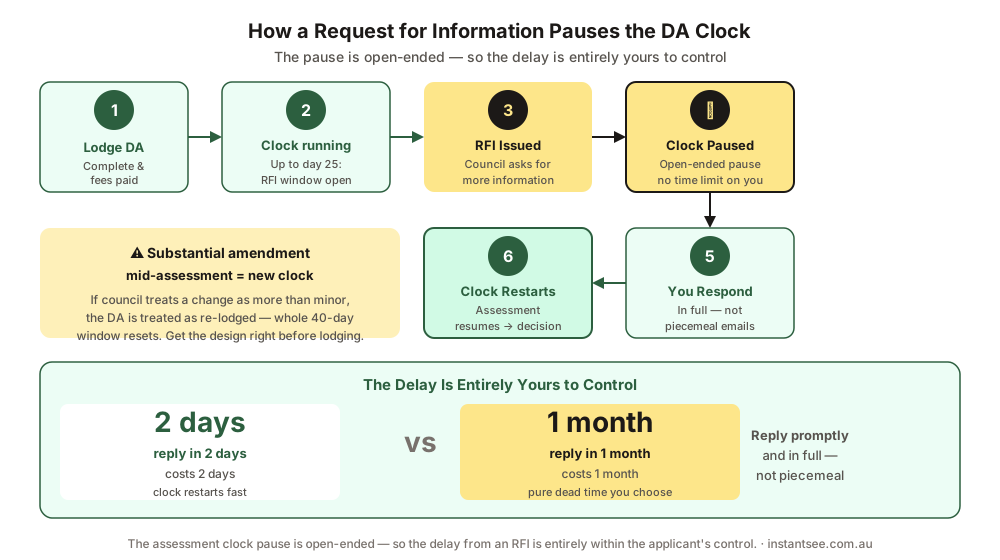
Figure 3: A request for information pauses the clock until you respond, so the delay is yours to control.
Two habits protect your timeline here. Reply to a request for information promptly and in full, rather than in piecemeal emails that invite a second round. And avoid making substantial design changes mid-assessment: if the council treats an amendment as more than minor, your DA can be taken to be lodged again on the day of the amendment, restarting the clock and handing the council a fresh window to ask for more. Get the design right before you lodge, then defend it rather than rebuild it.
DA Approval Tips: Comply With the Controls and Manage Objections
The fastest DAs are the ones that give the council the least to argue with — proposals that meet the LEP and DCP give little to assess and little for neighbours to object to, while a clause 4.6 variation argued properly is far better than a breach left unexplained.
The fastest DAs are the ones that give the council the least to argue with. Where your proposal meets the Local Environmental Plan and the Development Control Plan, there is little to assess and little for neighbours to object to. Where you exceed a development standard, justify it properly, using a clause 4.6 variation request rather than hoping the breach goes unnoticed.

Figure 4: Five tips that keep the assessment clock running and short.
Objections are a major source of delay, because they oblige the council to assess and respond to each planning issue raised. Talking to affected neighbours before you lodge, and adjusting small things that worry them, heads off objections that would otherwise add weeks.
- Is your DA lodgement complete with all required documents including a full SEE? The clock only starts when it is
- Have you confirmed compliance with the LEP and DCP before lodging? Non-compliance gives the council a reason to pause
- Have you spoken to likely-objecting neighbours before lodging? Pre-addressing concerns prevents objections that pause assessment
- Are you ready to respond to any council request for information within days? Speed of response directly controls how long the pause lasts
The pattern across all of these DA approval tips is the same: every gap, breach or surprise is a reason for the council to pause and ask, and every pause is time. Remove the reasons to pause, and your DA moves.
Frequently asked questions
How long does a DA take to be approved in NSW?
Can I fast track a DA in NSW?
What is the most common cause of DA delays in NSW?
Does a request for information stop the DA assessment clock?
How can I speed up my council DA assessment?
Ready to get your SEE report?
Skip the writing. Get a DA-ready Statement of Environmental Effects in 5 minutes.
Get your SEE report