Key takeaways
- The assessment clock starts only once your DA is complete and registered
- Standard notified development is typically exhibited for 14 days
- The deemed refusal period for local development is 40 days under the EP&A Regulation 2021
- A gap in your SEE triggers an RFI and pauses the clock immediately
- Consent is granted first — a Construction Certificate is needed before building starts
After you lodge a DA in NSW, the council checks the application is complete, registers it with a DA number, and the assessment clock starts. From there your DA is notified to neighbours, referred to council specialists and sometimes outside agencies, assessed against the matters in s 4.15(1) of the Environmental Planning and Assessment Act 1979, and finally determined by approval with conditions, a deferred commencement consent, or refusal.
The hard part is that once you hit submit, the process goes quiet. You have spent weeks gathering plans, a BASIX certificate, and a SEE, and then nothing visible happens for a while, which is exactly when people start to worry that something has gone wrong. Usually it has not. The assessment is moving through stages you cannot see.
Get a council-ready Statement of Environmental Effects for your DA in 5 minutes — no town planner, no waiting.
Get your SEE report →- What the council checks in the first hours after you lodge your DA
- How public notification works and how long it runs for different development types
- What referrals happen during assessment and who can block your consent
- Who actually decides your DA and when it goes above officer level
- What the three determination outcomes mean and what comes after approval
What Happens Right After You Lodge a DA
The first thing the council does is a completeness check — and your DA is only legally "made" once every required document and fee is on the NSW Planning Portal, so the clock does not start until that check passes.
The first thing your council does is a completeness check. A DA is only legally "made" once all the required documents and fees are lodged on the NSW Planning Portal, so the council confirms your application form, plans, Statement of Environmental Effects, BASIX certificate, and owner's consent are all there. If something is missing, they ask for it before the DA is accepted, and the clock does not start until they have it.
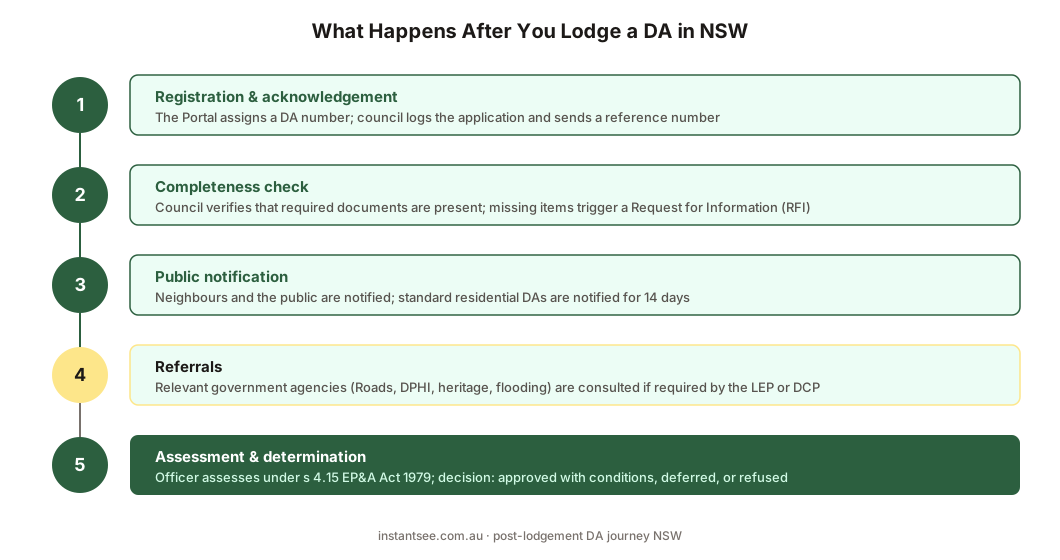
Figure 1: What your council does after you lodge a DA, in order. The clock starts only once the application is complete and registered.
Once the DA is accepted, it is registered, given a DA number, and allocated to an assessing officer. This is the point the statutory clock begins. A free DA Lodgement Checklist for NSW lists every document the completeness check looks for, so a clean lodgement is accepted on the first pass rather than bounced back. The single most common reason a DA stalls at this stage is an incomplete application, which is why getting the document set right before you lodge saves you the first round of delay.
Public Notification: When Neighbours Get a Say
Most DAs are notified to adjoining and nearby owners and occupiers for a set period — commonly 14 days for standard local development, at least 28 days for designated development — and any submissions received become a matter the assessing officer must weigh under s 4.15(1).
Most DAs are notified to the people around your site so they can make a submission. Your council writes to adjoining and nearby owners and occupiers, and the DA appears on the council's online DA tracker. The notification period and who gets notified are set by each council's community participation plan and Development Control Plan, so they vary, but the patterns are consistent across NSW.
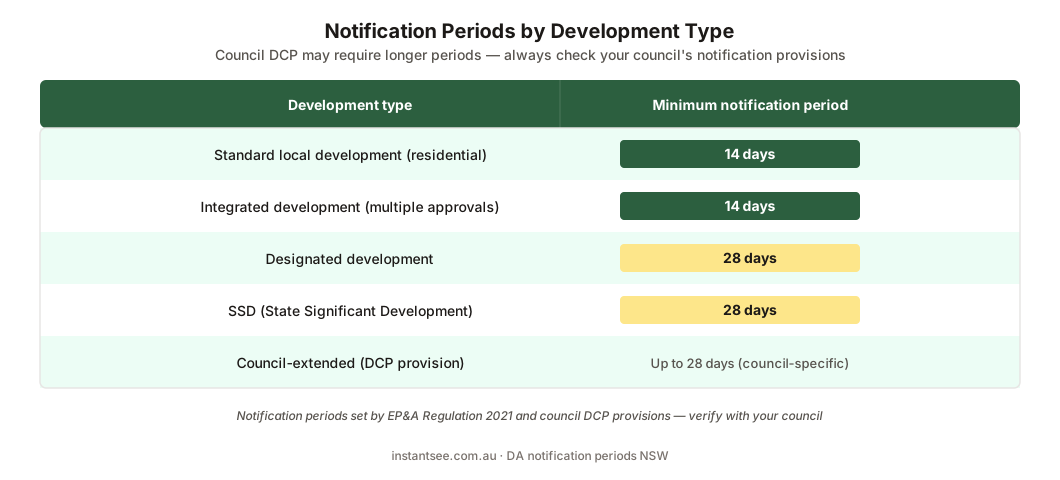
Figure 2: Typical notification periods. Standard local development is commonly notified for 14 days, while designated development requires at least 28 days.
For standard notified development, a 14 day notification period is common. Designated development, which is higher-impact development listed in the regulations and which needs an Environmental Impact Statement rather than a SEE, must be exhibited for at least 28 days. Integrated development and other more complex proposals often sit at the longer end too. If neighbours object, their submissions become one of the matters the officer must weigh, and a high number of unique objections can change who determines your DA. A well-argued SEE that addresses overshadowing, privacy, and noise up front gives the officer the answers to objections before they arrive.
Referrals and Assessment Against Section 4.15
Spend 5 minutes, not 3 weeks
instantSEE generates a complete, DA-ready Statement of Environmental Effects online. No town planner. No waiting.
Get your SEE report in 5 minutes →While notification runs, your assessing officer refers the DA to internal specialists and sometimes outside agencies — and if an outside approval body recommends refusal on an integrated DA, the council cannot grant consent regardless of what the officer thinks.
While notification runs, your assessing officer sends the DA out for referral. Internal referrals go to council specialists in traffic and parking, stormwater, heritage, trees, and environmental health, depending on what your proposal touches. If your DA is "integrated development", it must also be referred to outside approval bodies such as the NSW Rural Fire Service, the Environment Protection Authority, or Water NSW, who issue general terms of approval. The council cannot grant consent if one of these bodies recommends refusal.
The officer then assesses the DA against s 4.15(1) of the EP&A Act 1979. That section requires them to consider the relevant environmental planning instruments and the Development Control Plan, the likely impacts of the development, the suitability of the site, any submissions received, and the public interest. Your Statement of Environmental Effects is the document that answers each of these, which is why a complete SEE is what keeps the assessment moving. If the officer finds a gap, they issue a request for more information, and the clock pauses until you respond, which is the most common cause of a DA taking longer than expected.
Who Decides Your DA
Most straightforward residential DAs are decided by a council officer under delegated authority, but a Local Planning Panel steps in when a proposal is contentious — such as when it attracts a significant number of objections or seeks a clause 4.6 variation of more than 10 per cent.
Not every DA is decided by the same person. For most straightforward residential applications, the decision is made by a council officer acting under delegated authority. The more contentious or complex the proposal, the higher up the chain the decision goes.
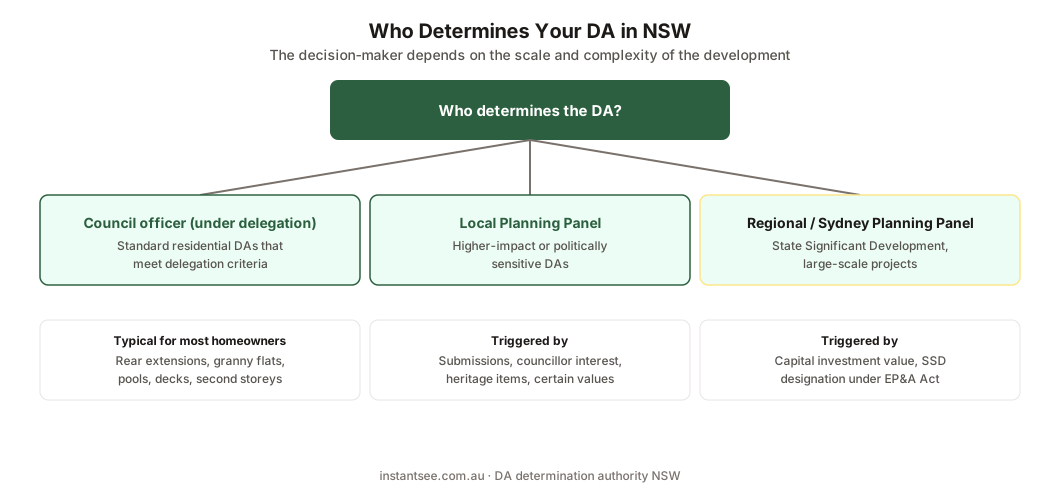
Figure 3: Who determines your DA depends on how contentious or significant it is. Most residential DAs are decided by a council officer under delegation.
A Local Planning Panel, made up of an independent chair, experts, and a community member, determines DAs that are flagged as contentious. Under the Minister's directions, that commonly includes DAs attracting a set number of unique objections, or those seeking to vary a development standard such as height or floor space ratio by more than 10 per cent through a clause 4.6 request. Regionally significant development above a capital investment threshold goes to a regional planning panel, and State significant development goes to the Minister or the Independent Planning Commission. For a typical house extension or secondary dwelling, expect a council officer to decide it.
The Three Ways Your DA Can Be Determined
Your DA ends in one of three outcomes — approval with conditions, deferred commencement consent under s 4.16(3), or refusal — and knowing what each one means before the notice lands saves you from misreading the result.
Your DA ends in one of three outcomes, and it helps to know what each one means before the notice of determination lands in your portal inbox.
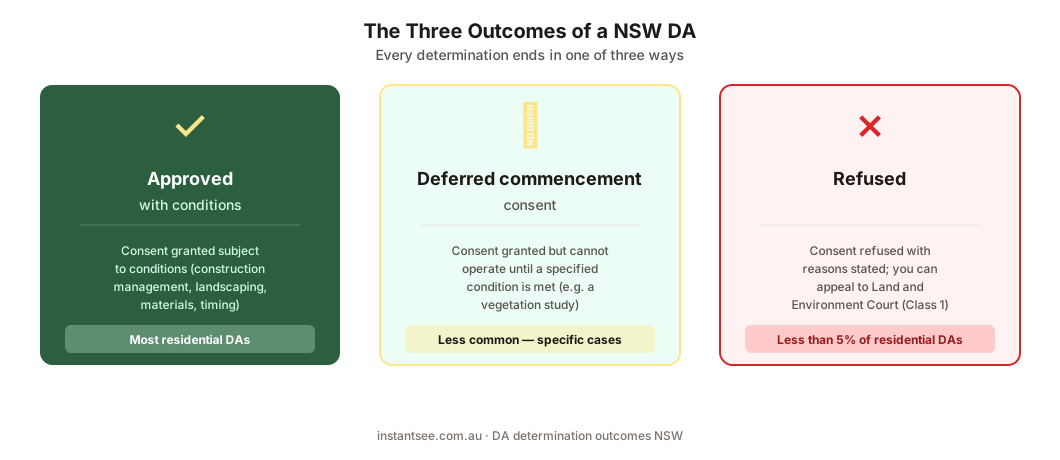
Figure 4: The three possible determinations. Most residential DAs are approved with conditions; refusal carries review and appeal rights.
The usual result is approval with conditions, which is a development consent that lets you proceed once you meet the conditions attached, such as construction hours, stormwater design, or tree protection. A deferred commencement consent, under s 4.16(3) of the EP&A Act, is an approval that does not operate until you satisfy one or more specified conditions first, after which it becomes active. A refusal sets out the planning reasons, usually tied back to s 4.15(1), and you can request a review by the council under s 8.2 of the EP&A Act or appeal to the Land and Environment Court. You also have an appeal right if the council does not determine your DA at all: for ordinary local development, the deemed refusal period under the EP&A Regulation 2021 is 40 days, after which you may treat the DA as refused and appeal.
- Lodge a complete DA to pass the completeness check without delay
- Include a SEE that addresses every s 4.15(1) matter to avoid an information request
- Check whether your DA is integrated development before lodging — referrals to outside agencies add time
- Address overshadowing and privacy in your SEE to pre-empt neighbour objections
- Know your appeal rights: 40-day deemed refusal period and s 8.2 review after a refusal
After Approval: From Consent to Construction
Development consent is not your permission to start building — you still need a Construction Certificate confirming your plans comply with the Building Code of Australia, and an Occupation Certificate once the work is finished before anyone can move in.
Development consent is not your permission to start building. Before any work begins, you need a Construction Certificate (CC), which confirms your detailed construction plans comply with the Building Code of Australia and the conditions of your consent. The CC can be issued by the council or a registered certifier.
Once you have the CC and have appointed a principal certifier, you can build. When the work is finished, you apply for an Occupation Certificate (OC), which certifies the building is suitable to occupy and was built in line with the consent and the CC. So the full sequence after a successful DA is consent, then Construction Certificate, then build, then Occupation Certificate. Knowing that chain helps you plan, because the DA approval is the first of several steps, not the last.
Frequently asked questions
How long does a council take to assess a DA in NSW after lodging?
What does it mean when my DA is "on notification"?
Can a council ask for more information after I lodge my DA?
What happens if the council refuses my DA?
Do I get told when my DA is approved?
Ready to get your SEE report?
Skip the writing. Get a DA-ready Statement of Environmental Effects in 5 minutes.
Get your SEE report